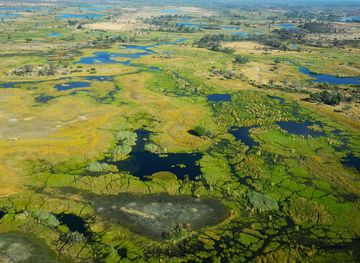
Free Palapye Travel Guide & Mobile App
Plan your Palapye trip with Evendo. Get free guides to top attractions, restaurants, hotels, and bars. Web access or download the mobile app.


Palapye, Botswana, combines Bangwato history, Old Palapye ruins, wildlife areas and easy access to eastern Botswana’s landscapes and culture.
A Settlement Shaped by Movement
Palapye lies in eastern Botswana between Gaborone and Francistown, beside the A1 highway and the railway corridor that links the country’s principal urban centres. It is a practical regional town, but its importance reaches well beyond transport. The modern settlement stands near the remains of Phalatswe, or Old Palapye, the nineteenth-century capital established by the Bangwato under Kgosi Khama III. Scattered stonework and low archaeological remains at the old settlement offer a quieter counterpoint to the traffic and commerce of present-day Palapye.Read more about Palapye
Heritage, Industry and Open Country
When is the best time to visit Palapye?
Best: June–August · 28–31°C| Month | High (°C) | Rainfall (mm) |
|---|---|---|
| January | 34 | 106 |
| February | 35 | 100 |
| March | 34 | 83 |
| April | 33 | 43 |
| May | 30 | 21 |
| June (best) | 28 | 6 |
| July (best) | 28 | 0 |
| August (best) | 31 | 0 |
| September | 35 | 3 |
| October | 38 | 30 |
| November | 38 | 61 |
| December | 36 | 85 |
Getting to and around Palapye
How to get there
Transportation
Best attractions in Palapye
Palapye’s principal attraction is Old Palapye, the historic Phalatswe settlement associated with Khama III and the Bangwato, where scattered ruins and archaeological remains stand in open thornveld. The site rewards visitors interested in Botswana’s political and religious history rather than those expecting a conventional museum complex. Within and around the modern town, everyday streets, local shops and railway landscapes reveal Palapye’s role as a transport and service centre. The nearby Lotsane area offers opportunities for wildlife viewing and birdwatching, subject to access arrangements and seasonal conditions. For a wider excursion, the Tswapong Hills and Moremi Gorge provide rocky scenery, woodland and seasonal streams, although these lie outside Palapye itself. The contrast between Old Palapye’s historic settlement, the contemporary A1 corridor and the surrounding semi-arid countryside gives sightseeing here a distinctly regional character.
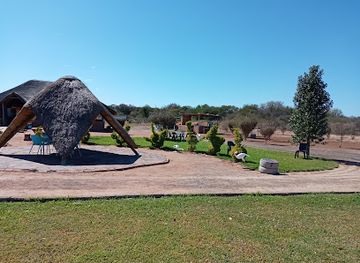
Best landmarks in Palapye
Old Palapye is Palapye’s defining historical landmark: the remains of Phalatswe, the Bangwato capital founded under Khama III in 1889. Its stone structures and settlement traces express the political importance of the site and the scale of a community that later moved to Serowe. The railway corridor is another landmark of sorts, representing the transport infrastructure that helped the modern town develop within the former Bechuanaland Protectorate. The A1 highway, passing through the settlement, embodies Palapye’s present role as a north–south gateway and commercial stop. Around the town, churches, civic buildings and newer commercial developments reflect Botswana’s post-independence growth, while the Morupule energy complex nearby illustrates the industrial forces that have reshaped the local economy. These places are less a compact architectural ensemble than a sequence of historical and contemporary markers spread through an expanding regional town.
-
Hotel
Majestic Five Hotel
Experience comfort and convenience at Palapye's Majestic Five Hotel, your gateway to Botswana's culture and natural beauty.
17 min drive · 5.6 km from city centre
-
Grocery store
Food Lovers Market
Discover fresh, local flavors and gourmet ingredients at Food Lovers Market in Palapye, your daily destination for a vibrant culinary experience.
15 min drive · 4.9 km from city centre
-
Shopping mall
Diphalane Mall
Experience modern shopping in Palapye at Diphalane Mall, offering a variety of stores, dining, and services for locals and travelers alike.
12 min drive · 4.0 km from city centre
-
Shopping mall
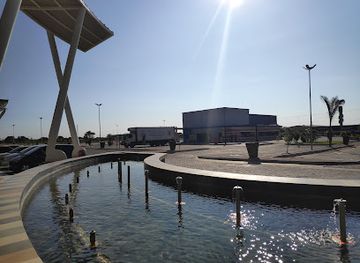
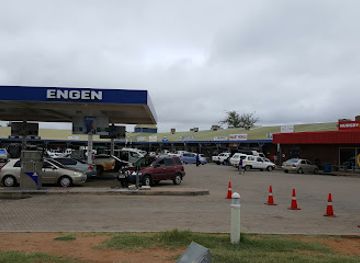
ENGEN MALL PALAPYE
Discover a vibrant shopping experience at ENGEN Mall Palapye, your gateway to local and international brands in the heart of Botswana.
11 min drive · 3.8 km from city centre
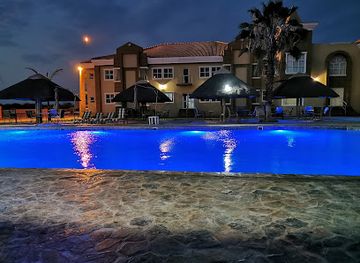
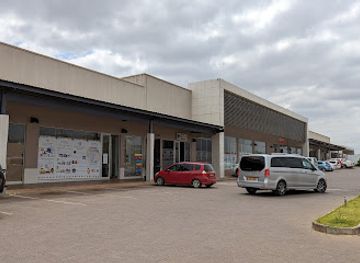
Explore Palapye on the map
Plan your Palapye trip on one map. See where the top attractions, landmarks, restaurants, bars and hotels are, find what's near where you're staying, and book hotels and experiences in a few clicks.
Best hotels in Palapye
Best restaurants in Palapye
Palapye’s dining scene is centred on practical local restaurants, cafés, takeaways and hotel dining rooms serving residents, workers and travellers moving along the A1. Traditional Botswana food may include sorghum or maize-based staples such as bogobe, meat dishes, beans and seasonal vegetables, with beef and goat especially familiar in the country’s food culture. Braai-style grilled meat, stews and simple plates are widely suited to the town’s role as a transport stop, while bakeries and modern cafés provide quicker options. Shops and supermarkets make it easy to assemble provisions for excursions into the surrounding countryside. Dining tends to be informal and functional rather than concentrated in a dedicated restaurant quarter, and menus may reflect both Setswana cooking traditions and the broader southern African influences common in eastern Botswana.
-
Chicken
Nando's Palapye
Experience the bold flavors of peri-peri chicken at Nando's Palapye - where South African meets Portuguese culinary delight.
12 min drive · 3.9 km from city centre
-
Restaurant
Wimpy Palapye
Experience delicious meals at Wimpy Palapye – where every bite is filled with flavor and warmth amidst Botswana's vibrant culture.
11 min drive · 3.8 km from city centre
-
Grill
Cappello Palapye
Discover delicious grilled specialties at Cappello Palapye, where vibrant flavors meet warm Botswana hospitality.
12 min drive · 4.2 km from city centre
-
Fast Food
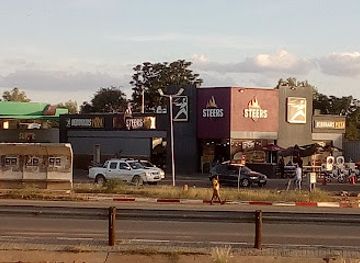
Steers
Discover delicious grilled meals at Steers in Palapye - where fast food meets local flavor!
12 min drive · 3.9 km from city centre


Best bars in Palapye
Palapye’s evening life is modest and locally focused rather than built around a large club scene. Hotel bars, independent drinking spots and casual venues provide spaces for conversation, televised sport and socialising, while restaurants and cafés offer quieter evening settings. Music and dancing may feature at particular venues or community events, but opening patterns and entertainment programmes can change, so local advice is useful. The town’s nightlife is shaped by its role as a regional service centre and by Botswana’s generally relaxed but sociable public culture, not by a concentrated entertainment district. Visitors should use recognised transport after dark, avoid walking along the A1 or poorly lit roads, and observe the atmosphere of each venue rather than assuming that every bar operates as a late-night club.
-
Restaurant
Wimpy Palapye
Experience the heart of Botswana's culinary scene at Wimpy Palapye, where comfort food meets local flavors in a welcoming atmosphere.
11 min drive · 3.8 km from city centre
-
Grill
Cappello Palapye
Discover the vibrant flavors of Palapye at Cappello Palapye, where expertly grilled dishes meet a welcoming atmosphere.
12 min drive · 4.2 km from city centre
-
Restaurant
Bonita Gardens Cafe - Palapye, Botswana
Experience the perfect blend of nature and culinary delight at Bonita Gardens Cafe, Palapye's hidden gem for coffee lovers and food enthusiasts.
7 min walk · 0.5 km from city centre
-
Bar
Honeymoon Bar
Discover the lively nightlife of Palapye at Honeymoon Bar, where locals and visitors unite for unforgettable drinks and entertainment.
11 min drive · 3.7 km from city centre


Best nightclubs in Palapye
Palapye’s evening life is modest and locally focused rather than built around a large club scene. Hotel bars, independent drinking spots and casual venues provide spaces for conversation, televised sport and socialising, while restaurants and cafés offer quieter evening settings. Music and dancing may feature at particular venues or community events, but opening patterns and entertainment programmes can change, so local advice is useful. The town’s nightlife is shaped by its role as a regional service centre and by Botswana’s generally relaxed but sociable public culture, not by a concentrated entertainment district. Visitors should use recognised transport after dark, avoid walking along the A1 or poorly lit roads, and observe the atmosphere of each venue rather than assuming that every bar operates as a late-night club.
-
Bar
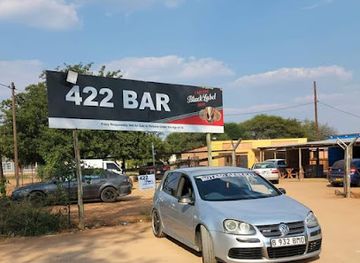
422 BAR
Discover the lively nightlife of 422 BAR in Palapye, where local culture and refreshing drinks create an unforgettable evening.
5 min drive · 1.5 km from city centre
-
Night club
Wamzito Club
Experience the vibrant nightlife at Wamzito Club in Palapye, where music, dance, and local culture collide for an unforgettable evening.
6 min drive · 1.8 km from city centre
-
Night club
Oxygen night club
Experience the electrifying nightlife at Oxygen Night Club in Palapye, Botswana, where music and dance come alive.
5 min drive · 1.7 km from city centre

Best shops in Palapye
Shopping in Palapye is concentrated around everyday retail rather than a specialised tourist market. Commercial areas along and near the main road contain supermarkets, pharmacies, clothing shops, mobile-phone retailers, banks, fuel stations and small independent businesses useful for travellers stocking up before rural excursions. Informal sellers and roadside traders may offer seasonal produce, snacks and locally made goods, while larger retail developments provide modern shopping alongside older township businesses. Visitors looking for Botswana-made souvenirs may find woven items, baskets, beadwork or craft products through local sellers, although selection is variable and not every stall is aimed at tourists. Food supplies, bottled water, sun protection and basic outdoor equipment are generally more practical purchases here than specialist luxury goods. Polite bargaining may be appropriate with informal traders, but fixed-price shops should be treated accordingly.
-
Shopping mall
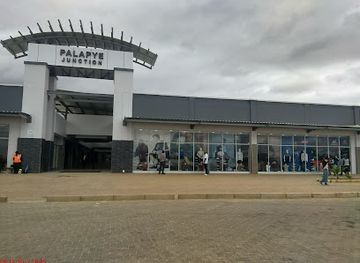
PALAPYE JUNCTION SHOPPING MALL
Discover the heart of shopping and entertainment at Palapye Junction Shopping Mall, a vibrant hub in Botswana offering diverse experiences.
12 min drive · 3.9 km from city centre
-
Supermarket
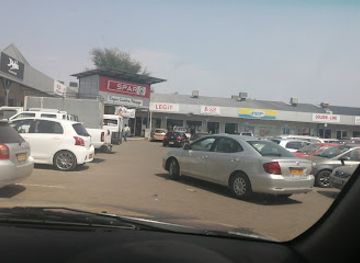
SPAR Palapye
Experience the vibrant shopping atmosphere at SPAR Palapye, your go-to supermarket for fresh produce and local delights in Botswana.
11 min drive · 3.8 km from city centre
-
Grocery store
Food Lovers Market
Discover the vibrant flavors of Botswana at Food Lovers Market, a culinary paradise in Palapye offering fresh produce and local delicacies.
15 min drive · 4.9 km from city centre
-
Supermarket
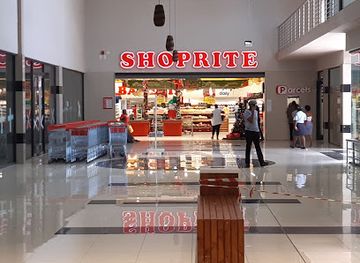
Shoprite Palapye
Shoprite Palapye: A vibrant supermarket offering local groceries and essentials in the heart of Botswana's Palapye.
12 min drive · 4.0 km from city centre
Get your free copy of our complete guide to Palapye, delivered straight to you.
Everything on this page, from attractions and restaurants to essentials and local phrases, in one PDF you can read offline, print or share.
Already have an account? Sign in
Your Palapye guide is ready.
We'll send it to · Not you? Sign out

Getting your guide ready…
We are putting together a fresh copy of the Palapye guide. This can take up to a minute.
This can take a few moments. If your browser asks, choose Allow so the download can start. You'll find the guide in your Downloads folder.
Nothing happened? Download it again
Sorry, the guide is taking longer than usual. Please try again in a minute, or get it by email instead.
Palapye essentials
Currency and Payment
Safety
Emergency Situations
Do's and Don'ts
Local Tips
From Eve
Local phrases worth knowing
You don't need to get them perfect. A few words go a long way, and locals appreciate the effort.
Basics
| English | Local | Say it |
|---|---|---|
| Hello | Dumela | [doo-meh-lah] |
| Goodbye | Sala sentle | [sah-lah sen-tleh] |
| Yes | Ee | [ee] |
| No | Nnyaa | [nnyah] |
| Please/You're welcome | Ke a leboga | [keh ah leh-boh-gah] |
| Thank you | Ke a leboga | [keh ah leh-boh-gah] |
| Excuse me/Sorry | Ntshwarele | [n-chwa-reh-leh] |
| How are you? | O kae? | [oh kah-eh] |
| Fine. And you? | Ke teng. Le wena? | [keh te-ng. leh weh-nah] |
| Do you speak English? | O bua se sengwe ka sekgowa? | [oh boo-ah sey sey-ngweh kah seh-koh-wah] |
| I don't understand | Ga ke itse | [gah keh it-seh] |
Eating & Drinking
| English | Local | Say it |
|---|---|---|
| I'd like to see the menu, please | Ke batla go bona menyoo, ka kopo | [keh baht-lah goh boh-nah meh-nyoo, kah koh-poh] |
| I don't eat meat | Ga ke dira nyama | [gah keh dee-rah nyah-mah] |
| Cheers! | Tsamaya sentle! | [tsah-mah-yah sen-tleh] |
| I would like to pay, please | Ke batla go dira dipaletso, ka kopo | [keh baht-lah goh dee-rah dee-pah-leh-tsoh, kah koh-poh] |
Emergencies
| English | Local | Say it |
|---|---|---|
| Help! | Boitumelo! | [boi-too-meh-loh] |
| Go away! | Tsamaea! | [tsah-mah-eh] |
| Call the Police! | Itse motseare! | [it-seh moht-sheh-ah-reh] |
| Call a doctor! | Itse ngaka! | [it-seh ngah-kah] |
| I'm lost | Ke a tswaletse | [keh ah tswah-leh-tseh] |
| I'm ill | Ke tshwere ke tshabetsa | [keh tshwe-reh keh tshah-beh-tsa] |
Shopping
| English | Local | Say it |
|---|---|---|
| I'd like to buy... | Ke batla go bolaya... | [keh baht-lah goh boh-lah-yah] |
| I'm just looking | Ke bone | [keh boh-neh] |
| How much is it? | Ke bokae? | [keh boh-kah-eh] |
| That's too expensive | Ke tlhokafetse | [keh tlhoh-kah-feht-seh] |
| Can you lower the price? | O ka kgothatsa phahlo? | [oh kah koh-tsat-sah pah-hloh] |
Time & Numbers
| English | Local | Say it |
|---|---|---|
| What time is it? | Ke nako mang? | [keh nah-koh mah-ng] |
| It's one o'clock | Ke nako ya mosha | [keh nah-koh yah moh-shah] |
| Half past (10) | Mosha la lefatshe (10) | [moh-shah lah leh-faht-sheh (10)] |
| Morning | Bohula | [boh-hoo-lah] |
| Afternoon | Botsotso | [boht-soht-soh] |
| Evening | Ntwa | [n-twa] |
| Yesterday | Nako ya mokwalo | [nah-koh yah moh-kwah-loh] |
| Today | Nako e kana | [nah-koh eh kah-nah] |
| Tomorrow | Nako ya ngwaga | [nah-koh yah ngwah-gah] |
| 1 | Moja | [moh-jah] |
| 2 | Pedi | [peh-dee] |
| 3 | Tharo | [tah-roh] |
| 4 | Nne | [nneh] |
| 5 | Tlhano | [tlhah-noh] |
| 6 | Tlhare | [tlhah-reh] |
| 7 | Supa | [soo-pah] |
| 8 | Robete | [roh-beh-teh] |
| 9 | Sentsho | [sehnt-shoh] |
| 10 | Lesome | [leh-soh-meh] |
Transport & Directions
| English | Local | Say it |
|---|---|---|
| Where's a/the...? | Ke kae...? | [keh kah-eh] |
| What's the address? | Boitsebiso ke eng? | [boi-tseh-bee-soh keh e-ng] |
| Can you show me (on the map)? | O ka nna leka (ka mapo)? | [oh kah n-nah leh-kah (kah mah-poh)] |
| When's the next (bus)? | Nako ya bokete e kae? | [nah-koh yah boh-keh-teh eh kah-eh] |
| A ticket (to ....) | Lekgotla (go ....) | [leh-koh-tlah goh] |
History of Palapye
Bangwato Origins at Phalatswe
Palapye’s most important historical story is associated with the Bangwato and their leader Khama III. In 1889, Khama established a new capital at Phalatswe, now generally known as Old Palapye, after the community moved from Shoshong. The settlement became a substantial political and religious centre, reflecting the authority of the Bangwato kingdom and the organisation of its people during a period of major change in southern Africa. The name Palapye is commonly linked to the Setswana word for impala, an animal associated with the surrounding country. The remaining stone walls, settlement traces and church ruins at Old Palapye provide material evidence of this earlier capital.
A Capital Before Serowe
Phalatswe served as the Bangwato capital until the community moved again to Serowe in the early twentieth century. The change was connected to practical and political considerations, including the availability of water and the suitability of the new location for a growing settlement. Although the capital moved away, the Old Palapye site remained an important marker of Bangwato history. Its ruins show how political centres in pre-colonial and early colonial Botswana were shaped by mobility, environmental pressures and the authority of dikgosi, or traditional leaders. The surviving remains also connect modern Palapye with the wider historical landscape of the Bangwato people.
Railways and the Colonial Era
The development of the railway through eastern Botswana altered the region’s economic geography. Rail connections formed part of the north–south route through the Bechuanaland Protectorate and encouraged the growth of settlements that could serve as transport, trading and administrative points. Palapye’s position along this corridor helped it develop beyond the earlier capital site and strengthened links with Gaborone, Francistown and communities farther north. During the colonial period, commerce, livestock movement and administrative systems increasingly operated alongside established Tswana political institutions. The railway’s legacy remains visible in Palapye’s role as a transport town and in the continued importance of the east-west and north-south road networks.
Botswana’s Independence and Expansion
Botswana became independent from British rule in 1966, and Palapye subsequently grew within a national programme focused on education, public administration, infrastructure and economic development. Its location between the capital and the north made it a natural service centre for surrounding villages and cattle areas. New schools, businesses, public facilities and transport links expanded the settlement’s regional influence. The town’s growth was not based solely on tourism: it was also shaped by ordinary commercial activity, government services and the needs of a dispersed population. Modern Palapye therefore carries both the continuity of Bangwato history and the institutional character of an independent Botswana.
Coal, Electricity and Contemporary Palapye
In recent decades, Palapye has become closely associated with Botswana’s coal and electricity industries, particularly through the Morupule energy complex nearby. Energy development has contributed to employment, construction, business activity and the town’s expanding regional importance, while also bringing the environmental and infrastructure questions associated with resource-based growth. Palapye is now a significant stop on the A1 and a service centre for eastern-central Botswana. Its contemporary identity combines industrial activity, education, transport and local commerce with the historic landscape of Old Palapye. That contrast between a nineteenth-century capital site and a modern energy corridor is central to understanding the town today.
Palapye in Photos
Browse through our photo collection highlighting the charm and character of the destination.
Cities near Palapye
The closest cities to Palapye, if you have time for more than one stop.
-
-

-

-
-


Swipe for more cities