


Bhutan Walking Holidays with Bumdra Camping.
 Paro, BT
 100% of travellers recommend this
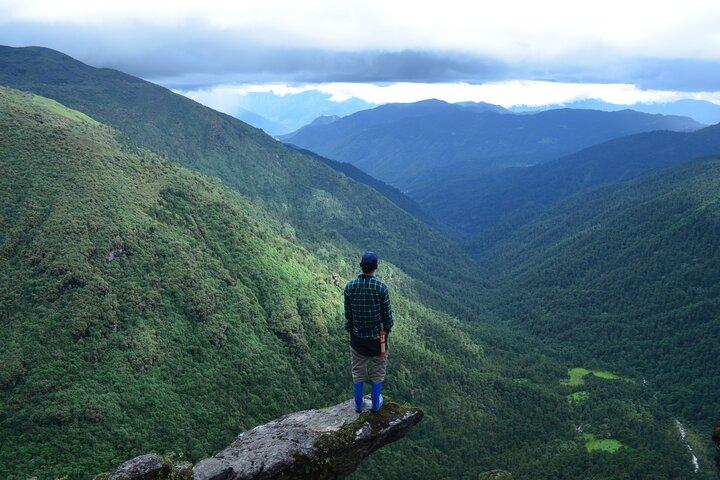
Non-refundable - Your booking can not be cancelled, modified or refunded.
Guaranteed Lowest Prices - Find a lower price? We'll match it!
Highlights
- Experience Bhutan's culture through breathtaking hikes
- Camp overnight in stunning Himalayan wilderness
- Explore iconic Tiger's Nest Monastery's beauty
- Discover vibrant local markets and crafts
- Marvel at panoramic views from Dochula Pass
-
Duration 216 hours
-
Private tour
-
Includes camping equipment
-
Meals as per itinerary
-
Expert guide provided
-
Skip-the-line tickets
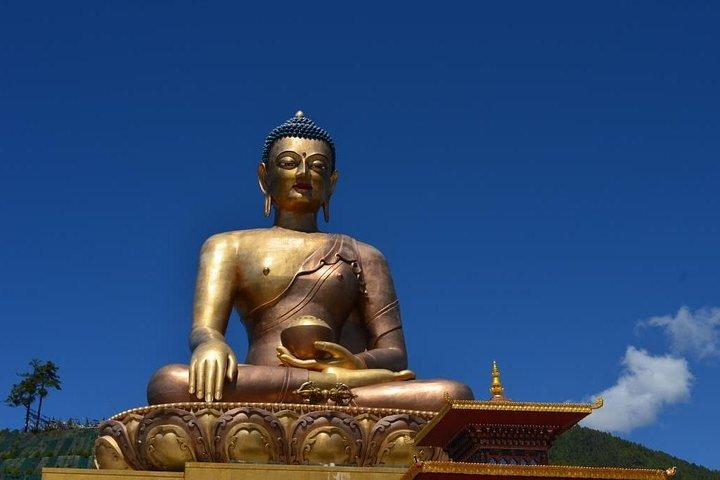
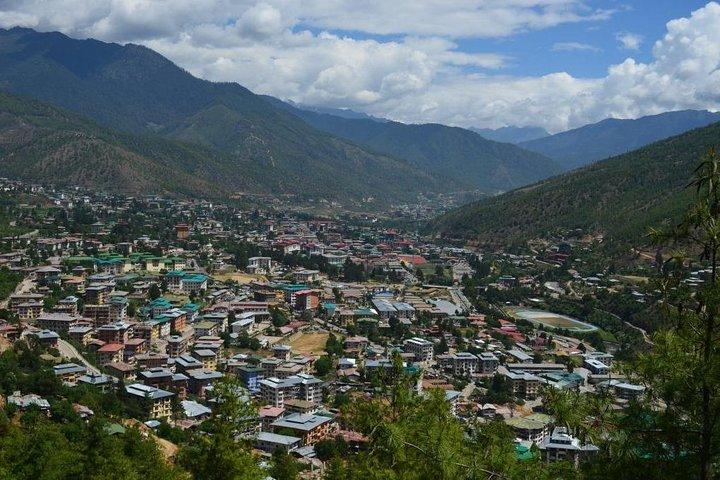
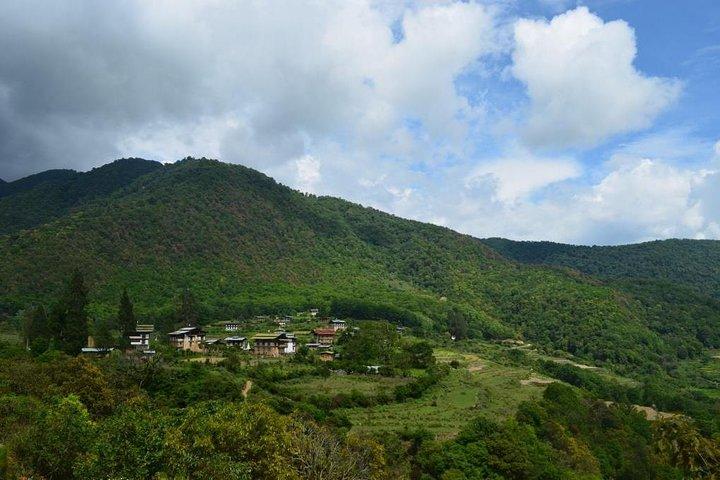
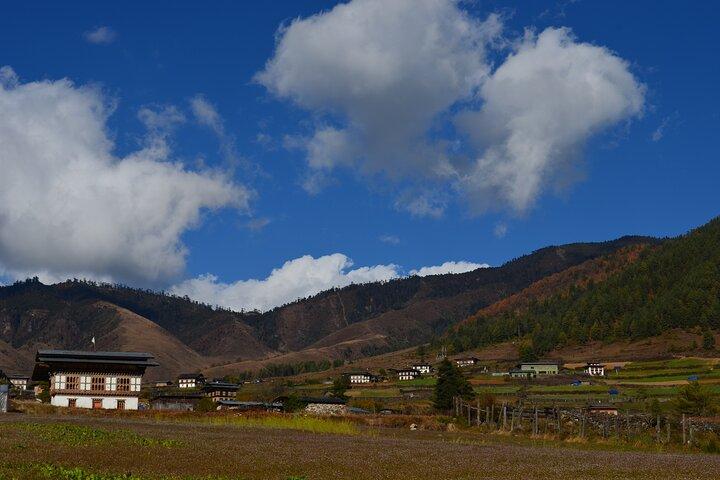
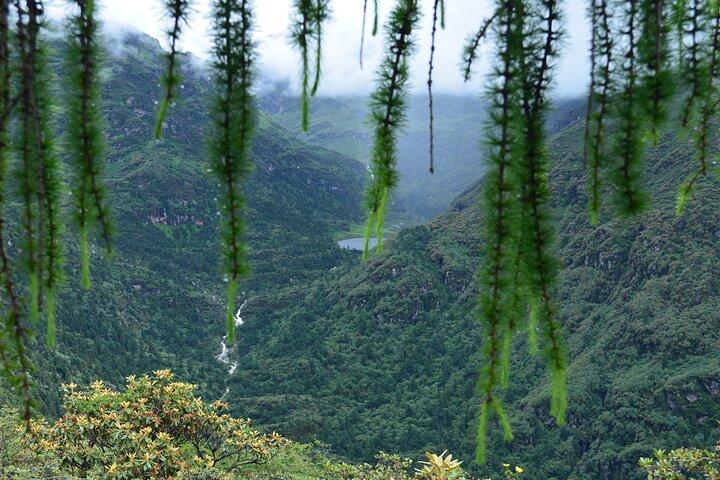
Embark on an unforgettable journey through Bhutan's breathtaking landscapes with a unique walking holiday that blends culture and nature. Travelers will traverse the stunning valleys of Thimphu, Punakha, and Paro, hiking to magnificent monasteries that echo the serenity of Bhutan's Buddhist heritage. A highlight of this adventure is the exhilarating trek to Bumdra Monastery, where they will camp under the stars in the Himalayan wilderness, surrounded by awe-inspiring views. Along the way, they'll experience vibrant local life, taste authentic Bhutanese cuisine, and explore ancient temples, all while guided by knowledgeable experts. This immersive experience promises to deepen their understanding of Bhutan's rich traditions, making it a true escape into the extraordinary heart of the Himalayas.
At a Glance
-
 9 days
-
 Available in English
-
 Mobile voucher
-
 Private Tour
-
 Guided
-
 Family friendly

Featured Reviews

Experience Bhutan's culture and nature on a 9-day walking holiday, featuring hikes to stunning monasteries and breathtaking landscapes.
Included
-
 OtherPrivate tour
 -
Lunch
-
Dinner
-
Breakfast
-
OtherGuaranteed to skip the long lines
-
Tea and coffeeCoffee and/or Tea
-
OtherAll sightseeing entry fees that are mentioned in the itinerary
-
OtherTransport by private vehicle
-
OtherSustainable Development Fee ( SDF )
-
OtherProfessional guide
-
Bottled waterBottled water
-
OtherPickup and drop-off from designated meeting points
-
SnacksSnacks
-
OtherMeals as per itinerary (B=breakfast, L=lunch, D=dinner)
-
OtherAccommodation as per itinerary
-
OtherHotel/port pickup and drop-off
-
OtherVisa fee
Excluded
-
 OtherAlcoholic drinks (available to purchase)
 -
OtherSouvenir photos (available to purchase)
-
GratuitiesGratuities
-
OtherTravel insurance
-
OtherFlight ticket
-
OtherMedical Insurance
Meeting Point
A guide and driver will be awaiting your arrival at Paro International Airport with a placard bearing your name.

Airport Road Paro, 12001 , Bhutan

End Point
A guide and driver will be awaiting your arrival at Paro International Airport with a placard bearing your name.

Airport Road Paro, 12001 , Bhutan
Pickup
Check if pick-up is available from your location, you will select during checkout (providers may allow other pickup locations)

What to expect
National Museum
National Museum of Bhutan is located inside six floors of circular Ta Dzong, an ancient watchtower above Paro Dzong. The original building was constructed in 1656. In 1872, the future first monarch, Ugyen Wangchuk was imprisoned here, while embroiled in the conflict. The building was converted to house, the first museum of Bhutan in 1968. The collection of the museum comprises of textiles, gears, costumes, manuscripts, paintings, appliqué and embroidered Thangkas. There is a gallery of Bhutan’s famous stamp, stuffed animals, insects, bamboo crafts, arms and amours, jewellery, household artifacts. On the top, there is also a chapel in form of a life-sustaining tree, with icons representing various Himalayan Buddhist traditions.
60 minutes
 Admission Included
Rinpung Dzong
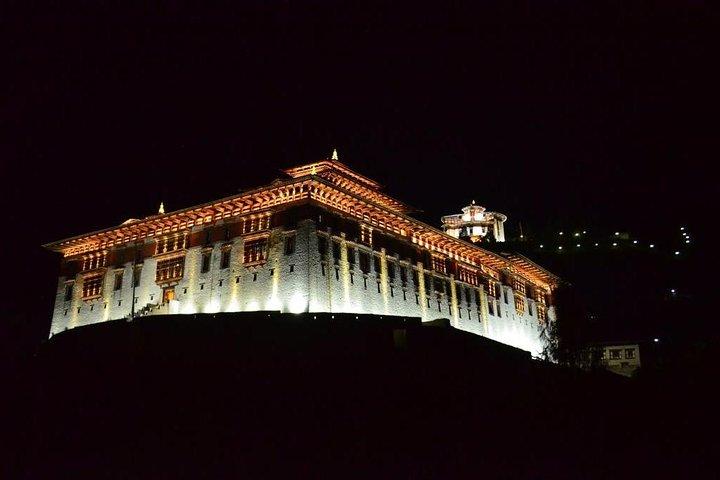
Rinpung Dzong is a large dzong - Buddhist monastery and fortress - of the Drukpa Lineage of the Kagyu school in Paro District, Bhutan. It houses the district Monastic Body and government administrative offices of Paro Dzongkhag. It is listed as a tentative site in Bhutan's Tentative List for UNESCO inclusion
60 minutes
Admission Included
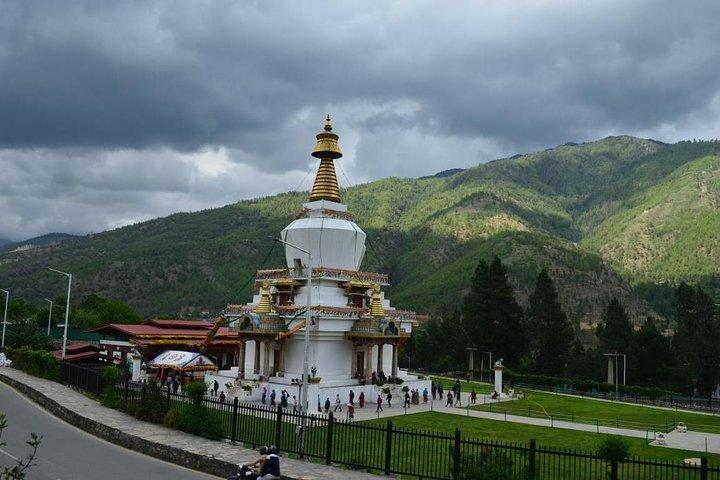
Thimphu Chorten (Memorial Chorten)
The National Memorial Chorten was built in memory of Third Druk King of Bhutan and is dedicated to World Peace. The chorten is a large white structure crowned with a golden spire. It is located close to the center of Thimphu city and is one of its most iconic monuments. Visitors will find elderly Bhutanese people circumambulating the Chorten throughout the day. Chorten literally means ‘Seat of Faith’ and Buddhists often call such monuments, the ‘Mind of Buddha’. The Chorten is an extraordinary example of Buddhist architecture and artwork with its gorgeous paintings and intricate sculptures.
60 minutes
Admission Included
Changangkha Lhakhang
The date of the foundation of Changangkha Lhakhang is not exactly known but the elder people speak like that: ‘The descendants of Phajo Drugom Shigpo Son’s Nyima, established the monastery in the 15th century and called it “Phagpa Ranjung Tsuglakha”, “ the temple of Avalokitoshvara” statue which has appeared by itself”. In this main statue made of precious materials, they put relics which had appeared after Phajo’s cremation and many items of other kagyul lamas. Changangkha Lhakhang is the most important temple for the Children born in Thimphu, since the protective deity of children resides in this temple. This statue, which still exists, represents Avalokiteshvara with 11 heads. Thanks to the prayers said by the descendants of this lineage, this lineage has given to the monk-body the famous 4th Desi Tenzing Rabgye (1638-1696), other abbots and eminent Lamas for the benefit of Bhutan.
60 minutes
Admission Included
Zilukha Anim Dratshang was founded in 1976 by Rikey Jadrel, who is considered an emanation of Thangtong Gyalpo (1361-1485), the Tibetan. It is also know as Thangtong Dewachen nunnery. saint renowned as the great Siddha, the most accomplished Master in the Tibetan Buddhist world, and father of Tibetan Opera and builder of numerous iron chain bridges across the Himalayas. This was established with the aim of promoting Buddhism in general and teachings associated with the Tangtong Gyalpo in particular. Under the Rikey Jadrel Rinpoche, the nunnery is started with forty-five nuns but today it houses the sixty nuns engaged in Buddhist study and practice. The nunnery mainly follows the Jangter lineage and Abham Terchoe of Nyingma School and Shangpa.
60 minutes
Admission Included
National Institute for Zorig Chusum
National Institute for Zorig Chusum or the School of Arts and Crafts is an Institute where students undertake a six-year course on the 13 traditional arts and crafts of Bhutan. “Zorig Chusum” means the Thirteen Arts and Crafts. To preserve the country’s invaluable heritage and promote arts in Bhutan, the government initiated this institute in 1971. Students are taught painting, calligraphy, embroidery, wood carving, and sculpture. They also learn the traditional meaning and spiritual values enshrined in Buddhist art. On a visit one can actually see students at work. The students follow a comprehensive course that starts with drawing and progresses through painting, wood carving, embroidery, and statue- making. This institute not only helps preserve our beautiful heritage but also equips future generations with skills and knowledge to keep our own heritage alive. The 13 arts and crafts comprise of; painting, carpentry, carving, sculpture, casting, blacksmith, bamboo work, gold and silversmith, weaving, embroidery, masonry, leather work, and paper making.
60 minutes
Admission Included
National Library and Archives of Bhutan
National Library was first established in 1967 with a small collection of precious texts and was initially housed within the central tower of Tashichodzong. Later it moved to a building in the Changgangkha area of Thimphu. To provide a permanent home for the sacred religious books and manuscripts in the growing collection, construction of the present four-storeyed eight-cornered traditional building, which looks like the central tower temple of a Bhutanese Dzong, was initiated and was inaugurated in 1984. The repository rooms of the archives now house many important documents including old records, old letters and around seven thousand important photographs. The archives also hold microfilms of many other important documents. Particularly rare and important books and manuscripts from the National Library collection are also kept in their secure and controlled facilities.
60 minutes
Admission Included
Jungshi Handmade Paper Factory
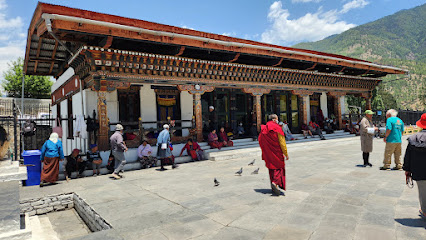
The Jungshi handmade paper factory uses traditional methods to produce the authentic Bhutanese paper known as Deh-sho. The Jungshi paper factory continues to preserve and promote this age-old Bhutanese tradition. It also produces various other products, such as stationery and greeting cards. It is located approximately 1 km from Thimphu City. The factory uses the bark of two tree species, the Daphne tree and Dhekap tree in the manufacture of traditional paper. Visitors can observe the entire process of producing handmade paper using ancient traditional methods that have been practiced for generations. You can even try your hand at this ancient craft and make some paper of your very own as a souvenir. Deh-sho paper was originally used by monasteries for woodblock and manuscript books and also for writing prayer books.
60 minutes
Admission Included
Motithang Takin Preserve
A short distance up the road to the BBS tower viewpoint is a trail leading to a large fenced enclosure that was originally established as a zoo. Motithang Takin Preserve, located in the Motithang district of Thimphu, Bhutan is a wildlife reserve area for takin (Budorcas taxi color), the national animal of Bhutan. The reason for declaring Takin as the national animal of Bhutan is attributed to a legend of the animal’s creation in Bhutan in the 15th century by Lama Drukpa Kunley, popularly known as the Divine Mad Man. It's worthwhile taking the time to see these oddball mammals. The best time to see them is early morning, when they gather near the fence to feed.
60 minutes
Admission Included
Tashichho Dzong (Thimpu Dzong)
Tashichho Dzong has been the seat of the government since 1952 and presently houses the throne room and offices of the king, the secretariat and the ministries of home affairs and finance. Other government departments are housed in buildings nearby. It was first constructed in 1216 A.D. by Lama Gyalwa Lhanangpa where Dechen Phodrang now stands above Thimphu. In 1641, Zhabdrung Ngawang Namgyal acquired it but finding it too small, he built another one, known as the lower Dzong. The original dzong was destroyed by fire in 1771 and everything was moved to the lower dzong. The new building was later expanded several times over the years. It was damaged during an earthquake in 1897 and rebuilt in 1902. King Jigme Dorji Wangchuck had it completely renovated and enlarged over five years after he moved the capital to Thimphu in 1952 in traditional style using neither nails nor written plans. The dzong is located close to Thimphu town, next to the banks of the Wang Chhu River. It is an impressively large structure, surrounded by well-kept lawns and beautiful gardens.
60 minutes
Admission Included
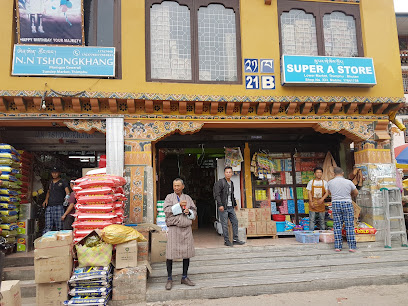
The weekend market is in a permanent set of stalls north of Changlimithang Stadium. Vendors from throughout the region arrive on Friday afternoon and remain until Sunday night. It’s an interesting place to visit, where village people jostle with well-heeled Thimphu residents for the best- and cheapest- vegetables and foodstuffs. This is the only time that fresh produce is easily available and the shopping is enhanced by the opportunity to catch up on the week’s gossip. Depending on the season you may find potatoes, onions, numerous varieties of chillies, red and white rice, buckwheat, flour, cauliflowers, cabbages, lettuces, eggplants, asparagus, peas, squash, yams, several kinds of mushrooms and ferns, strange species and herbs. Fruits come from local orchards and from the south of the country. You will find oranges, apples, pineapples, bananas, mangoes, apricots, peaches and plums. If you wander off into one corner of the market, you’ll find an odoriferous collection of dried fish, beef and balls of dates (homemade soft cheese that is used to make sauces). During the winter, you can even pick up a leg of yak (with the hoof still attached). At the northern end of the market is a collection of stalls called “the indigenous goods and handicrafts section”. Here you will find locally produced goods, including religious objects, cloth, baskets and strange hats from various minority groups. They are more than happy to sell these to tourists, but it’s mostly intended for local consumption. If you shop here, you may find a Bhutanese housewife or a monk from a near by monastery to advise you on the quality of your purchase. Bargaining is very much in order here.
60 minutes
Admission Included
Dochula Pass
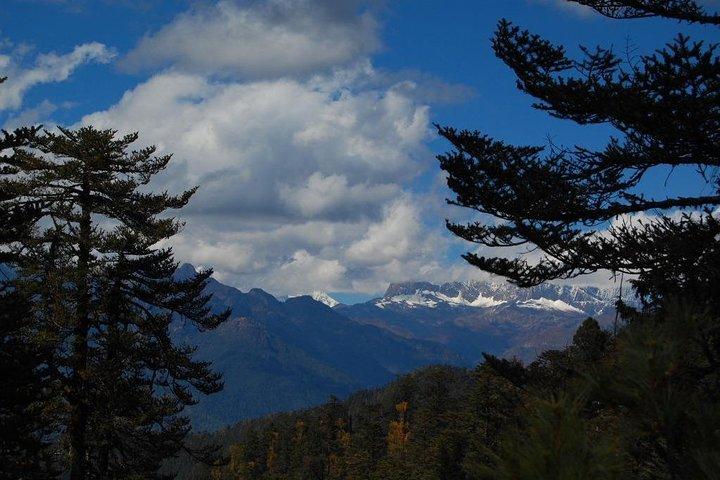
Dochula pass is located on the way to Punakha from Thimphu. The pass is a popular location among tourists as it offers a stunning 360 degree panoramic view of the Himalayan mountain range. The view is especially scenic on clear, winter days with snow capped mountains forming a majestic backdrop to the tranquility of the 108 chortens gracing the mountain pass. Bhutanese families enjoy visiting the pass during holidays and weekends to picnic and simply enjoy the scenery. It is common to see families and groups of friends seated among st the chortens, enjoying a packed lunch and hot tea. For tourists this is an ideal location to capture beautiful pictures of the Himalayan mountain range during clear, warm days.
30 minutes
Admission Included
Punakha Dzong
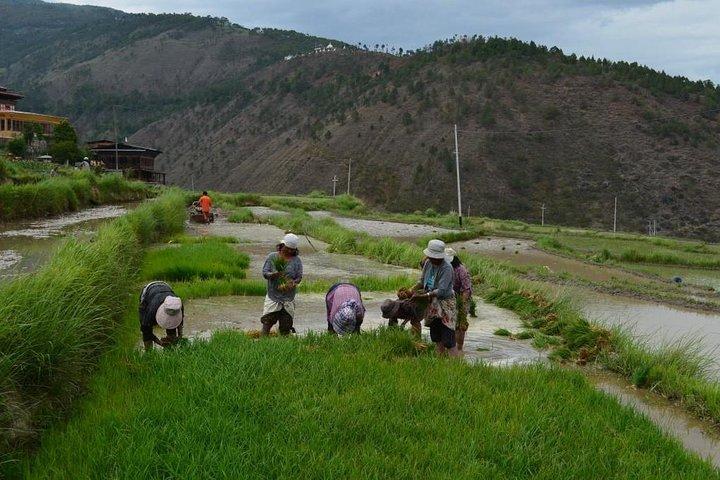
Punakha Dzongkhag has been inextricably linked with momentous occasions in Bhutanese history. It served as the capital of the country from 1637 to 1907 and the first national assembly was hosted here in 1953. Punakha Dzong is not only the second oldest and second largest dzong but it also has one of the most majestic structures in the country. October 13, 2011 marked an unforgettable wedding of the King of Bhutan, Jigme Khesar Namgyel Wangchuck to Jetsun Pema which was held at Punakha Dzong. Punakha Dzong was built at the confluence of two major rivers in Bhutan, the Pho Chhu and Mo Chhu, which converge in this valley. It is an especially beautiful sight on sunny days with sunlight reflecting off the water onto its white-washed walls. In addition to its structural beauty, Punakha Dzong is notable for containing the preserved remains of Zhabdrung Ngawang Namgyal, the unifier of Bhutan as well as a sacred relic known as the Ranjung Karsapani. This relic is a self-created image of Avalokiteswara that miraculously emerged from the vertebrae of Tsangpa Gyarey, the founder of the Drukpa School when he was cremated. Punakha valley has a pleasant climate with warm winters and hot summers. It is located at an average elevation of 1200 m above sea level. Owing to the favorable climatic conditions, rice has become the main cash crop cultivated in the region.
120 minutes
Admission Included
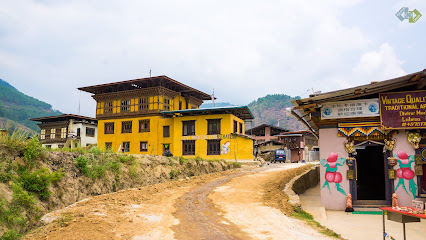
Also known as the “Fertility Temple,” the single building site was originally built in 1499 on a short hill that had been blessed by rogue Buddhist leader Drukpa Kunley, known as the “Divine Madman.” Drupa Kunley, also known as “The Saint of 5,000 Women” worked overtime to spread enlightenment through an active sex life. He was known to live a truly bacchanal lifestyle full of wine, women, and poetry. He is also credited with bringing Buddhism to Bhutan, hence the common phallic imagery found throughout the country. The phallus became Drupa Kunley’s symbol, signaling both fertility and the power to bring enlightenment to those who… learned from its teachings. Because of this, his penis as a symbol is sometimes known as the “Thunderbolt of Flaming Wisdom.”
90 minutes
Admission Included
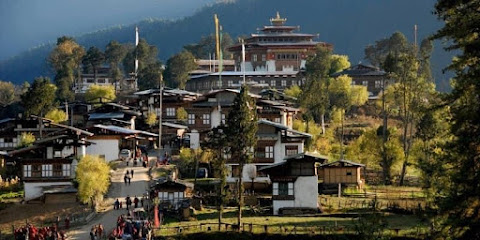
The Gangteng Monastery or simply the Gangtey Gonpa monastery is located on a hillock amidst the Gangtey village with a striking view of the Phobjika valley below. This monastery was established by Gyalse Rigdzin Pema Thinley, the grandson and the reincarnation of great Bhutanese treasure finder Pema Lingpa in 1613. It is headed by the ninth Gangtey Trulku and is the largest Nyingmapa monastery in Western Bhutan. The extensive complex comprises the central gonpa, quarters for the monk and meditation centers.
60 minutes
Admission Included
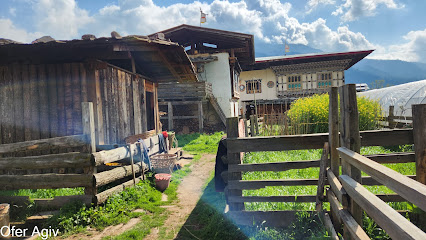
The Phobjikha Valley is a vast U-shaped glacial valley, also known as Gangteng Valley named after the impressive Gangteng Monastery of the Nyingma sect in central Bhutan, where the graceful black-necked cranes in Bhutan from the Tibetan Plateau visit the valley during the winter season to roost.
60 minutes
Admission Included
Black Necked Crane Information Centre is situated on the edge of the forest and wetland along the main road of Phobjikha valley, has an observation room equipped with high power telescope and spotting scopes for catching the best view of the cranes. The center also offers display information that outline the natural and cultural history of the area. There is a small gift shop, which sells handicrafts produced by the local people that local people can benefit from ecotourism. The center is also a place for recreation with crane watching equipment (binoculars, spotting scopes) and reference books. This is further supplemented with coffee shop where visitors can purchase hot and cold beverages (tea, coffee, etc) and snacks. The center has a gift shop where souvenirs that include local handicrafts and post cards representing the culture, tradition and landscapes of Bhutan and Phobjikha are available on sale. Other items in the gift shop include locally manufactured items, books, videos, etc.
90 minutes
Admission Included
Khamsum Yulley Namgyal Chorten
Standing regally on the hill above the Punakha valley, Khamsum Yulley Namgyal Chorten is a classic example of gorgeous traditions and architecture of Asian country. This chorten, however, is unique. It is not designed for community worship or for monastic retreat or education like other Buddhist Institute and Colleges. It is designed as a magical tool. It was built by the Queen Mother for heading off the negative forces and transportation peace and harmony for all the living beings. The thing that sets this Chorten apart is that it was designed on the principals delineate within the Holy Scriptures instead of trendy engineering manuals. The golden spire and labyrinthine wall patterns square measure fine example of art and traditions of Asian country.
120 minutes
Admission Included
Wangdue Dzong
An interesting story connects the Dzong to the old cantilever bridge that once used to span the Punatsangchu. The bridge was built after the construction of the Dzong under the direction of a famed Mason called Drakpa fromRinchengang village. As a safeguard against flash floods, a mandala dedicated to Mithugpa (Aksobya) was installed at the base of the bridge’s foundation. During the tenure of the 20th Wngzop Domchung a big flood washed way the entire bridge, but the base where the mandala was installed was left intact. Wangdue Dzong has 14 temples, including Kunrey (assembly hall of monks). The Goenkhang has a figure of gonpo (Mahakala) carved on a stone slab.
90 minutes
Admission Included
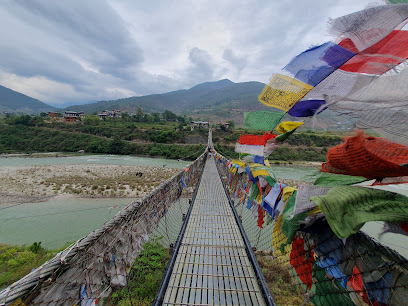
The Punakha Suspension Bridge is located very much near to the Punakha Dzong and is the longest suspension bridge in Bhutan built above the Po Chu river. The bridge is broad and built in a very nice way and you will be amazed to see that it doesn’t shake so much which can cause a sudden amount of panic among the tourists. The bridge also connects to the nearby villages. There are mountains surrounding the bridge from all the sides which also gives a breathtaking view.
60 minutes
Admission Included
The village of Talo is located on a plateau and is best known for its cleanliness and hygiene among all other villages located in the Punakha valley and is diffused among the hill slopes. It gives splendid views of the neighboring villages. It is situated above an elevation of 2,800 meters. The farm houses of this village have beautiful flowers blooming outside it while the hills are filled with sweet peas and corns. It is clear that the vegetation of Talo is lush and is abundant. The village is one of the attractive villages of Bhutan. The Talo temple, very much nearer to the village, is actually regarded as a summer retreat for one of the great Zhabdrungs who has a lineage of the present royal family of Bhutan. It is also said that the women of Talo are considered to be the most beautiful.
60 minutes
Admission Included
Drukgyel Dzong
Drukgyal meaning “the fortress of the victorious Drukpas” is located in Upper part of Paro. History has it that Zhabdrung Ngawang Namgyel built the dzong to commemorate his victory over the Tibetan-Mongol forces in 1649. However, some people say it might have been built by Tenzin Drukdra, the second Desi at the behest of Zhabdrung. The dzong used to house one of the biggest granaries among all the dzongs in the country. Some of the original relics rescued from the fire that occurred in 1951 are an image of Chenrizig, the god of compassion; an image of Zhabdrung Ngawang Namgyal; 108 volumes of kanjur (translated words of Lord Buddha) and 12 volumes of Bum (Hundred thousand verses of Prajnaparamitra) and Dolma (Tara).
60 minutes
Admission Included
Jangtsa Dumtseg Lhakhang
Jangtsa Dumgtseg Lhakhang is a Buddhist temple in western Bhutan. The temple is notable as it is in the form of a chorten, very rare in Bhutan. It is located on the edge of a hill between the Paro valley and the Dopchari valley, across the bridge from Paro.
45 minutes
Admission Included
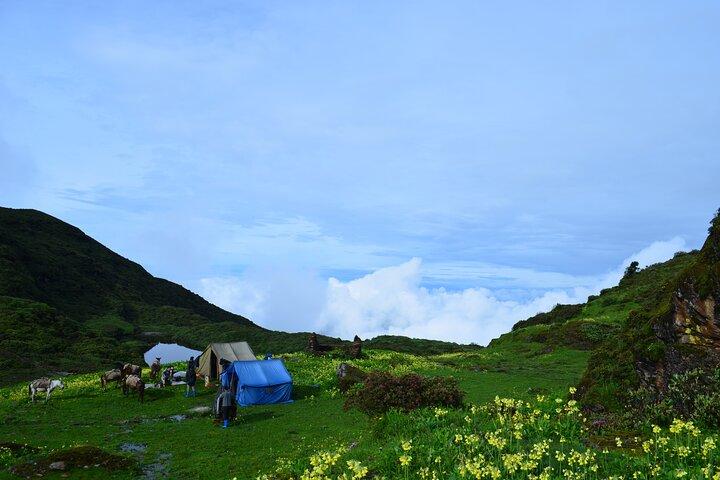
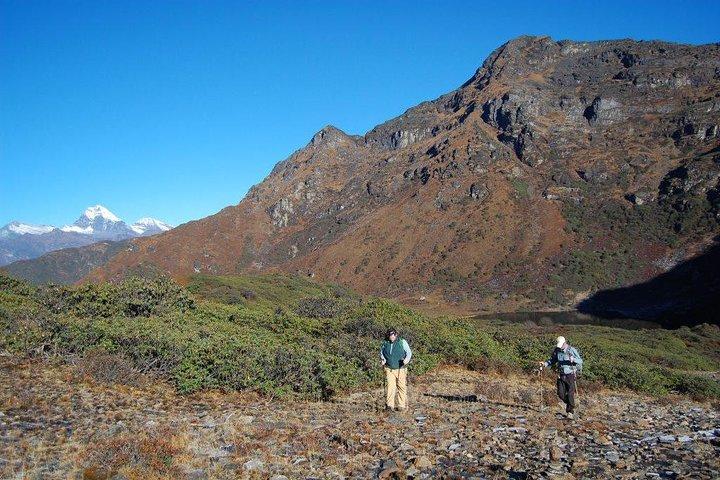
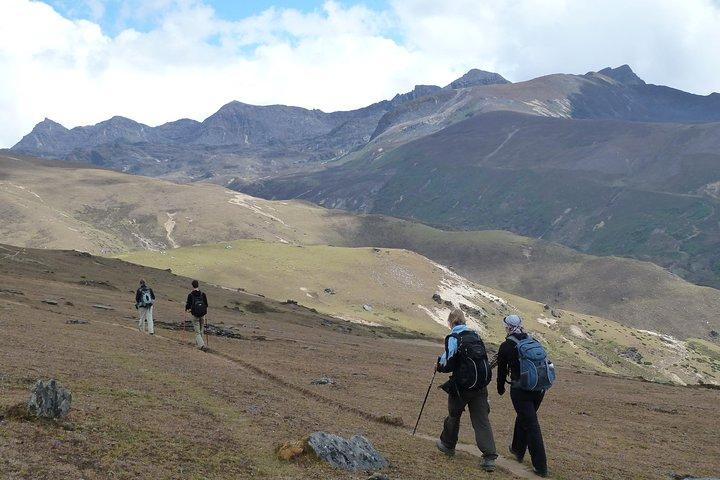
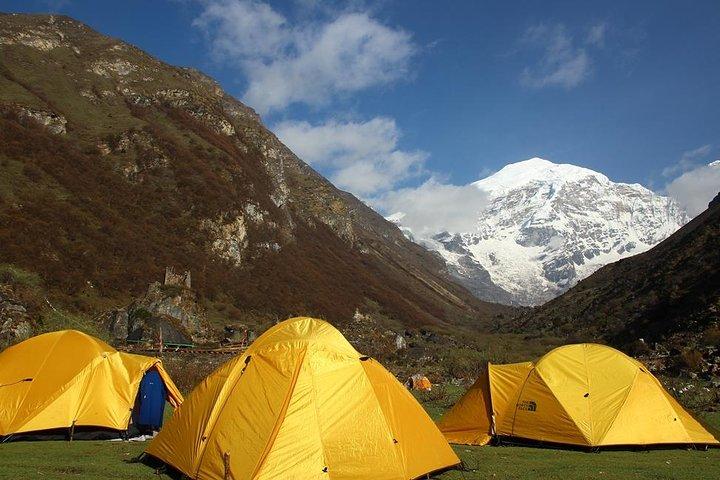
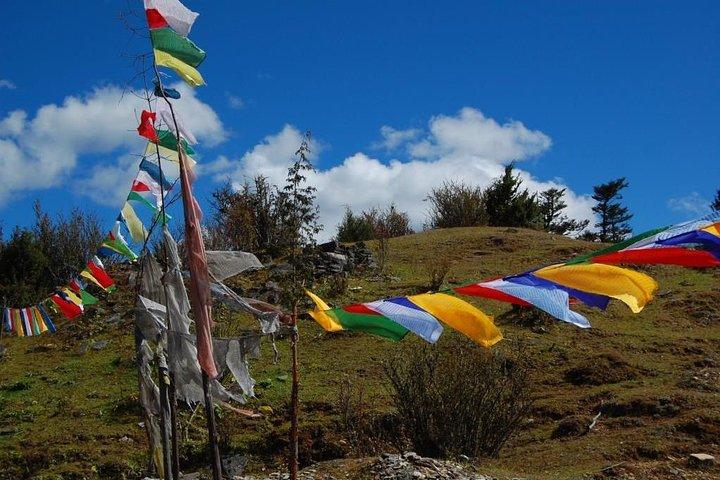
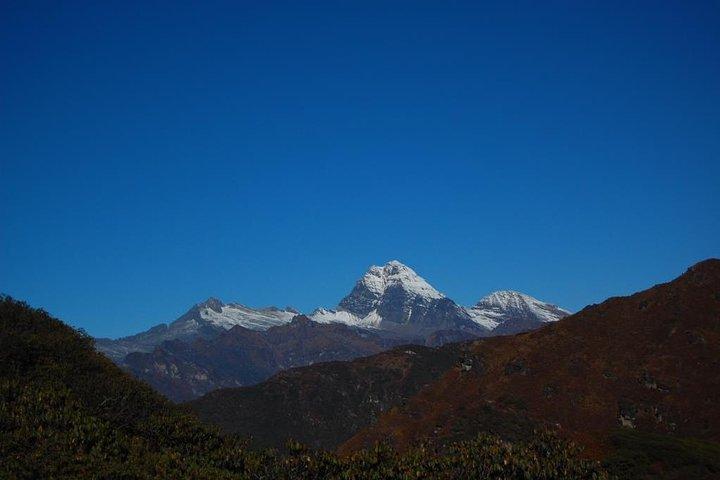
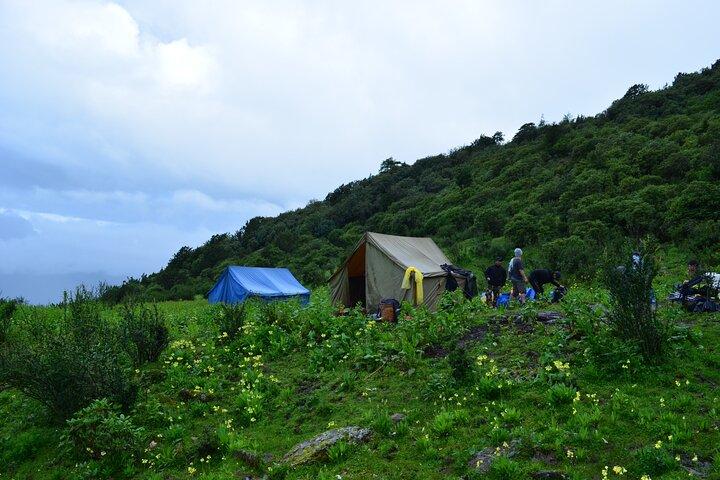
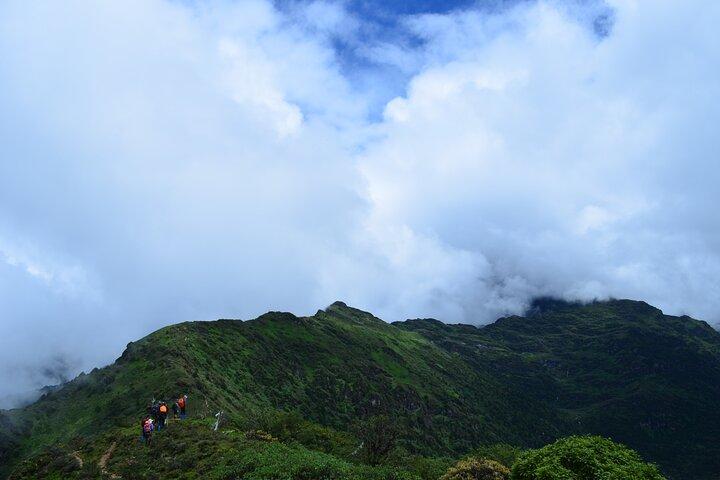
Hike from Sang Choekor Buddhist College (2,800m) to yak pastures below Bumdra Monastery (3,800m). The adventure begins with an early morning drive up to the Sang Choekor to meet our ponies and while they are being loaded we may pay our respects at the college. Above and ahead the Chhoe Tse Lhakhang (temple) nestles in the mountainside 1-2 hours walk away. Our home for the night is tucked in under Bumdra Monastery (cave of a thousand prayers) making the most of the awesome views of the Himalayan range. After lunch we can visit the monastery (if it is occupied) and also climb the peak to the north (about 4000m) for even better views, returning in time for a slap up dinner. Duration: 4-5 hours to camp 2-3 hours return trek to peak (optional) Difficulty: Moderate to Hard. Overnight at Bumdra Wilderness Camp.
360 minutes
Admission Included
Paro Taktsang
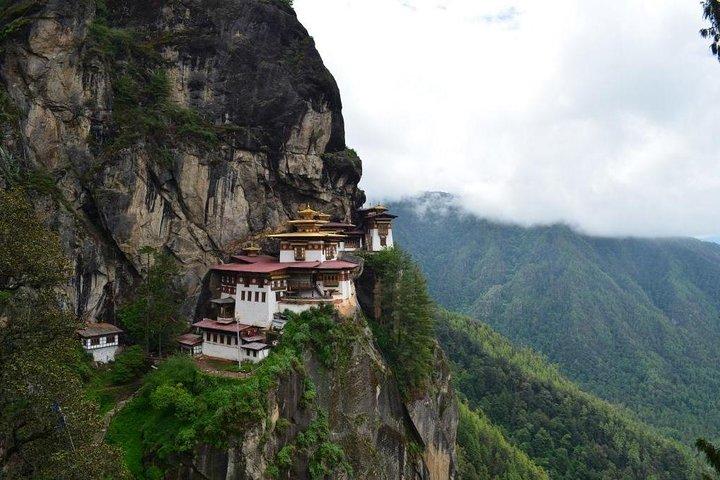
Paro Taktsang Monastery more famous as Tiger's nest Monastery is a Buddhist temple complex which clings to a cliff, 3120 meters above the sea level on the side of the upper Paro valley, Bhutan.It is one of the most famous touristic destinations of the country and the cultural icon of Bhutan. Visiting the Paro Taktsang Monastery is an unforgettable experience thanks to its unique location and the views of surrounding majestic mountains and emerald green valleys. The main peculiarity of the monastery is its isolated location. It is only accessible by mountainous paths. The remote location of the monastery makes it amazingly beautiful and unique, but also creates technical difficulties.
240 minutes
Admission Included
Kyichu Lhakhang སྐྱིད་ཆུ་ལྷ་ཁང་།
As we walk towards toward the Kyichu Lhakhang, we can see elderly pilgrims constantly walking around the Lhakhang and spinning the prayers wheels. We can see a wall painting onto the right side of the entrance way as we come near the internal courtyard. It is the wall painting of a king called Gesar of Ling who was a popular Tibetan warrior king. His epic poem is believed to be the longest in the world. The Kyichu Lhakhang conceals the statue of Jowo Jamba which is originally from the 7th century. It is considered as the greatest treasure of the valley. Outside the hall of the shrine, has the statue of Chenresig having 11 heads and 1000 arms. The main entrance door is beautifully covered with gold. We can see that in front of the statue are the grooves worn into the wooden floor by the generations of prostration. . Kyichu Lhakhang holds some of the oldest relics and the floor of the main temple which is made of wood is inlaid with turquoise, other precious gems and stones. Next to the main temple is the Guru Lhakhang. The Guru Lhakhang consists of 5 meter high statue of Guru Rinpoche and Kurukulla (Red Tara) which holds a bow and arrow made of flowers. We can see a chorten to the right side of Guru, where it contains the ashes of Dilgo Khyentse Rinpoche. He was an honorable Nyingma Buddhist and the spiritual teacher of the Queen Mother. His former quarters are closed to the visitors which is located at the left side. We can also see a heap of iron links in the corner of the Lhakhang which was faked by the famous bridge builder of Bhutan called Thangtong Gyalpo. Kyichu Lhakhang is a very important place for art connoisseurs, historians, pilgrims and visitors from all around the world because it is a place of culture and art. Outside the temple, we can see water pray wheels, small prayer wheels with Lenza script, Monks house, palace for Naga and Stupa for Naga. It is believed that the two orange trees which are in the courtyard of the Lhakhang bears fruit throughout the year.
60 minutes
Admission Included
Paro International Airport
Your Bhutan tour guide will escort you to the airport for your onward destinations. With a heavy heart, we wave you goodbye and until time we see you again.
60 minutes
Admission Included
The experience can be subject to change due to bad weather or unforseen circumstances. We always endeavour to give you the best possible experience.
Additional Information
-
 Infants and small children can ride in a pram or stroller
 -
Not recommended for pregnant travelers
-
Not recommended for travelers with poor cardiovascular health
-
Not recommended for travelers with spinal injuries
-
Operates in all weather conditions, please dress appropriately
-
Please advise any specific dietary requirements at time of booking
-
Service animals allowed
-
Specialized infant seats are available
-
Travelers should have at least a moderate level of physical fitness
-
Vegetarian option is available, please advise at time of booking if required
What our experts say
-
 Prepare for high altitude hikes.
 -
Taste local delicacies at Centenary Market.
-
Bring a camera for stunning views.
-
Check weather conditions before trekking.
-
Hydrate well; bottled water provided.

More About this Experience
Bhutan Walking Holidays with Bumdra Camping is a mesmerizing journey that invites adventurers and culture enthusiasts alike to explore the breathtaking landscapes and rich traditions of Bhutan. Over the course of 216 hours, travelers will traverse through the enchanting valleys of Thimphu, Punakha, and Paro, where vibrant ecosystems meet ancient monasteries. This isn't just a hiking tour; it's an immersive experience that delves deep into Bhutan's Buddhist culture. From the serene beauty of Bumdra Monastery, where adventurers will camp under the stars amidst the majestic Himalayas, to the iconic Tiger's Nest Monastery, this tour offers a unique blend of nature and spirituality. Each step taken on the ancient mountain paths echoes the footsteps of pilgrims from centuries past, providing a profound connection to the land and its history. What to expect? Participants can look forward to a week filled with awe-inspiring hikes, cultural insights, and the thrill of camping in the Himalayas. The journey begins with guided tours of historical sites like the National Museum and Rinpung Dzong, where travelers will gain a deeper understanding of Bhutan's heritage. The highlight is undoubtedly the trek to Bumdra, where the night under the starlit sky and a camp dinner await. Throughout the tour, all camping gear, meals, and expert guides are provided, ensuring a seamless experience. The variety of landscapes—ranging from lush valleys to rugged mountains—will captivate nature lovers, while the spiritual ambiance of the monasteries will leave a lasting impression on all who seek enlightenment. Who is this for? This remarkable journey is designed for those who seek adventure alongside cultural exploration. Whether you're a seasoned hiker or a first-time adventurer, this tour welcomes anyone with a moderate level of physical fitness. It’s perfect for solo travelers, couples looking for a unique getaway, families eager to bond through shared experiences, and groups of friends searching for an unforgettable adventure. Nature enthusiasts, history buffs, and spiritual seekers alike will find something to cherish in this journey. The tour accommodates diverse dietary needs, ensuring that everyone can savor the culinary delights of Bhutanese cuisine while on the move. Why book this? The Bhutan Walking Holidays with Bumdra Camping stands out for its unique combination of breathtaking hikes, rich cultural experiences, and the chance to camp amidst the world’s most stunning landscapes. Unlike typical tourist experiences, this journey allows participants to connect intimately with the local culture and environment. The expert guides, who are passionate about sharing their knowledge, enhance the experience with stories and insights that bring the region’s history to life. Moreover, the opportunity to camp at Bumdra, surrounded by the natural beauty of the Himalayas, offers a level of tranquility and connection to nature that is hard to find elsewhere. The carefully curated itinerary ensures that travelers get the most out of their time in Bhutan, creating memories that will last a lifetime. Good to know: Before embarking on this adventure, it's essential to prepare physically for the moderate to challenging hikes, particularly the trek to Bumdra. The tour operates in all weather conditions, so dressing appropriately is key for comfort and safety. Travelers are encouraged to communicate any specific dietary requirements when booking to ensure a delightful culinary experience throughout the journey. This tour is private, offering a more personalized experience that allows for flexibility and a deeper connection with the guides and fellow travelers. With every detail taken care of, from pickup at Paro International Airport to all meals and accommodations, participants can focus entirely on soaking in the breathtaking beauty and unique culture of Bhutan. Reviews from past participants highlight the incredible landscapes, the warmth of the local people, and the immersive cultural experiences that made their trip unforgettable. Many have praised the knowledgeable guides who brought the history and traditions of Bhutan to life, as well as the breathtaking camping experience at Bumdra. The hiking paths, often away from the typical tourist trails, provided a sense of solitude and connection with nature that travelers found both refreshing and rejuvenating. Overall, feedback reflects an overwhelming sense of satisfaction, with travelers leaving Bhutan with not just memories, but a profound appreciation for its culture and natural beauty.
Journals from our explorers at this location




Your all‑in‑one travel companion app
Explore expert travel guides, compare and book tours, experiences, hotels, and more—all from the palm of your hand. Download now for seamless trip planning wherever your wanderlust takes you.


This is a popular product and the date you are looking for just sold out. Next available date is
