

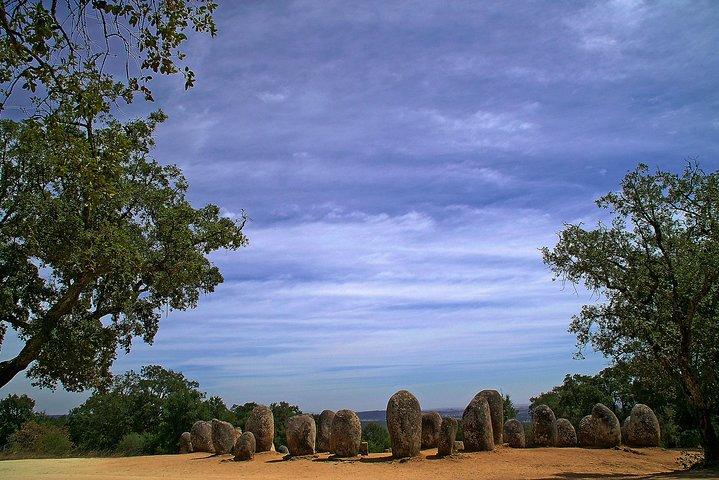
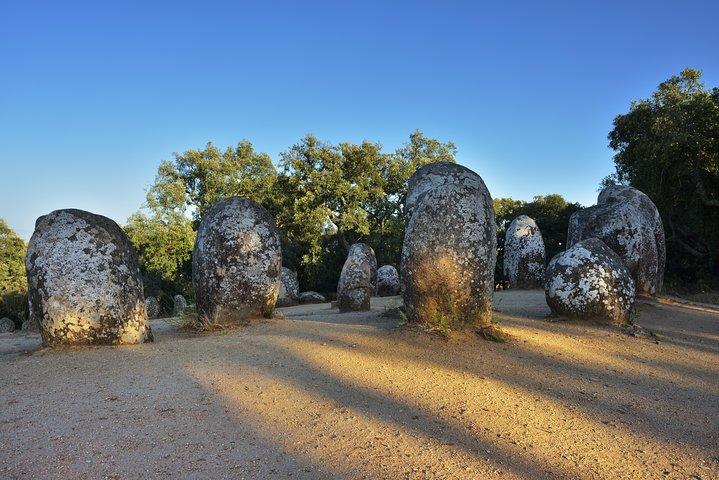
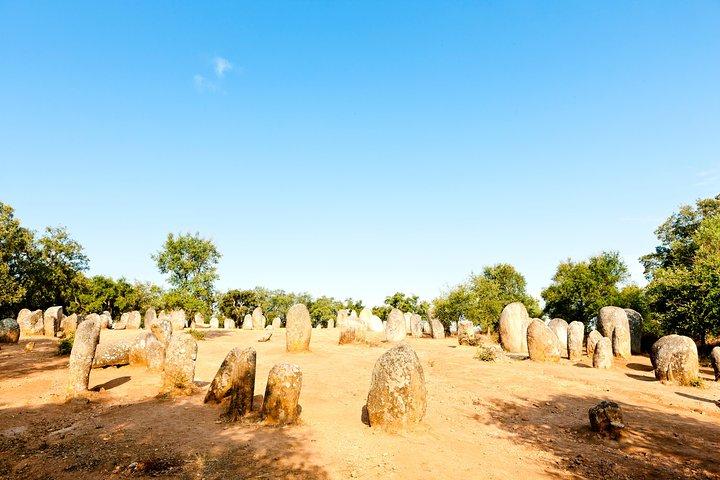
ÉVORA Megalithic Almendres Cromlech
 Nossa Sra. de Guadalupe, PT
 87% of travellers recommend this
Highlights
- Explore the megalithic monuments of Evora
- Marvel at the ancient Almendres Menhir
- Discover the massive Anta Grande do Zambujeiro dolmen
- Immerse yourself in the historical city of Evora
- Visit the impressive Igreja de Sao Francisco
-
Duration 8 to 9 hours
-
Private transportation included
-
WiFi on board
-
Bottled water provided
-
Air-conditioned vehicle
-
Guided in multiple languages
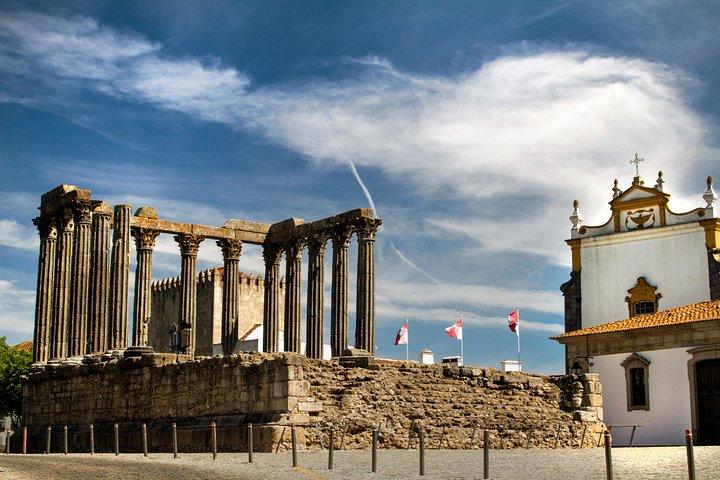
Discover the ancient mysteries of the megalithic on an unforgettable tour through Evora in Alentejo. Explore the remarkable Almendres Cromlech, Almendres Menhir, and Anta Grande do Zambujeiro dolmen, as you step back in time and uncover the secrets of prehistoric Portugal. As a UNESCO World Heritage Site, Evora is a city rich in history and culture. Immerse yourself in the narrow streets, white houses, and stunning monuments such as the Roman Temple of Diana, built in the 2nd century. With private transportation, bottled water, and an air-conditioned vehicle included, this tour offers a comfortable and convenient way to experience the wonders of Evora. Don't miss the chance to explore the captivating megalithic sites and delve into the archaeology of this incredible city.
At a Glance
-
 Free cancellation
-
 8 hours
-
 Instant Confirmation
-
 Available in Portuguese, English, French, Spanish; Castilian
-
 Mobile voucher
-
 Private Tour
-
 Guided
-
 Family friendly

Featured Reviews

Explore prehistoric wonders at Almendres Cromlech in Évora. Enjoy a comprehensive guided tour of megalithic sites in the stunning Alentejo region.
Included
-
 All taxes, fees and handling charges
 -
Private transportation
-
In-vehicle air conditioning
-
Bottled water
-
On-board wifi
Excluded
-
 Tickets not included
Pickup
Check if pick-up is available from your location, you will select during checkout (providers may allow other pickup locations)

What to expect
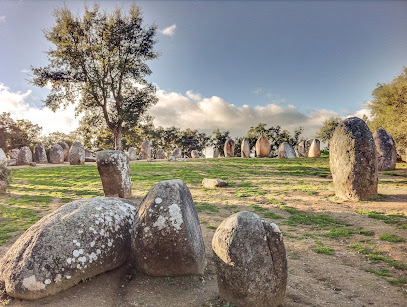
Going on the Megalithic Tour in Evora, a visit to the megalithic monuments in this region, means to go back thousands of years in time. In Evora district there are more than 10 megalithic sites, making this fenomenal testimony of prehistory in Alentejo one of the most important in the Iberian Peninsula and Europe altogether. These prehistoric monuments go back to the Neolithic period (5500-4500 BC). Their location in in the outskirts of Evora because this region is the only place where the river basins of the most important rivers in the south of Portugal come together: Tagus, Sado and Guadiana. So, the Alentejo plains were ideal for the last communities of hunter-gatherers humans to practise their way of living.
60 minutes
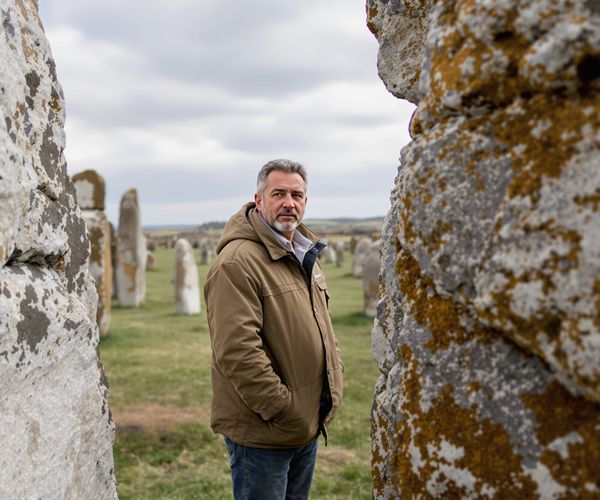
We come across Almendres Menhir close to Almendres Cromlech, since they are intimately connected. Seen from the cromlech, the menhir indicates the sunrise in the summer solstice (the longest day of the year). It has the shape of an elongated egg and has a crosier (staff) engraved in the top part. This form represents the importance of nature in the Neolithic, especially in what the domestication of animals is concerned.
60 minutes
Evora Inn
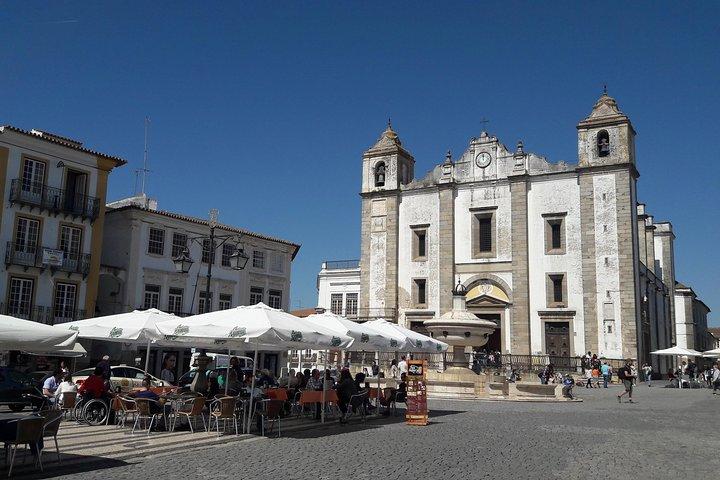
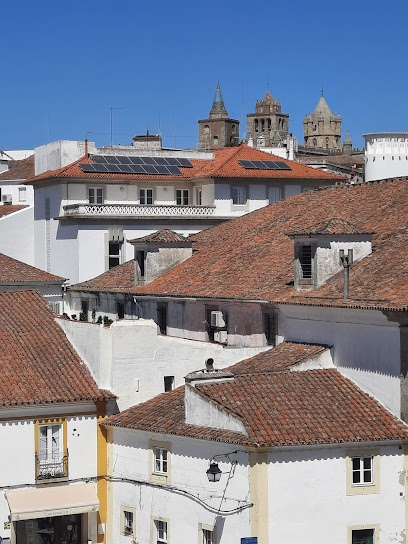
Évora Towns and Villages Topped by an imposing cathedral, Évora is laid out over a gently sloping hill rising out of the huge Alentejo plain. It guards its historic centre with a vast outer wall and represents a valuable cultural legacy that UNESCO has classified World Heritage. The city, with its narrow streets of Moorish origin contrasting with squares where the light floods in, holds two millennia of hsitory. Conquered in 59 B.C. by the Romans, they named it "Liberalitas Julia". In this period, Évora gained great importance as can be witnessed from the remains of that time: the ruins of a fine temple dated towards the end of the second century, various parts of the wall and the gateway more recently called Dona Isabel in addition to the remains of thermal baths below what is now the Municipal Council building. Little remains of the Visigoth period (5th - 8th centuries). There then followed the Moorish period begun with the city's conquest by Tárique. This lasted through to Christian reconquest in the 12th century. Yeborah, as it became known, had already received an indelible Moorish influence, most clearly seen in the Mouraria neighbourhood. After the Reconquest, in addition to between the inner and outer walls, urban development moved beyond the city's walls. The city was home to the court of various Portuguese kings of the first and second dynasties. During this period it was endowed with various palaces and monuments, particularly during the reigns of kings João II and Manuel (15th and 16th centuries). Wander its streets and absorb the secret soul that a diverse range of cultural influences has laid down in this city of the World. There are also excellent restaurants and bars, esplanades, arts and handicraft stores and the youthful nature of those attending its university all adding up to a dynamic of the present with its roots very firmly in the past.
60 minutes
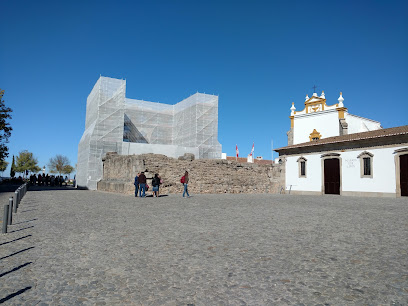
Templo romano de Évora Archaeology The Roman Temple, over 2000 years old, is the ex-libris monument of Évora and is one of the most important historic ruins in the country. The Roman temple in Évora was built in the first century, during the time of Caesar Augustus. It has a long history, serving as testimony to many transformations and different uses over the centuries. It was practically destroyed when the Barbarians occupied the Iberian peninsular in the fifth century, and served as a bank vault and butcher’s to Evora castle in the 14th century. Its original Roman design was only recovered in the 19th century, in one of the first archaeological interventions in Portugal. It is a testimony to the Roman forum of the city of Évora, consecrated to the Imperial cult, thus clarifying a 17th-century tradition that claimed that the temple had been consecrated to the goddess Diana. For this reason, it was identified for many years as the Temple of Diana. Recent excavations have shown that it was surrounded by a portico and water mirror.
30 minutes

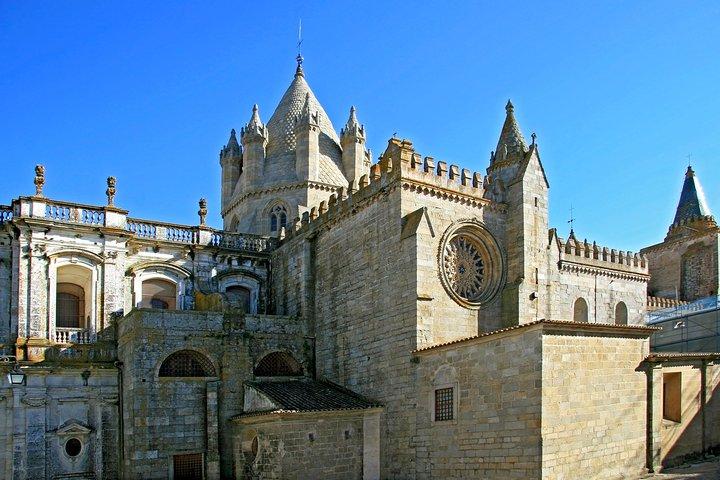
From Évora's Cathedral to Largo das Portas de Moura Other Turning the apse of the Sé, head down the Freiria de Cima street looking for the porches and twinned windows that ornament some of the houses. Continuing along the streets of Cenáculo and Freiria de Baixo, you come across S. Manços street where there is the House of Garcia de Resende (who was royal secretary, poet and writer). The house boasts three beautiful twinned Manueline windows decorated with small columns and Moorish style points. Further along, in the Portas de Moura square, in addition to the Mudéjar - Manueline veranda of the Cordovil house, the beautiful renaissance fountain draws all eyes. The interesting angle of the Sé can be particularly effectively discerned from this spot. Close by there is the former University of the Holy Spirit founded in 1559 by Cardinal Henrique for the College of the Company of Jesus.
30 minutes
 Admission Not Included
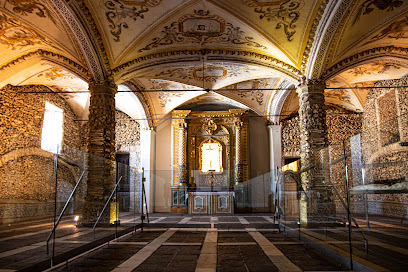
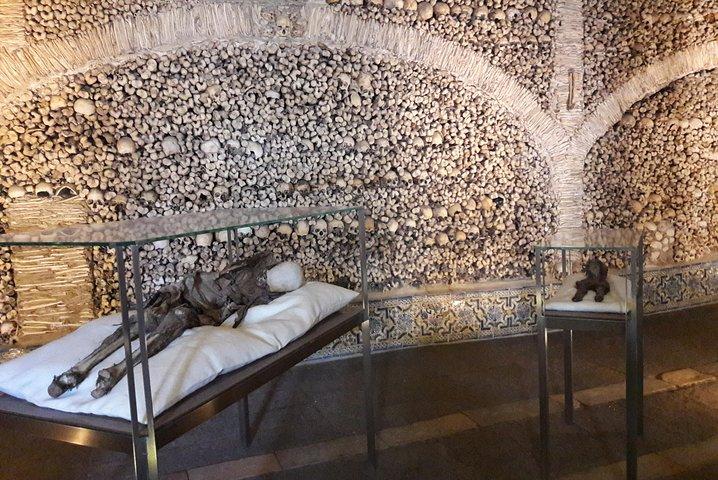
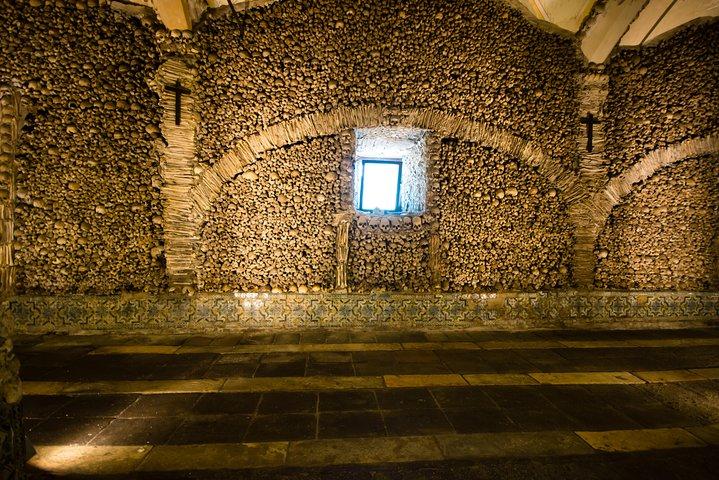
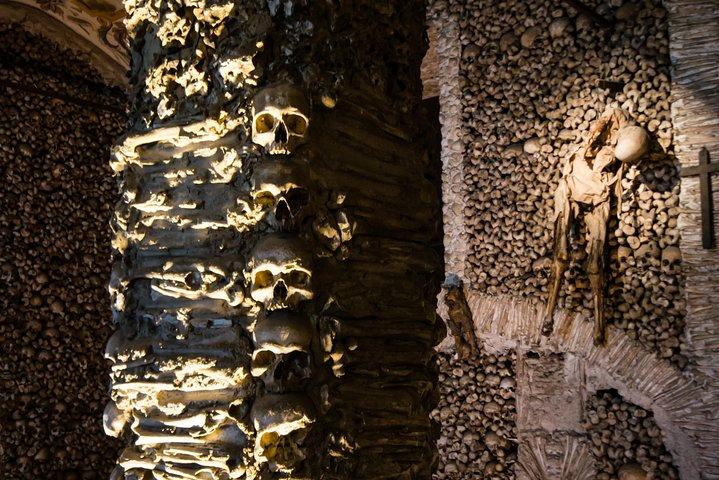
Bones Chapel in Evora – History The chapel was built in the 17th century on the initiative of three Franciscan friars. Their goal: to convey the message of temporariness and fragility of human life. This message clearly comes across to visitors of Bones Chapel right at its entrance through the sign “We bones that are here, for yours we wait”. In fact, it shows Baroque’s men macabre taste for necrophilia.
30 minutes
Admission Not Included
Igreja de São Francisco / Capela dos Ossos - Évora Monuments Church of São Francisco - Évora One of the striking features of the façade is a church porch with arches of different styles - a typical example of the "marriage" between Gothic and Moorish style found in so many monuments of this region in Portugal. Over the Manueline doorway we can see the emblems of the kings that commissioned its construction - D. João II and D. Manuel I - whose emblems were the pelican and armillary sphere respectively. One particularity of the Church is that it has a single nave, terminating in a ribbed vaulted ceiling, that has the largest span of all Portuguese Gothic architecture. On the sides we can see twelve chapels, all covered in Baroque carved woodwork. The main chapel, dating from the early 16th century, still maintains important Renaissance features such as the pulpits. It's well worth noting the harmonious decoration of stone, carved woodwork and azulejo tiles in the chapel of the third order, on one of the arms of the transept. Inside, visitors can see the strange Bones Chapel, built during the Filippine period (17th-century). The pillars and walls are completely covered by bones. It's also worth noting the late Renaissance doorway where the capitals of the columns seem to be decorated in a different manner according to whether one is looking from the exterior or interior.
60 minutes
Admission Not Included
The experience can be subject to change due to bad weather or unforseen circumstances. We always endeavour to give you the best possible experience.
Additional Information
-
 Not recommended for travelers with poor cardiovascular health
 -
Public transportation options are available nearby
-
Specialized infant seats are available
-
Suitable for all physical fitness levels
What our experts say
-
 Try local Alentejo wines nearby.
 -
Visit the Chapel of Bones after.
-
Explore Roman Temple of Diana nearby.
-
Taste regional dishes at Taberna Típica.
-
Wear comfortable shoes for walking.

More About this Experience
Introduction
Immerse yourself in the secrets of prehistory with the Évora Megalithic Tour. This guided visit to the megalithic sites in Alentejo, Portugal, offers a remarkable journey back in time. Évora, a UNESCO World Heritage Site, sets the stage for this adventure, with its charming streets and historical monuments. As you explore the region's prehistoric monuments, you'll be transported to the Neolithic period, approximately 5500-4500 BC. This area is home to some of the most significant megalithic sites in the Iberian Peninsula and Europe, making it a must-visit location for history enthusiasts.What to expect?
During the Évora Megalithic Tour, you can anticipate a total duration of 480 to 540 minutes, ensuring ample time to delve into the mysteries of the past. Step by step, you'll be guided through the megalithic monuments that have withstood the test of time. Visit the Almendres Cromlech and witness the mesmerizing connection between the Almendres Menhir and the summer solstice sunrise. Discover the Anta Grande do Zambujeiro, one of the largest dolmens in the Iberian Peninsula, with its impressive granite props.Who is this for?
This tour is a perfect fit for history enthusiasts and anyone intrigued by the ancient world. From curious explorers to families on vacation, the Évora Megalithic Tour welcomes all who seek to uncover the secrets of prehistoric life. Whether you're a seasoned traveler or a first-time visitor to Portugal, this tour offers an enriching experience for everyone.Why book this?
Unveiling the mysteries of the Évora Megalithic is an experience like no other. Immerse yourself in the ancient world as you explore these remarkable monuments. This tour enables you to witness the architectural wonders and cultural significance of these sites, providing a unique perspective on human history. By booking this tour, you'll gain a deeper understanding of the prehistoric communities that once thrived in this region. Prepare to be captivated by the monumental achievements of our ancestors.Good to know
The Évora Megalithic Tour lasts approximately 480 to 540 minutes, allowing you to fully immerse yourself in the historical wonders of the region. Remember to wear comfortable footwear as you explore the megalithic sites. Don't forget your camera to capture the stunning beauty of these ancient monuments. As you stroll through Évora, take in the charm of the narrow streets, white houses, and captivating historical landmarks. Prepare to be transported to a bygone era, where the past comes alive before your eyes.Reviews
Travelers who have embarked on the Évora Megalithic Tour have been enthralled by the experience. They appreciate the knowledgeable guides who provide fascinating insights into the significance of these megalithic sites. Visitors have commented on the awe-inspiring beauty of the Almendres Cromlech and the striking Almendres Menhir. Additionally, the Anta Grande do Zambujeiro dolmen has left a lasting impression with its monumental size and impressive construction. Explorers have also praised the charming city of Évora with its historic center and cultural legacy. Overall, the Évora Megalithic Tour offers a captivating journey through time, leaving visitors with a newfound appreciation for ancient civilizations.Journals from our explorers at this location










This is a popular product and the date you are looking for just sold out. Next available date is
