As a family, we cherish our travel memories, and what better way to preserve them than through stunning photographs? Over the years, I've learned a few tricks to capture those special moments beautifully, even with a six-year-old in tow. Whether you're planning a grand adventure or a simple weekend getaway, these tips will help you document your family's journey in a way that you'll treasure forever.
Planning Ahead: Setting the Stage for Memorable Photos
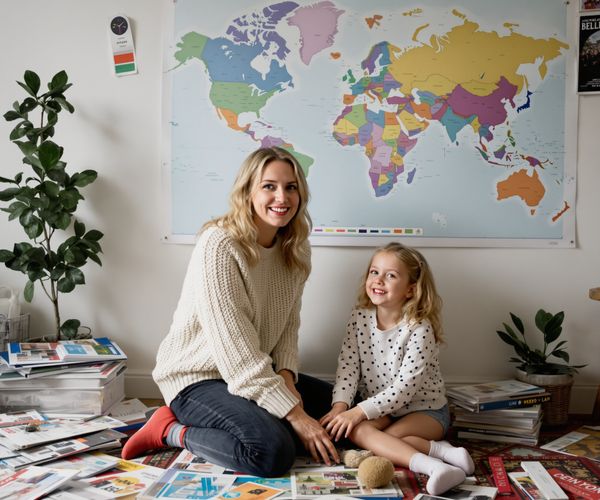
Before we even pack our bags, I like to do a little photography reconnaissance. Researching our destination beforehand gives me a sense of the potential photo opportunities. I browse travel blogs, Instagram, and even old-fashioned guidebooks to get a feel for the landscapes, landmarks, and local culture.
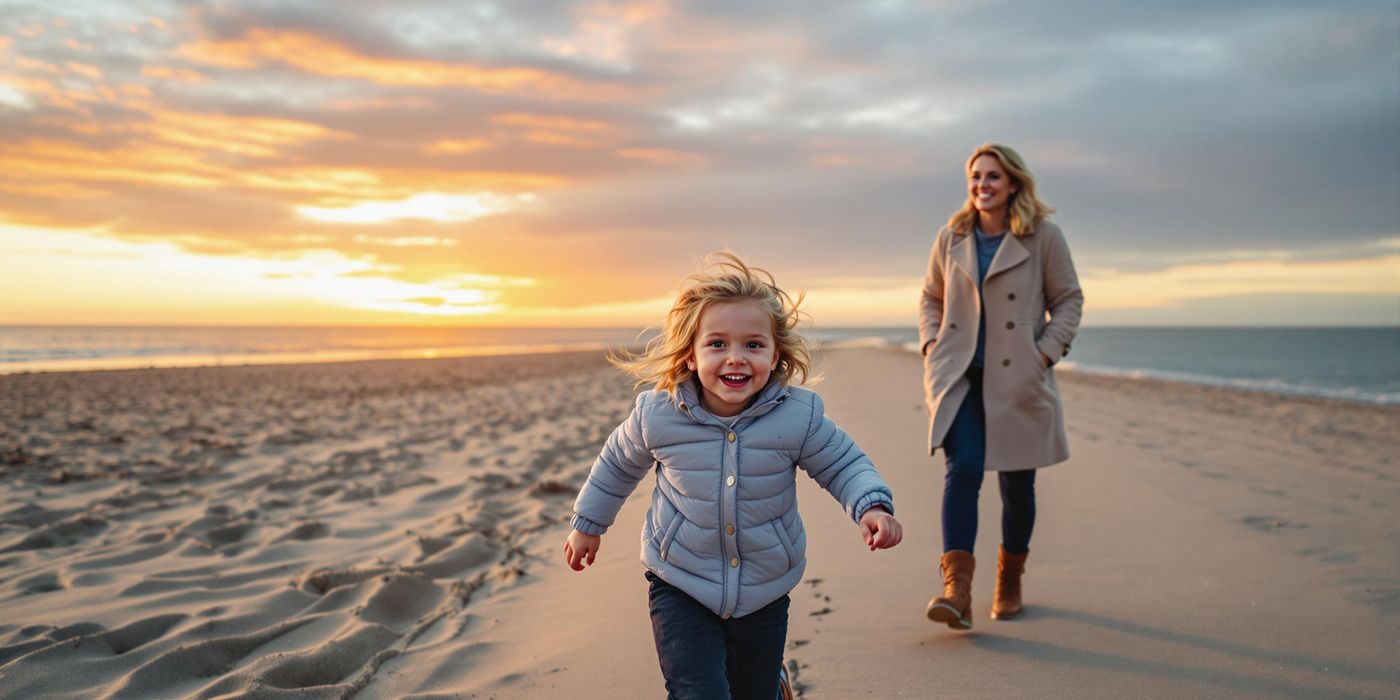
This helps me visualize the kinds of shots I want to capture. For example, when we visited the Baltic Sea last summer, I knew I wanted to photograph Astrid running along the sandy beaches at sunset.
I also consider the purpose of the photos. Are they for a family photo book, to share on social media, or to print and frame? This influences my approach and the types of shots I prioritize. And most importantly, I involve the whole family in the planning! Showing Astrid pictures of where we are going builds excitement and gets her thinking about what she wants to photograph too.
Packing the right lenses is also key. A versatile zoom lens is great for capturing a variety of scenes without having to switch lenses constantly. I also love bringing a wide-angle lens for those breathtaking landscape shots and a macro lens for capturing the tiny details that often go unnoticed.
Gear Essentials for Family Travel Photography
You might think you need a fancy DSLR and a bag full of lenses to take great travel photos, but honestly, you don't. While I love my DSLR, sometimes the best camera is the one you have with you – your smartphone! Phone cameras have come so far in recent years, and they're incredibly convenient for capturing spontaneous moments.
The key difference between using a smartphone and a DSLR is the level of control you have. With a DSLR, you can adjust aperture, shutter speed, and ISO to fine-tune your images. But with a smartphone, you're relying on the camera's automatic settings. Both have their pros and cons, but ultimately, the best camera is the one you feel most comfortable using.
One of my favorite things to do is give Astrid her own durable, child-friendly camera. This empowers her to document her experiences from her perspective. It's amazing to see what catches her eye – often things I would never have noticed myself!
Don't forget accessories! A lightweight tripod can be useful for steady shots in low light, and a remote shutter release can help you avoid camera shake. Waterproof covers are a must if you're planning any water-based activities.
Mastering Composition: Tips for Visually Appealing Family Photos
Composition is key to creating visually appealing photos. One of the most basic techniques is the rule of thirds. Imagine dividing your image into nine equal parts with two horizontal and two vertical lines. Place your subject at one of the intersections of these lines, or along one of the lines themselves, to create a more balanced and interesting composition.
Leading lines are another great tool. Use roads, fences, or other lines to draw the viewer's eye into the scene. Symmetry can also be very effective, especially when photographing architecture or landscapes.
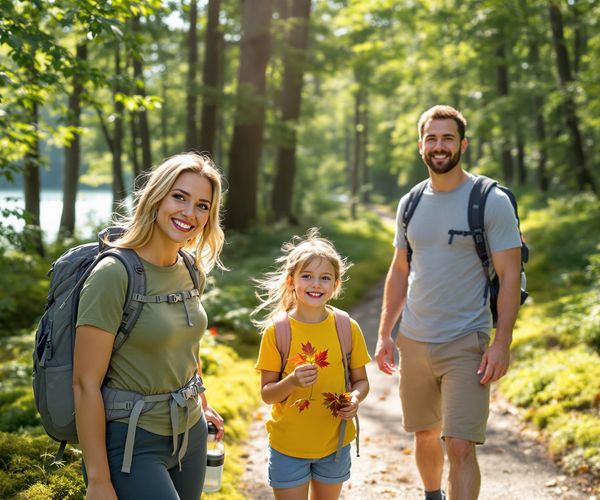
Don't be afraid to experiment with different angles. Get down low to capture the world from a child's perspective, or shoot from a high angle to create a sense of drama. And remember to use foreground, midground, and background elements to add depth to your photos. For example, when photographing Astrid in a field of wildflowers, I might include some blurred flowers in the foreground to create a sense of depth.
I also love using shapes and patterns to create more abstract compositions. Look for repeating patterns in architecture or nature, and use them to create a sense of rhythm and visual interest.
Working with Light: Capturing the Best Moments
Light is everything in photography! The quality of light can make or break a photo. Natural light is almost always the best option, so try to plan your shoots around the available light.
The 'golden hours' – early morning and late afternoon – are my favorite times to shoot. The light is soft, warm, and flattering, creating a magical atmosphere. The 'blue hour' – just after sunset – is also a great time to capture beautiful, moody images.
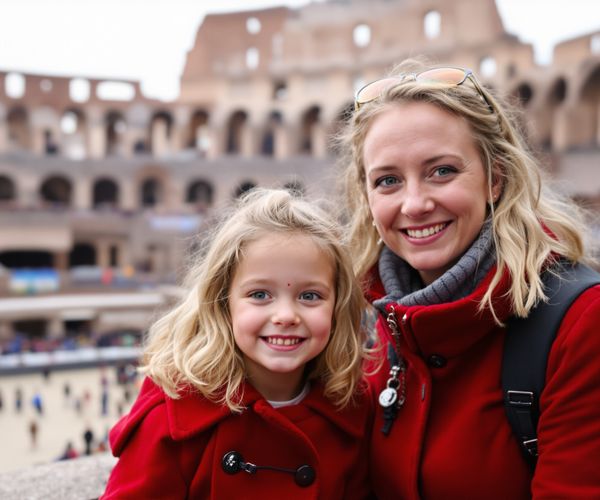
If you're shooting in harsh midday sun, try to find open shade. This is shade that is evenly lit, without any harsh shadows. You can also use shadows creatively to add drama to your photos. When we were visiting Rome, the midday sun was unavoidable, so I used the shadows cast by the buildings to create interesting patterns and textures in my photos.
Many smartphones have an HDR (High Dynamic Range) setting that can help balance highlights and shadows in high-contrast situations. Experiment with it to see if it improves your photos. A polarizing filter can be a lifesaver for reducing glare and reflections, especially when shooting near water. It can also enhance colors, making the sky look bluer and the foliage look greener.
Photographing People: Capturing Authentic Family Moments
The best family photos are the ones that capture genuine emotions and interactions. Candid photos are often the most powerful, so try to capture your family members when they're not posing. Observe them as they play, explore, and interact with each other.
When photographing children, get down to their level. This will help you capture their expressions and create a more intimate connection. I often ask Astrid questions or tell her jokes to get her to smile naturally.
Posing families can be tricky. Instead of stiff, forced smiles, suggest natural poses and interactions. Have them hold hands, hug, or look at each other. Encourage them to talk and laugh. The goal is to capture the love and connection between them.
Always be respectful when photographing local people and children. Ask for permission before taking their picture, and be mindful of their culture and customs. Emphasize movement by directing families through prompts, fun games, walking, tickling, dancing, swinging the kids, and shooting the entire time. The results will be authentic and joyful.
Technical Tips: Camera Settings for Various Scenarios
Understanding your camera settings can help you take better photos in different situations. For landscapes, use a small aperture (like f/8 or f/11) to get everything in focus. For portraits, use a wide aperture (like f/2.8 or f/4) to blur the background and create a shallow depth of field. For action shots, use a fast shutter speed (like 1/250th of a second or faster) to freeze the motion.
ISO controls your camera's sensitivity to light. Use a low ISO (like 100 or 200) in bright light, and a higher ISO (like 800 or 1600) in low light. Be careful not to use too high of an ISO, as it can introduce noise into your photos. White balance ensures that the colors in your photos are accurate. Use the appropriate white balance setting for the lighting conditions, or use the auto white balance setting.
Aperture priority mode allows you to set the aperture and let the camera automatically adjust the shutter speed. This is a great way to quickly respond to changes in light. Burst mode is useful for capturing fast-moving subjects. It allows you to take a series of photos in rapid succession, increasing your chances of capturing the perfect moment. Manual focus can be helpful for night shots, when autofocus may struggle to find focus.
Storytelling Through Photos: Capturing the Essence of Your Trip
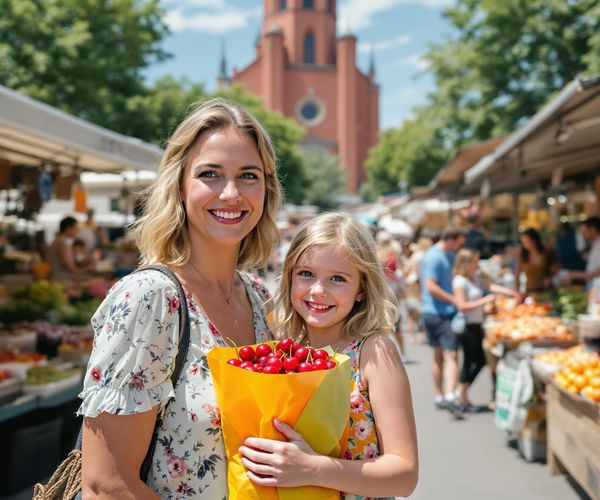
Think about the story you want to tell with your photos. What are the key moments and experiences that you want to remember? Capture details that evoke memories, such as local food, architecture, and cultural elements. When we visited a local market in Stockholm, I made sure to photograph the colorful displays of fruits and vegetables, the traditional crafts, and the friendly faces of the vendors.
Include a mix of wide shots to establish the scene and close-up shots to capture emotions. Wide shots give context and show the overall environment, while close-up shots focus on the details and emotions of the people in the scene. For example, when photographing Astrid building a sandcastle, I would take a wide shot of the beach and the ocean, as well as a close-up shot of her face as she concentrates on her task.
After the vacation, think about how to publish the story. One of my favorite ways to preserve our travel memories is to create a photo book. It's a tangible reminder of our adventures that we can share with friends and family. There are many online services that make it easy to create beautiful, professional-quality photo books.
Post-Processing: Enhancing Your Travel Photos
Post-processing can help you enhance your travel photos and bring out their full potential. Cropping can improve the composition of your photos, while color correction can fix any color imbalances. Sharpening can make your photos look crisper and more detailed.
There are many user-friendly photo editing apps available for smartphones and tablets. Some of my favorites include Snapseed, VSCO, and Adobe Lightroom Mobile. These apps allow you to make basic adjustments to your photos, such as brightness, contrast, and saturation.
The key is to make subtle edits that enhance the natural look of your photos, rather than creating something artificial. I like to start by adjusting the exposure and contrast, then fine-tune the colors and sharpness.
Finally, don't forget to organize and back up your photos soon after getting home. Create a system for organizing your photos by date, location, or event. And make sure to back them up to a cloud storage service or an external hard drive to protect them from loss or damage.
Learn how to take stunning family travel photos with practical tips on camera settings, composition, and lighting from a mom's perspective.