

Takht-e Rustam Travel Guide
Free Guide: Explore Takht-e Rustam, an ancient Afghan Buddhist site blending history, legend, and stunning rock-carved architecture from the Silk Road era.


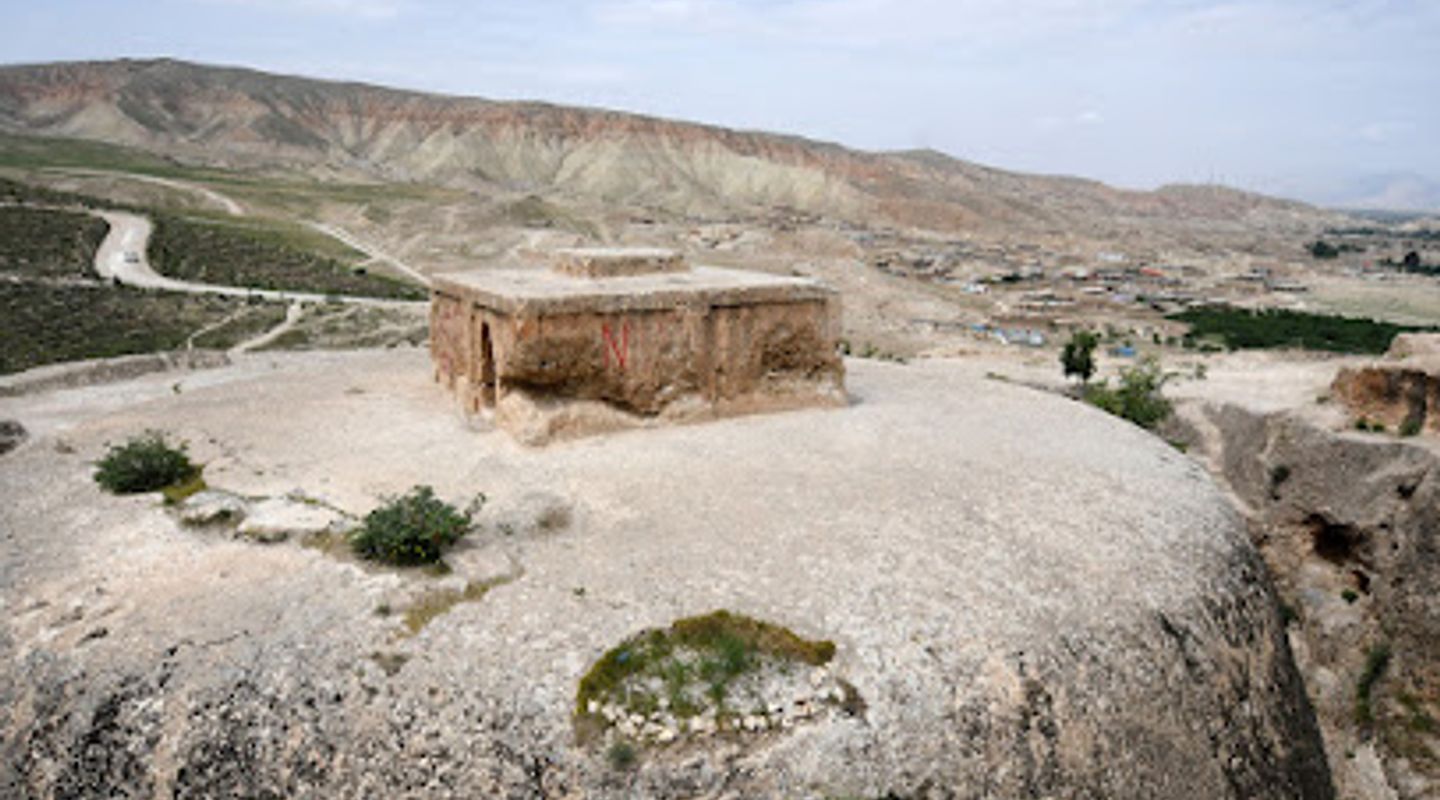
A brief summary of Takht-e Rustam
Explore Takht-e Rustam, an ancient Afghan Buddhist site blending history, legend, and stunning rock-carved architecture from the Silk Road era.
Takht-e Rustam, or the Throne of Rostam, is a historical site in Afghanistan's Samangan Province featuring a Buddhist monastery complex carved into the bedrock. Dating back to the 3rd-4th centuries AD, it showcases a unique blend of history, religion, and Persian legend [3, 4, 5].
- Address
- Afghanistan
Getting there
Taxi
Discover more about Takht-e Rustam
Overview
Takht-e Rustam, meaning the Throne of Rostam, is an ancient Buddhist monastery complex located 2 kilometers south of Haibak in Afghanistan [4]. Carved entirely from bedrock during the Kushano-Sasanian Kingdom (3rd-4th century AD), the site offers a glimpse into Afghanistan's diverse religious past [3, 4]. Here, Buddhists, Zoroastrians, and Hindus coexisted along the ancient Silk Road [3].The complex consists of five chambers, including two sanctuaries [4]. One sanctuary features a domed ceiling adorned with intricate lotus leaf carvings [3, 4, 11]. Nearby, the main stupa, also carved into the rock, includes more caves to explore [3]. The site's unique underground design has led historians to speculate it was either camouflage against invaders or a way to combat Afghanistan's extreme climate [3, 5].After the Islamic conquest, the site's original purpose was lost, and it was incorporated into Persian mythology [3, 4, 5]. Legend says that Rostam, a hero from the 10th-century Persian epic Shahnameh, visited the Kingdom of Samangan and stayed at Takht-e Rustam [4, 7, 10]. In 2021, the Afghan government renovated the site and constructed a hall for tourists [4]. Today, Takht-e Rustam stands as one of Afghanistan's most impressive pre-Islamic sites [5, 9].
Evendo Review Centre
 Google
Guest reviews
Explore Takht-e Rustam on the map
A handpicked selection of must-see spots near Takht-e Rustam, mapped for you.
Get your free copy of our complete guide to Takht-e Rustam, delivered straight to you.
Everything on this page, from opening hours and how to get there to Eve’s tips and the best time to go, in one PDF you can read offline, print or share.
Already have an account? Sign in
Your Takht-e Rustam guide is ready.
We'll send it to · Not you? Sign out

Getting your guide ready…
We are putting together a fresh copy of the Takht-e Rustam guide. This can take up to a minute.
This can take a few moments. If your browser asks, choose Allow so the download can start. You'll find the guide in your Downloads folder.
Nothing happened? Download it again
Sorry, the guide is taking longer than usual. Please try again in a minute, or get it by email instead.
Other nearby places you may find interesting
The closest places of the same kind, if this one is not quite what you had in mind.
-
-
-
-
-


Swipe for more places
More to explore near Takht-e Rustam

 Best experiences near Takht-e Rustam
 Best hotels near Takht-e Rustam
 Best landmarks near Takht-e Rustam
 Best attractions near Takht-e Rustam
 Best shops near Takht-e Rustam
 Best restaurants near Takht-e Rustam
 Best bars near Takht-e Rustam
Do you manage this location?
Take control to get all the benefits, like improved information, better appearance, and stronger visibility across AI-powered discovery.
Explore more

Explore more of Baghlan
Discover Baghlan: A blend of history, nature, and culture in the heart of northern Afghanistan.
Explore Baghlan
Explore more of Afghanistan
Discover Afghanistan's rich history, stunning landscapes, and diverse cultures. From ancient cities to breathtaking nature, this Central Asian gem offers a unique travel experience.
Explore Afghanistan
