
Red Hills, Alabama Travel Guide
Discover the natural beauty and historical significance of Alabama's Red Hills, home to unique wildlife and scenic hiking trails.
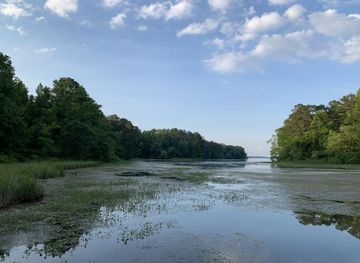
The Red Hills of Alabama are a hidden gem for nature lovers and adventure seekers. Located in the heart of Alabama, this unique area offers a fascinating blend of natural beauty, history, and outdoor activities. The hills get their name from the rich, red soil that characterizes the landscape, creating a striking contrast against the lush greenery and clear blue skies. One of the main attractions in the Red Hills is the Red Hills Salamander, an endangered species that is native to this region. Visitors can explore the various hiking trails that wind through the hills, offering stunning views and a chance to see this rare creature in its natural habitat. The trails vary in difficulty, making them suitable for both casual walkers and experienced hikers. In addition to its natural wonders, the Red Hills area is steeped in history. The region played a significant role in the Civil War, and visitors can explore several historical sites and museums that tell the story of this turbulent period. The local communities are warm and welcoming, offering a glimpse into the rich cultural heritage of Alabama. Whether you're interested in wildlife, history, or simply enjoying the great outdoors, the Red Hills of Alabama have something to offer. Pack your hiking boots, bring your camera, and get ready for an unforgettable adventure in one of Alabama's most captivating destinations.

Know before you go
Hi, I'm Eve. Here are a few practical things to know before exploring Red Hills.
- Visit in spring or fall for the best weather and vibrant foliage.
- Wear sturdy hiking boots and bring plenty of water for the trails.
- Check local guides for information on the Red Hills Salamander habitats.
- Explore nearby historical sites to enrich your visit.
- Engage with local communities to learn about the area's cultural heritage.
Top City Travel Guides in Red Hills
The cities of Red Hills, and the easiest places to base yourself.


Destinations in Red Hills
Resorts, valleys and scenic spots worth a trip of their own.


Explore Red Hills: Things to Do, Places to Eat, Hotels & More
Handpicked recommendations for top attractions, local dining, accommodations, and more

Top Attractions & Sightseeing in Red Hills
Top-rated picks
Best Attractions

U.S. Space & Rocket Center
Explore the cosmos at the U.S. Space & Rocket Center: rockets, space artifacts, and interactive exhibits await in Huntsville, Alabama.

Vulcan Park and Museum
Discover Birmingham's iconic Vulcan statue, explore its history, and enjoy panoramic city views from atop Red Mountain.

Lake Guntersville State Park
Discover Alabama's natural beauty at Lake Guntersville State Park: hiking, fishing, golf, and stunning lake views await!

J.D. & Annie S. Hays Nature Preserve
Explore Alabama's natural beauty with hiking trails, diverse wildlife, and outdoor adventures at this scenic nature preserve in Owens Cross Roads.

Best restaurants in Red Hills
Top-rated picks
Best Restaurants

Top O' The River
Savor exquisite seafood with stunning lake views at Top O' The River in Guntersville—where every meal is a memorable experience.

Santa Fe Cattle Company
Experience delicious Southern cuisine at Santa Fe Cattle Company in Albertville—where every meal feels like home.

Golden Corral Buffet & Grill
Savor a world of flavors at Golden Corral Buffet & Grill - where every meal becomes a cherished memory.

Cracker Barrel Old Country Store
Discover hearty meals and Southern charm at Cracker Barrel Old Country Store in Guntersville - where every meal feels like home.

Best bars in Red Hills
Top-rated picks
Best Bars

Pink Pony Pub
Savor the best seafood and American cuisine at Pink Pony Pub, where the lively atmosphere meets stunning coastal views in Gulf Shores.

Pirate's Bar And Grill
Discover the coastal flavors of Dauphin Island at Pirate's Bar And Grill, where fresh seafood meets vibrant island vibes.

Furniture Factory Bar & Grill
Experience the lively charm of Furniture Factory Bar & Grill in Huntsville, AL, where great food meets vibrant entertainment in a welcoming atmosphere.
![Carrigan's Public House [21+ Only]](https://media.evendo.com/locations-resized/BarImages/360x263/b6a853c6-c072-40bf-9952-4a52bfa33807?type=webp)
Carrigan's Public House [21+ Only]
Discover the dynamic flavors and lively atmosphere of Carrigan's Public House, a premier gastropub in Birmingham, AL, perfect for adults.


Best shops in Red Hills
Top-rated picks
Best Shops

Bridge Street Town Centre
Discover the charm of Bridge Street Town Centre in Huntsville, Alabama, where shopping meets entertainment in a stunning outdoor setting.

Riverchase Galleria
Discover a shopping paradise at Riverchase Galleria in Hoover, Alabama, where fashion, dining, and entertainment come together for a perfect day out.

Tanger Outlets Foley
Discover unbeatable deals at Tanger Outlets Foley, your ultimate shopping destination in Alabama with top brand outlets and delightful dining options.

The Shops of Grand River
Explore The Shops of Grand River, Alabama's premier outlet mall offering unbeatable deals, diverse dining, and family-friendly entertainment options.

Explore Red Hills on the Map
A handpicked selection of must-see spots in Red Hills, mapped for you.
Red Hills Essentials
-
Red Hills is located in central Alabama, United States. The nearest major airport is Birmingham-Shuttlesworth International Airport, about 90 miles away. From Birmingham, you can rent a car and drive to Red Hills, which takes approximately 1.5 to 2 hours. Alternatively, you can take a bus from Birmingham to the nearest town, and then hire a taxi to reach Red Hills. There are also regional airports closer to Red Hills, such as the Montgomery Regional Airport, which is about 70 miles away.
-
Red Hills is best explored by car, as public transportation is limited. Car rentals are available at major airports and in nearby towns. Within Red Hills, local taxi services are available but must be arranged in advance. For those looking for a more leisurely experience, biking is an option, though the terrain can be hilly. Walking is ideal for exploring the central areas and local trails.
-
The official currency is the United States Dollar (USD). Credit and debit cards are widely accepted in most establishments, including restaurants, shops, and hotels. However, it is advisable to carry some cash for smaller vendors and rural areas. ATMs are available in nearby towns, but ensure you have sufficient cash before heading into more remote parts of Red Hills.
-
Red Hills is generally a safe destination for tourists. However, it is advisable to take standard precautions such as avoiding isolated areas at night and not leaving valuables in plain sight in your vehicle. There are no specific areas with high crime rates targeting tourists, but always stay aware of your surroundings and secure your belongings.
-
In case of an emergency, dial 911 for immediate assistance. The nearest hospitals and medical facilities are located in nearby towns such as Selma and Montgomery. It is recommended to have travel insurance that covers medical emergencies. For minor health issues, there are pharmacies in these towns where you can purchase over-the-counter medications.
-
Fashion: Do dress comfortably and casually. Avoid overly formal attire unless attending a special event. Religion: Do respect local customs and religious sites. Some areas may have churches or historical religious markers that require modest dress. Public Transport: Do plan your transportation ahead of time, as public transport is limited. Don't rely on public transport for timely travel. Greetings: Do greet people with a friendly 'hello' or 'hi.' Southern hospitality is prevalent, and a warm greeting is appreciated. Eating & Drinking: Do try local Southern cuisine and be open to food recommendations from locals. Don't refuse hospitality, as it is considered impolite.
-
To experience Red Hills like a local, visit the local farmers' markets where you can buy fresh produce and handmade goods. Engage with locals, as they are often friendly and willing to share stories about the area's history and culture. Don't miss exploring the Red Hills salamander habitat and the unique geological formations. For a unique experience, take a scenic drive through the countryside to appreciate the natural beauty of Alabama.
When is the best time to visit Red Hills?
Useful Local Phrases for Red Hills
You don't need to speak the language perfectly. Even learning a few simple words can make conversations warmer—and locals usually appreciate the effort.
— Eve

Here are the phrases I use most often in Red Hills. Try a few—you'll be surprised how far they go! 😊
❤️
-
- HelloHey there
[Hay thair] - GoodbyeSee ya later
[See ya lay-ter] - YesYep
[Yep] - NoNope
[Nope] - Please/You're welcomePlease / No problem
[Pleez / No prob-lem] - Thank youThank ya
[Thank ya] - Excuse me/SorryExcuse me / Sorry 'bout that
[Ex-kyoos mee / Sor-ree 'bout that] - How are you?How ya doin'?
[How ya doin'?] - Fine. And you?I’m good. How 'bout you?
[I'm good. How 'bout you?] - Do you speak English?Ya speakin' English?
[Ya speakin' English?] - I don't understandI ain't gettin' it
[I ain't gettin' it]
- HelloHey there
-
- I'd like to see the menu, pleaseCan I see the menu, please?
[Can I see the menu, pleez?] - I don't eat meatI don't eat no meat
[I don't eat no meat] - Cheers!Cheers!
[Cheers!] - I would like to pay, pleaseI’d like to pay, please
[I'd like to pay, pleez]
- I'd like to see the menu, pleaseCan I see the menu, please?
-
- Help!Help!
[Help!] - Go away!Leave me alone!
[Leave me alone!] - Call the Police!Call the cops!
[Call the cops!] - Call a doctor!Get a doctor!
[Get a doctor!] - I'm lostI’m lost
[I'm lost] - I'm illI ain't feelin' good
[I ain't feelin' good]
- Help!Help!
-
- I'd like to buy...I wanna buy...
[I wanna buy...] - I'm just lookingI'm just browsin'
[I'm just browsin'] - How much is it?How much is this?
[How much is this?] - That's too expensiveThat’s too pricey
[That’s too pricey] - Can you lower the price?Can ya knock down the price?
[Can ya knock down the price?]
- I'd like to buy...I wanna buy...
-
- What time is it?What time is it?
[What time is it?] - It's one o'clockIt's one o'clock
[It's one o'clock] - Half past (10)Half past ten
[Half past ten] - MorningMornin'
[Mornin'] - AfternoonAfternoon
[Afternoon] - EveningEvenin'
[Evenin'] - YesterdayYesterday
[Yesterday] - TodayToday
[Today] - TomorrowTomorrow
[Tomorrow] - 1One
[One] - 2Two
[Two] - 3Three
[Three] - 4Four
[Four] - 5Five
[Five] - 6Six
[Six] - 7Seven
[Seven] - 8Eight
[Eight] - 9Nine
[Nine] - 10Ten
[Ten]
- What time is it?What time is it?
-
- Where's a/the...?Where's the ...?
[Where's the ...?] - What's the address?What’s the address?
[What’s the address?] - Can you show me (on the map)?Can ya show me on the map?
[Can ya show me on the map?] - When's the next (bus)?When's the next bus?
[When's the next bus?] - A ticket (to ....)A ticket to ...
[A ticket to ...]
- Where's a/the...?Where's the ...?
History of Red Hills
-
The Red Hills area of Alabama has a deep-rooted connection to the Native American tribes, particularly the Creek and Choctaw nations. These indigenous peoples utilized the rich, fertile lands for agriculture and hunting long before European settlers arrived. The area was known for its red clay soil, which was used in pottery and other cultural artifacts.
-
In the early 16th century, European explorers, including Hernando de Soto, traversed the Red Hills region. Their arrival marked the beginning of significant cultural and social changes, as they established contact with the Native American tribes and introduced new goods and ideas.
-
During the 18th century, the Red Hills were part of the larger geopolitical struggles between the British, French, and Spanish empires. The area witnessed various skirmishes and negotiations as these European powers vied for control. The American Revolution saw local involvement, with residents supporting the fight for independence.
-
The early 19th century brought significant turmoil to the Red Hills with the outbreak of the Creek War (1813-1814). This conflict between American settlers and the Creek Nation resulted in major battles, such as the Battle of Horseshoe Bend, which led to the eventual cession of Creek lands to the United States.
-
In the years leading up to the Civil War, the Red Hills region became a hub of agricultural activity, particularly cotton plantations. The fertile red clay soil proved ideal for cotton cultivation, leading to economic growth. However, this prosperity was built on the labor of enslaved African Americans, whose contributions and suffering are an integral part of the area's history.
-
The Red Hills were significantly affected by the Civil War (1861-1865). The region's plantations and infrastructure were targets of Union raids, and local men enlisted in both Confederate and Union forces. The war brought profound changes to the social and economic fabric of the area.
-
Following the Civil War, the Red Hills faced the challenges of Reconstruction. The transition from a slave-based economy to one of sharecropping and tenant farming characterized this period. The area also saw the rise of industrialization and the establishment of railroads, which facilitated trade and movement.
-
The mid-20th century brought the Civil Rights Movement to the Red Hills, as African American residents fought for equality and justice. The region witnessed significant activism, protests, and legal battles that contributed to the broader national movement for civil rights.
-
Today, Red Hills is a blend of its historical roots and modern developments. The area boasts a rich cultural heritage, with numerous historical sites, museums, and cultural centers that celebrate its diverse history. The red clay hills continue to be a distinctive feature of the landscape, attracting tourists and history enthusiasts alike.
Neighbouring Regions of Red Hills
The closest regions to Red Hills, if you have time for more than one.


Your all‑in‑one travel companion app
Explore expert travel guides, compare and book tours, experiences, hotels, and more—all from the palm of your hand. Download now for seamless trip planning wherever your wanderlust takes you.


Explore More of Alabama

Looking beyond Red Hills? Discover Alabama for broader travel guides, local hot-spots, and regional highlights.
Explore Alabama