

Coastal Plain, Alabama Travel Guide
Discover Alabama's Coastal Plain: A blend of natural beauty, rich wildlife, and historic charm along the Gulf of Mexico.
The Coastal Plain of Alabama is a hidden gem that offers a serene escape with its lush landscapes, sprawling beaches, and rich biodiversity. This region is a tapestry of natural beauty, where visitors can experience the tranquil waters of the Gulf of Mexico, the picturesque estuaries, and the vast, verdant forests that stretch as far as the eye can see. One of the main attractions of the Coastal Plain is its diverse wildlife. The region is home to numerous state parks and wildlife refuges, where nature enthusiasts can spot rare birds, alligators, and other native species in their natural habitat. The Mobile-Tensaw Delta, often referred to as 'America's Amazon,' is a must-visit for those who love kayaking, fishing, and bird-watching. For history buffs, the Coastal Plain offers a glimpse into the past with its historic forts, charming small towns, and cultural landmarks. Places like Fort Morgan and the USS Alabama Battleship Memorial Park provide an immersive experience into the region’s rich history. Additionally, the vibrant city of Mobile, with its antebellum architecture and lively Mardi Gras celebrations, adds a touch of cultural flair to this natural paradise.

Know before you go
Hi, I'm Eve. Here are a few practical things to know before exploring Coastal Plain.
- Visit the Mobile-Tensaw Delta for kayaking and wildlife spotting.
- Explore Fort Morgan for a historical adventure.
- Check out the beaches in Gulf Shores for a relaxing day by the sea.
- Don't miss the Mardi Gras celebrations in Mobile for a unique cultural experience.
- Pack insect repellent for visits to wildlife areas.
Top City Travel Guides in Coastal Plain
The cities of Coastal Plain, and the easiest places to base yourself.


Destinations in Coastal Plain
Resorts, valleys and scenic spots worth a trip of their own.


Explore Coastal Plain: Things to Do, Places to Eat, Hotels & More
Handpicked recommendations for top attractions, local dining, accommodations, and more

Top Attractions & Sightseeing in Coastal Plain
Top-rated picks
Best Attractions

U.S. Space & Rocket Center
Explore the universe at the U.S. Space & Rocket Center in Huntsville, AL: rockets, space exploration history, and astronaut training for all ages.

Gulf Shores Public Beach
Experience sugar-white sands and turquoise waters at Gulf Shores Public Beach, offering endless fun, relaxation, and vibrant beach culture year-round.

Gulf State Park
Discover Alabama's Gulf Coast: Pristine beaches, scenic trails, and endless outdoor adventures await at Gulf State Park.

Vulcan Park and Museum
Discover Birmingham's history and breathtaking views at Vulcan Park and Museum, home to the world's largest cast-iron statue.

Best landmarks in Coastal Plain
Top-rated picks
Best Landmarks

USS ALABAMA Battleship Memorial Park
Explore WWII history: Tour the USS Alabama battleship, USS Drum submarine, and aircraft at Mobile's Memorial Park.

Gulf State Park
Discover Alabama's Gulf Coast: Beaches, trails, and natural beauty await at Gulf State Park. Explore diverse ecosystems and create lasting memories.

Fort Morgan State Historic Site
Explore a 19th-century fort with a rich history, museum exhibits, and scenic Gulf Coast views at Fort Morgan State Historic Site in Gulf Shores, AL.

Cathedral Caverns State Park
Discover Alabama's underground wonders: Explore massive caverns, stunning formations, and scenic hiking trails at Cathedral Caverns State Park.

Best restaurants in Coastal Plain
Top-rated picks
Best Restaurants
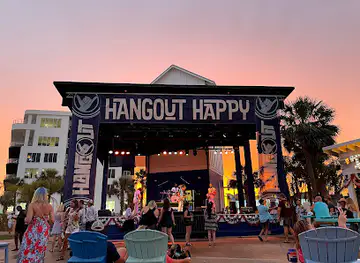
The Hangout Gulf Shores
Experience coastal charm at The Hangout Gulf Shores – where delicious seafood meets vibrant live music in a family-friendly atmosphere.

Sunliner Diner
Experience classic American breakfasts at Sunliner Diner in Gulf Shores – where nostalgia meets delicious comfort food.

The Gulf - Orange Beach
Discover The Gulf - Orange Beach: A premier seafood destination offering breathtaking views and fresh flavors from Alabama's coastline.

Lulu's Gulf Shores
Discover family-friendly dining at Lulu's Gulf Shores—where delicious seafood meets stunning waterfront views.

Best bars in Coastal Plain
Top-rated picks
Best Bars

The Hangout Gulf Shores
Experience the best of Gulf Shores dining at The Hangout, where seafood, family fun, and live music come together for an unforgettable experience.

Flora-Bama
Experience the vibrant atmosphere of Flora-Bama, a legendary bar and live music venue on the Alabama-Florida border, perfect for beach lovers and music fans.

Tacky Jacks Orange Beach
Discover the vibrant flavors of Tacky Jacks Orange Beach, where fresh seafood meets stunning waterfront views for an unforgettable dining experience.

Pink Pony Pub
Indulge in fresh seafood and American classics at Pink Pony Pub, where the coastal charm meets culinary delight in Gulf Shores, Alabama.

Best nightclubs in Coastal Plain
Top-rated picks
Best Nightclubs

Zebra Club
Discover the vibrant nightlife of Zebra Club in Mobile, AL – a lively night club with cocktails, dancing, and an energetic atmosphere for all.

The Quest Club
Experience Birmingham's vibrant nightlife at The Quest Club, a welcoming gay night club offering lively entertainment and an inclusive atmosphere.

Doc Holliday's
Discover the vibrant nightlife at Doc Holliday's, Foley's premier night club and bar, offering great music and a lively atmosphere.

Platinum of Birmingham
Discover the vibrant nightlife at Platinum of Birmingham, where great music and an electrifying atmosphere create unforgettable nights.

Best shops in Coastal Plain
Top-rated picks
Best Shops

Tanger Outlets Foley
Discover amazing deals and a diverse selection of brand-name stores at Tanger Outlets Foley, the ultimate shopping destination in Alabama.

The Shops of Grand River
Discover incredible deals and a delightful shopping atmosphere at The Shops of Grand River, the ultimate outlet mall in Leeds, Alabama.

Eastern Shore Centre
Explore shopping, dining, and events at Eastern Shore Centre, the premier shopping mall in Spanish Fort, Alabama, perfect for tourists seeking entertainment.

Souvenir City
Explore Souvenir City in Gulf Shores for unique gifts and local treasures that embody the spirit of Alabama's beautiful coast.

Explore Coastal Plain on the Map
A handpicked selection of must-see spots in Coastal Plain, mapped for you.
Coastal Plain Essentials
-
The Coastal Plain in Alabama is accessible via several major transportation hubs. The closest large airports include Birmingham-Shuttlesworth International Airport (BHM) and Mobile Regional Airport (MOB). From these airports, you can rent a car or take a bus to reach your destination within the Coastal Plain. Interstate highways such as I-65 and I-10 provide convenient road access. Additionally, Amtrak trains serve several cities in Alabama, offering an alternative for those preferring rail travel.
-
Once in the Coastal Plain, various transportation options are available. Car rentals are a popular choice for exploring the region at your own pace. Public buses and local shuttles operate in larger towns and cities. Taxis and ride-sharing services like Uber and Lyft are also available, particularly in urban areas. For a more scenic and leisurely experience, consider renting a bicycle to explore the coastal areas and nature trails.
-
The official currency in Alabama, as in the rest of the United States, is the US Dollar (USD). Credit and debit cards are widely accepted in hotels, restaurants, and shops. However, it is advisable to carry some cash for small purchases and in rural areas where card payments may not be accepted. ATMs are readily available in most towns and cities.
-
The Coastal Plain is generally a safe destination for tourists. However, it is wise to take standard precautions. Avoid walking alone at night in unfamiliar areas and keep your belongings secure in crowded places. Some areas in larger cities like Mobile have higher crime rates, so it's best to stay vigilant and avoid poorly lit or deserted areas after dark. Consult local advice for specific neighborhoods to avoid.
-
In case of an emergency, dial 911 for immediate assistance. This will connect you to police, fire, and medical services. Major hospitals and urgent care centers are available in larger towns and cities within the Coastal Plain. It is recommended to have travel insurance that covers medical emergencies. Pharmacies are also accessible for minor health issues and over-the-counter medications.
-
Fashion: Do dress comfortably and casually. Lightweight clothing is recommended due to the warm climate. Avoid overly revealing attire in conservative areas. Religion: Do respect local customs and traditions. Many communities are religious, so modesty is appreciated, especially when visiting churches. Public Transport: Do be polite and respectful. Offer your seat to elderly passengers. Greetings: Do greet people with a friendly 'hello' or a handshake. Eating & Drinking: Do try local seafood and Southern cuisine. Don’t forget to tip service staff, generally around 15-20% of the bill.
-
To experience the Coastal Plain like a local, visit farmers' markets and enjoy fresh, locally-sourced produce. Engage with locals at community events and festivals to learn more about the culture and history of the region. Don’t miss exploring the natural beauty of the area, including the Gulf Coast beaches, state parks, and wildlife refuges. For a unique experience, take a guided boat tour through the Mobile-Tensaw River Delta, known as the 'American Amazon'.
When is the best time to visit Coastal Plain?
Useful Local Phrases for Coastal Plain
You don't need to speak the language perfectly. Even learning a few simple words can make conversations warmer—and locals usually appreciate the effort.
— Eve

Here are the phrases I use most often in Coastal Plain. Try a few—you'll be surprised how far they go! 😊
❤️
-
- HelloHowdy
[Haud-ee] - GoodbyeSee ya later
[See ya lay-ter] - YesYep
[Yep] - NoNah
[Nah] - Please/You're welcomePlease/No problem
[Please/No prob-lum] - Thank youThank ya
[Thank ya] - Excuse me/SorryExcuse me/Sorry 'bout that
[Ex-cuse me/Sorry 'bout that] - How are you?How y'all doin'?
[How y'all doin'?] - Fine. And you?Good. And you?
[Good. An' you?] - Do you speak English?Y'all speakin' English?
[Y'all speakin' English?] - I don't understandI ain't gettin' it
[I ain't gettin' it]
- HelloHowdy
-
- I'd like to see the menu, pleaseCan I see the menu, please?
[Can I see thuh menu, please?] - I don't eat meatI don't eat no meat
[I don't eat no meat] - Cheers!Cheers!
[Cheers!] - I would like to pay, pleaseCan I pay you, please?
[Can I pay ya, please?]
- I'd like to see the menu, pleaseCan I see the menu, please?
-
- Help!Help!
[Help!] - Go away!Get on outta here!
[Get on outta here!] - Call the Police!Call the cops!
[Call thuh cops!] - Call a doctor!Get a doctor!
[Get a doctor!] - I'm lostI can't find my way
[I can't find my way] - I'm illI ain't feelin' good
[I ain't feelin' good]
- Help!Help!
-
- I'd like to buy...I wanna buy...
[I wanna buy...] - I'm just lookingI'm just browsin'
[I'm just browsin'] - How much is it?How much's this here?
[How much's this here?] - That's too expensiveThat ain't worth it
[That ain't worth it] - Can you lower the price?Can ya drop the price?
[Can ya drop thuh price?]
- I'd like to buy...I wanna buy...
-
- What time is it?What time is it?
[What time is it?] - It's one o'clockIt's one o'clock
[It's one o'clock] - Half past (10)Half past ten
[Half past ten] - MorningMornin'
[Mornin'] - AfternoonAfternoon
[Afternoon] - EveningEvenin'
[Evenin'] - YesterdayYestiddy
[Yestiddy] - TodayToday
[Today] - TomorrowTomorra
[Tomorra] - 1One
[One] - 2Two
[Two] - 3Three
[Three] - 4Four
[Four] - 5Five
[Five] - 6Six
[Six] - 7Seven
[Seven] - 8Eight
[Eight] - 9Nine
[Nine] - 10Ten
[Ten]
- What time is it?What time is it?
-
- Where's a/the...?Where's a...?
[Where's a...?] - What's the address?What's the address?
[What's thuh address?] - Can you show me (on the map)?Can ya show me on the map?
[Can ya show me on thuh map?] - When's the next (bus)?When's the next bus?
[When's thuh next bus?] - A ticket (to ....)A ticket to...
[A ticket to...]
- Where's a/the...?Where's a...?
History of Coastal Plain
-
Long before European settlers arrived, the Coastal Plain of Alabama was home to various indigenous cultures. Tribes such as the Creek and Choctaw thrived in the region, establishing complex societies with rich traditions. Evidence of their existence can be found in the form of ancient mounds, pottery, and tools scattered across the landscape.
-
In the early 16th century, Spanish explorers, including Hernando de Soto, ventured into the Coastal Plain of Alabama. Their expeditions, while primarily focused on finding wealth, also led to the first European contact with the native tribes. These encounters were marked by both trade and conflict, setting the stage for future European colonization.
-
In 1702, the French established Fort Louis de la Mobile, the first capital of French Louisiana, in what is now Mobile, Alabama. This marked the beginning of French influence in the region, which included the establishment of trade routes and relationships with indigenous tribes. Mobile quickly became a vital port and trading post, shaping the cultural and economic landscape of the Coastal Plain.
-
Following the French and Indian War, the British gained control of the Coastal Plain region through the Treaty of Paris in 1763. This period saw increased settlement and development, particularly in agriculture. During the American Revolution, the region experienced conflict between British loyalists and American patriots, with Mobile briefly falling under Spanish control once again in 1780.
-
Alabama became a state in 1819, and the Coastal Plain region saw significant growth during the antebellum period. Agriculture, particularly cotton farming, dominated the economy, leading to the establishment of large plantations. This era also saw the tragic expansion of slavery, as enslaved African Americans were brought to work on the plantations, leaving a lasting impact on the region's social fabric.
-
The Coastal Plain of Alabama played a crucial role during the Civil War, with key battles and military campaigns occurring in the region. The port city of Mobile was a strategic Confederate stronghold and faced significant Union blockades and attacks. Following the war, the Reconstruction era brought significant changes, including the emancipation of enslaved people and efforts to rebuild the economy and society.
-
The early 20th century saw a shift from an agricultural economy to industrialization in the Coastal Plain of Alabama. The development of industries such as shipbuilding, paper mills, and manufacturing brought new economic opportunities and growth to the region. This period also saw significant social changes, including the Civil Rights Movement, which had a profound impact on the area.
-
Today, the Coastal Plain of Alabama is a blend of historical legacies and modern advancements. The region continues to thrive with a diverse economy that includes tourism, agriculture, and industry. Visitors can explore historic sites, enjoy natural beauty, and experience the unique cultural heritage that has been shaped by centuries of history.
Neighbouring Regions of Coastal Plain
The closest regions to Coastal Plain, if you have time for more than one.


Your all‑in‑one travel companion app
Explore expert travel guides, compare and book tours, experiences, hotels, and more—all from the palm of your hand. Download now for seamless trip planning wherever your wanderlust takes you.


Explore More of Alabama

Looking beyond Coastal Plain? Discover Alabama for broader travel guides, local hot-spots, and regional highlights.
Explore AlabamaCoastal Plain in Photos
Browse through our photo collection highlighting the charm and character of the destination.


The Enchanting Coastal Plain of Alabama
The Coastal Plain of Alabama is a hidden gem that offers a serene escape with its lush landscapes, sprawling beaches, and rich biodiversity. This region is a tapestry of natural beauty, where visitors can experience the tranquil waters of the Gulf of Mexico, the picturesque estuaries, and the vast, verdant forests that stretch as far as the eye can see. One of the main attractions of the Coastal Plain is its diverse wildlife. The region is home to numerous state parks and wildlife refuges, where nature enthusiasts can spot rare birds, alligators, and other native species in their natural habitat. The Mobile-Tensaw Delta, often referred to as 'America's Amazon,' is a must-visit for those who love kayaking, fishing, and bird-watching. For history buffs, the Coastal Plain offers a glimpse into the past with its historic forts, charming small towns, and cultural landmarks. Places like Fort Morgan and the USS Alabama Battleship Memorial Park provide an immersive experience into the region’s rich history. Additionally, the vibrant city of Mobile, with its antebellum architecture and lively Mardi Gras celebrations, adds a touch of cultural flair to this natural paradise.