

Free Montgomery Travel Guide & Mobile App
Plan your Montgomery trip with Evendo. Get free guides to top attractions, restaurants, hotels, and bars. Web access or download the mobile app.


Montgomery, Alabama, brings Civil Rights history, Capitol landmarks, riverfront walks, Southern food and museums into a thoughtful, walkable city break.
A Capital Shaped by Conflict
Montgomery stands on the Alabama River in the state’s central Black Belt region, a city whose civic buildings and historic streets reflect some of the defining struggles of the American South. The Alabama State Capitol crowns the hill above downtown, while nearby Dexter Avenue King Memorial Baptist Church recalls the ministry of Martin Luther King Jr. and the organising power of the 1955–56 Montgomery Bus Boycott. Across the city, museums and memorials examine slavery, segregation, resistance and the continuing pursuit of racial justice.Read more about Montgomery
Historic Streets and Cultural Institutions
Riverfront Character and Southern Culture
When is the best time to visit Montgomery?
Best: April–May, October · 24–29°C| Month | High (°C) | Rainfall (mm) |
|---|---|---|
| January | 14 | 120 |
| February | 17 | 110 |
| March | 21 | 140 |
| April (best) | 24 | 110 |
| May (best) | 29 | 120 |
| June | 33 | 110 |
| July | 34 | 140 |
| August | 34 | 140 |
| September | 32 | 120 |
| October (best) | 24 | 90 |
| November | 18 | 100 |
| December | 14 | 110 |
Getting to and around Montgomery
How to get there
Transportation
Best attractions in Montgomery
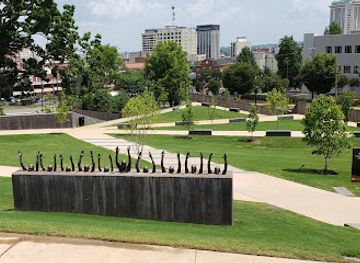
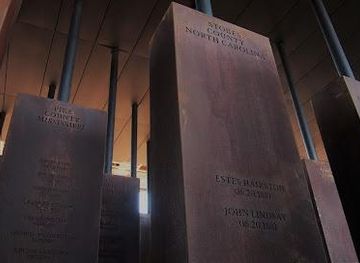
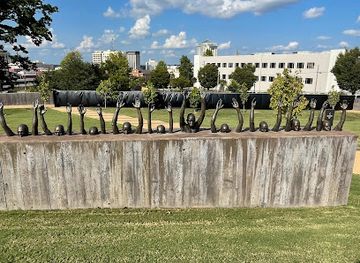
Montgomery’s principal attractions range from state history to the modern civil rights movement. The Alabama State Capitol anchors the central district, while the nearby Rosa Parks Museum interprets the bus boycott through exhibits focused on Parks, local organisers and the wider campaign. The Legacy Museum presents the history of racial injustice from enslavement to mass incarceration, and the National Memorial for Peace and Justice uses architecture and sculpture to commemorate victims of racial terror. The Freedom Rides Museum occupies the former Greyhound bus station where activists were attacked in 1961. For a different cultural register, the Scott and Zelda Fitzgerald Museum occupies the couple’s former home, while Wynton M. Blount Cultural Park provides the setting for the Alabama Shakespeare Festival. Riverfront spaces and the Alabama River offer a quieter counterpoint to the city’s museums and historic interiors.
-
Tourist attraction
The Legacy Museum
Explore America's history of racial injustice through immersive exhibits at this powerful and thought-provoking museum in Montgomery, Alabama.
6 min drive · 1.9 km from city centre
-
Zoo
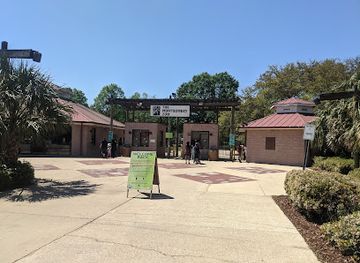
Montgomery Zoo & Mann Wildlife Learning Museum
Discover animals from around the world at the Montgomery Zoo and explore wildlife conservation at the Mann Wildlife Learning Museum in Alabama.
19 min drive · 6.3 km from city centre
-
Memorial park
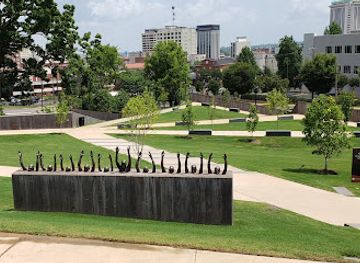
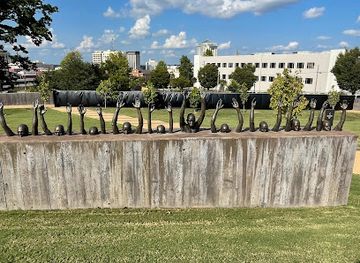
The National Memorial for Peace and Justice
A sacred space in Montgomery, AL, honoring victims of racial terror and promoting reflection on American history.
17 min walk · 1.3 km from city centre
-
Memorial park
The National Memorial for Peace and Justice
A solemn and essential monument in Montgomery, AL, honoring victims of racial terror lynchings and promoting justice and reconciliation.
17 min walk · 1.3 km from city centre
Best landmarks in Montgomery
The Alabama State Capitol is Montgomery’s defining civic landmark, a nineteenth-century domed building associated with Alabama state government and the Confederacy’s provisional capital. Dexter Avenue King Memorial Baptist Church is significant as the pulpit of Martin Luther King Jr. during the Montgomery Bus Boycott, while the Civil Rights Memorial nearby records the names of people who died in the movement between 1954 and 1968. The First White House of the Confederacy preserves the residence used by Jefferson Davis during Montgomery’s brief period as Confederate capital. The former Greyhound bus station, now the Freedom Rides Museum, represents the violence and federal enforcement surrounding interstate desegregation. Together these buildings show how the city’s architectural landmarks carry competing political, religious and social memories.
-
Museum
The Legacy Museum
Explore America's history of racial injustice, from slavery to mass incarceration, through powerful exhibits and immersive storytelling at this Montgomery museum.
6 min drive · 1.9 km from city centre
-
Memorial park
The National Memorial for Peace and Justice
A solemn memorial in Montgomery, AL, honoring victims of racial terror lynchings and promoting reflection on American history and racial injustice.
17 min walk · 1.3 km from city centre
-
Park
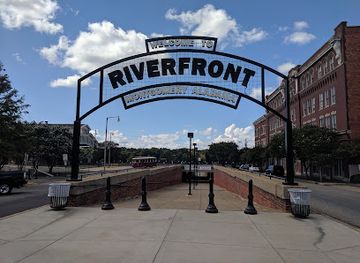
Riverfront Park
Experience Montgomery's vibrant heart at Riverfront Park: history, entertainment, and scenic river views await!
6 min drive · 2.1 km from city centre
-
Stadium
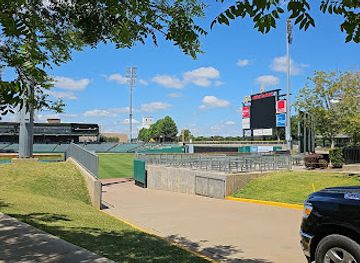
Montgomery Riverwalk Stadium
Experience baseball with a side of history at Montgomery's Riverwalk Stadium, home of the Biscuits and a downtown landmark.
6 min drive · 2.0 km from city centre
Explore Montgomery on the map
Plan your Montgomery trip on one map. See where the top attractions, landmarks, restaurants, bars and hotels are, find what's near where you're staying, and book hotels and experiences in a few clicks.
Neighbourhoods in Montgomery
-

-

-

-


Swipe for more neighbourhoods
Best hotels in Montgomery
Best restaurants in Montgomery
Montgomery’s dining identity is grounded in Alabama’s Southern cooking, with barbecue, fried catfish, chicken, greens, cornbread, biscuits and meat-and-three plates appearing alongside newer restaurants. Downtown and the nearby riverfront contain much of the city’s visitor-oriented dining, while Cloverdale and other established neighbourhoods have independent cafés, bistros and casual restaurants. Food traditions reflect both regional agriculture and African American culinary knowledge, and menus often combine smoked meats with seasonal vegetables and familiar comfort dishes. Bakeries and coffee shops offer a slower daytime rhythm, while local restaurants may provide more contemporary interpretations of Southern ingredients. Visitors should also look for Alabama-grown products and locally made specialities at markets and independent food businesses, rather than expecting a single dish to define the city.
-
Barbecue
Dreamland BBQ
Experience authentic Southern barbecue at Dreamland BBQ in Montgomery - where flavor meets tradition in every bite.
5 min drive · 1.8 km from city centre
-
American
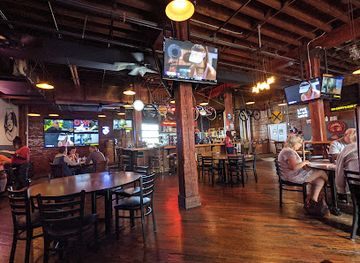
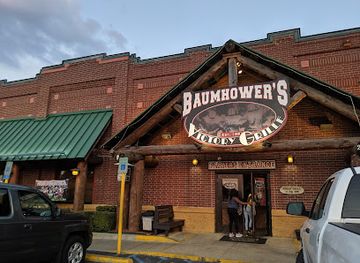
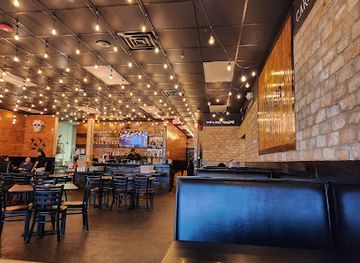
Baumhower's Victory Grille
Discover Baumhower's Victory Grille in Montgomery: an American dining experience blending delicious cuisine with an exciting sports bar atmosphere.
23 min drive · 7.7 km from city centre
-
Mexican
Sol Restaurante Mexicano & Taqueria
Savor authentic Mexican cuisine at Sol Restaurante Mexicano & Taqueria in Montgomery - where every dish tells a story.
16 min drive · 5.4 km from city centre
-
Steak
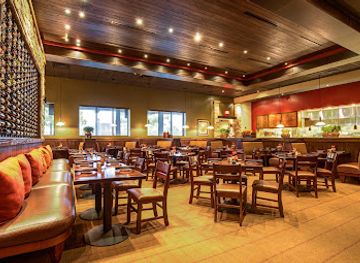
Firebirds Wood Fired Grill
Discover bold flavors at Firebirds Wood Fired Grill in Montgomery - where steak lovers meet seafood enthusiasts in a vibrant atmosphere.
32 min drive · 12 km from city centre
Best bars in Montgomery
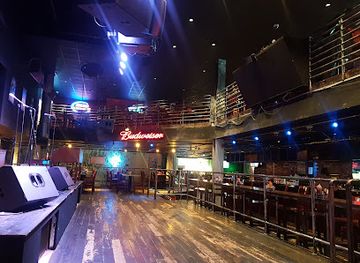
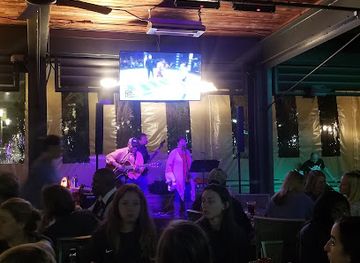
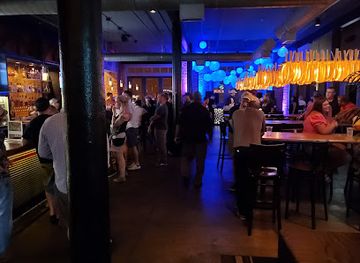
Montgomery’s evening scene is moderate rather than club-centred, with activity concentrated around downtown, Cloverdale and selected entertainment venues. Downtown bars and restaurants provide places for drinks after visiting the museums, while neighbourhood venues offer a more local atmosphere and occasional live music. The Alabama Shakespeare Festival and other performing-arts programmes create substantial evening options that do not depend on nightlife drinking, and concerts or civic events can bring additional energy to the riverfront and central district. Bars may range from relaxed pubs to contemporary cocktail settings, but opening patterns and event schedules vary. The city’s evenings are generally better suited to conversation, music, theatre and cultural programmes than to a large late-night club circuit.
-
Restaurant
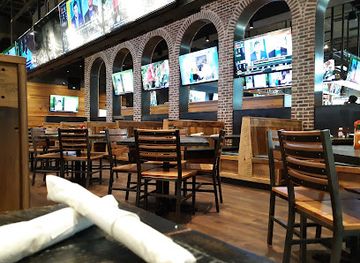
Walk-On's Sports Bistreaux
Experience the ultimate sports dining at Walk-On's Sports Bistreaux in Montgomery, where delicious food meets an energetic atmosphere.
34 min drive · 14 km from city centre
-
American
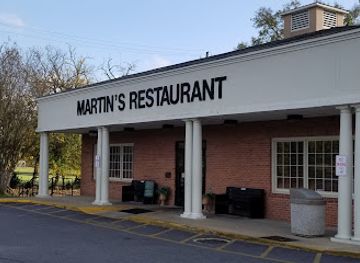
Martin's Restaurant
Discover the essence of Southern dining at Martin's Restaurant, where comfort food meets warm hospitality in Montgomery, Alabama.
6 min drive · 1.9 km from city centre
-
Grill
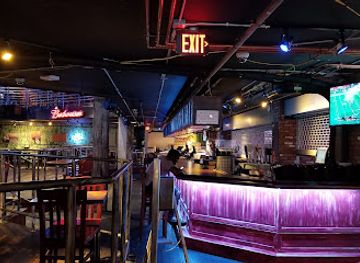
BB King's Blues Club
Dive into the heart of Montgomery's music scene at BB King's Blues Club, where delicious barbecue meets unforgettable live blues.
36 min drive · 16 km from city centre
-
Bar
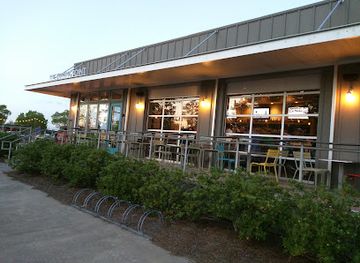
The Tipping Point
Discover The Tipping Point, Montgomery's beloved bar and restaurant, where locals gather to savor delectable sandwiches and vibrant drinks in a friendly atmosphere.
32 min drive · 12 km from city centre
Best nightclubs in Montgomery
Montgomery’s evening scene is moderate rather than club-centred, with activity concentrated around downtown, Cloverdale and selected entertainment venues. Downtown bars and restaurants provide places for drinks after visiting the museums, while neighbourhood venues offer a more local atmosphere and occasional live music. The Alabama Shakespeare Festival and other performing-arts programmes create substantial evening options that do not depend on nightlife drinking, and concerts or civic events can bring additional energy to the riverfront and central district. Bars may range from relaxed pubs to contemporary cocktail settings, but opening patterns and event schedules vary. The city’s evenings are generally better suited to conversation, music, theatre and cultural programmes than to a large late-night club circuit.
-
Grill
BB King's Blues Club
Discover the soulful blend of live blues music and exquisite Southern barbecue at BB King's Blues Club in Montgomery, Alabama.
36 min drive · 16 km from city centre
-
Lounge
The Exchange Bar
Experience the charm of Montgomery at The Exchange Bar, a cozy lounge offering craft cocktails, live music, and a warm atmosphere.
5 min drive · 1.8 km from city centre
-
Bar
AlleyBAR
Discover AlleyBAR: Montgomery's premier live music venue offering vibrant nightlife, local brews, and an unforgettable atmosphere for tourists.
5 min drive · 1.8 km from city centre
-
Bar
1048 Jazz & Blues
Experience soulful live music at 1048 Jazz & Blues, Montgomery's premier bar for jazz and blues enthusiasts seeking a vibrant night out.
6 min drive · 1.9 km from city centre

Best shops in Montgomery
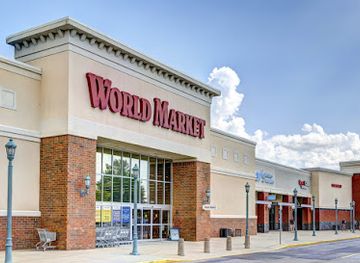
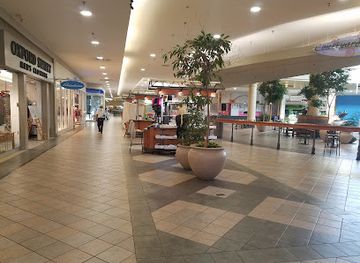
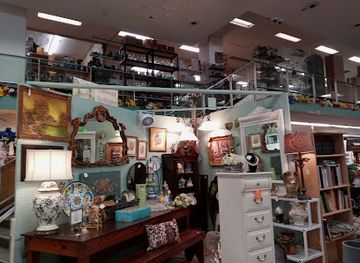
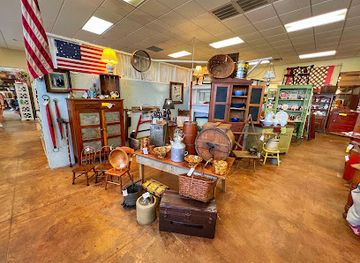
Shopping in Montgomery combines practical commercial centres with independent businesses in older neighbourhoods. The Shoppes at EastChase provide a large modern retail setting east of the central city, while downtown and Cloverdale offer smaller shops, galleries, cafés and local services amid historic streets and residential architecture. Visitors looking for distinctive purchases can browse independent books, art, vintage goods and Alabama-themed products, with regional food items and handmade work often more meaningful than generic souvenirs. Antiques and locally produced gifts appear through specialist retailers and periodic markets, although the city is not primarily a destination for luxury shopping. Retail patterns are dispersed, so visitors without a car may find the central and neighbourhood districts easier to combine with sightseeing.
-
Shopping mall
The Shoppes at Eastchase
Discover The Shoppes at Eastchase, Montgomery's vibrant shopping mall with diverse stores and dining options for a complete shopping experience.
33 min drive · 13 km from city centre
-
Shopping mall
Eastdale Mall
Explore Eastdale Mall in Montgomery, Alabama: a vibrant shopping hub with diverse stores, dining options, and family-friendly entertainment.
27 min drive · 9.1 km from city centre
-
Antique store
Eastbrook Flea Market and Antique Mall
Explore a treasure trove of antiques and unique finds at Eastbrook Flea Market and Antique Mall in Montgomery, Alabama, where every corner holds a story.
14 min drive · 4.7 km from city centre
-
Antique store
Amy's Antique & Flea Mall Inc
Explore a treasure trove of antiques and unique finds at Amy's Antique & Flea Mall in Montgomery, Alabama, perfect for treasure hunters and collectors alike.
27 min drive · 9.0 km from city centre
Get your free copy of our complete guide to Montgomery, delivered straight to you.
Everything on this page, from attractions and restaurants to essentials and local phrases, in one PDF you can read offline, print or share.
Already have an account? Sign in
Your Montgomery guide is ready.
We'll send it to · Not you? Sign out

Getting your guide ready…
We are putting together a fresh copy of the Montgomery guide. This can take up to a minute.
This can take a few moments. If your browser asks, choose Allow so the download can start. You'll find the guide in your Downloads folder.
Nothing happened? Download it again
Sorry, the guide is taking longer than usual. Please try again in a minute, or get it by email instead.
Montgomery essentials
Currency and Payment
Safety
Emergency Situations
Do's and Don'ts
Local Tips
From Eve
Local phrases worth knowing
You don't need to get them perfect. A few words go a long way, and locals appreciate the effort.
Basics
| English | Local | Say it |
|---|---|---|
| Hello | Hey y'all | [Hey y'all] |
| Goodbye | See y'all later | [See y'all later] |
| Yes | Yessir/Yessum | [Yessir/Yessum] |
| No | Nah | [Nah] |
| Please/You're welcome | Please/Sugah | [Please/Sugah] |
| Thank you | Thank ya | [Thank ya] |
| Excuse me/Sorry | Pardon me/I'm sorry | [Pardon me/I'm sorry] |
| How are you? | How y'all doin'? | [How y'all doin'?] |
| Fine. And you? | I'm doin' well. How 'bout you? | [I'm doin' well. How 'bout you?] |
| Do you speak English? | Ya speak English? | [Ya speak English?] |
| I don't understand | I don't reckon I understand | [I don't reckon I understand] |
Eating & Drinking
| English | Local | Say it |
|---|---|---|
| I'd like to see the menu, please | Can I see the menu, please | [Can I see the menu, please] |
| I don't eat meat | I don't eat no meat | [I don't eat no meat] |
| Cheers! | Cheers! | [Cheers!] |
| I would like to pay, please | I'd like to pay now | [I'd like to pay now] |
Emergencies
| English | Local | Say it |
|---|---|---|
| Help! | Help! | [Help!] |
| Go away! | Git away from me! | [Git away from me!] |
| Call the Police! | Call the Po-leece! | [Call the Po-leece!] |
| Call a doctor! | Call a doc! | [Call a doc!] |
| I'm lost | I done got lost | [I done got lost] |
| I'm ill | I ain't feelin' right | [I ain't feelin' right] |
Shopping
| English | Local | Say it |
|---|---|---|
| I'd like to buy... | I wanna buy... | [I wanna buy...] |
| I'm just looking | I'm just lookin' | [I'm just lookin'] |
| How much is it? | How much does it cost? | [How much does it cost?] |
| That's too expensive | That's too pricey | [That's too pricey] |
| Can you lower the price? | Can ya bring the price down? | [Can ya bring the price down?] |
Time & Numbers
| English | Local | Say it |
|---|---|---|
| What time is it? | What's the time? | [What's the time?] |
| It's one o'clock | It's one o'clock | [It's one o'clock] |
| Half past (10) | Half past ten | [Half past ten] |
| Morning | Mornin' | [Mornin'] |
| Afternoon | Afternoon | [Afternoon] |
| Evening | Evenin' | [Evenin'] |
| Yesterday | Yestiddy | [Yestiddy] |
| Today | Today | [Today] |
| Tomorrow | Tomorra | [Tomorra] |
| 1 | One | [One] |
| 2 | Two | [Two] |
| 3 | Three | [Three] |
| 4 | Four | [Four] |
| 5 | Five | [Five] |
| 6 | Six | [Six] |
| 7 | Seven | [Seven] |
| 8 | Eight | [Eight] |
| 9 | Nine | [Nine] |
| 10 | Ten | [Ten] |
Transport & Directions
| English | Local | Say it |
|---|---|---|
| Where's a/the...? | Where's the...? | [Where's the...?] |
| What's the address? | What's the address? | [What's the address?] |
| Can you show me (on the map)? | Can you show me on the map? | [Can you show me on the map?] |
| When's the next (bus)? | When's the next bus? | [When's the next bus?] |
| A ticket (to ....) | A ticket to ... | [A ticket to ...] |
History of Montgomery
Indigenous Lands and River Settlement
The Montgomery area lies within the traditional homeland of the Muscogee, or Creek, people, whose communities occupied and travelled through the river valleys of what is now Alabama. European American settlement expanded after the Creek were forcibly removed during the 1830s. The modern city developed from the nearby settlements of East Alabama Town and New Philadelphia, which were consolidated in 1819 and named Montgomery after the Irish-born Revolutionary War officer Richard Montgomery. Its position on the Alabama River supported commerce and helped the young settlement grow as a regional centre.
Statehood and Antebellum Growth
Montgomery became Alabama’s capital in 1846, strengthening its role as a political and commercial centre. Cotton agriculture and the river trade brought wealth to the city, although that economy depended on the enslavement of African Americans and the coercive plantation system surrounding it. The Alabama State Capitol, completed in 1851, became the visual focus of the new capital. Downtown warehouses, homes and churches also expanded during this period, leaving an architectural record of a prosperous but profoundly unequal antebellum society.
Confederate Capital and Civil War
In February 1861, delegates meeting in Montgomery adopted the Confederate States of America’s provisional constitution, and Jefferson Davis was inaugurated as provisional president on the Capitol steps. Montgomery served as the Confederacy’s first capital until the government moved to Richmond later that year. The First White House of the Confederacy, where Davis lived during this brief period, preserves part of that political history. Union forces captured Montgomery in April 1865, near the end of the Civil War, after which the city entered the difficult era of emancipation, Reconstruction and contested political change.
Segregation and Black Civic Life
After Reconstruction, Alabama established a system of racial segregation and disfranchisement that restricted African American political and economic life for decades. Montgomery nevertheless sustained influential Black churches, schools, businesses and civic organisations. Dexter Avenue King Memorial Baptist Church became an important centre of activism, and Martin Luther King Jr. served as its pastor from 1954 to 1959. The city’s history during this period includes both the institutional power of Jim Crow and the community networks that challenged it through education, organising, journalism and religious leadership.
The Montgomery Bus Boycott
On 1 December 1955, Rosa Parks was arrested after refusing to surrender her seat to a white passenger on a Montgomery bus. Her arrest helped trigger a city-wide boycott organised by the Montgomery Improvement Association, led by Martin Luther King Jr. African American residents sustained the protest for 381 days despite intimidation and economic pressure. The campaign ended after federal court decisions and helped establish King as a national civil rights leader. The boycott also demonstrated the force of coordinated local activism in challenging segregation laws.
Freedom Rides and Civil Rights Change
The struggle continued in Montgomery during the Freedom Rides of 1961, when interracial groups travelled by bus to challenge segregation in interstate transport. Riders were attacked in Alabama, and hundreds of demonstrators later gathered in Montgomery before a violent assault outside the First Baptist Church. National pressure contributed to federal enforcement of desegregation in interstate facilities. In 1965, the Selma to Montgomery voting-rights march brought another major campaign to the state capital, where marchers completed their journey and helped build support for the Voting Rights Act.
A City Confronting Its Past
Since the civil rights era, Montgomery has remained Alabama’s political capital while developing institutions that interpret the city’s complex past. The Civil Rights Memorial opened in 1989, followed by the Rosa Parks Museum in 2000, the Legacy Museum in 2018 and the National Memorial for Peace and Justice in the same year. Together with historic churches, civic buildings and preserved neighbourhoods, these sites have broadened public interpretation beyond state and Confederate history. Montgomery’s contemporary identity is increasingly shaped by efforts to acknowledge racial violence, resistance and the work of reconciliation.
Montgomery in Photos
Browse through our photo collection highlighting the charm and character of the destination.
Cities near Montgomery
The closest cities to Montgomery, if you have time for more than one stop.
-

-

-

-

-


Swipe for more cities
Explore more

Explore more of Alabama
Discover Alabama: A Southern state rich in history, culture, and natural beauty, offering unforgettable experiences from vibrant cities to serene beaches and majestic mountains.
Explore Alabama