

Free Lezhë Travel Guide & Mobile App
Plan your Lezhë trip with Evendo. Get free guides to top attractions, restaurants, hotels, and bars. Web access or download the mobile app.


Lezhë, Albania reveals Illyrian ruins, Skanderbeg’s legacy, a hilltop castle and easy access to northern landscapes, wetlands and the Adriatic coast.
Ancient Foundations and Medieval Memory
Lezhë occupies a strategic position in northern Albania, where the Drin valley approaches the Adriatic coast. Known in antiquity as Lissus, the settlement grew around a fortified hill overlooking routes between the interior and the sea. Its layered past is visible in the castle walls, archaeological remains and the cathedral associated with Gjergj Kastrioti Skënderbeu, Albania’s fifteenth-century national hero. In 1444, Lezhë hosted the League of Lezhë, an alliance of Albanian princes formed under Skënderbeu’s leadership to resist Ottoman expansion.Read more about Lezhë
A Compact Town with Broad Horizons
When is the best time to visit Lezhë?
Best: May–June, September · 26–32°C| Month | High (°C) | Rainfall (mm) |
|---|---|---|
| January | 12 | 107 |
| February | 12 | 106 |
| March | 15 | 95 |
| April | 21 | 88 |
| May (best) | 26 | 71 |
| June (best) | 32 | 42 |
| July | 35 | 31 |
| August | 35 | 33 |
| September (best) | 30 | 60 |
| October | 23 | 118 |
| November | 17 | 144 |
| December | 13 | 147 |
Getting to and around Lezhë
How to get there
Transportation
Best attractions in Lezhë
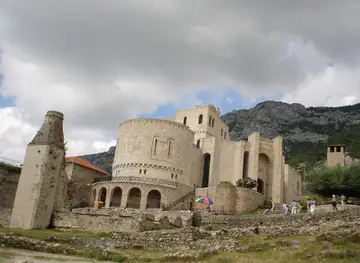
Lezhë’s principal sights are concentrated around the historic hill and the compact centre below it. Lezhë Castle rises above the town on the site of ancient Lissus, combining archaeological remains with broad views across the Drin plain and towards the surrounding hills. At the foot of the fortress, the Memorial Church of Saint Nicholas recalls the League of Lezhë and the burial tradition associated with Skanderbeg. The church’s small museum setting adds context to the fifteenth-century alliance of Albanian princes. Further exploration reveals fragments of ancient walls and masonry incorporated into later fortifications, while the town’s streets offer a glimpse of everyday northern Albanian life rather than a heavily curated historic quarter. Beyond the city, the Kune-Vain-Tale wetland landscape and the Adriatic shore at Shëngjin provide nature and coastal contrasts, but they are separate destinations within the wider municipal area rather than attractions in central Lezhë.
-
Castle
Castle of Kruja
Explore Kruja Castle: a symbol of Albanian resilience, offering history, culture, and stunning panoramic views from its hilltop fortress.
53 min drive · 33 km from city centre
-
Tourist attraction
Rozafa Castle
Explore Rozafa Castle in Shkodër: a historic fortress with stunning views, rich legends, and a glimpse into Albania's past.
52 min drive · 32 km from city centre
-
Tourist attraction
Rozafa Castle
Explore Rozafa Castle in Shkodër: a historic fortress with stunning views, rich history, and the legendary tale of Rozafa.
52 min drive · 32 km from city centre
-
Museum
Gjergj Kastrioti National Museum (Skanderbeg)
Explore the legacy of Albania's national hero, Skanderbeg, within the walls of the historic Kruja Castle. A journey through Albanian history awaits.
53 min drive · 33 km from city centre


Best landmarks in Lezhë
Lezhë’s most important landmarks express its position at the meeting point of ancient, medieval and national history. Lezhë Castle occupies the hill of ancient Lissus, where successive fortifications preserve traces of Illyrian, Roman, medieval and later construction. Its walls and elevated setting explain why the site remained strategically valuable for centuries. The Memorial Church of Saint Nicholas is associated with the League of Lezhë, convened in 1444 under Gjergj Kastrioti Skënderbeu, and with the traditional location of his tomb. Within and around the castle, surviving ancient masonry demonstrates how later builders adapted earlier defensive structures. The Drin plain below is also part of Lezhë’s visual identity: its rivers, fields and routes towards the coast help explain the town’s historical importance. Together, these landmarks present Lezhë less as a collection of isolated monuments than as a compact historical landscape shaped by movement, defence and memory.
-
Historical place
Lezhë Castle
Explore Lezhë Castle: A historic Albanian fortress with stunning views and a rich tapestry of Illyrian, Roman, and Ottoman influences.
6 min walk · 0.5 km from city centre
-
Pizza
Lezha Park
Experience authentic Albanian pizza in a charming park setting. Fresh ingredients, vibrant atmosphere, and warm hospitality await!
7 min drive · 2.2 km from city centre
-
Catholic church
Kisha Katolike Françeskane
Discover the serene Kisha Katolike Françeskane in Shkodër, a beacon of faith and history with stunning architecture and a peaceful atmosphere.
53 min drive · 33 km from city centre
-
Catholic church
The Church of St. Anthony
Discover the historic Church of St. Anthony near Kepi i Rodonit, Albania: a blend of Romanesque-Gothic architecture, serene landscapes, and cultural heritage.
47 min drive · 27 km from city centre


Explore Lezhë on the map
Plan your Lezhë trip on one map. See where the top attractions, landmarks, restaurants, bars and hotels are, find what's near where you're staying, and book hotels and experiences in a few clicks.
Best hotels in Lezhë
Best restaurants in Lezhë
Lezhë’s dining scene reflects northern Albanian home cooking, with menus shaped by the fertile Drin plain, pastoral traditions and the nearby Adriatic. Expect grilled meats, qofte, seasonal vegetables, salads, soups and byrek, the layered savoury pastry found in many Albanian households. Dairy products, beans and locally grown produce are common in traditional cooking, while restaurants towards the coast draw on fish and seafood from the Shëngjin area. Town-centre eateries tend to be informal and family-run, with cafés providing coffee, pastries and simple meals throughout the day. The culinary character changes between inland Lezhë and coastal Shëngjin: the former suits hearty regional dishes, while the latter is associated more strongly with seafood. Menus may be brief and seasonal, so asking about the day’s ingredients can reveal more than relying on a fixed international selection.
-
Restaurant
Mrizi i Zanave - Restorant Agroturizëm
Discover authentic Albanian cuisine at Mrizi i Zanave - where tradition meets flavor amidst stunning landscapes.
33 min drive · 13 km from city centre
-
Restaurant
Rapsodia Restaurant
Experience the flavors of Albania at Rapsodia Restaurant in Lezhë – where farm-fresh ingredients meet traditional culinary artistry.
7 min drive · 2.4 km from city centre
-
Restaurant
Hoteli i Gjuetisë
Experience authentic Albanian cuisine at Hoteli i Gjuetisë – where every dish tells a story amidst breathtaking views.
14 min drive · 4.5 km from city centre
-
Restaurant
Agroturizëm Hylli i Dritës
Discover authentic Albanian flavors at Agroturizëm Hylli i Dritës – where fresh ingredients meet rural charm in Lezhë.
31 min drive · 11 km from city centre


Best bars in Lezhë
Lezhë has a restrained evening scene centred on cafés, casual bars and restaurants rather than a dense club district. Social life usually gathers around central streets and squares, where residents meet for coffee, conversation, beer or raki, the traditional spirit served in many parts of Albania. Evenings are generally more sociable than theatrical, with nightlife shaped by family life and local routines. During the warmer months, the coastal town of Shëngjin offers a livelier seaside atmosphere, including promenade cafés, bars and seasonal entertainment, but it is distinct from Lezhë itself. Visitors seeking performances or larger late-night venues are more likely to find a broader choice in Tirana or Shkodër. In the city, an unhurried café evening, followed by dinner and a walk through the illuminated central streets, better reflects local patterns than a large nightclub experience.
-
Restaurant
Rapsodia Restaurant
Discover the flavors of Albania at Rapsodia Restaurant, where fresh ingredients and culinary passion come together in a delightful dining experience.
7 min drive · 2.4 km from city centre
-
Restaurant
Bistro Serrani
Experience the best of Italian and seafood cuisine at Bistro Serrani in Lezhë, a top-rated dining destination for tourists.
6 min walk · 0.4 km from city centre
-
Restaurant
lalanu
Discover the flavors of Albania at Lalanu, a charming restaurant and cocktail bar in Lezhë, perfect for a unique dining experience.
1 min walk · 0.1 km from city centre
-
Restaurant
Havana Bar Restaurant
Discover the vibrant flavors of Italy at Havana Bar Restaurant in Lezhë, Albania, where culinary delights meet a cozy lounge atmosphere.
10 min drive · 3.4 km from city centre


Best nightclubs in Lezhë
Lezhë has a restrained evening scene centred on cafés, casual bars and restaurants rather than a dense club district. Social life usually gathers around central streets and squares, where residents meet for coffee, conversation, beer or raki, the traditional spirit served in many parts of Albania. Evenings are generally more sociable than theatrical, with nightlife shaped by family life and local routines. During the warmer months, the coastal town of Shëngjin offers a livelier seaside atmosphere, including promenade cafés, bars and seasonal entertainment, but it is distinct from Lezhë itself. Visitors seeking performances or larger late-night venues are more likely to find a broader choice in Tirana or Shkodër. In the city, an unhurried café evening, followed by dinner and a walk through the illuminated central streets, better reflects local patterns than a large nightclub experience.
-
Restaurant
Bistro Serrani
Discover the flavors of Italy and Albania at Bistro Serrani, Lezhë's premier dining destination for exquisite cuisine and a cozy atmosphere.
6 min walk · 0.4 km from city centre
-
Restaurant
Havana Bar Restaurant
Experience the perfect blend of Italian cuisine and a vibrant atmosphere at Havana Bar Restaurant in Albania’s Lezhë District.
10 min drive · 3.4 km from city centre
-
Pizza
Island Lounge Bar and Pizzeria
Discover the vibrant Island Lounge Bar and Pizzeria in Lezhë, Albania, where delicious pizza meets a lively atmosphere and refreshing drinks.
6 min drive · 2.2 km from city centre
-
Bar
Bar Milenium
Discover the lively spirit of Lezhë at Bar Milenium, where great drinks and a vibrant atmosphere come together for an unforgettable experience.
9 min walk · 0.7 km from city centre


Best shops in Lezhë
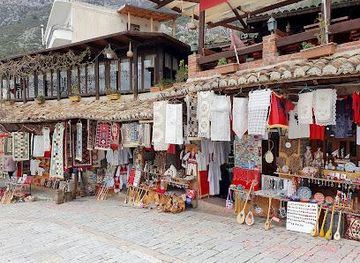
Shopping in Lezhë is practical and local in character, with everyday retail concentrated around the central streets, market areas and small independent shops. Visitors may find seasonal fruit and vegetables from the surrounding plain, local dairy products, honey, olives, preserves and other Albanian foodstuffs, although selection varies with the season. Small businesses and market stalls offer a more authentic sense of the town’s commercial life than formal souvenir outlets, while cafés and bakeries are useful places to observe daily routines. Traditional Albanian textiles, carved objects and packaged regional products may be available, but the range is more modest than in Tirana or the established tourist centres. Shëngjin’s seasonal coastal retail is oriented more towards beach visitors, whereas Lezhë’s shops serve local residents. Bargaining is not automatically expected in ordinary shops; ask politely in markets and confirm prices before buying.
-
Bazar
Kruja Bazaar
Experience the rich culture and vibrant atmosphere of Kruja Bazaar, a unique marketplace in Albania offering local crafts and delicious cuisine.
53 min drive · 33 km from city centre
-
Department store
Jumbo Lezhë
Explore the vibrant offerings at Jumbo Lezhë, a premier department store in Albania, perfect for all your shopping needs.
10 min walk · 0.8 km from city centre
-
Bazar
Pazari i vjetër
Experience the vibrant atmosphere of Pazari i Vjetër, a historic bazaar in Krujë, showcasing local crafts and culinary delights.
53 min drive · 33 km from city centre
-
Grocery store
Xhedis Supermarket
Discover local flavors and fresh produce at Xhedis Supermarket, your ultimate grocery stop in Lezhë, Albania.
10 min walk · 0.8 km from city centre


Get your free copy of our complete guide to Lezhë, delivered straight to you.
Everything on this page, from attractions and restaurants to essentials and local phrases, in one PDF you can read offline, print or share.
Already have an account? Sign in
Your Lezhë guide is ready.
We'll send it to · Not you? Sign out

Getting your guide ready…
We are putting together a fresh copy of the Lezhë guide. This can take up to a minute.
This can take a few moments. If your browser asks, choose Allow so the download can start. You'll find the guide in your Downloads folder.
Nothing happened? Download it again
Sorry, the guide is taking longer than usual. Please try again in a minute, or get it by email instead.
Lezhë essentials
Currency and Payment
Safety
Emergency Situations
Do's and Don'ts
Local Tips
From Eve
Local phrases worth knowing
You don't need to get them perfect. A few words go a long way, and locals appreciate the effort.
Basics
| English | Local | Say it |
|---|---|---|
| Hello | Tungjatjeta | [toon-jah-tyeh-tah] |
| Goodbye | Mirupafshim | [mee-roo-pahf-sheem] |
| Yes | Po | [poh] |
| No | Jo | [yoh] |
| Please/You're welcome | Ju lutem | [yoo loo-tehm] |
| Thank you | Faleminderit | [fah-leh-meen-deh-reet] |
| Excuse me/Sorry | Më falni | [muh fahl-nee] |
| How are you? | Si jeni? | [see yeh-nee] |
| Fine. And you? | Mirë. Ju? | [mee-ruh. yoo] |
| Do you speak English? | A flisni anglisht? | [ah flees-nee ahng-leesht] |
| I don't understand | Nuk kuptoj | [nook koop-toy] |
Eating & Drinking
| English | Local | Say it |
|---|---|---|
| I'd like to see the menu, please | Do të doja të shikoja menunë, ju lutem | [doh tuh doh-yah tuh shee-koh-yah meh-noo-nuh, yoo loo-tehm] |
| I don't eat meat | Nuk ha mish | [nook hah meesh] |
| Cheers! | Gëzuar! | [geh-zoo-ahr] |
| I would like to pay, please | Do të doja të paguaja, ju lutem | [doh tuh doh-yah tuh pah-gwah-yah, yoo loo-tehm] |
Emergencies
| English | Local | Say it |
|---|---|---|
| Help! | Ndihmë! | [ndee-muh] |
| Go away! | Largohu! | [lahr-goh-hoo] |
| Call the Police! | Thirrni policinë! | [theer-nee poh-lee-tsee-nuh] |
| Call a doctor! | Thirrni një doktor! | [theer-nee nyuh dohk-tohr] |
| I'm lost | Jam humbur | [yahm hoom-boohr] |
| I'm ill | Jam i sëmurë | [yahm ee suhm-roo] |
Shopping
| English | Local | Say it |
|---|---|---|
| I'd like to buy... | Do të doja të blija... | [doh tuh doh-yah tuh bleeh-yah] |
| I'm just looking | Po shikoj vetëm | [poh shee-koy veh-tuhm] |
| How much is it? | Sa kushton? | [sah koosh-tohn] |
| That's too expensive | Është shumë e shtrenjtë | [uhsh-tuh shoe-muh uh shtrehn-jtuh] |
| Can you lower the price? | A mund të ulni çmimin? | [ah moon-duh tuh ool-nee chmee-meen] |
Time & Numbers
| English | Local | Say it |
|---|---|---|
| What time is it? | Sa është ora? | [sah uhsh-tuh oh-rah] |
| It's one o'clock | Është një e orës | [uhsh-tuh nyuh uh oh-rehs] |
| Half past (10) | Në mes të (10) | [nuh mehs tuh] |
| Morning | Mëngjes | [muhn-gyes] |
| Afternoon | Pasdite | [pahs-deet] |
| Evening | Mbrëmje | [mbruhm-yeh] |
| Yesterday | Dje | [djeh] |
| Today | Sot | [soht] |
| Tomorrow | Nesër | [neh-sehr] |
| 1 | Një | [nyuh] |
| 2 | Dy | [duh] |
| 3 | Tre | [treh] |
| 4 | Katër | [ka-tuhr] |
| 5 | Pesë | [peh-suh] |
| 6 | Gjashtë | [gyahsht] |
| 7 | Shtatë | [shta-tuh] |
| 8 | Tetë | [teh-tuh] |
| 9 | Nëntë | [nuhntuh] |
| 10 | Dhjetë | [th-yeh-tuh] |
Transport & Directions
| English | Local | Say it |
|---|---|---|
| Where's a/the...? | Ku është një/...? | [koo uhsh-tuh nyuh/...?] |
| What's the address? | Cila është adresa? | [chee-lah uhsh-tuh ah-dreh-sah] |
| Can you show me (on the map)? | A mund të më tregoni (në hartë)? | [ah moon-duh tuh muh troh-nyee (nuh hahr-tuh)?] |
| When's the next (bus)? | Kur është autobusi i ardhshëm? | [koor uhsh-tuh ow-toh-boo-see ee ahrd-shuhm] |
| A ticket (to ....) | Një biletë (në ....) | [nyuh bee-leh-tuh (nuh ....)] |
History of Lezhë
Lissus and the Illyrian Coast
Lezhë’s ancient predecessor, Lissus, occupied a defensible hill and controlled routes linking the Adriatic coast with the interior. The settlement is generally associated with the Illyrian world, although surviving evidence reflects the movement of several powers through the region. In the fourth century BC, the city was developed as a Greek-founded settlement connected with Dionysius I of Syracuse, before becoming part of the expanding sphere of Macedon and later Rome. Its position beside the Drin made it commercially and militarily important, while the surrounding plain supported connections with inland communities. Remains incorporated into and displayed around Lezhë Castle preserve fragments of this early urban history.
Roman and Late Antique Lissus
Under Roman rule, Lissus became part of the province of Dalmatia and continued to function as a fortified settlement and regional centre. Roman administration strengthened the city’s links with Adriatic routes, while Christianity gradually became an important part of its civic identity. In late antiquity, Lissus was known as a bishopric and remained significant despite the political instability affecting the western Balkans. The hilltop position continued to provide protection, and successive walls were adapted as military needs changed. Archaeological traces in and around the castle demonstrate how ancient foundations were repeatedly reused rather than replaced by an entirely new town.
Medieval Rulers and Venetian Lezhë
During the medieval period, Lezhë stood at the intersection of competing Byzantine, local and western Adriatic interests. The town passed through changing spheres of influence before coming under Venetian control in the late fourteenth century. Venice valued the site for its defensive position and its access to routes across northern Albania, maintaining the fortress and the settlement’s commercial role. Medieval Lezhë was also shaped by the spread and institutional development of Christianity, reflected in its ecclesiastical history. The surviving castle complex, although altered many times, records this period of fortified rule and the constant strategic importance of the hill.
The League of Lezhë, 1444
Lezhë entered Albanian national history on 2 March 1444, when Gjergj Kastrioti Skënderbeu brought together a coalition of Albanian princes in what became known as the League of Lezhë. The alliance was formed to coordinate resistance against Ottoman expansion and marked a rare political and military union among several regional powers. Its decisions were associated with the town and with the cathedral of Saint Nicholas, later remembered as the site of Skanderbeg’s burial. The league did not create a modern state, but it gave resistance a shared political framework and made Lezhë a central symbol in Albania’s historical narrative.
Ottoman Rule and Changing Fortunes
Ottoman forces eventually incorporated Lezhë into the empire, and the town’s political circumstances changed as regional power shifted away from the medieval coastal networks. The fortress remained strategically useful, while the settlement developed within the administrative, religious and commercial structures of Ottoman Albania. These centuries brought changes in population, land use and religious life, as well as periods of decline and renewal. The modern town does not preserve a single untouched historical layer: ancient masonry, medieval fortifications, ecclesiastical remains and later urban development occupy the same compact landscape.
Lezhë in Modern Albania
In the twentieth century, Lezhë became part of the modern Albanian state and developed as a regional centre serving the surrounding agricultural plain and northern settlements. Infrastructure, public institutions and housing expanded beyond the historic hill, while archaeological and religious sites gained renewed importance in the cultural life of the town. The restoration and interpretation of the Memorial Church of Saint Nicholas helped reinforce Lezhë’s association with Skanderbeg and the League of Lezhë. Today, the city’s identity combines an ancient strategic location, a powerful medieval political memory and connections to the Adriatic coast, wetlands and mountain landscapes.
Lezhë in Photos
Browse through our photo collection highlighting the charm and character of the destination.
Cities near Lezhë
The closest cities to Lezhë, if you have time for more than one stop.
-
-

-

-

-


Swipe for more cities
Explore more

Explore more of Albania
Discover Albania: A land of untamed beauty, rich history, and warm hospitality, offering stunning beaches, rugged mountains, and vibrant cities.
Explore Albania