

Skanderbeg Square (Tirana) Travel Guide - Free
Explore Skanderbeg Square in Tirana with Evendo's free guide. Find the best shops, historic streets, restaurants, and gems on web or mobile.


Skanderbeg Square in Tirana brings Albania’s national history together with Ottoman landmarks, museums, cafés, markets and lively central-city walks.
A National Square at the Centre of Tirana
Skanderbeg Square is Tirana’s principal public space, a broad pedestrian plaza where the capital’s political history, religious heritage and everyday city life meet. Named after Albania’s medieval national hero, Gjergj Kastrioti Skanderbeg, the square is marked by his equestrian statue and surrounded by some of the city’s most recognisable buildings. Its open proportions make it an important orientation point for first-time visitors, while the surrounding cafés, museums and government institutions give it a steady rhythm from morning until evening.Read more about Skanderbeg Square
Layered Architecture and Urban Memory
Museums, Markets and Central-City Life
Best attractions in Skanderbeg Square
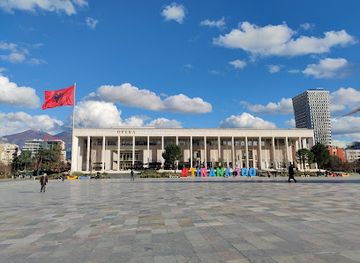
Skanderbeg Square’s principal attractions can be explored within a compact pedestrian circuit. The National History Museum faces the plaza with its large socialist-era mosaic and galleries tracing Albania’s history, while the Et’hem Bey Mosque preserves finely painted Ottoman interiors and remains an active place of worship. Beside it, the Clock Tower offers one of Tirana’s most recognisable silhouettes and, when open, elevated views over the centre. The Palace of Culture contains the National Theatre of Opera and Ballet and the National Library, although individual access depends on programmes and opening arrangements. The square itself is an attraction: its geometric paving, planted edges and shallow water features frame public gatherings and provide changing views of the surrounding architecture. Nearby, the House of Leaves and the streets towards Pazari i Ri extend the historical and cultural experience beyond the plaza.
-
Tourist attraction
Skanderbeg Square
Discover Tirana's vibrant heart at Skanderbeg Square, a historical and cultural hub surrounded by iconic landmarks and national pride.
2 min walk · 0.1 km from neighbourhood centre
-
Museum
Bunk'Art 2
Explore Albania's communist history in a former nuclear bunker in the heart of Tirana. A chilling and insightful journey into the past.
1 min walk · 0.1 km from neighbourhood centre
-
Tourist attraction
Center of Tirana
Discover Skanderbeg Square, the beating heart of Tirana, where Albania's history, culture, and vibrant modern life converge in a dynamic public space.
1 min walk · 0.1 km from neighbourhood centre
-
Tourist attraction
Piazza principale
Discover Tirana's central hub: Piazza Scanderbeg, where history, culture, and modern life converge in a vibrant public space.
2 min walk · 0.1 km from neighbourhood centre


Best landmarks in Skanderbeg Square
The landmark ensemble around Skanderbeg Square compresses several chapters of Tirana’s development into one civic setting. The equestrian statue of Skanderbeg, installed in 1968, gives the plaza its national symbol and commemorates the fifteenth-century Albanian commander. The adjacent Et’hem Bey Mosque and Clock Tower are surviving markers of Ottoman-era Tirana, with the mosque’s façade and interior decoration making it particularly significant. Across the square, the National History Museum represents the monumental public architecture of the socialist period, while the Palace of Culture occupies the historic centre’s former bazaar site. The National Bank of Albania, on the southern side of the central area, adds a prominent interwar and Italian-era architectural presence. Together these structures are important not because they form a uniform style, but because their contrasts make the capital’s political and urban transformations visible.
-
Cultural center
Palace of Culture
Discover Tirana's Palace of Culture: A monumental landmark housing the National Theater and Library on vibrant Skanderbeg Square.
2 min walk · 0.2 km from neighbourhood centre
-
Park
Friendship Monument
A symbol of unity and friendship between Albania and Kuwait, the Friendship Monument offers a tranquil escape in the heart of Tirana.
3 min walk · 0.2 km from neighbourhood centre
-
Tourist attraction
Center of Tirana
Discover Skanderbeg Square in Tirana, Albania: a vibrant hub of history, culture, and modern life, surrounded by iconic landmarks and attractions.
1 min walk · 0.1 km from neighbourhood centre
-
Historical landmark
The Clock Tower of Tirana
Climb Tirana's historic Clock Tower for panoramic city views and a glimpse into Albania's Ottoman past. A timeless landmark in Skanderbeg Square.
1 min walk · 0.1 km from neighbourhood centre


Explore Skanderbeg Square on the map
A handpicked selection of must-see spots in Skanderbeg Square, mapped for you.
Best hotels in Skanderbeg Square
Best bars in Skanderbeg Square
Evenings around Skanderbeg Square are generally sociable and central rather than club-focused. Cafés and bars around the surrounding streets serve coffee, beer, wine and cocktails, while restaurants and hotel lounges provide quieter options close to the monuments. The square itself often attracts people for strolling, conversation and public events after sunset, when the open paving and illuminated façades give it a different character from the daytime civic space. Cultural performances may be available at the Palace of Culture, depending on the programme. For a denser bar scene, visitors usually continue towards the streets around Blloku or other central districts, which are nearby but should not be confused with the square’s own nightlife. Because venues and events change, current listings are more reliable than assuming a permanent club programme around the plaza.
-
Bar
Opera Cafe
Discover the charm of Tirana at Opera Cafe, where exquisite flavors meet a vibrant atmosphere in the heart of Skanderbeg Square.
2 min walk · 0.2 km from neighbourhood centre
-
Grill
Book & Beer Albania
Discover the perfect fusion of culinary delights and literary treasures at Book & Beer Albania in the heart of Tirana.
1 min walk · 0.1 km from neighbourhood centre


Best nightclubs in Skanderbeg Square
Evenings around Skanderbeg Square are generally sociable and central rather than club-focused. Cafés and bars around the surrounding streets serve coffee, beer, wine and cocktails, while restaurants and hotel lounges provide quieter options close to the monuments. The square itself often attracts people for strolling, conversation and public events after sunset, when the open paving and illuminated façades give it a different character from the daytime civic space. Cultural performances may be available at the Palace of Culture, depending on the programme. For a denser bar scene, visitors usually continue towards the streets around Blloku or other central districts, which are nearby but should not be confused with the square’s own nightlife. Because venues and events change, current listings are more reliable than assuming a permanent club programme around the plaza.
-
Disco club
Tunel Music Venue
Experience the electrifying nightlife of Tirana at Tunel Music Venue, where unforgettable music and vibrant vibes await every night.
2 min walk · 0.2 km from neighbourhood centre

Best shops in Skanderbeg Square
Shopping immediately around Skanderbeg Square combines practical central-city retail with cultural and souvenir shopping rather than a single specialist market street. Toptani Shopping Centre, just east of the plaza, provides a modern indoor retail environment, while small shops, bookshops, bakeries and cafés line the surrounding streets. Visitors looking for local food products, market displays and a more informal atmosphere can continue towards Pazari i Ri, the revived market district nearby. The square is also a useful starting point for browsing Albanian books, handicrafts and small souvenirs, though stock varies between businesses and many shops serve local residents as much as tourists. The pedestrian layout makes window-shopping easy, but the area changes quickly between grand civic buildings, modest independent premises and contemporary commercial spaces, reflecting Tirana’s evolving centre.
-
Gift shop
Tradita.al
Explore the rich heritage of Albania at Tradita.al, a charming gift shop in Tirana offering unique handcrafted souvenirs and traditional artisan crafts.
2 min walk · 0.2 km from neighbourhood centre
-
 Gift shop
Unique gift shop
Explore the Unique Gift Shop in Tirana for authentic Albanian crafts and souvenirs, showcasing the rich culture and artistry of the region.
1 min walk · 0.1 km from neighbourhood centre
-
Gift shop
giftshopbyjeti
Discover authentic Albanian souvenirs at Gift Shop by Jeti in Tirana, where local craftsmanship meets unique gift ideas.
1 min walk · 0.1 km from neighbourhood centre

Skanderbeg Square essentials
Getting There
Getting Around
Safety
Emergency Situations
Do's and Don'ts
Local Tips

From Eve
Local phrases worth knowing
You don't need to get them perfect. A few words go a long way, and locals appreciate the effort.
Basics
| English | Local | Say it |
|---|---|---|
| Hello | Përshëndetje | [puhr-shuhn-deh-tyeh] |
| Goodbye | Mirupafshim | [mee-roo-pahf-sheem] |
| Yes | Po | [poh] |
| No | Jo | [yoh] |
| Please/You're welcome | Ju lutem | [yoo loo-tehm] |
| Thank you | Faleminderit | [fah-leh-meen-deh-reet] |
| Excuse me/Sorry | Më falni | [muh fahl-nee] |
| How are you? | Si jeni? | [see yeh-nee] |
| Fine. And you? | Mirë. Dhe ju? | [mee-ruh. theh yoo] |
| Do you speak English? | A flisni anglisht? | [ah flees-nee ahn-gleesht] |
| I don't understand | Nuk kuptoj | [nook koop-toy] |
Eating & Drinking
| English | Local | Say it |
|---|---|---|
| I'd like to see the menu, please | Do të doja të shikoja menunë, ju lutem | [doh tuh doh-yah tuh shee-koh-yah meh-noo-nuh yoo loo-tehm] |
| I don't eat meat | Unë nuk ha mish | [oo-neh nook hah meesh] |
| Cheers! | Gëzuar! | [geh-zoo-ahr] |
| I would like to pay, please | Do të doja të paguaja, ju lutem | [doh tuh doh-yah tuh pah-gwah-yah yoo loo-tehm] |
Emergencies
| English | Local | Say it |
|---|---|---|
| Help! | Ndihmë! | [ndee-muh] |
| Go away! | Shko larg! | [shkoh lahrg] |
| Call the Police! | Thirrni policin! | [thihr-nee poh-lee-tseen] |
| Call a doctor! | Thirrni një doktor! | [thihr-nee nyuh dohk-tohr] |
| I'm lost | Jam humbur | [yahm hoom-boor] |
| I'm ill | Jam i sëmurë | [yahm ee seh-moo-ruh] |
Shopping
| English | Local | Say it |
|---|---|---|
| I'd like to buy... | Do të doja të bleja... | [doh tuh doh-yah tuh bleh-yah] |
| I'm just looking | Po vetëm shikoj | [poh veh-tehm shee-koy] |
| How much is it? | Sa kushton? | [sah koosh-tohn] |
| That's too expensive | Kjo është shumë e shtrenjtë | [kyoh esh-teh shoo-muh eh shtrehn-jteh] |
| Can you lower the price? | A mund ta ulni çmimin? | [ah moon-d tah ool-nee chmee-meen] |
Time & Numbers
| English | Local | Say it |
|---|---|---|
| What time is it? | Sa është ora? | [sah esh-teh oh-rah] |
| It's one o'clock | Është një ora | [esh-teh nyuh oh-rah] |
| Half past (10) | Njëmbëdhjetë | [nyuhm-buh-dhyeh-teh] |
| Morning | Mëngjes | [muhn-jehs] |
| Afternoon | Pasdite | [pahs-dee-teh] |
| Evening | Mbrëmje | [mbruhm-yeh] |
| Yesterday | Dje | [djeh] |
| Today | Sot | [soht] |
| Tomorrow | Nesër | [neh-sahr] |
| 1 | Një | [nyuh] |
| 2 | Dy | [duh] |
| 3 | Tre | [treh] |
| 4 | Katër | [kah-tuhr] |
| 5 | Pesë | [peh-suh] |
| 6 | Gjashtë | [gyahsht] |
| 7 | Shtatë | [shtah-tuh] |
| 8 | Tetë | [teh-tuh] |
| 9 | Nëntë | [nuhn-tuh] |
| 10 | Dhjetë | [dhyeh-tuh] |
Transport & Directions
| English | Local | Say it |
|---|---|---|
| Where's a/the...? | Ku është një/a...? | [koo esh-teh nyuh/ah] |
| What's the address? | Cili është adresa? | [chee-lee esh-teh ah-dreh-sah] |
| Can you show me (on the map)? | A mund ta më tregoni (në hartë)? | [ah moon-d tah muh troh-goh-nee nuh hahr-tuh] |
| When's the next (bus)? | Kur është autobusi tjetër? | [koor esh-teh ow-toh-boo-see tyeh-tehr] |
| A ticket (to ....) | Një biletë (për ....) | [nyuh bee-leh-teh pair] |
History of Skanderbeg Square
From Ottoman Settlement to Market Centre
Tirana developed as an Ottoman-era settlement around religious buildings, workshops and trading spaces, and the area now occupied by Skanderbeg Square was associated with the town’s central bazaar and civic life. The Et’hem Bey Mosque, begun in the late eighteenth century and completed in the early nineteenth century, and the Clock Tower completed in 1822 remain the clearest architectural reminders of that period. Their survival gives the square a direct connection with the pre-modern town, although the broad monumental space visible today did not yet exist in its present form.
A Capital Takes Shape
After Tirana became Albania’s permanent capital in 1920, the central area was progressively reorganised to serve a growing national administration. Under King Zog, roads and public buildings were formalised, while Italian architects and planners later introduced a more monumental urban vision during the period of Italian occupation from 1939 to 1943. The square was gradually cleared and reshaped from a market-oriented centre into a representative civic space. This transformation placed government, commerce and national symbolism in closer physical relationship.
Socialist Monumentality
Following the Second World War, the socialist government remodelled the centre according to its own political and architectural priorities. The Palace of Culture, constructed on the site historically associated with the old bazaar, became a major cultural institution, while the National History Museum was completed in 1981 with its large mosaic façade facing the square. The area was also used for official ceremonies and mass public gatherings. The resulting ensemble placed Ottoman religious buildings beside large state-era structures, creating the architectural mixture that still defines the square.
Pedestrian Renewal and Contemporary Tirana
After the end of communist rule, Skanderbeg Square became a focus of debate about Tirana’s identity, traffic and public space. Cars and informal parking once dominated much of the centre, but a major redesign led by the Brussels-based architecture practice 51N4E created a largely pedestrian square, completed in the late 2010s. Its patterned paving, planting and water elements were intended to bring together the city’s diverse architectural periods. Today the square functions as a civic meeting place, event setting and everyday route through central Tirana.
Skanderbeg Square in Photos
Browse through our photo collection highlighting the charm and character of the destination.
Neighbourhoods near Skanderbeg Square
The closest neighbourhoods to Skanderbeg Square, if you have time for more than one stop.
-

-

-


Swipe for more neighbourhoods
Explore more

Explore more of Tirana
Tirana blends Ottoman heritage, communist history, colourful architecture, mountain scenery and lively cafés into Albania’s compelling cultural capital.
Explore Tirana