

Darkwood Beach Travel Guide - Free Web & App
Your ultimate guide to Darkwood Beach. Discover top landmarks, proposed trips, and local tips. Free on the web or via the Evendo companion app.


Darkwood Beach in Antigua and Barbuda offers golden sand, calm Caribbean water, sunset views, beach bars and easy access to the island’s southwest coast.
A Broad Caribbean Shore
Darkwood Beach lies on Antigua’s southwest coast, between the resort area around Jolly Harbour and the smaller coastal communities near Johnsons Point. Its long sweep of pale sand faces the Caribbean Sea, with shallow water, open horizons and a relaxed atmosphere that makes it one of the island’s most accessible public beaches. The shoreline is backed by low vegetation and a modest collection of beach facilities rather than a dense urban waterfront, while views extend across the water towards the volcanic islands of the southern Caribbean on clear days.Read more about Darkwood Beach
Swimming, Sunsets and Sea Views
A Coastal Base for Exploring
When is the best time to visit Darkwood Beach?
Best: June–August · 32°C| Month | High (°C) | Rainfall (mm) |
|---|---|---|
| January | 30 | 60 |
| February | 30 | 50 |
| March | 31 | 50 |
| April | 31 | 40 |
| May | 31 | 40 |
| June (best) | 32 | 20 |
| July (best) | 32 | 20 |
| August (best) | 32 | 20 |
| September | 32 | 40 |
| October | 31 | 50 |
| November | 31 | 60 |
| December | 30 | 60 |
Getting to and around Darkwood Beach
How to get there
Transportation
Explore Darkwood Beach on the map
Plan your trip on one map. See where the top attractions, landmarks, restaurants and hotels are, and book hotels and experiences in a few clicks.
Best hotels in Darkwood Beach
Best restaurants in Darkwood Beach
Dining at Darkwood Beach is centred on casual seaside refreshments and beach-based food services rather than a large restaurant district. Visitors may find drinks, light meals and Caribbean-influenced dishes close to the sand, although facilities and opening patterns can vary. For a wider choice, the resort and marina area around Jolly Harbour has restaurants and cafés, while St John’s offers the island’s broadest range of dining, from informal local food to international menus. Antiguan cooking commonly features fresh fish, seafood, seasoned meats, rice, vegetables and the island’s national dish, fungie with pepper. Local rum and fruit-based drinks are also part of the region’s culinary character. Those visiting from self-catering accommodation can buy supplies in larger commercial centres, but should not assume that every small coastal stop will have a full kitchen, regular service or card payment.
-
Restaurant
Sunset Horizon Restaurant & Bar
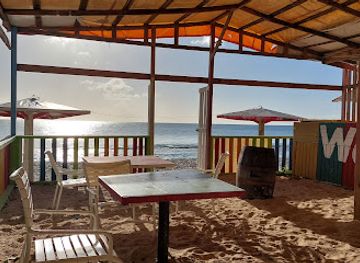
Experience unforgettable sunsets and exquisite local cuisine at Sunset Horizon Restaurant & Bar in Old Road.
Best bars in Darkwood Beach
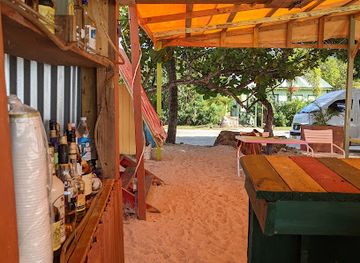
Darkwood Beach has a quiet, informal evening atmosphere rather than a dedicated nightlife scene. Beach bars and casual establishments may provide drinks, music and a place to watch the sunset, but the amount of evening activity varies and the shore should not be treated as a late-night entertainment district. Visitors looking for a broader choice of pubs, restaurants and resort bars can travel north to Jolly Harbour, while St John’s has the island’s more established urban evening options. Some hotels and resorts elsewhere on the south-west coast arrange entertainment or themed evenings, though programmes are subject to change. After sunset, transport is important: visitors should arrange a taxi or return journey in advance rather than assume that frequent public transport will be available from the beach.
-
Restaurant
Sunset Horizon Restaurant & Bar
Experience the best of Caribbean cuisine with stunning ocean views at Sunset Horizon Restaurant & Bar, a culinary treasure in Old Road.
Get your free copy of our complete guide to Darkwood Beach, delivered straight to you.
Everything on this page, from attractions and restaurants to essentials and local phrases, in one PDF you can read offline, print or share.
Already have an account? Sign in
Your Darkwood Beach guide is ready.
We'll send it to · Not you? Sign out

Getting your guide ready…
We are putting together a fresh copy of the Darkwood Beach guide. This can take up to a minute.
This can take a few moments. If your browser asks, choose Allow so the download can start. You'll find the guide in your Downloads folder.
Nothing happened? Download it again
Sorry, the guide is taking longer than usual. Please try again in a minute, or get it by email instead.
Darkwood Beach essentials
Currency and Payment
Safety
Emergency Situations
Do's and Don'ts
Local Tips
From Eve
Local phrases worth knowing
You don't need to get them perfect. A few words go a long way, and locals appreciate the effort.
Basics
| English | Local | Say it |
|---|---|---|
| Hello | Wadadli | [wa-da-dlee] |
| Goodbye | Layta | [lay-ta] |
| Yes | Yes | [yes] |
| No | Noh | [noh] |
| Please/You're welcome | Plees | [plees] |
| Thank you | Tank yu | [tank yu] |
| Excuse me/Sorry | Ekskyuz mi | [ek-skyooz mee] |
| How are you? | Ow yu duh? | [ow yu doo] |
| Fine. And you? | Fain. An yu? | [fain. an yu] |
| Do you speak English? | Yu spik Inglish? | [yu speek ing-lish] |
| I don't understand | Mi nat andastan | [mee not an-das-tan] |
Eating & Drinking
| English | Local | Say it |
|---|---|---|
| I'd like to see the menu, please | Mi wah si di menu, pliiz | [mee wah see dee men-oo, pleez] |
| I don't eat meat | Mi nat it miit | [mee not eet meet] |
| Cheers! | Chiz! | [cheez] |
| I would like to pay, please | Mi wah pay, pliiz | [mee wah pay, pleez] |
Emergencies
| English | Local | Say it |
|---|---|---|
| Help! | Elp! | [elp] |
| Go away! | Gowei! | [go-way] |
| Call the Police! | Kal di Polis! | [kal dee po-lis] |
| Call a doctor! | Kal a dakta! | [kal a dak-ta] |
| I'm lost | Mi los | [mee loss] |
| I'm ill | Mi il | [mee eel] |
Shopping
| English | Local | Say it |
|---|---|---|
| I'd like to buy... | Mi wah bay... | [mee wah buy] |
| I'm just looking | Mi jus lukiin | [mee jus look-een] |
| How much is it? | Ow much it deh? | [ow much it deh] |
| That's too expensive | Dat tuu ekspensiv | [dat too ex-pen-siv] |
| Can you lower the price? | Yu kyan lowa di prais? | [yu can low-ah dee price] |
Time & Numbers
| English | Local | Say it |
|---|---|---|
| What time is it? | Wat taim it deh? | [wat time it deh] |
| It's one o'clock | It wan aklak | [it one ah-klok] |
| Half past (10) | Aafta (10) | [aaf-ta (10)] |
| Morning | Mawnin | [morn-in] |
| Afternoon | Aftanuun | [af-ta-noon] |
| Evening | Ivinin | [eev-ning] |
| Yesterday | Yistadeh | [yis-ta-deh] |
| Today | Tudeh | [too-deh] |
| Tomorrow | Tomara | [to-mar-a] |
| 1 | Wan | [wahn] |
| 2 | Tu | [too] |
| 3 | Trii | [tree] |
| 4 | Fo | [foh] |
| 5 | Faiv | [fayv] |
| 6 | Siks | [siks] |
| 7 | Seven | [sev-en] |
| 8 | Eit | [ate] |
| 9 | Nain | [nayn] |
| 10 | Ten | [ten] |
Transport & Directions
| English | Local | Say it |
|---|---|---|
| Where's a/the...? | Weh di... | [weh dee] |
| What's the address? | Wat a di adres? | [wat ah dee ah-dress] |
| Can you show me (on the map)? | Yu kyan shu mi (ahn di map)? | [yu can shoo mee (on dee map)] |
| When's the next (bus)? | Wen a di neks (bas)? | [wen ah dee neks (bus)] |
| A ticket (to ....) | A tiket (tu ....) | [ah ticket (to ....)] |
History of Darkwood Beach
A Volcanic Island Coast
Darkwood Beach forms part of Antigua’s south-western coastline, an area shaped by the island’s volcanic and sedimentary geological history, long erosion and the movement of sand along exposed shores. The beach itself has no widely documented independent historical narrative comparable with Antigua’s major forts or plantation estates. Its character is instead connected to the broader physical setting of the island: dry coastal vegetation, low hills, sheltered bays and a sea route linking the south-western shore with neighbouring Caribbean islands.
Settlement and Plantation Antigua
Antigua’s colonial economy developed around sugar cultivation from the seventeenth century, and estates, roads and coastal landing places transformed much of the island’s countryside. The immediate Darkwood shoreline is primarily a beach landscape rather than a surviving plantation complex, but the surrounding parish areas were part of the wider agricultural system that shaped Antigua. Enslaved Africans and their descendants formed the central labour force of that economy, while later communities, roads and small coastal settlements continued to define the island beyond the estate lands.
From Working Coast to Leisure Shore
For much of Antigua’s history, the south-west coast was valued for fishing, small-scale agriculture, local movement and access to the sea rather than for international tourism. During the twentieth century, improved roads, air travel and the growth of Caribbean holidays brought increasing attention to beaches in the Jolly Harbour and south-western coastal area. Darkwood developed as a public bathing beach within this broader transition, retaining a relatively open shoreline while gaining modest visitor facilities and links to nearby resort accommodation.
Modern Coastal Stewardship
Darkwood Beach now sits within an island tourism landscape where public access, coastal development and environmental care need to be balanced. Antigua’s beaches are exposed to changing weather, coastal erosion and pressure from visitor use, while the surrounding sea supports marine habitats that benefit from responsible recreation. The beach’s modern identity is therefore not only recreational: it is also part of the continuing effort to keep Antigua’s coast accessible, attractive and environmentally respected as tourism remains important to the national economy.
Darkwood Beach in Photos
Browse through our photo collection highlighting the charm and character of the destination.
Neighbouring destination travel guides
The closest destinations to Darkwood Beach, if you have time for more than one.
-

-

-

-

-


Swipe for more destinations
Explore more

Explore more of Saint Mary
Explore Saint Mary in Antigua for sheltered beaches, green hills, historic Old Road, marina life and relaxed south-west coast adventures.
Explore Saint Mary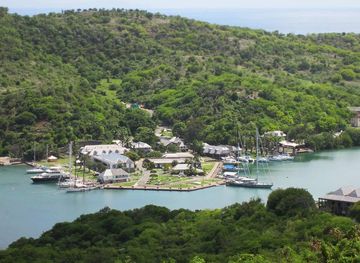
Explore more of Antigua and Barbuda
Discover Antigua and Barbuda's 365 beaches, vibrant culture, and rich history. Perfect for sun-seekers, nature lovers, and sailing enthusiasts in the Caribbean.
Explore Antigua and Barbuda