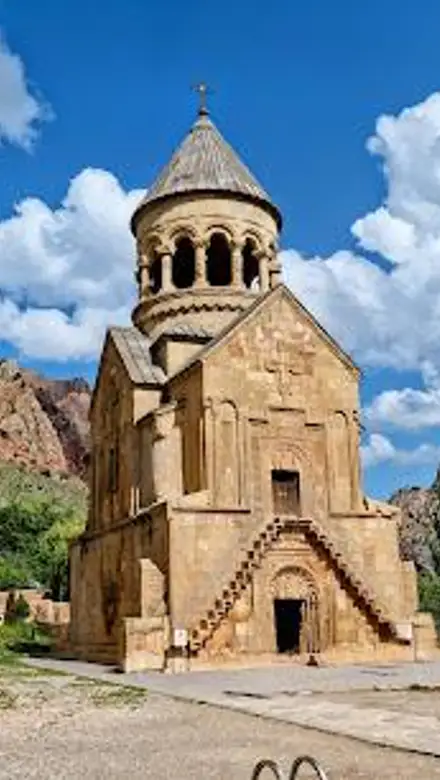
Noravank, Vayots Dzor Travel Guide
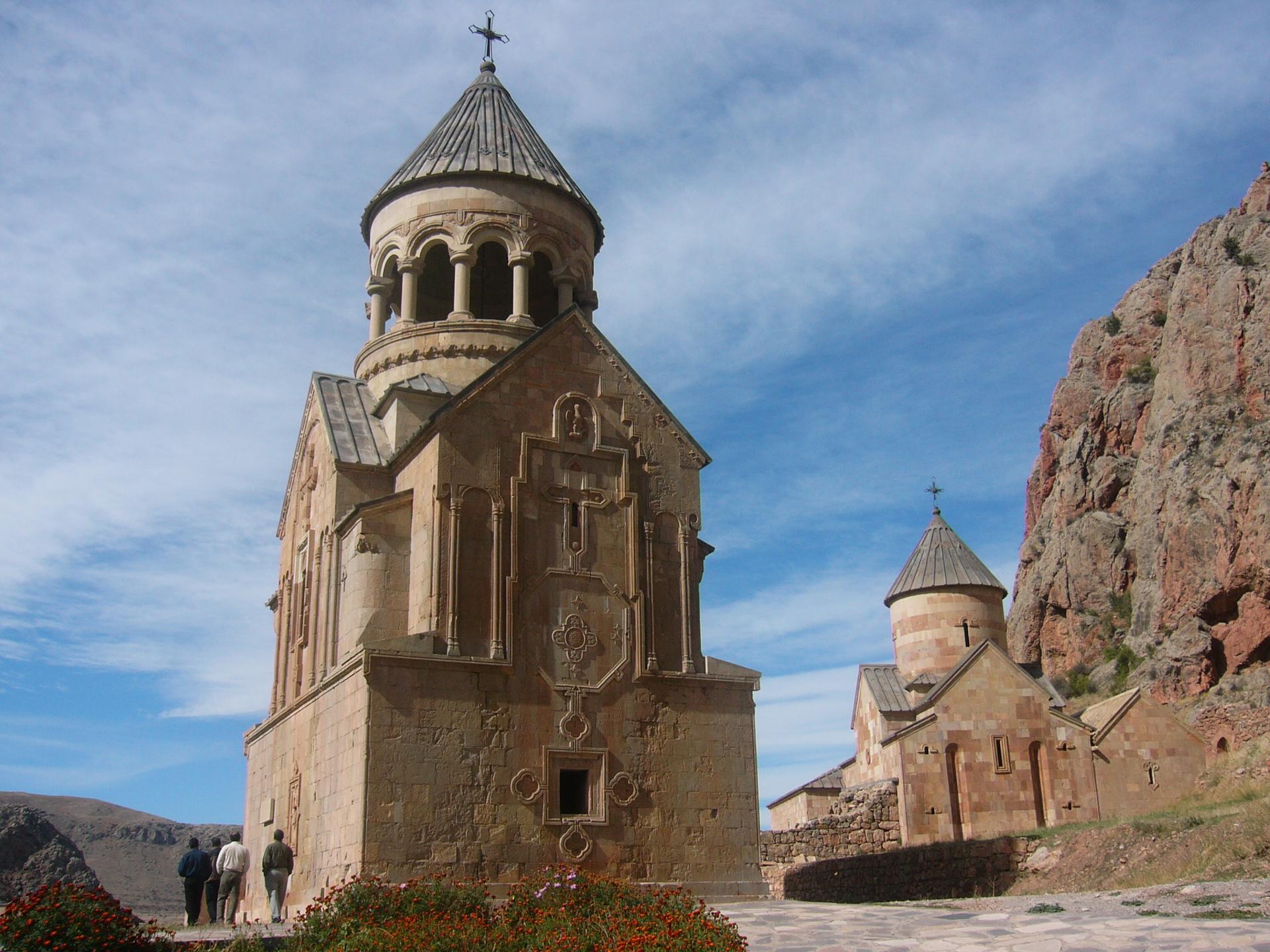
Discover Noravank Monastery: A medieval Armenian treasure nestled in a stunning red-rock canyon, showcasing remarkable architecture and rich history.
Nestled in a dramatic gorge carved by the Amaghu River, Noravank is a 13th-century Armenian monastery renowned for its stunning architecture and picturesque setting. Surrounded by towering red cliffs, this cultural and religious center offers a captivating glimpse into Armenia's rich history and artistic heritage.
A brief summary to Noravank
- Noravank Monastery Rd, 3604, AM
- Monday 9 am-8 pm
- Tuesday 9 am-8 pm
- Wednesday 9 am-8 pm
- Thursday 9 am-8 pm
- Friday 9 am-8 pm
- Saturday 9 am-8 pm
- Sunday 9 am-8 pm

Know before you go
Hi, I'm Eve. Here are a few practical things to know before exploring Noravank.
- Wear comfortable shoes for exploring the monastery grounds and navigating the narrow staircase of Surb Astvatsatsin Church.
- Visit the on-site museum to learn more about the history and significance of Noravank Monastery.
- Take time to admire the intricate carvings and khachkars throughout the complex.
- Explore the Amaghu Gorge surrounding the monastery for stunning views and photo opportunities.
- Bring water and snacks, as dining options at the monastery may be limited.
Do you manage this location?
Take control to get all the benefits, like improved information, better appearance, and stronger visibility across AI-powered discovery. Learn more about listing your business on Evendo
Activate your presenceOther nearby places you may find interesting
The closest places of the same kind, if this one is not quite what you had in mind.


Explore Noravank on the Map
A handpicked selection of must-see spots near Noravank, mapped for you.
Unlock the Best of Noravank
Buy tickets
-
No tickets available
Book tours with entry


Getting There
-
Car
The most convenient way to reach Noravank is by car. The monastery is located approximately 122 km southeast of Yerevan. The drive takes around 2-3 hours via the M2 highway, offering scenic views of the Armenian countryside. Follow the signs for Noravank Monastery after passing through the town of Yeghegnadzor. Parking is available near the monastery. There is no entrance fee to the Monastery, but parking may cost 100 AMD.
-
Public Transport
While there is no direct public transportation to Noravank, you can take a bus or marshrutka (minibus) from Yerevan to Yeghegnadzor. Buses depart from Yerevan Southern bus station. From Yeghegnadzor, hire a taxi for the remaining 12 km to Noravank. The bus fare from Yerevan to Yeghegnadzor is approximately 2,500 AMD. A taxi from Yeghegnadzor to Noravank will cost around 2,000-3,000 AMD.
Discover more about Noravank













Your all‑in‑one travel companion app
Explore expert travel guides, compare and book tours, experiences, hotels, and more—all from the palm of your hand. Download now for seamless trip planning wherever your wanderlust takes you.


Explore More of Vayots Dzor
Looking beyond Noravank? Discover Vayots Dzor for broader travel guides, local hot-spots, and regional highlights.
Explore Vayots Dzor
Discover Armenia's hidden gem: Gravi Dza, the naturally fizzy mineral spring offering a refreshing and rejuvenating experience in a serene landscape.
Discover Armenia's spiritual heritage at the Alley of Khachkars in Areni, a serene memorial showcasing intricately carved cross-stones.