

Boca Catalina Travel Guide - Free Web & App
Your ultimate guide to Boca Catalina. Discover top landmarks, proposed trips, and local tips. Free on the web or via the Evendo companion app.


Boca Catalina, Aruba, offers calm Caribbean swimming, easy snorkelling, sunset views and access to Malmok, the California Lighthouse and Palm Beach.
A Small Cove on Aruba’s North-West Coast
Boca Catalina is a compact sandy cove on Aruba’s north-western coast, between the residential shoreline of Malmok and the wider resort area around Palm Beach. Its sheltered position, clear water and gently curving beach make it one of the island’s better-known places for swimming and shore-based snorkelling, although conditions can still change with wind and swell. The cove is reached from the coastal road and feels far smaller and quieter than Aruba’s major resort beaches, with rocky edges, low scrub and open Caribbean views shaping its character.Read more about Boca Catalina
Marine Life and Coastal Scenery
Exploring the Surrounding Coast
When is the best time to visit Boca Catalina?
Best: January–March · 29–30°C| Month | High (°C) | Rainfall (mm) |
|---|---|---|
| January (best) | 29 | 20 |
| February (best) | 29 | 20 |
| March (best) | 30 | 20 |
| April | 30 | 20 |
| May | 30 | 20 |
| June | 30 | 20 |
| July | 30 | 20 |
| August | 31 | 20 |
| September | 31 | 20 |
| October | 31 | 20 |
| November | 31 | 20 |
| December | 31 | 20 |
Getting to and around Boca Catalina
How to get there
Transportation
Best attractions in Boca Catalina
The principal attraction at Boca Catalina is its small sandy cove, where shallow water and rocky reef habitat create a popular setting for swimming and shore-based snorkelling. Fish may be visible among the rocks, although sightings and water clarity depend on conditions and visitors should avoid touching coral or marine life. The coastal road links the cove with Malmok Beach, another nearby swimming and snorkelling location, and continues towards the California Lighthouse, which stands outside Boca Catalina at Aruba’s north-western tip. Palm Beach, with its larger concentration of hotels, restaurants and water-based excursions, is also close by but has a busier resort character. Inland and farther south, visitors can combine the coast with Aruba’s dry landscapes, historic sites and cultural attractions, although these require additional travel. Boca Catalina itself has limited infrastructure, so its appeal is concentrated in the contrast between a modest beach, clear Caribbean water, rocky shoreline and easy access to the wider north-west coast.
-
Beach
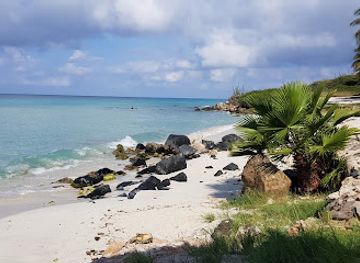
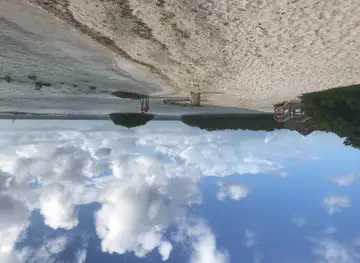
Boca Catalina Beach
Discover Boca Catalina Beach: Aruba's hidden gem for snorkeling, swimming, and unforgettable sunsets on the island's tranquil coast.
Best landmarks in Boca Catalina
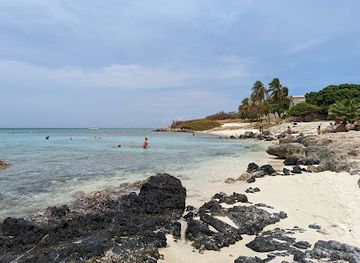
Boca Catalina’s defining landmark is its compact crescent of sand set against the rocky north-western coastline, with clear shallows that reveal the close relationship between Aruba’s beaches and its nearshore marine habitat. The cove’s significance is recreational and geographical rather than architectural: it is a recognisable coastal stopping point between Malmok and the wider Palm Beach area. The California Lighthouse, Aruba’s most prominent north-western navigational landmark, lies nearby but outside Boca Catalina, at the island’s northern tip. The surrounding limestone shore, wind-shaped vegetation and broad western horizon provide the principal physical context, while the nearby Malmok coastline adds further swimming and snorkelling sites. Visitors should distinguish these connected attractions from the cove itself, since Boca Catalina is a small beach rather than a large protected landscape or historic settlement.
-
Beach
Boca Catalina Beach
Discover Boca Catalina Beach in Aruba: a serene escape with crystal-clear waters, vibrant marine life, and breathtaking sunsets.
-
Bus stop
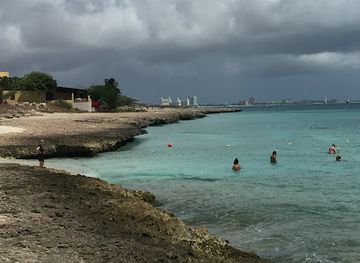
Boca Catalina Arubus Stop
Discover Aruba's underwater beauty at Boca Catalina: a serene beach with crystal-clear waters, perfect for snorkeling and relaxation.
Explore Boca Catalina on the map
Plan your trip on one map. See where the top attractions, landmarks, restaurants and hotels are, and book hotels and experiences in a few clicks.
Best hotels in Boca Catalina
Best nightclubs in Boca Catalina
Evening entertainment is limited at Boca Catalina itself, which is a quiet beach cove without a dedicated nightlife venue. Visitors wanting a drink, live entertainment or a later meal generally travel to the hotel and restaurant areas around Palm Beach, or to other parts of Noord, where bars, hotel lounges and evening venues are concentrated. The cove is better suited to watching the western sky at sunset or taking a calm coastal pause before returning to a nearby accommodation base than to organised evening activity. Because the shoreline and access road are lightly serviced after dark, visitors should arrange transport in advance, avoid poorly lit areas and leave the beach without disturbing residents, wildlife or other visitors.
-
Beach
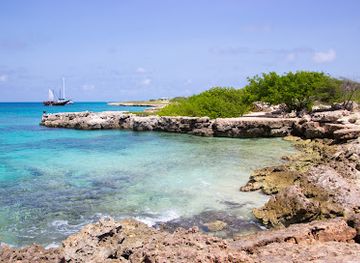
Boca Catalina Beach
Explore Boca Catalina Beach, Aruba's tranquil paradise with crystal-clear waters, stunning coral reefs, and breathtaking scenery for an unforgettable getaway.
Get your free copy of our complete guide to Boca Catalina, delivered straight to you.
Everything on this page, from attractions and restaurants to essentials and local phrases, in one PDF you can read offline, print or share.
Already have an account? Sign in
Your Boca Catalina guide is ready.
We'll send it to · Not you? Sign out

Getting your guide ready…
We are putting together a fresh copy of the Boca Catalina guide. This can take up to a minute.
This can take a few moments. If your browser asks, choose Allow so the download can start. You'll find the guide in your Downloads folder.
Nothing happened? Download it again
Sorry, the guide is taking longer than usual. Please try again in a minute, or get it by email instead.
Boca Catalina essentials
Currency and Payment
Safety
Emergency Situations
Do's and Don'ts
Local Tips
From Eve
Local phrases worth knowing
You don't need to get them perfect. A few words go a long way, and locals appreciate the effort.
Basics
| English | Local | Say it |
|---|---|---|
| Hello | Bon dia | [bon dee-ah] |
| Goodbye | Ayo | [ah-yo] |
| Yes | Si | [see] |
| No | No | [noh] |
| Please/You're welcome | Por fabor | [por fah-bor] |
| Thank you | Danki | [dahn-kee] |
| Excuse me/Sorry | Pardon | [par-don] |
| How are you? | Con ta bai? | [kon tah by] |
| Fine. And you? | Bon. I bo? | [bon. ee boh?] |
| Do you speak English? | Bo ta papia Ingles? | [boh tah pah-pee-ah een-gles] |
| I don't understand | Mi no ta compronde | [mee noh tah kom-pron-deh] |
Eating & Drinking
| English | Local | Say it |
|---|---|---|
| I'd like to see the menu, please | Mi kier mira e menu, por fabor | [mee kee-air mee-rah eh meh-noo, por fah-bor] |
| I don't eat meat | Mi no ta come carne | [mee noh tah koh-meh kahr-neh] |
| Cheers! | Salud! | [sah-lood] |
| I would like to pay, please | Mi kier paga, por fabor | [mee kee-air pah-gah, por fah-bor] |
Emergencies
| English | Local | Say it |
|---|---|---|
| Help! | Yudami! | [yoo-dah-mee] |
| Go away! | Bai leu! | [bah-ee leh-oo] |
| Call the Police! | Yama polis! | [yah-mah poh-lees] |
| Call a doctor! | Yama un dokter! | [yah-mah oon dohk-ter] |
| I'm lost | Mi a perde mi mes | [mee ah pehr-deh mee mehs] |
| I'm ill | Mi ta malu | [mee tah mah-loo] |
Shopping
| English | Local | Say it |
|---|---|---|
| I'd like to buy... | Mi kier cumpra... | [mee kee-air koom-prah] |
| I'm just looking | Mi ta solamente mira | [mee tah soh-lah-men-teh mee-rah] |
| How much is it? | Kuantu e ta costa? | [kwan-too eh tah koh-stah] |
| That's too expensive | Esaki ta muchu caro | [eh-sah-kee tah moo-choo kah-roh] |
| Can you lower the price? | Bo por baha e prijs? | [boh por bah-hah eh prees] |
Time & Numbers
| English | Local | Say it |
|---|---|---|
| What time is it? | Kuantu or e ta? | [kwan-too ohr eh tah] |
| It's one o'clock | E ta un or | [eh tah oon ohr] |
| Half past (10) | Mitad di diez | [mee-tahd dee d-yehs] |
| Morning | Madruga | [mah-droo-gah] |
| Afternoon | Atardi | [ah-tar-dee] |
| Evening | Anochi | [ah-noh-chee] |
| Yesterday | Ayer | [ah-yehr] |
| Today | Awe | [ah-weh] |
| Tomorrow | Mañana | [mah-nyah-nah] |
| 1 | Uno | [oo-noh] |
| 2 | Dos | [dohs] |
| 3 | Tres | [trehs] |
| 4 | Cuatro | [kwah-troh] |
| 5 | Cinco | [seen-koh] |
| 6 | Seis | [seys] |
| 7 | Siete | [syeh-teh] |
| 8 | Ocho | [oh-choh] |
| 9 | Nueve | [nweh-veh] |
| 10 | Diez | [d-yehs] |
Transport & Directions
| English | Local | Say it |
|---|---|---|
| Where's a/the...? | Unda ta e...? | [oon-dah tah eh...?] |
| What's the address? | Kiko ta e adres? | [kee-koh tah eh ah-dres] |
| Can you show me (on the map)? | Bo por mustrami (riba e mapa)? | [boh por moos-trah-mee (ree-bah eh mah-pah)] |
| When's the next (bus)? | Ki ora e siguiente (bus)? | [kee oh-rah eh see-gwee-ehn-teh (boos)] |
| A ticket (to ....) | Un ticket (pa ....) | [oon tee-keht (pah)] |
History of Boca Catalina
An Island Shaped by Sea and Trade Winds
Aruba’s dry north-western landscape reflects its position outside the main hurricane belt, its low rainfall and the persistent trade winds of the southern Caribbean. Boca Catalina’s small beach, limestone shoreline and shallow marine environment are part of this broader coastal setting rather than a separately formed historic settlement. The island’s geology and arid conditions influenced where people could farm, travel and build, while the sea remained central to movement and subsistence. At Boca Catalina, the most visible evidence of natural change is found in the relationship between rocky reef, sand accumulation and wave exposure along the coast.
Caquetío Heritage and Early Colonial Aruba
Long before modern tourism, Aruba was inhabited by Caquetío communities associated with the Arawakan-speaking peoples of the mainland and nearby Caribbean islands. Their presence is recorded through archaeological remains and rock art in different parts of Aruba, although Boca Catalina is primarily known today as a coastal recreation site rather than a major archaeological centre. Spanish control followed European contact, and Dutch influence later became dominant. For centuries the island’s communities relied on combinations of fishing, small-scale agriculture, animal husbandry and maritime links, activities that gave the coast practical importance even before beaches became leisure destinations.
From Extractive Industry to Island Tourism
Aruba’s modern economy changed substantially during the twentieth century. The gold-mining era had already left historic traces elsewhere on the island, while the development of the Lago oil refinery in the south created employment and strengthened transport connections. From the mid-twentieth century onwards, tourism increasingly shaped the north-west coast, particularly around Palm Beach and the hotel areas near Noord. Boca Catalina remained a modest natural cove within this expanding coastal visitor landscape, valued for swimming, snorkelling and its proximity to the developing resort corridor rather than for large-scale construction on the beach itself.
Coastal Recreation and Marine Stewardship
Boca Catalina’s present identity has emerged from Aruba’s tourism economy and growing appreciation of accessible marine environments. Visitors come for the clear shallows and reef-associated fish, while local and island-wide environmental efforts emphasise responsible use of coral habitats, protection of marine life and careful management of beach litter. The cove sits within a heavily visited north-western coastal zone, so its character depends on balancing recreation with the fragility of shallow reef areas. Contemporary visits are therefore shaped as much by responsible snorkelling and respect for the shoreline as by the older history of settlement and maritime use.
Boca Catalina in Photos
Browse through our photo collection highlighting the charm and character of the destination.
Neighbouring destination travel guides
The closest destinations to Boca Catalina, if you have time for more than one.
-

-

-

-

-


Swipe for more destinations
Explore more

Explore more of Aruba
Discover Aruba, the Caribbean's sun-drenched paradise with pristine beaches, rich culture, and warm hospitality. Your perfect getaway awaits on this happy island.
Explore Aruba