

Sydney CBD (Sydney) Travel Guide - Free
Explore Sydney CBD in Sydney with Evendo's free guide. Find the best shops, historic streets, restaurants, and gems on web or mobile.


Sydney CBD combines heritage arcades, harbour views, city dining, culture and nightlife across central Sydney, Australia, for curious visitors to explore.
Between History and High-Rise Sydney
Sydney CBD is the compact commercial and civic core of Australia’s oldest major city, stretching from Circular Quay and the harbour edge towards Central station, and from Darling Harbour across to Hyde Park and the Domain. Its streets bring together sandstone public buildings, Victorian arcades, modern towers, office plazas and busy transport interchanges. George Street forms the principal north–south spine, while Martin Place, Macquarie Street, Pitt Street and the laneways around Wynyard reveal different aspects of the centre’s character.Read more about Sydney CBD
Architecture, Culture and Public Life
Streets After Office Hours
Best attractions in Sydney CBD
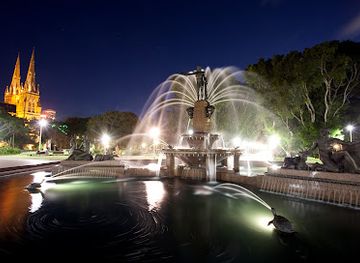
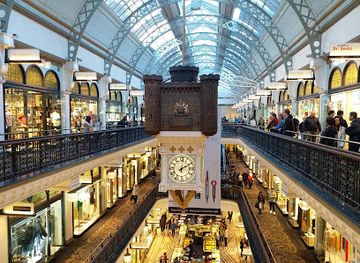
Sydney CBD’s attractions are concentrated rather than spread across a large area, making a good walking route possible between several distinct precincts. The Queen Victoria Building on George Street is the centre’s most ornate retail interior, with stained glass, tiled surfaces and restored nineteenth-century detailing. Nearby, the State Theatre and the pedestrianised sections of George Street add architectural and cultural interest, while Martin Place forms a formal civic space framed by banks, public buildings and the General Post Office. Hyde Park provides lawns, mature trees and the Archibald Fountain, with St Mary’s Cathedral marking its eastern edge. The Museum of Sydney and the State Library of New South Wales lie towards the harbour and Macquarie Street, close to the Domain and Royal Botanic Garden, which are adjoining green precincts rather than part of the dense commercial core. Circular Quay is nearby for harbour views and ferry connections.
-
Tourist attraction
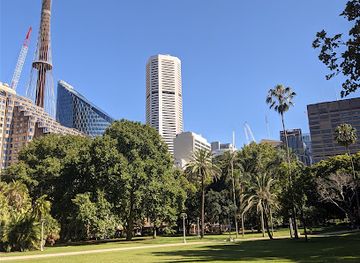
Hyde Park
Discover Hyde Park, Sydney's historic urban park, featuring lush gardens, iconic monuments, and vibrant community events in the heart of the city.
6 min walk · 0.5 km from neighbourhood centre
-
Tourist attraction
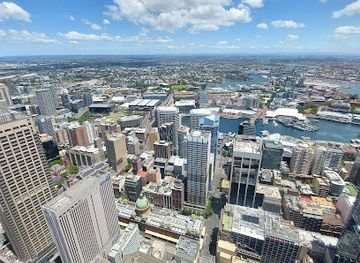
Sydney Tower Eye
Discover breathtaking views of Sydney from the Sydney Tower Eye, the city's tallest observation deck, offering an unforgettable experience for every visitor.
2 min walk · 0.2 km from neighbourhood centre
-
Tourist attraction
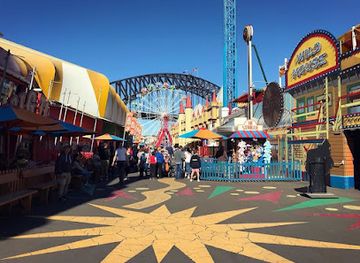
Luna Park Sydney
Experience the magic of Luna Park Sydney, where thrilling rides, stunning views, and unforgettable memories await in a historic amusement park.
7 min drive · 2.3 km from neighbourhood centre
-
Tourist attraction
Museum of Contemporary Art Australia
Discover cutting-edge art at the Museum of Contemporary Art Australia, an icon of creativity located in the heart of Sydney's historic The Rocks.
12 min walk · 1.0 km from neighbourhood centre
Best landmarks in Sydney CBD
The Queen Victoria Building is Sydney CBD’s defining commercial landmark, occupying a full George Street block with a Romanesque Revival exterior and an elaborate interior associated with the city’s late nineteenth-century civic ambition. The General Post Office, with its sandstone colonnade and clock tower, anchors Martin Place and remains one of the city’s clearest expressions of Victorian public architecture. St Andrew’s Cathedral and St Mary’s Cathedral represent different ecclesiastical traditions on opposite sides of the central area, while Hyde Park’s Archibald Fountain provides a major sculptural focus. The former Lands Department building and other government structures along Macquarie Street show how the eastern CBD developed as an institutional quarter. Modern towers, station entrances and the George Street light-rail corridor add a contrasting layer, illustrating the continuous redevelopment of Sydney’s central urban landscape.
-
Performing arts theater
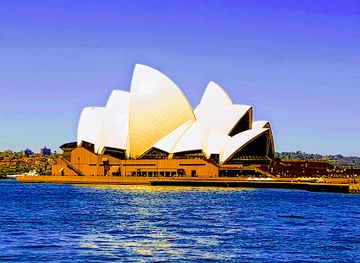
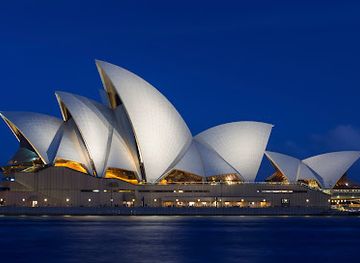
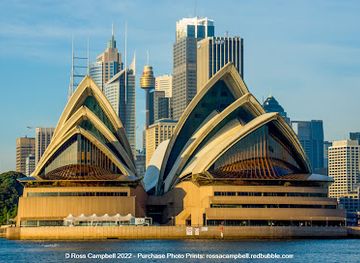
Sydney Opera House
Explore the Sydney Opera House, an architectural wonder that hosts world-class performances in the heart of Sydney's vibrant arts scene.
18 min walk · 1.4 km from neighbourhood centre
-
Tourist attraction
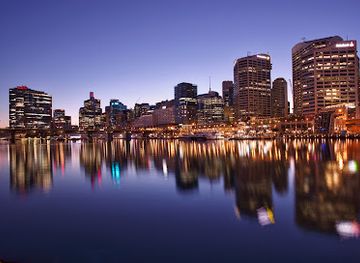
Darling Harbour
Explore Darling Harbour, Sydney's vibrant waterfront destination filled with attractions, dining, and stunning views for an unforgettable experience.
13 min walk · 1.0 km from neighbourhood centre
-
Park
Hyde Park
Explore Hyde Park, Sydney's lush urban oasis, offering stunning gardens, historical monuments, and vibrant cultural experiences in the heart of the city.
6 min walk · 0.5 km from neighbourhood centre
-
Observation deck
Sydney Tower Eye
Discover breathtaking views and the vibrant culture of Sydney from the iconic Sydney Tower Eye, the city’s highest observation deck.
2 min walk · 0.2 km from neighbourhood centre
Explore Sydney CBD on the map
A handpicked selection of must-see spots in Sydney CBD, mapped for you.
Best hotels in Sydney CBD
Best restaurants in Sydney CBD
Dining in Sydney CBD reflects the area’s role as a workplace, shopping district and transport crossroads. Cafés and bakeries serve commuters from early morning, while food courts, hotel restaurants and independent venues occupy the blocks around George Street, Pitt Street, Martin Place and Wynyard. Laneways and basement spaces provide room for modern Australian cooking, Asian cuisines, Italian restaurants, casual lunch counters and after-work dining, although the mix changes quickly as offices and redevelopment projects reshape individual buildings. The city centre also borders several more specialised food districts: Chinatown and Haymarket begin south of the CBD, while Barangaroo and The Rocks lie to the west and north respectively. Visitors looking for a particular cuisine should distinguish these adjacent areas from the CBD itself, then choose between polished dining rooms, compact cafés and practical weekday eateries within the central grid.
-
Modern Australian
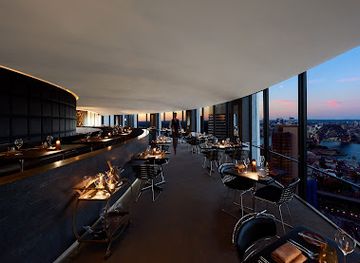
O Bar and Dining
Experience modern Australian cuisine with breathtaking views at O Bar and Dining in Sydney's Australia Square.
6 min walk · 0.5 km from neighbourhood centre
-
French
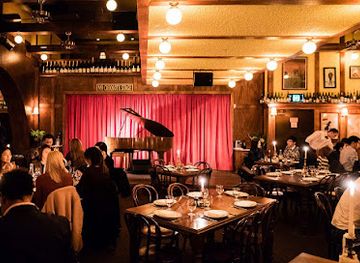
Restaurant Hubert
Discover modern French cuisine at Restaurant Hubert in Sydney – where elegance meets exquisite flavors in a charming atmosphere.
5 min walk · 0.4 km from neighbourhood centre
-
Thai
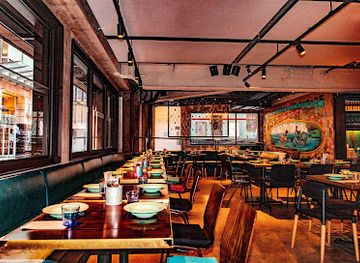
Long Chim Sydney
Experience the authentic taste of Thailand at Long Chim Sydney, where vibrant flavors meet contemporary dining in a stunning atmosphere.
3 min walk · 0.2 km from neighbourhood centre
-
Restaurant
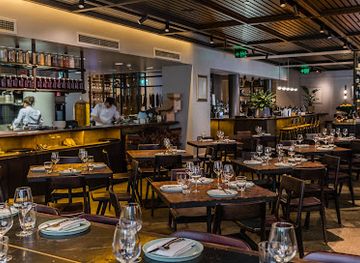
Mercado
Experience authentic Spanish cuisine at Mercado - where vibrant flavors meet elegant dining in Sydney.
3 min walk · 0.3 km from neighbourhood centre
Best bars in Sydney CBD
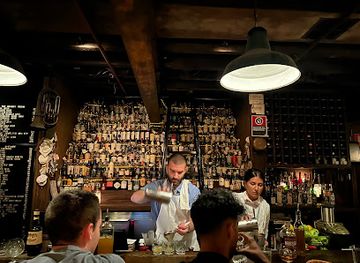
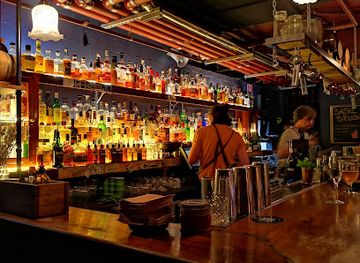
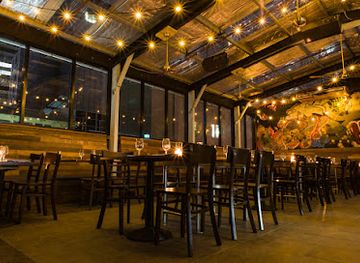
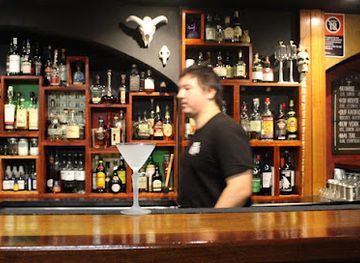
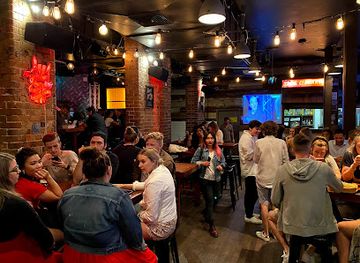
Sydney CBD becomes quieter in some office streets after working hours but remains active around hotels, restaurants, theatres and transport hubs. Bars and evening venues are concentrated around laneways near Wynyard, York Street, Martin Place, the central George Street corridor and the southern end of the city, with a mixture of hotel lounges, small cocktail bars, casual pubs and venues attached to restaurants. The State Theatre and nearby performance spaces bring a cultural audience rather than a purely club-oriented crowd, while larger late-night entertainment areas continue into adjoining precincts such as Darling Harbour and Chinatown. Nightlife is therefore varied but fragmented: some lanes feel busy after dark, while others empty quickly once offices close. Check current venue arrangements before setting out, as licensing, construction and event schedules can change the evening character of particular streets.
-
Bar
The Baxter Inn
Discover The Baxter Inn, Sydney's premier cocktail bar, offering an extraordinary selection of drinks in an inviting and stylish atmosphere.
4 min walk · 0.4 km from neighbourhood centre
-
Cocktail bar
Stitch Bar
Discover Stitch Bar in Sydney—where classic American diner meets innovative cocktails in a lively atmosphere.
5 min walk · 0.4 km from neighbourhood centre
-
Bar
The Rook
Experience Sydney's skyline from The Rook, a trendy bar and restaurant offering exquisite cuisine and refreshing drinks in a lively atmosphere.
4 min walk · 0.3 km from neighbourhood centre
-
Cocktail bar
Papa Gede's Bar
Discover the vibrant cocktail scene at Papa Gede's Bar, where unique drinks and lively ambiance await your visit in the heart of Sydney.
5 min walk · 0.4 km from neighbourhood centre
Best nightclubs in Sydney CBD
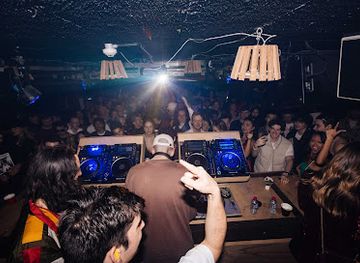
Sydney CBD becomes quieter in some office streets after working hours but remains active around hotels, restaurants, theatres and transport hubs. Bars and evening venues are concentrated around laneways near Wynyard, York Street, Martin Place, the central George Street corridor and the southern end of the city, with a mixture of hotel lounges, small cocktail bars, casual pubs and venues attached to restaurants. The State Theatre and nearby performance spaces bring a cultural audience rather than a purely club-oriented crowd, while larger late-night entertainment areas continue into adjoining precincts such as Darling Harbour and Chinatown. Nightlife is therefore varied but fragmented: some lanes feel busy after dark, while others empty quickly once offices close. Check current venue arrangements before setting out, as licensing, construction and event schedules can change the evening character of particular streets.
-
Night club
Side Bar
Discover the electric atmosphere of Side Bar, Sydney's must-visit night club for an unforgettable nightlife experience in Haymarket.
5 min drive · 1.6 km from neighbourhood centre
-
Night club
The Scary Canary
Discover the lively nightlife of Sydney at The Scary Canary, a must-visit bar, pub, and restaurant experience.
8 min walk · 0.6 km from neighbourhood centre
-
Night club
Club 77
Experience the vibrant nightlife of Darlinghurst at Club 77, where electrifying beats and a lively crowd await every weekend.
11 min walk · 0.9 km from neighbourhood centre
-
Disco club
Candelaria - Sydney
Experience Sydney's nightlife at Candelaria, the ultimate disco club where rhythm meets vibrant social energy, perfect for dance lovers and party enthusiasts.
2 min walk · 0.2 km from neighbourhood centre


Best shops in Sydney CBD
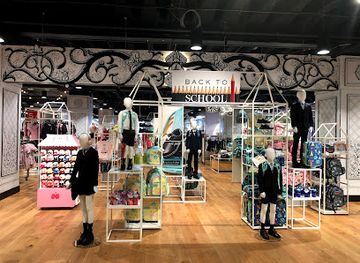
Shopping in Sydney CBD ranges from restored arcades and department-store style interiors to large contemporary complexes and practical high-street retail. The Queen Victoria Building remains the standout architectural shopping setting, while the Strand Arcade offers another historic passage linking George Street with Pitt Street. Pitt Street Mall is the main pedestrian retail spine, surrounded by major fashion, beauty, technology and department-store businesses, with Westfield Sydney occupying a substantial block nearby. Smaller specialist shops and cafés appear in the lanes around Martin Place, Wynyard and York Street, although the CBD is more strongly associated with mainstream city retail than with a dense independent-maker scene. For fresh produce, specialist groceries and a broader Asian food culture, Haymarket and Chinatown immediately south of the CBD offer a different shopping experience and should be treated as neighbouring precincts rather than part of the central business district.
-
Gift shop
Myer
Discover the ultimate shopping experience at Myer, Sydney's leading department store, featuring fashion, home goods, and gifts for everyone.
3 min walk · 0.2 km from neighbourhood centre
-
Shopping mall
The Galeries
Explore The Galeries in Sydney for an unforgettable blend of luxury shopping, exquisite dining, and vibrant art, all in one stunning location.
6 min walk · 0.4 km from neighbourhood centre
-
Gift shop
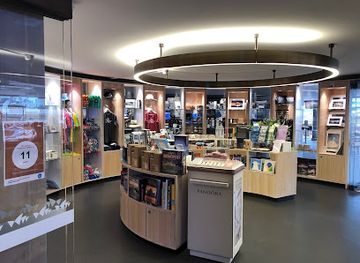
Sydney Opera House Gift Shops
Explore the Sydney Opera House Gift Shops for exclusive souvenirs, unique gifts, and books that celebrate Australia's rich culture and artistry.
17 min walk · 1.4 km from neighbourhood centre
-
Clothing store
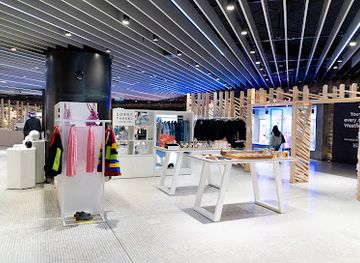
Sorry Thanks I Love You
Explore Sorry Thanks I Love You in Sydney, a vibrant destination for unique clothing, books, and artisanal treasures.
2 min walk · 0.1 km from neighbourhood centre
Sydney CBD essentials
Getting There
Getting Around
Safety
Emergency Situations
Do's and Don'ts
Local Tips

From Eve
Local phrases worth knowing
You don't need to get them perfect. A few words go a long way, and locals appreciate the effort.
Basics
| English | Local | Say it |
|---|---|---|
| Hello | G'day | [g'day] |
| Goodbye | Catch ya later | [catch ya later] |
| Yes | Yeah | [yeah] |
| No | Nah | [nah] |
| Please/You're welcome | No worries | [no worries] |
| Thank you | Cheers | [cheers] |
| Excuse me/Sorry | Sorry mate | [sorry mate] |
| How are you? | How ya going? | [how ya going] |
| Fine. And you? | Not bad. You? | [not bad. you] |
| Do you speak English? | You speak English? | [you speak English] |
| I don't understand | I'm lost | [I'm lost] |
Eating & Drinking
| English | Local | Say it |
|---|---|---|
| I'd like to see the menu, please | Can I check the menu, mate? | [can I check the menu, mate] |
| I don't eat meat | I'm vego | [I'm vego] |
| Cheers! | Cheers! | [cheers] |
| I would like to pay, please | Can I pay now, mate? | [can I pay now, mate] |
Emergencies
| English | Local | Say it |
|---|---|---|
| Help! | Help! | [help] |
| Go away! | Bugger off! | [bugger off] |
| Call the Police! | Get the cops! | [get the cops] |
| Call a doctor! | Need a doc! | [need a doc] |
| I'm lost | Lost! | [lost] |
| I'm ill | Feeling crook | [feeling crook] |
Shopping
| English | Local | Say it |
|---|---|---|
| I'd like to buy... | I wanna buy... | [I wanna buy] |
| I'm just looking | Just browsing, mate | [just browsing, mate] |
| How much is it? | How much? | [how much] |
| That's too expensive | Too pricey, mate | [too pricey, mate] |
| Can you lower the price? | Can you do a deal? | [can you do a deal] |
Time & Numbers
| English | Local | Say it |
|---|---|---|
| What time is it? | What's the time? | [what's the time] |
| It's one o'clock | It's one | [it's one] |
| Half past (10) | Half ten | [half ten] |
| Morning | Morning | [morning] |
| Afternoon | Arvo | [arvo] |
| Evening | Evening | [evening] |
| Yesterday | Yesterday | [yesterday] |
| Today | Today | [today] |
| Tomorrow | Tomorrow | [tomorrow] |
| 1 | One | [one] |
| 2 | Two | [two] |
| 3 | Three | [three] |
| 4 | Four | [four] |
| 5 | Five | [five] |
| 6 | Six | [six] |
| 7 | Seven | [seven] |
| 8 | Eight | [eight] |
| 9 | Nine | [nine] |
| 10 | Ten | [ten] |
Transport & Directions
| English | Local | Say it |
|---|---|---|
| Where's a/the...? | Where's the...? | [where's the] |
| What's the address? | What's the addy? | [what's the addy] |
| Can you show me (on the map)? | Can you show me (on the map)? | [can you show me (on the map)] |
| When's the next (bus)? | When's the next (bus)? | [when's the next (bus)] |
| A ticket (to ....) | A ticket (to ....) | [a ticket (to)] |
History of Sydney CBD
Gadigal Country and Colonial Settlement
Sydney CBD occupies part of the traditional country of the Gadigal people of the Eora Nation, whose cultural connection to Sydney Harbour, creeks, ridges and coastal land long predates the arrival of the British. The colonial settlement established in 1788 developed around Sydney Cove to the north of today’s central business district, but roads and institutions soon extended south and east across the area now occupied by the CBD. Early streets followed uneven ridges and practical routes between the harbour, government buildings and markets, creating the framework from which later commercial Sydney grew. The colonial transformation brought dispossession, epidemic disease and profound disruption to Aboriginal communities, a history that remains essential to understanding the city centre.
Civic Streets and Commercial Growth
During the nineteenth century, Sydney’s central area became the colony’s administrative, financial and commercial focus. Macquarie Street gathered major public institutions, while George Street, Pitt Street and York Street developed as busy routes lined with shops, offices, hotels and warehouses. The city’s expansion was strengthened by improved roads, wharves and public transport, and later by railway connections reaching the central area. Grand buildings such as the General Post Office and the surviving sections of the Department of Lands reflected the confidence of late nineteenth-century Sydney, when sandstone civic architecture was used to express the colony’s growing wealth and political importance.
Arcades, Railways and a Modern Centre
The early twentieth century reshaped the CBD through major transport and commercial projects. The opening of Central station in 1906 consolidated the southern edge of the business district, while electric tramways and expanding suburban rail services brought more workers and shoppers into the centre. The Queen Victoria Building, completed in 1898, preserved a monumental market and retail presence on George Street as department stores and arcades transformed city shopping. Martin Place developed into a formal civic boulevard and public gathering space, and the construction of the Sydney Harbour Bridge in 1932 strengthened the CBD’s role as the metropolitan focus by making movement between the north shore and central city far easier.
Towers, Conservation and Renewal
After the Second World War, office towers, traffic engineering and large commercial developments altered the scale of the CBD. Some historic buildings and lanes were lost, while others survived through changing attitudes towards conservation. The Queen Victoria Building was restored in the late twentieth century, and older facades around Martin Place, Wynyard and George Street were increasingly treated as part of the city’s architectural inheritance. More recently, pedestrian improvements, light rail construction and major redevelopment projects have changed movement through the centre, while new offices, hotels, apartments and cultural venues have extended activity beyond traditional working hours. The result is a densely layered district where colonial, Victorian, modernist and contemporary Sydney remain visibly interwoven.
Sydney CBD in Photos
Browse through our photo collection highlighting the charm and character of the destination.
Neighbourhoods near Sydney CBD
The closest neighbourhoods to Sydney CBD, if you have time for more than one stop.
-

-

-

-


Swipe for more neighbourhoods
Explore more
Explore more of Sydney
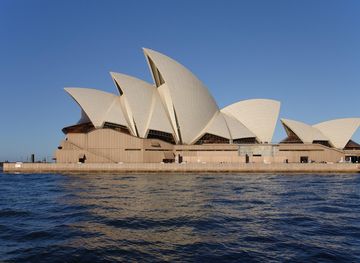
Sydney combines a glittering harbour, grand architecture, surf beaches and rich cultural life, from the Opera House to coastal walks and lively neighbourhoods.
Explore Sydney