

Free Gurktal Travel Guide & Mobile App
Explore Gurktal with free travel guides. Discover regional history, expert tips, proposed trips, and audio guides on web or mobile app.


Explore Gurktal in Carinthia for Romanesque heritage, forested Alpine valleys, village traditions, walking routes and seasonal mountain landscapes.
Read more about Gurktal
When is the best time to visit Gurktal?
Best: June–August · 23–24°C| Month | High (°C) | Rainfall (mm) |
|---|---|---|
| January | 4 | 45 |
| February | 5 | 46 |
| March | 10 | 50 |
| April | 15 | 57 |
| May | 19 | 76 |
| June (best) | 23 | 89 |
| July (best) | 24 | 93 |
| August (best) | 23 | 88 |
| September | 19 | 73 |
| October | 14 | 62 |
| November | 7 | 60 |
| December | 3 | 51 |
Getting to and around Gurktal
How to get there
Transportation
Best attractions in Gurktal
Gurktal's attractions combine major ecclesiastical heritage with accessible mountain countryside. Gurk Cathedral is the principal cultural destination, offering Romanesque architecture and a powerful sense of the region's medieval religious importance. Straßburg provides a contrasting castle setting, while Metnitz is associated with the Dance of Death tradition and local religious art. Smaller churches, chapels, historic farmsteads and village museums reward slower exploration by car or bicycle. Beyond the valley settlements, Flattnitz and Hochrindl offer walking, cross-country skiing and family-oriented mountain recreation amid forests and open pastures. The surrounding Gurktal Alps are better suited to hiking, scenic drives and quiet observation than to large-scale resort tourism. Visitors can combine short woodland walks with longer marked routes, viewing the changing relationship between managed meadows, grazing land and spruce forest. Seasonal village celebrations, craft demonstrations and local food producers add cultural interest, although programmes and opening arrangements vary. The attraction landscape is consequently broad but unhurried: it is defined by the connection between landscape, religious history and rural life rather than by a long sequence of ticketed sights.
-
Observation deck
Pyramidenkogel Tower
Discover stunning panoramic views from Pyramidenkogel Tower, the tallest wooden observation tower in the world, overlooking Lake Keutschach.
-
Castle
Hochosterwitz Castle
Explore the stunning Hochosterwitz Castle, a medieval masterpiece with breathtaking views and rich history in the heart of Austria.
-
Animal park
Adler Arena Burg Landskron
Experience the wonders of wildlife at Adler Arena Burg Landskron, where adventure meets conservation in the heart of Villach.
-
Park
Europapark
Discover the serene beauty of Europapark, a green oasis in Klagenfurt, perfect for relaxation, outdoor activities, and family fun.


Best landmarks in Gurktal
Gurk Cathedral is Gurktal's defining landmark, its imposing Romanesque form and celebrated crypt representing the medieval power of the Diocese of Gurk. The building dominates the small settlement and provides an architectural focus for understanding the region's religious history. In Straßburg, the former episcopal castle occupies a prominent position above the town and recalls the area's medieval political administration; its surviving structures and setting make it one of the valley's most recognisable historic features. Metnitz's parish church, cemetery and Dance of Death heritage form another important ensemble, linking architecture with a distinctive tradition of visual religious culture. The Gurk River itself is a geographical landmark, giving the region its name and organising a sequence of settlements, fields and wooded slopes. At higher elevations, the open pastures and upland landscapes around Flattnitz and Hochrindl provide natural landmarks rather than monumental structures, with broad views across the forested Gurktal Alps. Together these places express the region through sacred architecture, fortified history, village memory and mountain terrain.
-
Fortress
Fortress Hohensalzburg
Discover the captivating history and breathtaking views at the Fortress Hohensalzburg, a must-see landmark in Salzburg, Austria.
-
Theme park
Minimundus
Discover the magic of Minimundus, where iconic landmarks from around the world come to life in miniature form, perfect for family fun and exploration.
-
Cathedral
Gurk Cathedral
Explore the stunning Gurk Cathedral, a historic Gothic masterpiece in Austria, rich in art, architecture, and spiritual significance.
-
Hiking area
Abenteuer-Wasser-Weg
Explore the Abenteuer-Wasser-Weg, a family-friendly hiking trail in Glantschach featuring playful art installations and stunning natural beauty.


Explore Gurktal on the map
Plan your trip on one map. See where the top cities, national parks and sights are, and book hotels and experiences in a few clicks.
Best hotels in Gurktal
Best restaurants in Gurktal
Dining in Gurktal reflects the food culture of Carinthia and the eastern Alps, with menus often built around potatoes, grains, dairy produce, seasonal vegetables and preserved meats. Carinthian specialities such as Kärntner Kasnudeln, pasta parcels traditionally filled with curd cheese and herbs, may appear alongside soups, dumplings, roast dishes and hearty plates suited to mountain weather. Village inns and family-run guesthouses remain the most characteristic settings, while cafés provide cakes, coffee and simple snacks in the market towns. Farm shops and seasonal stalls can offer honey, cheese, smoked products, breads and herbal goods from the surrounding valleys. Higher settlements may have a more seasonal dining pattern, particularly outside the main winter and summer periods, so advance checking is sensible. The region's culinary identity is less about elaborate restaurant districts than about straightforward cooking, local supply and the social role of the inn as a meeting place.
-
Restaurant
Restaurant Maria Loretto
Experience exquisite dining at Restaurant Maria Loretto with stunning views over Wörthersee; savor local flavors in a cozy lakeside setting.
-
Austrian
Gasthof Seitner
Discover authentic Austrian flavors and warm hospitality at Gasthof Seitner in Feldkirchen.
-
Restaurant
Restaurant Autohof
Discover authentic Austrian cuisine at Restaurant Autohof in St. Veit an der Glan - where local flavors meet warm hospitality.
-
Austrian
GASTHOF SCHLOSSWIRT
Discover authentic Austrian cuisine and warm hospitality at Gasthof Schlosswirt in Klagenfurt am Wörthersee.


Best bars in Gurktal
Evenings in Gurktal generally centre on traditional inns, hotel lounges and village cafés rather than a large nightclub scene. Gurk, Straßburg, Weitensfeld and the other market communities offer places for an unhurried drink or meal, while seasonal mountain areas may have après-ski gatherings during the winter period. Local beer, Austrian wine, schnapps and non-alcoholic drinks are commonly available, and some establishments host occasional live music, club events or village celebrations. Nightlife is most active during festivals and holiday periods, but programmes and opening arrangements change from year to year. In rural districts, distances between settlements and limited late-evening transport make it important to arrange a taxi, designated driver or accommodation within walking distance. The region's evening character is consequently conversational and community-based, with dining, music and local events playing a larger role than late-night dancing.
-
Bar
GIG Bar & Cafe
Experience the vibrant atmosphere of GIG Bar & Cafe in Klagenfurt, where great drinks and a lively ambiance come together for an unforgettable night.
-
Irish pub
McMullens Klagenfurt
Discover the vibrant atmosphere and authentic Irish cuisine at McMullens Klagenfurt, a must-visit pub for every traveler.
-
Bar
Bar 19null7
Experience breathtaking views and vibrant atmosphere at Bar 19null7, the premier rooftop bar in Klagenfurt am Wörthersee.
-
Bar
GATES Lifestyle Bar - good vibes since 1996
Experience the vibrant atmosphere of GATES Lifestyle Bar in Klagenfurt am Wörthersee, where good vibes and delicious drinks await every visitor.


Best nightclubs in Gurktal
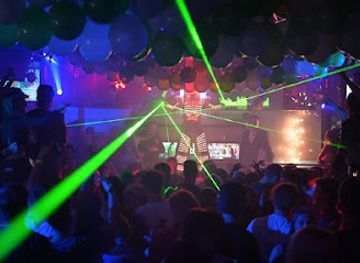
Evenings in Gurktal generally centre on traditional inns, hotel lounges and village cafés rather than a large nightclub scene. Gurk, Straßburg, Weitensfeld and the other market communities offer places for an unhurried drink or meal, while seasonal mountain areas may have après-ski gatherings during the winter period. Local beer, Austrian wine, schnapps and non-alcoholic drinks are commonly available, and some establishments host occasional live music, club events or village celebrations. Nightlife is most active during festivals and holiday periods, but programmes and opening arrangements change from year to year. In rural districts, distances between settlements and limited late-evening transport make it important to arrange a taxi, designated driver or accommodation within walking distance. The region's evening character is consequently conversational and community-based, with dining, music and local events playing a larger role than late-night dancing.
-
Disco club
V-Club Villach
Experience the vibrant nightlife of Villach at V-Club, where music, dancing, and fun come together in a stylish disco setting.
-
Disco club
G2 clubs Disco
Discover the electrifying nightlife at G2 Club Disco in Lieserhofen, where music and dancing come alive until dawn.
-
Disco club
Stromberger H u. B. Ges.n.b.R
Experience the electrifying nightlife at Stromberger Disco Club in Kleinglödnitz, where vibrant music and dance await every visitor.
-
Disco club
Discotheque Fabrik
Dance the night away at Discotheque Fabrik, the top disco club in Techelsberg am Wörther See, where vibrant nightlife meets stunning scenery.


Best shops in Gurktal
Shopping in Gurktal is concentrated in small market-town high streets, village shops, bakeries, cafés, farm outlets and occasional producers' stalls rather than large retail centres. Weitensfeld, Gurk, Straßburg and Metnitz are useful places to look for everyday supplies, books, gifts and locally produced food, while larger shopping requirements are generally handled in towns outside the immediate valley region. Regional purchases may include honey, herbs, cheese, smoked meats, breads, preserves, schnapps and other farm products, along with small craft items linked to Carinthian rural traditions. Some church and heritage sites have modest cultural gift selections, but opening arrangements vary. Visitors interested in antiques, art or handmade goods should ask locally about current exhibitions, craft workshops and seasonal markets instead of relying on permanent retail districts. The most appropriate souvenirs are usually edible or practical products from the surrounding valleys, which reflect Gurktal's agricultural and forest-based character more accurately than generic Alpine merchandise.
-
Shopping mall
ATRIO Villach
Discover the ultimate shopping and dining experience at ATRIO Villach, the premier shopping mall in Austria's beautiful Villach.
-
Shopping mall
City-Arkaden Klagenfurt
Experience the best of shopping and dining at City-Arkaden Klagenfurt, a vibrant hub for tourists seeking retail therapy and culinary delights.
-
Pastries
Cafe-Konditorei Holzmann - Fam Motschiunig
Discover the sweet flavors of St. Veit an der Glan at Cafe-Konditorei Holzmann, a must-visit spot for pastry enthusiasts.
-
Clothing store
Alpe Adria factory Strohmaier
Explore unique Alpine-inspired clothing at Alpe Adria Factory Strohmaier, where quality meets local craftsmanship in the heart of Weitensfeld.


Get your free copy of our complete guide to Gurktal, delivered straight to you.
Everything on this page, from attractions and restaurants to essentials and local phrases, in one PDF you can read offline, print or share.
Already have an account? Sign in
Your Gurktal guide is ready.
We'll send it to · Not you? Sign out

Getting your guide ready…
We are putting together a fresh copy of the Gurktal guide. This can take up to a minute.
This can take a few moments. If your browser asks, choose Allow so the download can start. You'll find the guide in your Downloads folder.
Nothing happened? Download it again
Sorry, the guide is taking longer than usual. Please try again in a minute, or get it by email instead.
Gurktal essentials
Currency and Payment
Safety
Emergency Situations
Do's and Don'ts
Local Tips
From Eve
Local phrases worth knowing
You don't need to get them perfect. A few words go a long way, and locals appreciate the effort.
Basics
| English | Local | Say it |
|---|---|---|
| Hello | Hallo | [Hah-loh] |
| Goodbye | Auf Wiedersehen | [Owf Vee-der-zay-en] |
| Yes | Ja | [Yah] |
| No | Nein | [Nyn] |
| Please/You're welcome | Bitte | [Bitt-eh] |
| Thank you | Danke | [Dahn-keh] |
| Excuse me/Sorry | Entschuldigung | [Ent-shool-dee-goong] |
| How are you? | Wie geht's dir? | [Vee gate's deer?] |
| Fine. And you? | Gut. Und dir? | [Goot. Oond deer?] |
| Do you speak English? | Sprechen Sie Englisch? | [Shpre-chen Zee Eng-lish?] |
| I don't understand | Ich verstehe nicht | [Ish fersh-tay-eh nikht] |
Eating & Drinking
| English | Local | Say it |
|---|---|---|
| I'd like to see the menu, please | Ich hätte gerne die Speisekarte, bitte | [Ish heh-teh gair-neh dee Shpie-ze-kar-teh, bitt-eh] |
| I don't eat meat | Ich esse kein Fleisch | [Ish ess-eh kyn Flysh] |
| Cheers! | Prost! | [Prohst!] |
| I would like to pay, please | Ich möchte zahlen, bitte | [Ish merkh-teh tsah-len, bitt-eh] |
Emergencies
| English | Local | Say it |
|---|---|---|
| Help! | Hilfe! | [Hil-feh!] |
| Go away! | Geh weg! | [Gay vek!] |
| Call the Police! | Rufen Sie die Polizei! | [Roo-fen Zee dee Poh-li-tsai!] |
| Call a doctor! | Rufen Sie einen Arzt! | [Roo-fen Zee eye-nen Artzt!] |
| I'm lost | Ich habe mich verlaufen | [Ish hah-beh mikh fer-lau-fen] |
| I'm ill | Ich bin krank | [Ish bin krank] |
Shopping
| English | Local | Say it |
|---|---|---|
| I'd like to buy... | Ich möchte ... kaufen | [Ish merkh-teh ... kau-fen] |
| I'm just looking | Ich schaue nur | [Ish shau-eh noor] |
| How much is it? | Wie viel kostet es? | [Vee feel cost-et es?] |
| That's too expensive | Das ist zu teuer | [Das ist tsoo toy-er] |
| Can you lower the price? | Könnten Sie den Preis senken? | [Kern-ten Zee den Pryce zen-ken?] |
Time & Numbers
| English | Local | Say it |
|---|---|---|
| What time is it? | Wie spät ist es? | [Vee shpet ist es?] |
| It's one o'clock | Es ist ein Uhr | [Es ist ine Oor] |
| Half past (10) | Halb (10) | [Halb (10)] |
| Morning | Morgen | [Mor-gen] |
| Afternoon | Nachmittag | [Nahk-mit-tahg] |
| Evening | Abend | [Ah-bent] |
| Yesterday | Gestern | [Gess-tern] |
| Today | Heute | [Hoy-teh] |
| Tomorrow | Morgen | [Mor-gen] |
| 1 | Eins | [Eyns] |
| 2 | Zwei | [Tsvy] |
| 3 | Drei | [Dry] |
| 4 | Vier | [Veer] |
| 5 | Fünf | [Fuenf] |
| 6 | Sechs | [Zex] |
| 7 | Sieben | [Zee-ben] |
| 8 | Acht | [Akh-t] |
| 9 | Neun | [Noyn] |
| 10 | Zehn | [Tsayn] |
Transport & Directions
| English | Local | Say it |
|---|---|---|
| Where's a/the...? | Wo ist ein/das...? | [Vo ist ine/das...?] |
| What's the address? | Was ist die Adresse? | [Vas ist dee Ah-dres-se?] |
| Can you show me (on the map)? | Könnten Sie mir (auf der Karte) zeigen? | [Kern-ten Zee mir (owf der Kar-teh) tsai-gen?] |
| When's the next (bus)? | Wann fährt der nächste (Bus)? | [Vahn fehrt der naech-steh (Boos)?] |
| A ticket (to ....) | Ein Ticket (nach ...) | [Ine Tik-ket (nahkh ...)] |
History of Gurktal
Pre-Roman and Roman Carinthia
The Gurktal area formed part of the wider cultural landscape of ancient Noricum before becoming incorporated into the Roman world. Roman roads and settlements were concentrated along more important routes in the surrounding Carinthian basin, while the Gurk valleys remained largely rural and resource-based. Archaeological evidence across the region and neighbouring parts of Carinthia records the gradual interaction of Celtic, Roman and later Germanic influences. The modern landscape does not preserve a single monumental Roman site comparable with those elsewhere in Austria, but the ancient period established the wider political and economic setting in which the valleys developed.
Medieval Settlement and Christianisation
During the early and high Middle Ages, the valleys of central Carinthia were shaped by Slavic and Bavarian settlement, land clearance and the growth of ecclesiastical estates. Churches and farming communities became the basis of the settlement pattern still visible today. The Gurk valley's name and local place names preserve traces of this layered past, while the spread of parish churches connected remote communities with larger diocesan institutions. Forest clearance created meadow and pasture land, but the surrounding uplands remained important sources of timber and grazing.
The Diocese of Gurk and the Cathedral
The Diocese of Gurk was founded in 1072, and Gurk became the seat of a powerful ecclesiastical institution serving Carinthia. Construction of Gurk Cathedral began in the twelfth century, producing one of the great Romanesque churches of the eastern Alps. The cathedral's crypt, architecture and later artistic additions reflect the changing devotional and political importance of the site. Although the diocesan seat was eventually transferred to Klagenfurt in the late eighteenth century, Gurk retained its religious significance and remains the region's foremost historical monument.
Castles, Markets and Medieval Administration
Medieval authority in Gurktal was also expressed through fortified and administrative centres. Straßburg developed around its castle and became closely connected with the bishops of Gurk, while market settlements such as Weitensfeld served local exchange and administration. These centres linked scattered farmsteads and mountain communities with ecclesiastical, judicial and commercial networks. Much of the original political structure has disappeared, but castle remains, parish churches and historic town layouts still indicate how power and trade were organised before modern roads and state institutions transformed the valleys.
Farming, Forestry and Mountain Economies
For centuries, Gurktal's economy depended on mixed farming, livestock, forestry and seasonal use of higher pastures. Hay meadows and alpine grazing were not simply scenic features but essential parts of household economies, while timber supported construction, charcoal production and local trade. In some parts of the wider Gurktal Alps, small-scale mining and metalworking also contributed to regional livelihoods, although these activities never created a heavily industrialised landscape. The survival of dispersed farms, pasture clearings and village sawmills reflects this long relationship between settlement and forest.
Religious Art and the Dance of Death Tradition
Religious imagery remained central to valley culture, especially in parish churches, chapels and cemeteries. Metnitz is notable for its Dance of Death tradition, represented by historic imagery connected with the Middle Ages and later devotional culture. Such works presented death as a universal presence across social ranks, offering both moral instruction and a record of the visual language of rural Christianity. Together with Gurk Cathedral and the region's wayside shrines, Metnitz's heritage demonstrates how faith shaped public art and shared memory in communities far from Austria's major cities.
Modern Mobility and Rural Change
The nineteenth and twentieth centuries brought improved roads, schooling, public administration and wider markets, gradually reducing the isolation of the upper valleys. At the same time, mechanisation and population change altered traditional farming, encouraging forestry, commuting and tourism to supplement agriculture. Winter sports and holiday homes became more important in higher areas such as Flattnitz and Hochrindl, while the market towns retained civic and cultural functions. Contemporary Gurktal therefore reflects both continuity and adjustment: historic villages and working landscapes remain, but their economic life is connected to regional centres beyond the valleys.
Gurktal in Photos
Browse through our photo collection highlighting the charm and character of the destination.
Neighbouring regions of Gurktal
The closest regions to Gurktal, if you have time for more than one.
-

-

-

-

-


Swipe for more regions
Explore more
Explore more of Austria
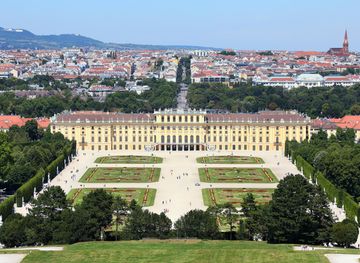
Discover Austria's blend of alpine landscapes, rich cultural heritage, and culinary delights, from Vienna's historic charm to Tyrol's dramatic beauty.
Explore Austria