

Lungau, Austria Travel Guide
Discover Lungau, Austria: A picturesque region with stunning landscapes, rich history, and vibrant traditions, perfect for outdoor adventures and cultural experiences.
Nestled in the heart of Austria, Lungau is a charming region filled with stunning landscapes, rich culture, and a slower pace of life. Known for its picturesque villages, rolling hills, and majestic mountains, Lungau offers a perfect escape for those looking to immerse themselves in nature and experience authentic Austrian hospitality. In the winter, Lungau transforms into a snow-covered wonderland, perfect for skiing, snowboarding, and other winter sports. The region boasts several family-friendly ski resorts, making it an ideal destination for both beginners and seasoned skiers. During the warmer months, Lungau's lush meadows and serene lakes provide ample opportunities for hiking, cycling, and relaxing outdoor activities. History enthusiasts will delight in exploring Lungau's well-preserved medieval castles and churches. The region's vibrant festivals and traditional events, such as the Samson parades, offer visitors a unique glimpse into the local culture and traditions. Don't forget to savor the delicious regional cuisine, featuring hearty dishes made from locally sourced ingredients.

Know before you go
Hi, I'm Eve. Here are a few practical things to know before exploring Lungau.
- Visit during the summer for beautiful hikes and during the winter for excellent skiing opportunities.
- Try the local Lungauer Eachtling potatoes, a regional specialty.
- Attend the Samson parades for a unique cultural experience.
- Explore the medieval Mauterndorf Castle for a step back in time.
- Rent a bike to explore the scenic trails and hidden gems of the region.
Destinations in Lungau
Resorts, valleys and scenic spots worth a trip of their own.

Explore Lungau: Things to Do, Places to Eat, Hotels & More
Handpicked recommendations for top attractions, local dining, accommodations, and more

Top Attractions & Sightseeing in Lungau
Top-rated picks
Best Attractions

Porsche Automuseum Helmut Pfeifhofer
Discover the legacy of Porsche at the Helmut Pfeifhofer Museum in Gmünd, Austria, featuring a stunning collection of classic and modern vehicles.

Rodelbahn Lucky Flitzer
Embark on an unforgettable adventure at Rodelbahn Lucky Flitzer, where thrilling summer toboggan rides meet stunning alpine landscapes in Flachau, Austria.

Burg Mauterndorf
Explore the medieval charm and rich history of Burg Mauterndorf, a captivating castle and museum in the heart of Austria's scenic landscape.

Günster Wasserfall
Discover the stunning Günster Wasserfall in Austria, a natural wonder perfect for relaxation, hiking, and photography enthusiasts.

Best landmarks in Lungau
Top-rated picks
Best Landmarks
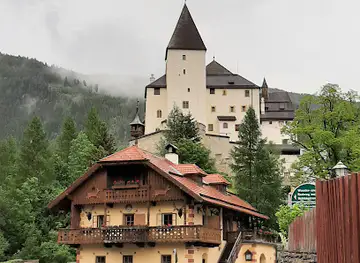
Mauterndorf Castle
Explore Mauterndorf Castle, a historical gem in Austria, where medieval charm meets captivating exhibitions and breathtaking views.
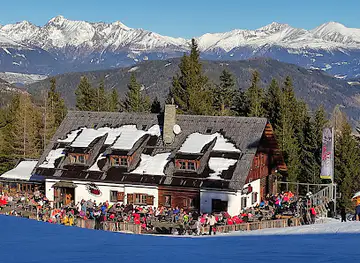
Ski and hiking area Aineck Katschberg
Discover the thrilling slopes and scenic trails of Aineck Katschberg, the ultimate destination for skiing and hiking in the Austrian Alps.

Pritzhütte
Discover the perfect blend of alpine cuisine and stunning mountain views at Pritzhütte in Austria's Katschberg region.

Schloss Moosham und Apartments beim Schloss
Explore the enchanting Schloss Moosham, a historical castle in Austria, offering a perfect blend of rich heritage and modern holiday comforts.

Best restaurants in Lungau
Top-rated picks
Best Restaurants

Gamskogelhütte
Discover authentic Austrian flavors at Gamskogelhütte, where mountain views meet delightful culinary experiences in Katschberg.

Panorama Alm Mauterndorf
Discover delightful dining amidst stunning alpine views at Panorama Alm Mauterndorf - where culinary tradition meets breathtaking scenery.
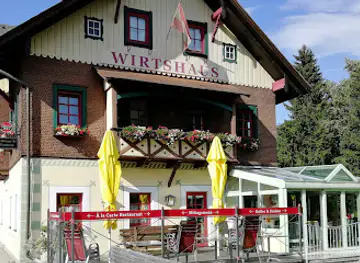
Prodinger's Wirtshaus
Indulge in traditional Austrian flavors at Prodinger's Wirtshaus in St. Michael im Lungau—where culinary heritage meets stunning alpine views.

Peterbaueralm
Experience authentic Austrian cuisine amidst stunning mountain vistas at Peterbaueralm—your gateway to nature's bounty.

Best bars in Lungau
Top-rated picks
Best Bars

Panorama Alm Mauterndorf
Discover the flavors of Austria with breathtaking alpine views at Panorama Alm Mauterndorf, a unique dining experience in the heart of the Alps.

Peterbaueralm
Discover the flavors of the Austrian Alps at Peterbaueralm, a charming restaurant and organic farm nestled in stunning mountain scenery.

Pritzhütte
Experience the best of Austrian cuisine at Pritzhütte, a scenic restaurant perfect for hikers and food lovers in the stunning Lungau region.

Wilderer Alm
Experience authentic Austrian dining at Wilderer Alm, your cozy retreat in the scenic Katschberghöhe region, perfect for food and nature lovers.

Best nightclubs in Lungau
Top-rated picks
Best Nightclubs

Disco Villa GmbH (Disco, Tanzbar, Rockbar, Pub)
Discover the heart of Mariapfarr's nightlife at Disco Villa GmbH, a vibrant disco club featuring diverse music and a lively atmosphere.

G2 clubs Disco
Discover the electrifying nightlife of G2 Club Disco, Lieserhofen's best spot for dancing and live music, perfect for locals and tourists alike.

Cult*Disco*Bar Fuggo Radstadt
Experience the vibrant nightlife at Cult*Disco*Bar Fuggo in Radstadt, where lively music and delicious drinks create unforgettable nights.

Fanningerwirt - Rock Cafe & Gastgarten
Experience the vibrant culture of Mariapfarr at Fanningerwirt, a rock café and gastgarten serving great food and live music in a cozy atmosphere.

Best shops in Lungau
Top-rated picks
Best Shops

Designer Outlet Salzburg
Discover incredible deals on top brands at Designer Outlet Salzburg, a shopper's paradise with stunning views and a variety of dining options.

HOFER
Shop at HOFER in St. Michael im Lungau for affordable groceries and local specialties, making your travel experience more enjoyable and budget-friendly.

Peterbaueralm
Discover the authentic taste of the Austrian Alps at Peterbaueralm, a charming restaurant and organic farm surrounded by breathtaking mountain views.

BILLA
Explore BILLA in St. Michael im Lungau – a premier supermarket offering fresh groceries and local specialties, plus electric vehicle charging stations.

Explore Lungau on the Map
A handpicked selection of must-see spots in Lungau, mapped for you.
Lungau Essentials
-
Lungau is located in the Salzburg region of Austria. The nearest major airport is Salzburg Airport, approximately 120 kilometers away. From Salzburg, you can take a train to Bischofshofen, and then a bus to Lungau. Alternatively, you can rent a car at the airport and drive to Lungau, which takes about 1.5 to 2 hours. The region is also accessible by train and bus from other major cities in Austria.
-
Within Lungau, the most convenient way to get around is by car, as public transport options are limited. However, there are local buses that connect the main towns and villages. Bicycling is also a popular mode of transportation, especially during the summer months. For those who prefer not to drive, taxi services are available but can be costly.
-
The official currency in Austria is the Euro (EUR). Credit and debit cards are widely accepted in most hotels, restaurants, and shops. However, it is advisable to carry some cash, especially in smaller villages and rural areas where card payments might not be available. ATMs are accessible in the main towns, but it is a good idea to withdraw sufficient cash before heading to more remote areas.
-
Lungau is generally a very safe destination for tourists. Crime rates are low, and it is rare for tourists to be targeted. However, it is always wise to take standard precautions such as not leaving valuables unattended and being aware of your surroundings, especially in crowded places. There are no specific high-crime areas in Lungau.
-
In case of emergency, dial 112, which is the European emergency number for police, fire, and medical services. The main towns in Lungau have medical facilities, and there are pharmacies where you can purchase over-the-counter medications. It is recommended to have travel insurance that covers medical emergencies.
-
Fashion: Do dress in layers and be prepared for varying weather conditions. Don't wear overly casual attire when dining in upscale restaurants. Religion: Do respect local customs and traditions. Some churches may require modest clothing and head coverings. Public Transport: Do be punctual and purchase your ticket before boarding. Don’t talk loudly on public transport. Greetings: Do greet people with a friendly 'Grüß Gott' (Hello) or a handshake. Eating & Drinking: Do try local dishes and drinks, and always say 'Prost' (Cheers) before drinking. Don’t leave a tip directly on the table; hand it to the server instead.
-
To experience Lungau like a local, attend one of the many traditional festivals, such as the Samson Parade or the Harvest Festival. Visit local farmers' markets to buy fresh produce and regional specialties. Engage in outdoor activities like hiking, cycling, and skiing, which are popular among residents. Don't miss tasting Lungauer Eachtling, a local potato variety that is a staple in the regional cuisine.
When is the best time to visit Lungau?
Useful Local Phrases for Lungau
You don't need to speak the language perfectly. Even learning a few simple words can make conversations warmer—and locals usually appreciate the effort.
— Eve

Here are the phrases I use most often in Lungau. Try a few—you'll be surprised how far they go! 😊
❤️
-
- HelloGrüß Gott
[Groos Got] - GoodbyeAuf Wiedersehen
[Owf Veederzayn] - YesJa
[Ya] - NoNein
[Nine] - Please/You're welcomeBitte
[Bitt-eh] - Thank youDanke
[Dahn-keh] - Excuse me/SorryEntschuldigung
[Ent-shool-dee-goong] - How are you?Wie geht's?
[Vee gates?] - Fine. And you?Gut. Und dir?
[Gooot. Oond deer?] - Do you speak English?Sprechen Sie Englisch?
[Shprekh-en Zee Eng-lish?] - I don't understandIch verstehe nicht
[Ish fer-shtay-eh nikht]
- HelloGrüß Gott
-
- I'd like to see the menu, pleaseIch hätte gerne die Speisekarte, bitte
[Ish het-teh ger-neh dee Shpy-ze-kahr-teh, bitt-eh] - I don't eat meatIch esse kein Fleisch
[Ish ess-eh kine Flysh] - Cheers!Prost!
[Prohst!] - I would like to pay, pleaseIch möchte bezahlen, bitte
[Ish merkh-teh beh-tsah-len, bitt-eh]
- I'd like to see the menu, pleaseIch hätte gerne die Speisekarte, bitte
-
- Help!Hilfe!
[Hil-feh!] - Go away!Geh weg!
[Geh veg!] - Call the Police!Rufen Sie die Polizei!
[Roo-fen Zee dee Poh-li-tsai!] - Call a doctor!Rufen Sie einen Arzt!
[Roo-fen Zee eye-nen Artst!] - I'm lostIch bin verloren
[Ish bin fer-lo-ren] - I'm illIch bin krank
[Ish bin krank]
- Help!Hilfe!
-
- I'd like to buy...Ich möchte kaufen...
[Ish merkh-teh kow-fen...] - I'm just lookingIch schaue nur
[Ish shao-eh noor] - How much is it?Wie viel kostet es?
[Vee feel kost-et es?] - That's too expensiveDas ist zu teuer
[Das ist tsoo toy-er] - Can you lower the price?Könnten Sie den Preis senken?
[Kern-ten Zee den Price sen-ken?]
- I'd like to buy...Ich möchte kaufen...
-
- What time is it?Wie spät ist es?
[Vee shpayt ist es?] - It's one o'clockEs ist ein Uhr
[Es ist ine Oor] - Half past (10)Halb (10)
[Halb (zehn)] - MorningMorgen
[Mor-gen] - AfternoonNachmittag
[Nakh-mit-tahg] - EveningAbend
[Ah-bent] - YesterdayGestern
[Ges-tern] - TodayHeute
[Hoy-teh] - TomorrowMorgen
[Mor-gen] - 1Eins
[Eins] - 2Zwei
[Tsvy] - 3Drei
[Dry] - 4Vier
[Veer] - 5Fünf
[Foonf] - 6Sechs
[Zex] - 7Sieben
[Zee-ben] - 8Acht
[Akh-t] - 9Neun
[Noyn] - 10Zehn
[Tzayn]
- What time is it?Wie spät ist es?
-
- Where's a/the...?Wo ist ein/das...?
[Vo ist ine/das...?] - What's the address?Wie ist die Adresse?
[Vee ist dee A-dres-se?] - Can you show me (on the map)?Könnten Sie mir (auf der Karte) zeigen?
[Kern-ten Zee meer (owf der Kar-teh) tsai-gen?] - When's the next (bus)?Wann kommt der nächste (Bus)?
[Vahn komt der nay-shte (Boos)?] - A ticket (to ....)Ein Ticket (nach....)
[Ine Ti-ket (nakh....)]
- Where's a/the...?Wo ist ein/das...?
History of Lungau
-
Lungau's history stretches back to prehistoric times, with evidence of human settlement dating to the Neolithic era. Archaeological finds, such as flint tools and pottery shards, suggest that early inhabitants engaged in hunting, farming, and trading. The region's strategic location in the Alps made it a vital corridor for ancient migrations and trade routes.
-
During the Roman Empire, Lungau was an important transit region. Known as part of the province of Noricum, it witnessed the construction of Roman roads and settlements. Artefacts, including coins and remnants of Roman villas, highlight the area's significance in connecting the Roman world with the northern territories.
-
The Middle Ages were a transformative period for Lungau, marked by the construction of numerous castles and fortifications. Notable among them is Mauterndorf Castle, a well-preserved medieval fortress that served as a toll station and administrative center. The castle's strategic position allowed it to control trade routes and protect the region from invaders.
-
From the 14th to the 19th century, Lungau was under the jurisdiction of the Archbishopric of Salzburg. This ecclesiastical rule brought significant cultural and architectural developments, including the construction of churches, monasteries, and educational institutions. The region flourished economically and culturally during this period, benefiting from the archbishopric's influence.
-
In the early 16th century, Lungau was affected by the Peasants' War, a series of uprisings against feudal oppression. Local peasants, inspired by the broader European movement, demanded better living conditions and fairer treatment. Although the revolts were eventually suppressed, they left a lasting impact on the region's social structure and agrarian practices.
-
Lungau, like much of Europe, was deeply impacted by the Napoleonic Wars in the early 19th century. The region faced invasions, territorial changes, and economic disruptions. After the fall of Napoleon, Lungau became part of the Austrian Empire, marking a new chapter in its administrative and political history.
-
The 20th century brought significant changes to Lungau, from the turmoil of the World Wars to the modernization of its infrastructure. Post-World War II, Lungau transitioned from a primarily agrarian economy to a more diversified one, with tourism playing an increasingly vital role. The preservation of its historical sites and natural beauty became a priority, shaping its contemporary identity.
Neighbouring Regions of Lungau
The closest regions to Lungau, if you have time for more than one.


Your all‑in‑one travel companion app
Explore expert travel guides, compare and book tours, experiences, hotels, and more—all from the palm of your hand. Download now for seamless trip planning wherever your wanderlust takes you.


Explore More of Austria
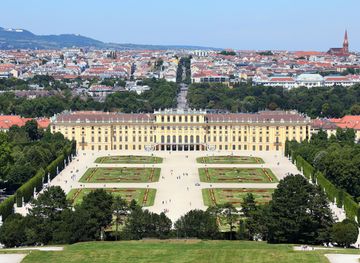
Looking beyond Lungau? Discover Austria for broader travel guides, local hot-spots, and regional highlights.
Explore AustriaLungau in Photos
Browse through our photo collection highlighting the charm and character of the destination.


Enchanting Lungau: Austria's Hidden Gem
Nestled in the heart of Austria, Lungau is a charming region filled with stunning landscapes, rich culture, and a slower pace of life. Known for its picturesque villages, rolling hills, and majestic mountains, Lungau offers a perfect escape for those looking to immerse themselves in nature and experience authentic Austrian hospitality. In the winter, Lungau transforms into a snow-covered wonderland, perfect for skiing, snowboarding, and other winter sports. The region boasts several family-friendly ski resorts, making it an ideal destination for both beginners and seasoned skiers. During the warmer months, Lungau's lush meadows and serene lakes provide ample opportunities for hiking, cycling, and relaxing outdoor activities. History enthusiasts will delight in exploring Lungau's well-preserved medieval castles and churches. The region's vibrant festivals and traditional events, such as the Samson parades, offer visitors a unique glimpse into the local culture and traditions. Don't forget to savor the delicious regional cuisine, featuring hearty dishes made from locally sourced ingredients.