

Styria, Austria Travel Guide
Discover Styria: A picturesque region in Austria known for its lush landscapes, historic architecture, and exceptional wine. Perfect for both outdoor adventures and cultural experiences.
Styria, often referred to as the 'Green Heart of Austria,' is a picturesque region known for its lush landscapes, rolling vineyards, and stunning architecture. Located in the southeastern part of Austria, Styria offers a mix of nature, culture, and culinary delights that cater to all types of travelers. The region is famous for its wine production, particularly the white wines. Visitors can explore the South Styrian Wine Road, which meanders through idyllic vineyards and charming villages. Wine tasting tours are a must to experience the local flavors and hospitality. Graz, the capital of Styria, is a UNESCO World Heritage Site with its well-preserved old town. The city combines Renaissance, Baroque, and modern architecture, making it a visual delight for visitors. Landmarks like the Graz Clock Tower and the Eggenberg Palace are not to be missed. Outdoor enthusiasts will find plenty to do in Styria. The region is home to numerous hiking and biking trails, including the scenic paths in the Dachstein-Tauern region. In winter, the area transforms into a snowy wonderland, perfect for skiing and snowboarding. Thermal spas, such as the ones in Bad Blumau, offer relaxation and rejuvenation. Styria's culinary scene is another highlight. The region is known for its pumpkin seed oil, hearty stews, and delicious pastries. Farmers' markets and local restaurants provide ample opportunities to savor traditional Styrian dishes.

Know before you go
Hi, I'm Eve. Here are a few practical things to know before exploring Styria.
- Visit during the autumn harvest season to experience the wine festivals and vibrant foliage.
- Rent a bike to explore the South Styrian Wine Road at your own pace.
- Don't miss the Graz Clock Tower for panoramic views of the city.
- Try the local pumpkin seed oil, a Styrian specialty, at farmers' markets.
- Pack comfortable hiking shoes if you plan to explore the Dachstein-Tauern trails.
- Book thermal spa treatments in advance, especially during the winter months.
Top City Travel Guides in Styria
The cities of Styria, and the easiest places to base yourself.


Destinations in Styria
Resorts, valleys and scenic spots worth a trip of their own.


Explore Styria: Things to Do, Places to Eat, Hotels & More
Handpicked recommendations for top attractions, local dining, accommodations, and more

Top Attractions & Sightseeing in Styria
Top-rated picks
Best Attractions

Schlossberg Graz
Experience stunning views and rich history at Schlossberg Graz, a beautiful hilltop park and cultural landmark in the heart of Austria.

Main square of Graz
Explore the vibrant Hauptplatz in Graz, a stunning historical square filled with culture, architecture, and local charm, perfect for every traveler.
Riegersburg Castle
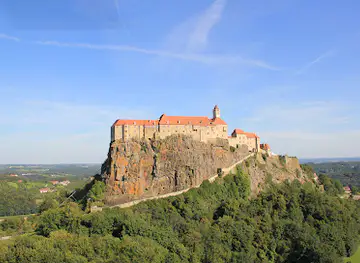
Discover the majestic Riegersburg Castle in Austria, a historical fortress offering breathtaking views, rich history, and captivating museums for every traveler.

Schloss Eggenberg
Explore Schloss Eggenberg, a stunning baroque palace in Graz, offering rich history, captivating art, and scenic gardens for an unforgettable cultural experience.

Best landmarks in Styria
Top-rated picks
Best Landmarks
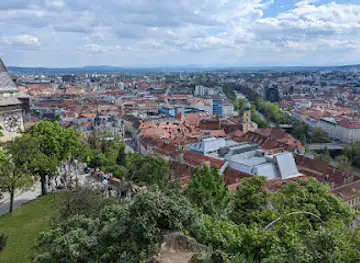
Schlossberg Graz
Explore Graz's iconic Schlossberg: a historic hill offering stunning views, the famous Clock Tower, and a blend of culture and recreation.

Uhrturm
Graz's iconic Clock Tower on Schlossberg hill: a historic landmark offering panoramic views and a unique glimpse into the city's past.

Riegersburg Castle
Explore Riegersburg Castle, an imposing medieval fortress in Styria, Austria, offering history, museums, falconry, and panoramic views.
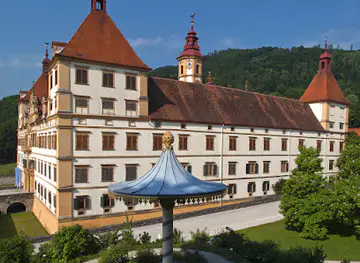
Schloss Eggenberg
Explore Schloss Eggenberg: A UNESCO World Heritage Site in Graz, blending Baroque architecture, art, and stunning gardens.

Best restaurants in Styria
Top-rated picks
Best Restaurants
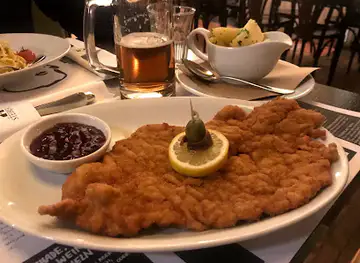
Der Steirer
Discover the culinary delights of Austria at Der Steirer in Graz - where tradition meets taste in every dish.

El Gaucho im Landhaus
Experience exquisite steak and European cuisine at El Gaucho im Landhaus, Graz's premier dining destination for meat lovers.
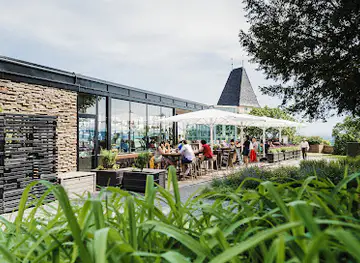
aiola upstairs
Experience the perfect blend of European cuisine and local flavors at Aiola Upstairs in Graz, where exquisite dining meets breathtaking views.

Landhauskeller
Experience the perfect blend of traditional Austrian cuisine and modern fusion delights at Graz's renowned Landhauskeller restaurant.

Best bars in Styria
Top-rated picks
Best Bars

Flann O'Brien Original Irish Pub
Discover the charm of Irish culture at Flann O'Brien Original Irish Pub in Graz, where hearty food and great drinks await.

Salon Marie
Experience the vibrant culinary scene of Graz at Salon Marie, where delightful breakfasts and brunches await in an inviting atmosphere.

O'Carolan’s Irish Pub
Discover O'Carolan’s Irish Pub in Graz, where traditional Irish cuisine meets a vibrant nightlife in a cozy and welcoming atmosphere.

Hops Craft Beer Pub Graz
Experience the best of craft beer culture at Hops Craft Beer Pub Graz, where every sip tells a story of flavor and passion.

Best nightclubs in Styria
Top-rated picks
Best Nightclubs

Mausefalle
Discover the pulsating nightlife of Graz at Mausefalle, the city's premier disco club offering an unforgettable experience filled with music and dancing.

Kottulinsky - Der Club in Graz
Experience the vibrant nightlife of Graz at Kottulinsky, where dancing, drinks, and unforgettable memories await you.

Bunker
Experience the heart of Graz's nightlife at Bunker, a vibrant disco club with electrifying music and an unforgettable atmosphere.

Bur Bar & Restaurant - BUR GmbH
Discover Graz's nightlife at Bur Bar & Restaurant, where culinary delights meet vibrant entertainment in a stylish setting.

Best shops in Styria
Top-rated picks
Best Shops

MURPARK
Discover MURPARK in Graz, a vibrant shopping mall offering a perfect blend of retail, dining, and entertainment for an unforgettable experience.

Shopping Nord
Discover Shopping Nord in Graz: your ultimate shopping destination with diverse stores, delicious dining, and exciting entertainment options.

Primark
Explore Primark in Graz for trendy, affordable fashion that caters to every style and budget in a vibrant shopping environment.

Bethrifty Vintage Kilo Store
Explore sustainable fashion at Bethrifty Vintage Kilo Store in Graz, where every piece tells a story and unique treasures await.

Explore Styria on the Map
A handpicked selection of must-see spots in Styria, mapped for you.
Styria Essentials
-
Styria is accessible via several modes of transportation. The nearest major international airport is Graz Airport (GRZ), which has frequent connections to many European cities. From Graz Airport, you can take a bus, taxi, or rental car to reach various destinations within Styria. Additionally, Vienna International Airport (VIE) is about 2 hours away by car or train. The Austrian Federal Railways (ÖBB) provides extensive train service connecting Graz and other Styrian towns to major cities in Austria and Europe.
-
Public transportation in Styria is well-developed and includes buses, trams, and trains. Graz, the capital of Styria, has an efficient tram network that covers most parts of the city. For intercity travel, the Austrian Federal Railways (ÖBB) offers convenient and frequent train services. Renting a car is also a popular option, allowing for flexibility and the ability to explore the scenic countryside at your own pace. Biking is another excellent way to see the region, with numerous bike paths and rental options available.
-
The official currency in Austria is the Euro (EUR). Credit and debit cards are widely accepted in urban areas, including hotels, restaurants, and shops. However, it is advisable to carry some cash, especially when visiting smaller towns or rural areas where card payment might not be available. ATMs are plentiful and can be found in most towns and cities. It’s a good idea to inform your bank of your travel plans to avoid any issues with card transactions.
-
Styria is generally a safe region for tourists. However, as with any travel destination, it is important to stay vigilant. Petty crimes such as pickpocketing can occur in crowded areas and on public transport, so keep an eye on your belongings. Graz, the largest city in Styria, has some areas where tourists should be cautious, particularly around train stations and nightlife districts at night. Always use common sense and trust your instincts.
-
In case of an emergency, dial 112, the general emergency number for the European Union. This number can be used for police, fire, and medical emergencies. For non-urgent medical assistance, you can visit local pharmacies (Apotheke) where pharmacists can provide advice and over-the-counter medications. It is recommended to have comprehensive travel insurance that covers medical emergencies, accidents, and theft.
-
Fashion: Do dress comfortably and appropriately for the season. Austrians generally dress well, so avoid overly casual attire in urban areas. Religion: Do respect religious customs. When visiting churches or monasteries, dress modestly and avoid loud behavior. Public Transport: Do validate your ticket before boarding trains or trams. Fines for traveling without a valid ticket are steep. Greetings: Do greet people with a friendly 'Grüß Gott' or 'Hallo'. A firm handshake is customary. Eating & Drinking: Do try local specialties such as Styrian pumpkin seed oil and wines. Don’t expect to find many restaurants open late at night; dinner is typically served earlier.
-
To experience Styria like a local, consider visiting a Buschenschank, a traditional wine tavern where you can enjoy local wines and homemade snacks. Participating in local festivals such as the Styrian Autumn Festival or the Pumpkin Festival in Feldbach can provide a deeper cultural experience. Engage with locals; they are generally friendly and willing to share insights about their region. Don’t miss out on exploring the scenic Styrian Wine Road or the historic town of Bad Radkersburg with its thermal spas.
When is the best time to visit Styria?
Useful Local Phrases for Styria
You don't need to speak the language perfectly. Even learning a few simple words can make conversations warmer—and locals usually appreciate the effort.
— Eve

Here are the phrases I use most often in Styria. Try a few—you'll be surprised how far they go! 😊
❤️
-
- HelloHowdy
[haudi] - GoodbyeSee ya
[si ya] - YesYep
[yehp] - NoNah
[nah] - Please/You’re welcomeNo problem
[no prob-lem] - Thank youThanks
[thangs] - Excuse me/SorrySorry 'bout that
[sor-ree 'bout that] - How are you?How ya doin'?
[how ya doin'?] - Fine. And you?Good. And you?
[gud. and you?] - Do you speak English?You speakin' English?
[yu speakin' ing-glish?] - I don't understandI ain't gettin' it
[i ain't gettin' it]
- HelloHowdy
-
- I'd like to see the menu, pleaseCan I see the menu?
[can i see the men-u?] - I don't eat meatI'm a vegetarian
[i'm a vege-tarian] - Cheers!Cheers!
[cheers] - I would like to pay, pleaseCan I get the check?
[can i get the check?]
- I'd like to see the menu, pleaseCan I see the menu?
-
- Help!Help!
[help] - Go away!Get lost!
[get lost] - Call the Police!Call the cops!
[call the cops] - Call a doctor!Get a doctor!
[get a doc-tor] - I'm lostI'm turned around
[i'm turned a-round] - I'm illI'm not feelin' good
[i'm not feelin' good]
- Help!Help!
-
- I'd like to buy...I wanna buy...
[i wanna buy...] - I'm just lookingJust browsin'
[just browsin'] - How much is it?What’s the price?
[what's the price?] - That's too expensiveThat's way too pricey
[that's way too pri-cey] - Can you lower the price?Can you knock down the price?
[can you knock down the price?]
- I'd like to buy...I wanna buy...
-
- What time is it?What time ya got?
[what time ya got?] - It's one o'clockIt's one
[it's one] - Half past (10)Half past ten
[half past ten] - MorningMornin'
[mornin'] - AfternoonAfternoon
[afternoon] - EveningEvenin'
[evenin'] - YesterdayYesterday
[yes-ter-day] - TodayToday
[to-day] - TomorrowTomorrow
[to-mor-row] - 1One
[one] - 2Two
[two] - 3Three
[three] - 4Four
[four] - 5Five
[five] - 6Six
[six] - 7Seven
[seven] - 8Eight
[eight] - 9Nine
[nine] - 10Ten
[ten]
- What time is it?What time ya got?
-
- Where's a/the...?Where's the...?
[where's the...?] - What's the address?What’s the address?
[what’s the ad-dress?] - Can you show me (on the map)?Can you point it out?
[can you point it out?] - When's the next (bus)?When’s the next bus?
[when's the next bus?] - A ticket (to ....)A ticket to ...
[a tick-et to ...]
- Where's a/the...?Where's the...?
History of Styria
-
Styria, known as 'Steiermark' in German, boasts a rich history dating back to the Celtic era. The region was once part of the Celtic kingdom of Noricum, and it became a significant area during the Roman Empire, evidenced by numerous archaeological sites such as the remnants of Roman roads and settlements.
-
During the Middle Ages, Styria flourished under the rule of the Babenberg and later the Habsburg dynasties. The region's wealth grew due to its iron mines and the trade of iron goods. The medieval architecture, including the fortified towns and castles like Riegersburg and Burg Oberkapfenberg, stand as testaments to this prosperous era.
-
The 16th and 17th centuries were marked by the struggles against the Ottoman Empire. Styria's strategic location made it a frontline in the defense against Turkish invasions. The construction of fortifications and the rallying of local militias were crucial in protecting the region from Ottoman advances.
-
Styria was significantly impacted by the Protestant Reformation in the 16th century. Many Styrians converted to Protestantism, leading to religious conflicts. The Counter-Reformation, spearheaded by the Habsburg rulers, sought to restore Catholicism, resulting in the construction of grand Baroque churches and monasteries.
-
The Napoleonic Wars brought turmoil to Styria, as the region was invaded and occupied by French forces. The Austrian resistance, including local Styrian fighters, played a crucial role in the eventual defeat of Napoleon's troops. This period also saw significant political and social changes as part of the larger European upheaval.
-
The 19th century Industrial Revolution transformed Styria into a hub of industrial activity. The development of ironworks and steel mills, particularly in towns like Leoben and Eisenerz, fueled economic growth. Railways expanded, connecting Styria to other parts of the Austro-Hungarian Empire and beyond.
-
Styria, like the rest of Austria, was deeply affected by both World Wars. The region endured significant hardships, including battles, occupation, and economic challenges. The interwar period saw political instability, but also efforts to rebuild and modernize the region's infrastructure and economy.
-
After World War II, Styria underwent extensive reconstruction and modernization. The region embraced new technologies and industries, transforming into a vibrant economic and cultural center in Austria. Graz, the capital of Styria, became a UNESCO World Heritage site, and the region is now known for its high-quality wines, thermal spas, and stunning landscapes.
Neighbouring Regions of Styria
The closest regions to Styria, if you have time for more than one.


Your all‑in‑one travel companion app
Explore expert travel guides, compare and book tours, experiences, hotels, and more—all from the palm of your hand. Download now for seamless trip planning wherever your wanderlust takes you.


Explore More of Austria
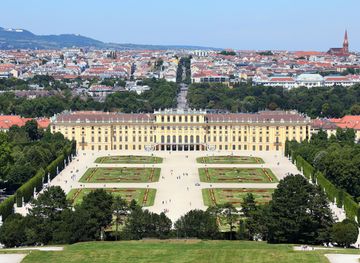
Looking beyond Styria? Discover Austria for broader travel guides, local hot-spots, and regional highlights.
Explore AustriaStyria in Photos
Browse through our photo collection highlighting the charm and character of the destination.


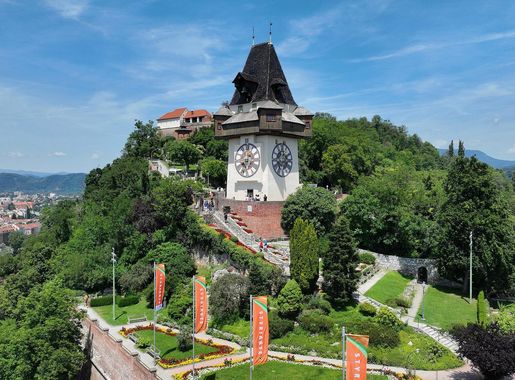


Styria: The Green Heart of Austria
Styria, often referred to as the 'Green Heart of Austria,' is a picturesque region known for its lush landscapes, rolling vineyards, and stunning architecture. Located in the southeastern part of Austria, Styria offers a mix of nature, culture, and culinary delights that cater to all types of travelers. The region is famous for its wine production, particularly the white wines. Visitors can explore the South Styrian Wine Road, which meanders through idyllic vineyards and charming villages. Wine tasting tours are a must to experience the local flavors and hospitality. Graz, the capital of Styria, is a UNESCO World Heritage Site with its well-preserved old town. The city combines Renaissance, Baroque, and modern architecture, making it a visual delight for visitors. Landmarks like the Graz Clock Tower and the Eggenberg Palace are not to be missed. Outdoor enthusiasts will find plenty to do in Styria. The region is home to numerous hiking and biking trails, including the scenic paths in the Dachstein-Tauern region. In winter, the area transforms into a snowy wonderland, perfect for skiing and snowboarding. Thermal spas, such as the ones in Bad Blumau, offer relaxation and rejuvenation. Styria's culinary scene is another highlight. The region is known for its pumpkin seed oil, hearty stews, and delicious pastries. Farmers' markets and local restaurants provide ample opportunities to savor traditional Styrian dishes.