

Free Carinthia Travel Guide & Mobile App
Explore Carinthia with free travel guides. Discover regional history, expert tips, proposed trips, and audio guides on web or mobile app.


Explore Carinthia’s warm lakes, Alpine valleys, medieval castles, regional cuisine and borderland culture in southern Austria.
Read more about Carinthia
When is the best time to visit Carinthia?
Best: June–August · 21–24°C| Month | High (°C) | Rainfall (mm) |
|---|---|---|
| January | 2 | 30 |
| February | 4 | 35 |
| March | 9 | 40 |
| April | 13 | 45 |
| May | 18 | 60 |
| June (best) | 21 | 70 |
| July (best) | 24 | 80 |
| August (best) | 23 | 80 |
| September | 19 | 70 |
| October | 14 | 50 |
| November | 8 | 40 |
| December | 3 | 35 |
Getting to and around Carinthia
How to get there
Transportation
Top city travel guides in Carinthia
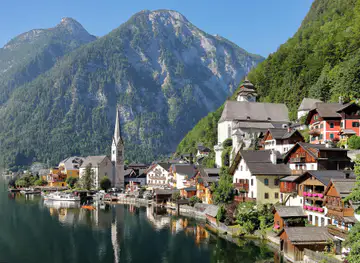
The cities of Carinthia, and the easiest places to base yourself.
-
-

-

-


Swipe for more cities
Destinations in Carinthia
Resorts, valleys and scenic spots worth a trip of their own.
-

-

-

-

-

-


Swipe for more destinations
Best attractions in Carinthia
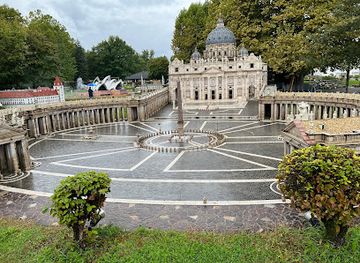
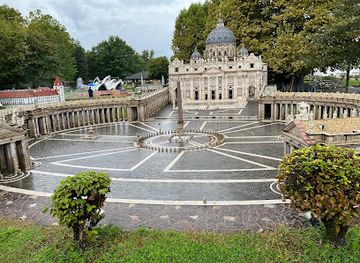
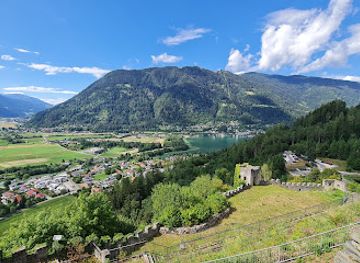
Carinthia’s attractions range from Roman archaeology and medieval fortresses to lakeside recreation and high mountain landscapes. The Magdalensberg archaeological area and the remains associated with Virunum near Maria Saal introduce the province’s ancient Noric and Roman past, while Gurk Cathedral and Hochosterwitz Castle provide two of its most important historic visits. Friesach adds fortified streets, medieval civic architecture and a strong sense of the province’s trading history. Around the lakes, visitors can swim, paddle, cycle and walk beside Wörthersee, Ossiacher See and Millstätter See, each offering a different balance of resort life, wooded shore and mountain scenery. The Nock Mountains are suited to walking among rounded summits and open pasture, while the Hohe Tauern and southern border ranges provide more demanding alpine terrain. Villach’s thermal facilities and Klagenfurt’s museums offer alternatives in poor weather, and family-oriented attractions around the provincial capital include the miniature landscape park Minimundus. Winter adds skiing, snowboarding, cross-country routes and wellness resorts, particularly around Bad Kleinkirchheim and Nassfeld.
-
Castle
Bled Castle
Discover the enchanting Bled Castle, a historic fortress with stunning views of Lake Bled and rich cultural exhibits that capture Slovenia's heritage.
-
Nature preserve
Soteska Vintgar
Immerse yourself in the breathtaking beauty of Soteska Vintgar, Slovenia's stunning gorge with crystal-clear waters and serene nature trails.
-
Tourist attraction
Minimundus
Explore the world's most iconic landmarks in miniature at Minimundus, Klagenfurt. A unique and enchanting experience for all ages.
-
Lake
Lake Bled
Discover the stunning beauty and rich history of Lake Bled, Slovenia, a picturesque alpine destination perfect for relaxation and adventure.



Best landmarks in Carinthia
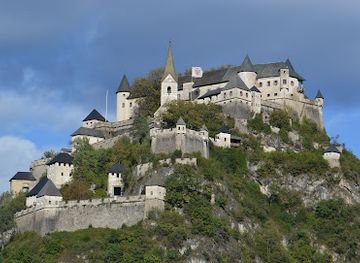
Hochosterwitz Castle is Carinthia’s most recognisable fortress, rising on a steep limestone rock east of Sankt Veit an der Glan and reached traditionally through a sequence of defensive gates. Gurk Cathedral, with its Romanesque architecture and richly historic interior, is one of the major ecclesiastical landmarks of the province and anchors the small town of Gurk in the eastern mountain country. Maria Saal’s church and the nearby Zollfeld landscape connect visible Christian heritage with the ancient political geography of Carantania and Roman Noricum. In Klagenfurt, the Renaissance character of the Neuer Platz and the Lindwurm fountain provide a civic symbol of the provincial capital, while the old centre of Villach reflects its long role as a commercial and transport town. The lake landscapes themselves are important natural landmarks: Wörthersee is known for its broad resort shoreline, Millstätter See for its wooded mountain setting, and the Nock Mountains for their smooth, rounded ridges. In the far south, the Karawanks and Carnic Alps form a dramatic border landscape shaped by geology, hiking routes and historic crossings.
-
Observation deck
Pyramidenkogel Tower
Discover the stunning Pyramidenkogel Tower, the tallest wooden observation tower in the world, offering breathtaking views of Austria's natural landscapes.
-
Theme park
Minimundus
Explore the wonders of the world in miniature at Minimundus, Klagenfurt's enchanting theme park filled with iconic landmarks and family-friendly fun.
-
Animal park
Affenberg Landskron
Visit Affenberg Landskron for a unique journey into the world of monkeys and wildlife, set against the stunning backdrop of the Austrian Alps.
-
Castle
Hochosterwitz Castle
Explore the majestic Hochosterwitz Castle, a breathtaking historical site in Austria offering stunning views and rich medieval heritage.
Explore Carinthia on the map
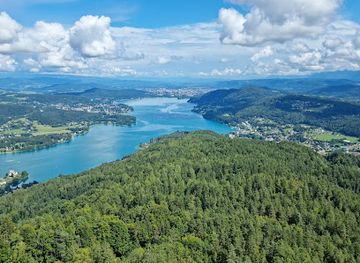
Plan your trip on one map. See where the top cities, national parks and sights are, and book hotels and experiences in a few clicks.
Best hotels in Carinthia
Best restaurants in Carinthia
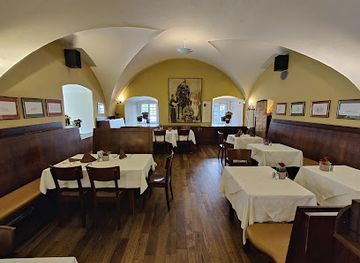
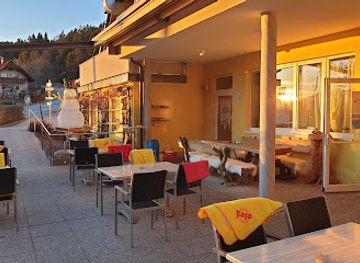
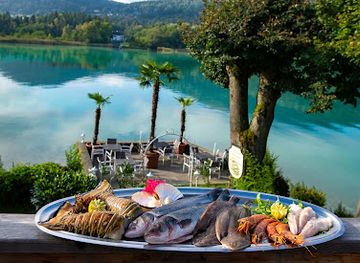
Carinthian cooking reflects Alpine farming, lake fisheries and long-standing connections with neighbouring Slovenia and Italy. Kärntner Kasnudeln are the signature dish: pasta parcels commonly filled with potato, curd cheese, herbs and mint, although recipes vary between households and districts. Menus also feature freshwater fish, game, pork, seasonal mushrooms and hearty soups, while Gailtaler Almkäse has protected regional status and is widely encountered in mountain pastures and specialist shops. Reindling, a spiced, swirled yeast cake, is associated with festive and family cooking. Klagenfurt and Villach have the broadest choice of contemporary restaurants, cafés and international food, whereas village inns and mountain huts centre on substantial regional dishes and locally sourced products. Lakeside restaurants are especially popular in warm weather, and farmers’ markets or farm shops provide opportunities to buy cheese, cured meats, bread, honey and seasonal fruit. Austrian wine is less central here than beer, fruit spirits and non-alcoholic alpine drinks, though modern restaurants may offer selections from across the country.
-
Restaurant
Villa Lido - Pizzeria Trattoria
Discover authentic Italian flavors at Villa Lido - Pizzeria Trattoria while enjoying breathtaking views of Wörthersee in Klagenfurt.
-
Austrian
Gasthaus im Landhaushof
Discover authentic Austrian cuisine at Gasthaus im Landhaushof in Klagenfurt am Wörthersee - where tradition meets flavor.
-
Restaurant
Restaurant Karawankenblick am Pyramidenkogel – Christoph Schaschl
Experience traditional Austrian cuisine with stunning views at Restaurant Karawankenblick near Pyramidenkogel.
-
Restaurant
Restaurant Maria Loretto
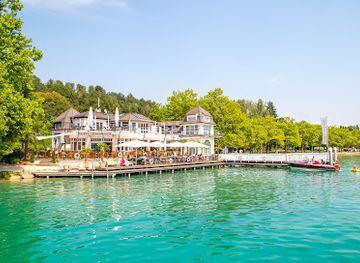
Experience culinary excellence at Restaurant Maria Loretto by Wörthersee with fresh local flavors in a stunning lakeside setting.
Best bars in Carinthia
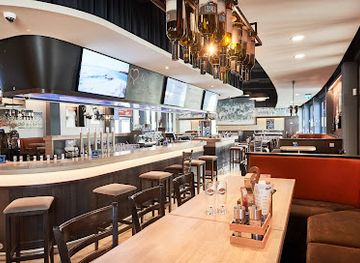
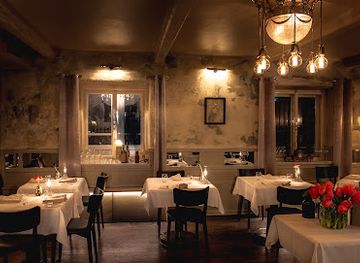
Evening life in Carinthia is concentrated in Klagenfurt and Villach, with smaller towns and lake resorts offering a quieter mix of traditional inns, wine bars, cafés and seasonal terraces. Klagenfurt’s central streets support the broadest choice of bars, from relaxed places close to the old town to venues aimed at students and live-music audiences. Villach has a similarly varied but generally compact evening scene, strengthened by its sizeable regional population and cultural calendar. Around Wörthersee, Ossiacher See and Millstätter See, summer brings lakeside restaurants, hotel bars and occasional music events, although the atmosphere is more seasonal than that of a major city. In mountain districts, après-ski venues, alpine huts and hotel lounges may provide the principal night-time activity, particularly during the winter season. Nightclubs exist but are not the defining feature of the province; visitors should check current arrangements locally, as opening patterns and event programmes change more quickly than the region’s established pub culture.
-
Grill
Frankie's Restaurant Bar & Café
Indulge in a delightful dining experience at Frankie's Restaurant Bar & Café, where fresh grilled flavors meet a warm, inviting atmosphere in Klagenfurt.
-
Bar
151 Restaurant & Bar
Experience the vibrant culinary scene at 151 Restaurant & Bar in Klagenfurt – where exquisite flavors meet a lively atmosphere.
-
Bar
GIG Bar & Cafe
Discover the lively GIG Bar & Cafe in Klagenfurt am Wörthersee, where great drinks and vibrant atmosphere await every visitor.
-
Restaurant
Monkey Circus
Discover the vibrant flavors of Monkey Circus in Velden am Wörthersee, where local meets international in a delightful dining experience.

Best nightclubs in Carinthia
Evening life in Carinthia is concentrated in Klagenfurt and Villach, with smaller towns and lake resorts offering a quieter mix of traditional inns, wine bars, cafés and seasonal terraces. Klagenfurt’s central streets support the broadest choice of bars, from relaxed places close to the old town to venues aimed at students and live-music audiences. Villach has a similarly varied but generally compact evening scene, strengthened by its sizeable regional population and cultural calendar. Around Wörthersee, Ossiacher See and Millstätter See, summer brings lakeside restaurants, hotel bars and occasional music events, although the atmosphere is more seasonal than that of a major city. In mountain districts, après-ski venues, alpine huts and hotel lounges may provide the principal night-time activity, particularly during the winter season. Nightclubs exist but are not the defining feature of the province; visitors should check current arrangements locally, as opening patterns and event programmes change more quickly than the region’s established pub culture.
-
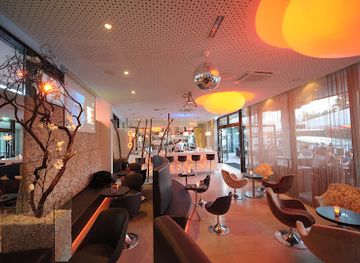
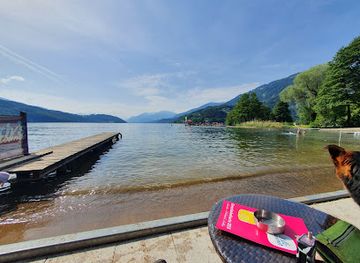
Lounge
Charly's Seelounge
Experience the serene beauty and delightful flavors at Charly's Seelounge, where every visit is a memorable escape by the lake.
-
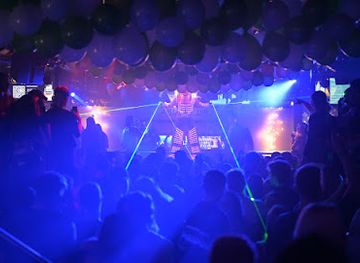
Disco club
V-Club Villach
Experience the vibrant nightlife at V-Club Villach, where energetic music and a lively crowd create unforgettable nights in Austria.
-
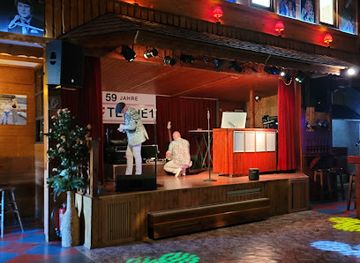
Dance hall
Tenne Krumpendorf - The legendary dance hall at Wörthersee
Discover the legendary Tenne Krumpendorf, a vibrant dance hall at Wörthersee, where unforgettable nights of music and joy await.
-
Night club
Andiamo Men's Club
Experience the vibrant nightlife at Andiamo Men's Club in Villach, where elegance meets entertainment in an unforgettable atmosphere.

Best shops in Carinthia
Shopping in Carinthia is strongest in the historic centres of Klagenfurt and Villach, where pedestrian streets combine national retailers with cafés, bookshops, smaller fashion businesses and independent specialist stores. Klagenfurt’s markets and central food shops are useful for regional produce, while Villach’s old town provides a convenient base for browsing gifts, crafts and everyday goods. Smaller market towns such as Sankt Veit an der Glan, Feldkirchen and Spittal an der Drau offer a more local high-street experience, with opening patterns that can be quieter outside business hours. Farm shops, dairies and mountain huts are the best places to look for Gailtaler Almkäse, honey, cured meats, spirits, breads and other edible souvenirs. Pottery, woodwork, woollen goods and locally made decorative objects may be found in craft shops and seasonal markets, though selection varies by district. Around the lakes, retail is largely oriented towards holiday needs and leisure wear rather than luxury shopping, making the province better suited to regional food, practical outdoor equipment and small artisan purchases than to designer retail.
-
Shopping mall
ATRIO Villach
Explore ATRIO Villach, the ultimate shopping destination in Austria, featuring diverse stores and delightful dining experiences for all visitors.
-
Shopping mall
City-Arkaden Klagenfurt
Explore City-Arkaden Klagenfurt, the ultimate shopping mall with diverse stores, delightful dining, and a vibrant atmosphere in Klagenfurt am Wörthersee.
-
Shopping mall
SÜDPARK Shopping Center Klagenfurt
Explore the SÜDPARK Shopping Center in Klagenfurt for a unique shopping and dining experience, featuring diverse stores and exciting events.
-
Shopping mall
Stadtpark Center Spittal
Experience the vibrant shopping scene at Stadtpark Center Spittal, where diverse shops and delightful dining create a perfect day out for every traveler.


Get your free copy of our complete guide to Carinthia, delivered straight to you.
Everything on this page, from attractions and restaurants to essentials and local phrases, in one PDF you can read offline, print or share.
Already have an account? Sign in
Your Carinthia guide is ready.
We'll send it to · Not you? Sign out

Getting your guide ready…
We are putting together a fresh copy of the Carinthia guide. This can take up to a minute.
This can take a few moments. If your browser asks, choose Allow so the download can start. You'll find the guide in your Downloads folder.
Nothing happened? Download it again
Sorry, the guide is taking longer than usual. Please try again in a minute, or get it by email instead.
Carinthia essentials
Currency and Payment
Safety
Emergency Situations
Do's and Don'ts
Local Tips
From Eve
Local phrases worth knowing
You don't need to get them perfect. A few words go a long way, and locals appreciate the effort.
Basics
| English | Local | Say it |
|---|---|---|
| Hello | Hallo | [Hah-loh] |
| Goodbye | Auf Wiedersehen | [Owf Veeder-zayn] |
| Yes | Ja | [Yah] |
| No | Nein | [Nain] |
| Please/You're welcome | Bitte | [Bitt-eh] |
| Thank you | Danke | [Dahn-keh] |
| Excuse me/Sorry | Entschuldigung | [Ent-shool-dee-goong] |
| How are you? | Wie geht's? | [Vee gates?] |
| Fine. And you? | Gut. Und dir? | [Goot. Oond deer?] |
| Do you speak English? | Sprechen Sie Englisch? | [Shpreck-en Zee Eng-lish?] |
| I don't understand | Ich verstehe nicht | [Ish fer-shtay-eh nikht] |
Eating & Drinking
| English | Local | Say it |
|---|---|---|
| I'd like to see the menu, please | Ich möchte die Speisekarte sehen, bitte | [Ish mer-kte dee Shpy-ze-kar-teh zay-en, bitt-eh] |
| I don't eat meat | Ich esse kein Fleisch | [Ish ess-eh kyan Fly-sh] |
| Cheers! | Prost! | [Prohst!] |
| I would like to pay, please | Ich möchte bezahlen, bitte | [Ish mer-kte beh-tsah-len, bitt-eh] |
Emergencies
| English | Local | Say it |
|---|---|---|
| Help! | Hilfe! | [Hihl-feh!] |
| Go away! | Geh weg! | [Gay vek!] |
| Call the Police! | Rufen Sie die Polizei! | [Roof-en Zee dee Po-lee-tsai!] |
| Call a doctor! | Rufen Sie einen Arzt! | [Roof-en Zee eye-nen Artst!] |
| I'm lost | Ich habe mich verlaufen | [Ish hah-beh mikh fer-lou-fen] |
| I'm ill | Ich bin krank | [Ish bin krank] |
Shopping
| English | Local | Say it |
|---|---|---|
| I'd like to buy... | Ich möchte kaufen... | [Ish mer-kte kow-fen...] |
| I'm just looking | Ich schaue nur | [Ish shau-eh noor] |
| How much is it? | Wie viel kostet es? | [Vee feel kos-tet es?] |
| That's too expensive | Das ist zu teuer | [Das ist tsu toy-er] |
| Can you lower the price? | Können Sie den Preis senken? | [Kern-en Zee den Price sen-ken?] |
Time & Numbers
| English | Local | Say it |
|---|---|---|
| What time is it? | Wie spät ist es? | [Vee shpate ist es?] |
| It's one o'clock | Es ist ein Uhr | [Es ist ine Oor] |
| Half past (10) | Halb (10) | [Halb (10)] |
| Morning | Morgen | [Mor-gen] |
| Afternoon | Nachmittag | [Nach-mit-tahg] |
| Evening | Abend | [Ah-bent] |
| Yesterday | Gestern | [Gehs-tern] |
| Today | Heute | [Hoy-teh] |
| Tomorrow | Morgen | [Mor-gen] |
| 1 | Eins | [Eins] |
| 2 | Zwei | [Tsvi] |
| 3 | Drei | [Dry] |
| 4 | Vier | [Fear] |
| 5 | Fünf | [Foonf] |
| 6 | Sechs | [Zex] |
| 7 | Sieben | [Zee-ben] |
| 8 | Acht | [Acht] |
| 9 | Neun | [Noyn] |
| 10 | Zehn | [Tsen] |
Transport & Directions
| English | Local | Say it |
|---|---|---|
| Where's a/the...? | Wo ist ein/das...? | [Vo ist ine/das...?] |
| What's the address? | Was ist die Adresse? | [Vas ist dee Ah-dres-seh?] |
| Can you show me (on the map)? | Können Sie mir (auf der Karte) zeigen? | [Kern-en Zee meer (owf der Kar-teh) tsigh-en?] |
| When's the next (bus)? | Wann kommt der nächste (Bus)? | [Vahn komt der nay-sht-eh (Boos)?] |
| A ticket (to ....) | Ein Ticket (nach ....) | [Ine Ti-ket (nahkh ....)] |
History of Carinthia
Noricum and the Roman Province
Before Roman rule, the region formed part of the Celtic kingdom of Noricum, whose political centre was at the settlement on the Magdalensberg in eastern Carinthia. The Romans incorporated Noricum during the late first century BC and developed roads, settlements, trade and administration across the southern Alpine region. Virunum, on the Zollfeld plain near modern Maria Saal, became the principal Roman city of the province. Archaeological remains around Magdalensberg, Virunum and nearby sites reveal connections with the Adriatic, the Danube world and the mineral resources of the eastern Alps.
Carantania and Early Medieval Slavic Rule
During the early Middle Ages, Carinthia was a centre of the Slavic principality known as Carantania, traditionally associated with the area around the Zollfeld. Its political traditions later became connected with the Duchy of Carinthia and with the symbolic installation of its dukes at the Prince’s Stone near Maria Saal. Bavarian and Frankish influence increased from the eighth century, followed by the spread of Christianity and the development of ecclesiastical institutions. This period helped shape Carinthia’s enduring cultural links with both the German-speaking Alpine world and neighbouring Slavic regions.
Medieval Duchy and Ecclesiastical Power
Carinthia became a duchy in the tenth century and was ruled by several powerful dynasties before passing to the Habsburgs in 1335. Medieval authority was expressed through castles, fortified towns, monasteries and market centres. Gurk Cathedral, founded in the twelfth century, reflects the wealth and ambition of the medieval ecclesiastical landscape, while Friesach prospered through trade and minting under the influence of the bishops of Gurk. Fortresses such as Hochosterwitz guarded routes and estates, leaving a highly visible architectural legacy across the province.
Habsburg Carinthia and Mining
Under Habsburg rule, Carinthia remained a strategically placed Alpine territory with a mixed economy based on agriculture, forestry, trade and mining. Iron, lead and other mineral resources supported settlements and local industries, particularly in the wider mountain districts. Klagenfurt developed as an administrative and commercial centre, while Villach benefited from routes linking the Austrian lands with Italy and the Adriatic. Catholic renewal after the Reformation also left its mark in churches, monasteries and Baroque furnishings, although religious change and social tensions affected different communities unevenly.
Railways, Industry and the Modern Province
The nineteenth century brought stronger transport links, especially through railway construction, and accelerated the movement of goods and people across the Alpine valleys. Industrial activity expanded around iron, timber, engineering and other manufacturing, while towns gained new civic buildings and commercial districts. Villach became an important railway junction, and Klagenfurt strengthened its role as the provincial capital. At the same time, the lakes and mountains began to attract organised tourism, establishing a leisure economy that would grow substantially during the twentieth century.
The Carinthian Plebiscite of 1920
After the First World War, the future of parts of southern Carinthia was disputed between the new Austrian Republic and the Kingdom of Serbs, Croats and Slovenes, later Yugoslavia. A plebiscite held on 10 October 1920 in Zone A produced a majority for remaining with Austria, and the result confirmed the province’s post-war borders. The vote remains central to Carinthian political memory. Modern Carinthia also recognises its Slovenian-speaking minority, whose language and cultural heritage are particularly important in the southern districts.
Tourism, Lakes and Cross-Border Europe
After the Second World War, Carinthia developed into a major Austrian holiday region, combining lake tourism in summer with skiing and wellness in winter. Resorts around Wörthersee, Ossiacher See, Millstätter See and the mountain districts expanded their accommodation and recreational infrastructure. Since Austria joined the European Union and border controls with neighbouring Schengen states were reduced, the province’s historic position between Germanic, Slavic and Italian cultural spheres has become an increasingly practical advantage for travel, trade and cultural exchange.
Carinthia in Photos
Browse through our photo collection highlighting the charm and character of the destination.
Neighbouring regions of Carinthia
The closest regions to Carinthia, if you have time for more than one.
-

-

-

-

-


Swipe for more regions
Explore more
Explore more of Austria
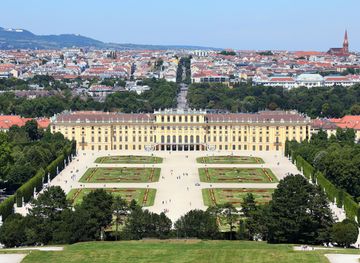
Discover Austria's blend of alpine landscapes, rich cultural heritage, and culinary delights, from Vienna's historic charm to Tyrol's dramatic beauty.
Explore Austria