

Free Hawar Islands Travel Guide & Mobile App
Explore Hawar Islands with free travel guides. Discover regional history, expert tips, proposed trips, and audio guides on web or mobile app.


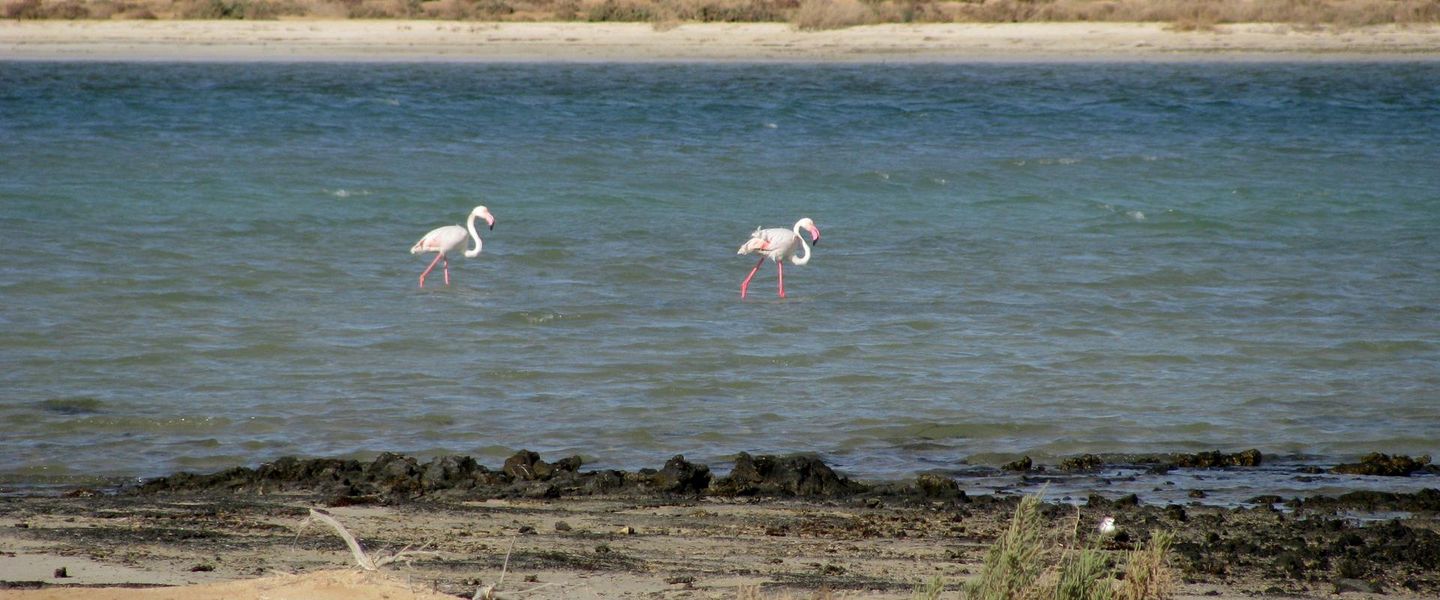


Explore Bahrain’s Hawar Islands for sheltered Gulf waters, desert beaches, birdlife, marine habitats and a remote southern-island escape.
Read more about Hawar Islands
When is the best time to visit Hawar Islands?
Best: February–March, December · 22–26°C| Month | High (°C) | Rainfall (mm) |
|---|---|---|
| January | 21 | 10 |
| February (best) | 22 | 8 |
| March (best) | 26 | 7 |
| April | 30 | 5 |
| May | 34 | 2 |
| June | 37 | 0 |
| July | 39 | 0 |
| August | 38 | 0 |
| September | 36 | 1 |
| October | 33 | 4 |
| November | 29 | 6 |
| December (best) | 24 | 8 |
Getting to and around Hawar Islands
How to get there
Transportation
Best attractions in Hawar Islands
Hawar’s attractions are primarily natural and maritime rather than urban. Boat excursions reveal shallow Gulf waters, low limestone shores, sandy beaches, tidal flats and small offshore islets, while the protected area offers opportunities for birdwatching and wildlife photography. Depending on season and conditions, visitors may look for flamingos, herons, terns, cormorants and other coastal birds, as well as dolphins or dugongs offshore. Sea turtles and intertidal life are also part of the archipelago’s ecological interest, although sightings are never guaranteed. Organised fishing and boating may be available, subject to current regulations and weather. The main island can support quiet beach recreation and short nature walks, but facilities are limited and the landscape is exposed, so excursions need to be planned around heat and water supplies. Hawar’s remoteness is itself part of the experience: there are no dense shopping streets, museums or historic town centres to compete with the open horizon. Visitors interested in conservation can learn about the importance of Bahrain’s Gulf wetlands through guided interpretation, while families may prefer supervised beach and boat activities. The best experiences are low-impact ones that leave wildlife undisturbed and recognise that much of the archipelago is habitat rather than conventional sightseeing infrastructure.
-
Water park
The Lost Paradise of Dilmun Water Park
Experience thrilling rides and ancient history at Bahrain's largest water park, a unique destination for family fun and adventure.
-
Historical landmark
Bab Al Bahrain
Explore Bahrain's heritage at Bab Al Bahrain, the gateway to Manama's vibrant souq and cultural heart.
-
Shopping mall
The Lagoon Park
Experience waterfront leisure at The Lagoon Park in Amwaj Islands, Bahrain, with diverse dining, shopping, and entertainment for all ages.
-
Park
Marina Beach Garden Park
Escape to Manama's scenic Marina Beach Garden Park: a blend of nature, recreation, and culture along the Arabian Gulf.



Best landmarks in Hawar Islands
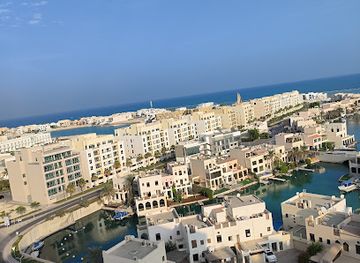
Hawar’s most important landmarks are geographical and ecological rather than monumental. The broad, low profile of Hawar Island, surrounded by pale beaches and shallow Gulf water, defines the archipelago’s visual identity, while the chain of smaller islets demonstrates how finely divided this part of Bahrain’s coast is. Protected mudflats, salt-tolerant coastal vegetation and bird habitat are significant natural features, particularly during migration seasons. The islands also carry political significance as the territory awarded to Bahrain in the 2001 International Court of Justice ruling that settled the Bahrain–Qatar dispute. Unlike Bahrain’s main island, Hawar has no large fort, cathedral or historic urban quarter; its importance lies in maritime geography, conservation and the continuing relationship between land and sea. Any traces of earlier fishing or seasonal occupation are modest and vulnerable, so they should be treated as heritage rather than explored or collected from. The combination of open desert terrain, tidal shorelines and an almost uninterrupted Gulf horizon is the archipelago’s defining physical character.
-
Water park
The Lost Paradise of Dilmun Water Park
Experience thrilling water rides and ancient history at the Lost Paradise of Dilmun, Bahrain's largest themed water park, perfect for families and thrill-seekers.
-
Wildlife park
Al Areen Wildlife Park
Discover Arabian wildlife at Al Areen Wildlife Park, a conservation haven in Bahrain dedicated to preserving endangered species and offering a unique nature experience.
-
Fortress
Bahrain Fort
Explore 4,000 years of history at this UNESCO World Heritage Site, the heart of the ancient Dilmun civilization.
-
Business center
Bahrain Financial Harbour
Discover Bahrain's modern financial hub: iconic towers, luxury shopping, and stunning waterfront views in the heart of Manama.


Explore Hawar Islands on the map
Plan your trip on one map. See where the top cities, national parks and sights are, and book hotels and experiences in a few clicks.
Best hotels in Hawar Islands
Best restaurants in Hawar Islands
Dining on the Hawar Islands is centred on accommodation facilities, organised excursions and prepared meals rather than a broad independent restaurant scene. Menus may include familiar Bahraini and Gulf dishes such as grilled fish, rice-based meals, meat, salads, flatbreads and dates, with seafood particularly appropriate to the islands’ maritime setting. Visitors should not expect the range of cafés, bakeries and specialist restaurants found in Manama or Muharraq, and those staying overnight should confirm whether breakfast, lunch, dinner and drinks are included. It is sensible to carry sealed snacks and water, especially for day trips, while respecting restrictions on glass, litter and cooking in protected areas. On the mainland, southern Bahrain provides a wider choice of restaurants before or after the crossing, but Hawar itself is best approached as a simple nature destination with meals arranged in advance. Alcohol availability should not be assumed, and visitors should follow the policies of their accommodation or boat operator.
-
Restaurant
AYSHA BAHLOOL RESTAURANT
Discover authentic Bahraini flavors at Aysha Bahlool Restaurant - where tradition meets modern dining in the heart of Manama.
-
Restaurant
The Orangery
Discover the charm of The Orangery in Manama - where exquisite breakfasts meet delightful pastries in an elegant setting.
-
Restaurant
Alhateem restaurant
Experience the authentic taste of Bahrain at Alhateem Restaurant - home to delicious local delicacies in Dar Kulaib.
-
Steak
CUT by Wolfgang Puck
Experience luxury dining at CUT by Wolfgang Puck – where exquisite steaks meet breathtaking views in Bahrain's finest setting.


Best bars in Hawar Islands
Hawar does not have a conventional nightlife district, club scene or concentration of late-opening bars. Evenings are generally quiet and shaped by the island setting: visitors may dine at their accommodation, sit outdoors in suitable weather, watch the changing light over the Gulf or join a permitted fishing or boating activity. Any drinks service depends on the individual accommodation or excursion provider and should be confirmed before arrival; alcohol should never be assumed to be available. The archipelago’s limited lighting can make it attractive for calm stargazing, although visitors should avoid disturbing wildlife and follow safety instructions after dark. For live music, lounges, nightclubs and a broader choice of restaurants, travellers need to return to Bahrain’s main island, especially the urban areas around Manama, which are outside the Hawar Islands region.
-
Restaurant
Hazel Rooftop Lounge
Experience breathtaking views, exquisite cuisine, and vibrant nightlife at Hazel Rooftop Lounge in Manama, Bahrain.
-
Night club
W Club Lounge
Experience the electrifying atmosphere of W Club Lounge, Bahrain's upscale night club, where music, dance, and vibrant nightlife come alive.
-
Irish pub
McGettigan's
Discover the lively charm of McGettigan's Irish Pub in Manama, where great food, drinks, and entertainment await you.
-
 Hotel
Hawar Beach Hotel
Experience the Ultimate Coastal Retreat at Hawar Beach Hotel, Bahrain's Premier Luxury Destination with Stunning Views and Unmatched Service.


Best nightclubs in Hawar Islands
Hawar does not have a conventional nightlife district, club scene or concentration of late-opening bars. Evenings are generally quiet and shaped by the island setting: visitors may dine at their accommodation, sit outdoors in suitable weather, watch the changing light over the Gulf or join a permitted fishing or boating activity. Any drinks service depends on the individual accommodation or excursion provider and should be confirmed before arrival; alcohol should never be assumed to be available. The archipelago’s limited lighting can make it attractive for calm stargazing, although visitors should avoid disturbing wildlife and follow safety instructions after dark. For live music, lounges, nightclubs and a broader choice of restaurants, travellers need to return to Bahrain’s main island, especially the urban areas around Manama, which are outside the Hawar Islands region.
-
Night club
Club Wrangler Bahrain
Discover the exhilarating nightlife of Club Wrangler Bahrain, where vibrant beats and electrifying energy create unforgettable nights in Manama.
-
Lounge
Iguana Lounge
Experience the vibrant nightlife at Iguana Lounge in Juffair, Bahrain, where great food meets lively entertainment.
-
Lounge
Halo lounge Bahrain
Discover the vibrant nightlife at Halo Lounge in Bahrain, where exquisite drinks and a chic atmosphere await every visitor.
-
Live music bar
Beats Lounge
Unwind at Beats Lounge in Manama, Bahrain – a lively live music bar perfect for enjoying vibrant performances and refreshing drinks.


Best shops in Hawar Islands
Shopping on the Hawar Islands is minimal and generally limited to practical supplies, refreshments or souvenirs available through organised accommodation or excursion facilities. There is no established market town, shopping centre or substantial independent retail quarter. Visitors who want Bahraini dates, spices, sweets, handicrafts, textiles, jewellery or locally produced food should shop on the main island before travelling, where Manama, Muharraq and other mainland centres offer far greater choice. A small, useful souvenir might include a locally made craft or packaged regional product, but visitors should avoid buying shells, coral, wildlife products or items that could have been removed from the protected island environment. Because the crossing is arranged rather than spontaneous, a shopping stop on the mainland is best planned before departure. The most meaningful purchase associated with Hawar is often a conservation-minded experience or locally operated excursion rather than a retail item.
-
Shopping mall
City Centre Bahrain
Discover a shopping paradise at City Centre Bahrain, offering a unique blend of retail, dining, and entertainment experiences for every visitor.
-
Shopping mall
The Avenues
Discover The Avenues, Bahrain's top shopping mall, where modern retail meets vibrant dining and entertainment experiences, perfect for every traveler.
-
Shopping mall
Souq Al Baraha
Experience the lively atmosphere and unique shopping opportunities at Souq Al Baraha in Muharraq, Bahrain – a cultural gem for every traveler.
-
Shopping mall
Al Hayat Shopping Centre
Explore Al Hayat Shopping Centre in Manama, the ultimate shopping destination blending retail, dining, and entertainment for an unforgettable experience.


Get your free copy of our complete guide to Hawar Islands, delivered straight to you.
Everything on this page, from attractions and restaurants to essentials and local phrases, in one PDF you can read offline, print or share.
Already have an account? Sign in
Your Hawar Islands guide is ready.
We'll send it to · Not you? Sign out

Getting your guide ready…
We are putting together a fresh copy of the Hawar Islands guide. This can take up to a minute.
This can take a few moments. If your browser asks, choose Allow so the download can start. You'll find the guide in your Downloads folder.
Nothing happened? Download it again
Sorry, the guide is taking longer than usual. Please try again in a minute, or get it by email instead.
Hawar Islands essentials
Currency and Payment
Safety
Emergency Situations
Do's and Don'ts
Local Tips
From Eve
Local phrases worth knowing
You don't need to get them perfect. A few words go a long way, and locals appreciate the effort.
Basics
| English | Local | Say it |
|---|---|---|
| Hello | مرحبا | [Marhaba] |
| Goodbye | وداعا | [Wadaa'an] |
| Yes | نعم | [Na'am] |
| No | لا | [La] |
| Please/You’re welcome | من فضلك | [Min fadlak] |
| Thank you | شكرا | [Shukran] |
| Excuse me/Sorry | عفوا | [Afwan] |
| How are you? | كيف حالك؟ | [Kayfa halak?] |
| Fine. And you? | بخير. وانت؟ | [Bikhayr. Wa anta?] |
| Do you speak English? | هل تتحدث الإنجليزية؟ | [Hal tatahaddath al-ingliziya?] |
| I don't understand | أنا لا أفهم | [Ana la afham] |
Eating & Drinking
| English | Local | Say it |
|---|---|---|
| I'd like to see the menu, please | أود رؤية القائمة من فضلك | [Awad ru'yat al-qi'ma min fadlak] |
| I don't eat meat | أنا لا آكل اللحم | [Ana la akul al-lahm] |
| Cheers! | صحتين | [Sahteen] |
| I would like to pay, please | أود الدفع من فضلك | [Awad al-daf' min fadlak] |
Emergencies
| English | Local | Say it |
|---|---|---|
| Help! | نجدة! | [Najda!] |
| Go away! | اذهب بعيدا! | [Idhab ba'eedan!] |
| Call the Police! | اتصل بالشرطة! | [Ittasil bil-shurtah!] |
| Call a doctor! | اتصل بطبيب! | [Ittasil bi-tabeeb!] |
| I'm lost | أنا ضائع | [Ana da'i'] |
| I'm ill | أنا مريض | [Ana marid] |
Shopping
| English | Local | Say it |
|---|---|---|
| I'd like to buy... | أود شراء... | [Awad shir'a...] |
| I'm just looking | أنا فقط أبحث | [Ana faqat abhath] |
| How much is it? | كم ثمنه؟ | [Kam thamanu?] |
| That's too expensive | هذا مكلف جدا | [Hatha mukallaf jidan] |
| Can you lower the price? | هل يمكنك تخفيض السعر؟ | [Hal yumkinuka takhfid al-si'r?] |
Time & Numbers
| English | Local | Say it |
|---|---|---|
| What time is it? | كم الساعة؟ | [Kam al-saa'a?] |
| It's one o'clock | الساعة واحدة | [Al-saa'a wahida] |
| Half past (10) | ونصف (10) | [Wa nisf (10)] |
| Morning | صباح | [Sabah] |
| Afternoon | بعد الظهر | [Ba'd al-zuhur] |
| Evening | مساء | [Masa'] |
| Yesterday | أمس | [Ams] |
| Today | اليوم | [Al-yawm] |
| Tomorrow | غدًا | [Ghad'an] |
| 1 | واحد | [Wahid] |
| 2 | اثنين | [Ithnayn] |
| 3 | ثلاثة | [Thalatha] |
| 4 | أربعة | [Arba'a] |
| 5 | خمسة | [Khamsa] |
| 6 | ستة | [Sitta] |
| 7 | سبعة | [Sab'a] |
| 8 | ثمانية | [Thamaniya] |
| 9 | تسعة | [Tis'a] |
| 10 | عشرة | [Ashara] |
Transport & Directions
| English | Local | Say it |
|---|---|---|
| Where's a/the...? | أين هو...؟ | [Ayna huwa...?] |
| What's the address? | ما هو العنوان؟ | [Ma huwa al-'unwan?] |
| Can you show me (on the map)? | هل يمكنك إخباري (على الخريطة)؟ | [Hal yumkinuka ikhbari (ala al-kharita)?] |
| When's the next (bus)? | متى يأتي (الباص) التالي؟ | [Mata yati (al-bus) al-tali?] |
| A ticket (to ....) | تذكرة (إلى ....) | [Tadhkarah (ila ....)] |
History of Hawar Islands
Early Gulf Settlement and Maritime Use
The Hawar Islands belong to the wider cultural and archaeological world of the Arabian Gulf, where coastal communities moved between mainland settlements and offshore waters for fishing, shellfish gathering and trade. The islands offered temporary landing places, freshwater challenges and access to productive marine habitats rather than fertile farmland. Their low limestone terrain has preserved fewer monumental remains than Bahrain’s larger islands, yet their importance lies in the maritime networks that connected the Gulf’s shores from antiquity onwards. Hawar’s position near the southern approaches to Bahrain gave it continuing relevance to sailors and coastal communities.
Pearling, Fishing and Seasonal Island Life
Before the development of oil, Bahrain’s economy depended heavily on pearling, fishing, date cultivation and maritime commerce. The Hawar Islands formed part of this seaborne world, providing fishing grounds, seasonal camps and a base for people whose livelihoods depended on the tides and weather. Pearling was demanding work involving specialised boats, divers, rope handlers and merchants, while fishing remained important after the pearling economy declined. The islands’ association with these activities illustrates how Bahrain’s history was shaped not only by towns and forts but also by mobile communities operating across the Gulf.
British Gulf Administration and Modern Boundaries
During the nineteenth and early twentieth centuries, Britain exercised a strong political and maritime influence over the Gulf through its relationships with the Trucial states, Bahrain, Qatar and other regional rulers. The islands’ location close to Qatar made their political status significant as modern state boundaries gradually became more important. Administrative records, navigation and territorial claims increasingly treated offshore islands as matters of sovereignty rather than simply as shared maritime space. This transition changed the meaning of Hawar, turning a seasonal landscape into a clearly contested part of the modern Gulf map.
The Bahrain–Qatar Territorial Dispute
Bahrain and Qatar disputed sovereignty over the Hawar Islands, along with other maritime features and areas, for much of the twentieth century. The disagreement reflected the islands’ strategic location and the difficulty of applying modern borders to shallow seas, reefs and small islets. In 2001, the International Court of Justice delivered a ruling that awarded the Hawar Islands to Bahrain while also settling other territorial and maritime questions between the two states. The decision remains an important chapter in the political geography of the Gulf and explains why the archipelago is discussed in relation to both countries.
Conservation of a Gulf Island Ecosystem
As Bahrain industrialised and its population became increasingly concentrated on the main island, Hawar’s value shifted from a working maritime landscape towards a conservation and recreation resource. The archipelago’s beaches, shallow marine areas, mudflats and seabird habitats support species adapted to the Gulf’s intense heat and limited rainfall. Protection measures have sought to balance carefully managed tourism with the needs of wildlife, particularly in sensitive coastal zones. Hawar Islands is recognised internationally as a wetland of importance under the Ramsar Convention, reflecting its role for birds and other species within the Gulf.
Contemporary Low-Impact Tourism
Modern visits to Hawar are centred on nature, boating, fishing, beach recreation and short stays rather than large-scale urban development. Any tourism infrastructure remains relatively limited in comparison with Bahrain’s main island, and access is more dependent on organised arrangements, sea conditions and conservation requirements. This gives Hawar a different identity within Bahrain’s tourism landscape: it is valued for open space, wildlife and isolation rather than museums, shopping districts or dense historical quarters. Its future depends on managing visitor access without damaging habitats that are difficult to restore in an arid island environment.
Hawar Islands in Photos
Browse through our photo collection highlighting the charm and character of the destination.
Neighbouring regions of Hawar Islands
The closest regions to Hawar Islands, if you have time for more than one.
-

-

-

-

-


Swipe for more regions
Explore more

Explore more of Bahrain
Discover Bahrain, where modernity meets history, from bustling markets to ancient ruins, and from luxurious shopping to serene beaches.
Explore Bahrain