Background

Saint Michael's Church: A Gothic Masterpiece in Ghent

Discover Ghent's architectural gem: Saint Michael's Church, a captivating blend of Gothic artistry, historical depth, and serene ambiance in the heart of the city.

4.5

Saint Michael's Church (Sint-Michielskerk) is a captivating Roman Catholic church in the heart of Ghent, Belgium. Its origins trace back to the 11th century, with the current late Gothic structure primarily built from the 14th century onwards. The church boasts a rich interior, adorned with neo-Gothic elements, 18th-century statues, and notable Baroque paintings, including Anthony van Dyck's "Golgotha". Despite its incomplete tower, Saint Michael's Church stands as a testament to Ghent's architectural and artistic heritage, offering visitors a serene escape from the bustling city center. Explore its historical significance, admire its artistic treasures, and experience the spiritual ambiance within its walls. The church is easily accessible by public transport and is surrounded by other historical landmarks, making it a must-see destination for any traveler in Ghent.

A brief summary to Saint Michael's Church

Local tips

  • Visit during the afternoon when the light streams through the stained glass windows, creating a magical atmosphere.
  • Take time to admire Anthony van Dyck's "Golgotha," a masterpiece of Flemish Baroque painting.
  • Explore the silver and gold collection, including the relic of Saint Dorothea.
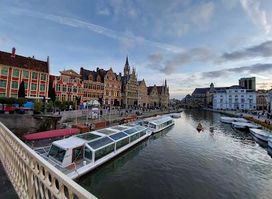
  • Combine your visit with a walk along the nearby Saint Michael's Bridge for panoramic views of Ghent.
  • Check the opening hours in advance, as they are limited, especially during winter months.
widget icon

Getting There

  • Walking

    Saint Michael's Church is located in the city center and is easily accessible on foot from most central locations. From Korenmarkt, walk south along the Sint-Michielsstraat, crossing the Sint-Michielsbrug (St. Michael's Bridge). The church will be directly in front of you on Sint-Michielsplein. The walk is approximately 5 minutes and offers scenic views. Keep an eye out for trams.

  • Public Transport

    The easiest way to reach Saint Michael's Church via public transport is by tram. Tram lines 1, 2, 3, and 4 all stop at Korenmarkt, which is a short walk from the church. From Korenmarkt, follow the walking directions above. A single ticket costs €2.50 and is valid for 60 minutes, allowing unlimited transfers between trams and buses within that time. Contactless payment is available on trams and buses.

  • Taxi/Ride-Share

    Taxis and ride-sharing services are readily available in Ghent. A short ride from Gent-Sint-Pieters railway station to Saint Michael's Church will typically cost between €10 and €15, depending on traffic. Be sure to specify Sint-Michielsplein 4 as your destination.

  • Driving

    If driving, be aware that the city center is a Low Emission Zone (LEZ). Check if your vehicle meets the LEZ requirements to avoid a fine. Parking is available at Sint-Michiels parking garage (Sint-Michielsplein 8), which is directly beneath the square in front of the church. Parking rates vary, with hourly rates around €4.50 during the day and a maximum daily rate of €26. Consider using park-and-ride facilities outside the city center for free parking and then taking public transport into the city.

Unlock the Best of Saint Michael's Church

Buy tickets

    No tickets available

Book tours with entry

    No tours available

Book tours without entry

    No tours available

Discover more about Saint Michael's Church

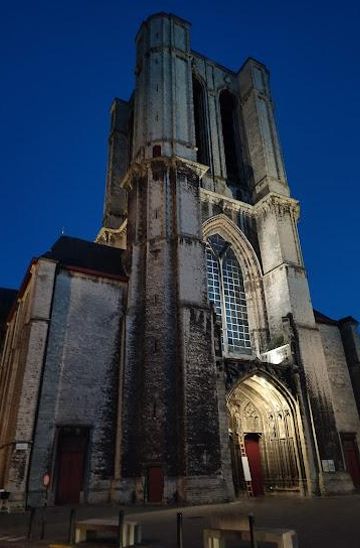
Saint Michael's Church, or Sint-Michielskerk in Dutch, is a remarkable architectural gem nestled in the heart of Ghent, Belgium. While perhaps overshadowed by the city's more famous St. Bavo's Cathedral, it offers a unique blend of history, art, and tranquility. This late Gothic church stands as a testament to the city's enduring spirit and architectural resilience. The origins of Saint Michael's Church date back to the 11th century, with documents from 1105 attesting to a chapel dedicated to Saint Michael on the site. This chapel was subordinate to another parish and suffered destruction by fire twice in the early 12th century, only to be rebuilt each time. By 1147, it gained recognition as an independent parochial church. Construction of the current late Gothic church commenced around 1440, unfolding in two distinct phases separated by a considerable interval. The first phase, spanning the 15th and 16th centuries, saw the erection of the western part of the building, encompassing the tower, the three-aisled nave, and the transept, completed by 1528. Work on the western tower continued, reaching two levels by 1566. However, religious conflicts brought construction to an abrupt halt, leading to looting and destruction. In 1578, Calvinists destroyed part of the church, and in 1579, the old choir was demolished. Reconstruction efforts resumed in 1623, replacing the early Gothic choir with one in the Brabantine Gothic style. Local architect Lieven Cruyl conceived a design for the unfinished western tower in 1662, envisioning a 134-meter-high spire in Brabantine Gothic style. Regrettably, this ambitious plan never materialized due to delays and cost concerns. Consequently, the tower remained incomplete, receiving a flat roof only in 1828. The sacristy in the northeast, constructed in Baroque style between 1650 and 1651, adds another layer to the church's architectural tapestry. The exterior of the church, crafted entirely from sandstone sourced from Brussels and Ledian sandstone, exudes a sober late Gothic aesthetic. In contrast, the interior boasts a rich neo-Gothic ambiance, featuring a grand altar and an ornate pulpit in that style. The church houses various 18th-century statues, including a Saint Livinus by Laurent Delvaux and a wooden Saint Sebastian by J. van Helderberg. Inside, visitors can admire a wealth of artistic treasures. The "Golgotha" by Anthony van Dyck, a masterpiece by the Flemish Baroque painter, stands as a highlight, depicting the crucifixion of Christ with dramatic intensity and masterful technique. The church also showcases sculptures and paintings by various artists, offering a glimpse into the region's artistic heritage. The intricate stonework, soaring vaulted ceilings, and stained glass windows create a visually stunning and spiritually uplifting atmosphere. The church possesses a silver and gold collection, including a relic of Saint Dorothea, a relic of the sacred "Doorn" brought to the church by Mary, Queen of Scots, and a relic of the true Cross, a gift from Archduke Albrecht and Isabella in 1619. Saint Michael's Church stands as a significant historical and architectural landmark in Ghent, reflecting the city's turbulent religious history and artistic heritage. It serves as a haven of peace within the city center, inviting visitors to explore its depths and appreciate its beauty. Accessibility is easy for people with disabilities. The church is a haven of peace within the city centre of Ghent. The church is open from Monday to Saturday from 2 PM to 5 PM. During winter months (October to April) the church is only open on Saturdays from 2 PM to 5 PM. Admission is free.

Popular Experiences near Saint Michael's Church

Popular Hotels near Saint Michael's Church

Select Currency