

Free Bukit Sawat Travel Guide & Mobile App
Explore Bukit Sawat with free travel guides. Discover regional history, expert tips, proposed trips, and audio guides on web or mobile app.


Explore Bukit Sawat in Belait District for forested hills, village life, river landscapes and a quieter side of rural Brunei.
Read more about Bukit Sawat
When is the best time to visit Bukit Sawat?
Best: January–March · 30–31°C| Month | High (°C) | Rainfall (mm) |
|---|---|---|
| January (best) | 30 | 200 |
| February (best) | 30 | 180 |
| March (best) | 31 | 190 |
| April | 31 | 200 |
| May | 31 | 210 |
| June | 31 | 220 |
| July | 31 | 230 |
| August | 31 | 240 |
| September | 31 | 250 |
| October | 31 | 260 |
| November | 30 | 270 |
| December | 30 | 280 |
Getting to and around Bukit Sawat
How to get there
Transportation
Destinations in Bukit Sawat
Resorts, valleys and scenic spots worth a trip of their own.

Swipe for more destinations
Best attractions in Bukit Sawat
Bukit Sawat’s attractions are primarily landscape-based and community-based rather than built for mass tourism. The mukim’s low hills, forest margins, streams and rural roads provide opportunities for quiet walking, birdwatching, photography and observing the transition between settled land and Brunei’s inland greenery. The village environment itself is significant: houses, mosques, community facilities, cultivated plots and roadside vegetation reveal the everyday structure of a rural Belait settlement. Visitors interested in ecology should travel with realistic expectations, as access to forest and river areas may be informal, seasonal or subject to local permission. Bukit Sawat works particularly well as part of a wider drive through Belait District, adding an inland perspective to the industrial and coastal history found around Kuala Belait and Seria outside the mukim. It is not a replacement for Brunei’s major protected areas or established visitor parks elsewhere in the country, but it offers a quieter setting in which to appreciate Brunei’s forested interior, humid climate and dispersed settlement pattern. Arranging a knowledgeable local contact is worthwhile for anyone hoping to explore beyond the main roads.
-
National forest
Lalak Lake National Park
Discover Brunei's natural beauty at Lalak Lake National Park: hiking, birdwatching, and serene lake views await in this tranquil escape.
-
Park
Luagan Park
Discover tranquility at Luagan Park in Bukit Puan, a serene escape with scenic lake views and lush greenery, perfect for relaxation.


Best landmarks in Bukit Sawat
The defining landmark of Bukit Sawat is its own elevated, forest-fringed rural setting, where the name of the mukim is reflected in gently rising ground amid the wider lowland landscape of Belait. Its visual identity comes less from monumental architecture than from the relationship between village roads, waterways, greenery and scattered settlement. Local mosques and community buildings serve as important civic reference points, expressing the central place of faith and communal organisation in village life, although they should be visited with appropriate permission and dress. The surrounding river and stream corridors are also meaningful geographical features: they recall the older importance of waterways for movement, food and settlement in western Brunei. Unlike the oil installations and planned townscapes of coastal Belait, Bukit Sawat’s landmarks are understated and dispersed. A careful drive through the mukim, with attention to the changing vegetation and views towards the forested interior, conveys more about its character than a checklist of monuments. Visitors should confirm access before approaching any local facility, track or riverside area.
-
Landmark
Billionth Barrel Monument
Discover Brunei's oil heritage at the Billionth Barrel Monument, an iconic landmark in Seria that celebrates the nation's industrial achievements.
-
Tourist attraction
BIBD frame Brunei Darussalam
Capture the iconic Omar Ali Saifuddien Mosque through this modern frame, a must-visit photo spot in Bandar Seri Begawan's vibrant heart.
-
Park
Wasai Wong Kadir Recreational Park
Explore the lush beauty and tranquil waterfalls at Wasai Wong Kadir Recreational Park, a perfect retreat for nature lovers in Brunei.
-
Historical place
Tea-Pot Roundabout
Experience the vibrant history and culture of Kuala Belait at the iconic Tea-Pot Roundabout, a perfect spot for relaxation and photography.
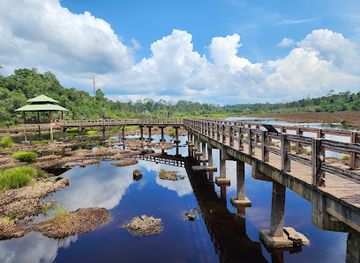


Explore Bukit Sawat on the map
Plan your trip on one map. See where the top cities, national parks and sights are, and book hotels and experiences in a few clicks.
Best hotels in Bukit Sawat
Best restaurants in Bukit Sawat
Dining in Bukit Sawat is modest and closely tied to village life, so visitors should not expect a concentrated restaurant district. Meals are more likely to be found through home cooking, small local food outlets or by travelling to larger settlements in Belait District. The wider regional food culture includes rice-based meals, noodles, grilled chicken and fish, vegetable dishes, kuih and sweet or savoury snacks shaped by Brunei’s Malay culinary traditions. Fresh ingredients, including locally grown produce and fish from waterways or coastal supply chains, may appear in household cooking, although availability is not uniform. Visitors should carry water and snacks and plan a substantial meal before entering the more rural parts of the mukim. In nearby commercial centres, cafés and casual eateries provide a wider choice, while village hospitality is best accepted by arrangement rather than assumed. As throughout Brunei, halal food is the norm and alcohol is not part of public dining culture.
-
Authentic Japanese
Excapade Japanese Restaurant Kuala Belait
Discover authentic Japanese flavors at Excapade Japanese Restaurant in Kuala Belait—where tradition meets taste.
-
Seafood
Seaworld Neptune Restaurant
Discover exquisite seafood at Seaworld Neptune Restaurant in Jerudong - where fresh flavors meet stunning views.
-
Authentic Japanese
Excapade Japanese Restaurant Seria
Discover authentic Japanese cuisine at Excapade Japanese Restaurant in Seria, where every dish tells a story of tradition and flavor.
-
Pakistani
Seri Damai Restaurant & Catering
Discover the rich flavors of Pakistan at Seri Damai Restaurant & Catering in Bandar Seri Begawan – a culinary gem for food lovers.


Best bars in Bukit Sawat
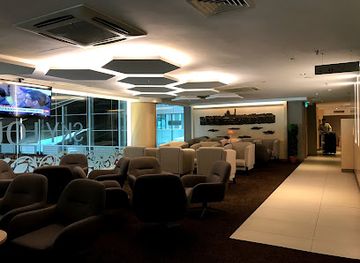
Bukit Sawat has no significant bar or nightclub scene, and evening life is centred on homes, mosques, community activities and quiet family gatherings rather than late-night entertainment. Brunei’s national Islamic regulations mean that alcohol is not sold publicly, so visitors should not expect pubs, cocktail bars or conventional clubbing. The most practical evening options are an early meal in a nearby larger settlement, a quiet stay in rural accommodation if arranged, or an evening drive planned with care. Darkness, limited lighting, wildlife and wet roads make spontaneous rural driving less suitable after nightfall. Cultural and community events may provide social activity at particular times, but these should be approached respectfully and not treated as performances staged for visitors. Travellers seeking cafés or more varied evening options will need to use the larger towns of Belait District outside Bukit Sawat.
-
Lounge
Royal Brunei Business Class Lounge
Discover the Royal Brunei Business Class Lounge, a tranquil retreat offering luxury amenities and exceptional service for discerning travelers.
-
Restaurant
Zuki Cafe
Discover the vibrant flavors of Seria at Zuki Cafe, where every dish tells a story of local culinary heritage.
-
Restaurant
IceBar Shabu Shabu
Discover the joy of hot pot dining at IceBar Shabu Shabu, a culinary gem in Kuala Belait offering a unique and interactive dining experience.
-
Restaurant
Palate restaurant
Experience a fusion of local and international flavors at Palate Restaurant in Bandar Seri Begawan, where culinary creativity meets a warm atmosphere.


Best nightclubs in Bukit Sawat
Bukit Sawat has no significant bar or nightclub scene, and evening life is centred on homes, mosques, community activities and quiet family gatherings rather than late-night entertainment. Brunei’s national Islamic regulations mean that alcohol is not sold publicly, so visitors should not expect pubs, cocktail bars or conventional clubbing. The most practical evening options are an early meal in a nearby larger settlement, a quiet stay in rural accommodation if arranged, or an evening drive planned with care. Darkness, limited lighting, wildlife and wet roads make spontaneous rural driving less suitable after nightfall. Cultural and community events may provide social activity at particular times, but these should be approached respectfully and not treated as performances staged for visitors. Travellers seeking cafés or more varied evening options will need to use the larger towns of Belait District outside Bukit Sawat.
-
Lounge
Royal Brunei Business Class Lounge
Discover unparalleled comfort and luxury at the Royal Brunei Business Class Lounge, your perfect travel retreat in Bandar Seri Begawan.
-
Night club
Billy's Den
Experience the vibrant nightlife at Billy's Den in Kuala Belait, where music, dancing, and excitement create unforgettable memories.
-
 Night club
rumah zafran
Immerse yourself in the vibrant nightlife of Kuala Belait at Rumah Zafran, where music, dance, and drinks create an unforgettable experience.
Best shops in Bukit Sawat
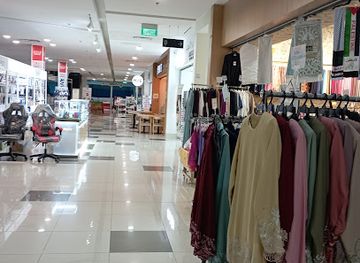
Shopping in Bukit Sawat is limited and primarily practical, with small local outlets serving daily household needs rather than a dedicated retail district. Travellers should buy fuel, cash, groceries, medicines and outdoor supplies in a larger Belait settlement before heading into the mukim. Where available, roadside stalls or community sales may offer seasonal produce, snacks and homemade foods, but such activity is informal and should not be assumed to operate every day. The most locally meaningful purchases are likely to be edible products and small handmade items obtained directly from residents or at community events, rather than branded souvenirs. For a broader choice of supermarkets, pharmacies, crafts and regional food products, use Kuala Belait or Seria outside Bukit Sawat. Visitors should carry reusable bags, avoid excessive packaging and ask about ingredients or provenance when buying homemade food. Formal markets and specialist craft shopping are generally more accessible elsewhere in Brunei.
-
Shopping mall
Rimba Point
Discover the vibrant shopping and dining experience at Rimba Point in Brunei, where local culture meets modern convenience.
-
Shopping mall
KB Sentral
Explore KB Sentral: A vibrant shopping mall in Kuala Belait offering diverse retail and dining experiences for all visitors.
-
Shopping mall
Aman Hills Shopping Centre
Explore the vibrant Aman Hills Shopping Centre: a premier shopping destination in Bandar Seri Begawan with diverse shops and global cuisines.
-
Asian household goods store
First Emporium & Supermarket (Branch)
Explore local culture through shopping at First Emporium & Supermarket, your gateway to Brunei's everyday essentials and unique Asian goods.



Get your free copy of our complete guide to Bukit Sawat, delivered straight to you.
Everything on this page, from attractions and restaurants to essentials and local phrases, in one PDF you can read offline, print or share.
Already have an account? Sign in
Your Bukit Sawat guide is ready.
We'll send it to · Not you? Sign out

Getting your guide ready…
We are putting together a fresh copy of the Bukit Sawat guide. This can take up to a minute.
This can take a few moments. If your browser asks, choose Allow so the download can start. You'll find the guide in your Downloads folder.
Nothing happened? Download it again
Sorry, the guide is taking longer than usual. Please try again in a minute, or get it by email instead.
Bukit Sawat essentials
Currency and Payment
Safety
Emergency Situations
Do's and Don'ts
Local Tips
From Eve
Local phrases worth knowing
You don't need to get them perfect. A few words go a long way, and locals appreciate the effort.
Basics
| English | Local | Say it |
|---|---|---|
| Hello | Halo | [hah-loh] |
| Goodbye | Selamat tinggal | [suh-lah-maht ting-gahl] |
| Yes | Ya | [yah] |
| No | Tidak | [tee-dahk] |
| Please/You're welcome | Sila | [see-lah] |
| Thank you | Terima kasih | [teh-ree-mah kah-see] |
| Excuse me/Sorry | Maaf | [mah-ahf] |
| How are you? | Apa khabar? | [ah-pah kah-bar] |
| Fine. And you? | Baik. Dan kamu? | [bye-k. dahn kah-moo] |
| Do you speak English? | Adakah kamu bercakap bahasa Inggeris? | [ah-dah-kah kah-moo ber-chah-kap bah-hah-sah ing-geh-ris] |
| I don't understand | Saya tidak faham | [sah-yah tee-dahk fah-hahm] |
Eating & Drinking
| English | Local | Say it |
|---|---|---|
| I'd like to see the menu, please | Saya ingin lihat menu, sila | [sah-yah ee-ngin lee-hat meh-noo, see-lah] |
| I don't eat meat | Saya tidak makan daging | [sah-yah tee-dahk mah-kahn dah-ging] |
| Cheers! | Selamat! | [suh-lah-maht] |
| I would like to pay, please | Saya ingin bayar, sila | [sah-yah ee-ngin bye-yar, see-lah] |
Emergencies
| English | Local | Say it |
|---|---|---|
| Help! | Tolong! | [toh-long] |
| Go away! | Pergi jauh! | [per-gee jah-oo] |
| Call the Police! | Panggil polis! | [pahn-gil poh-lis] |
| Call a doctor! | Panggil doktor! | [pahn-gil dok-tor] |
| I'm lost | Saya hilang | [sah-yah hee-lahng] |
| I'm ill | Saya sakit | [sah-yah sah-kit] |
Shopping
| English | Local | Say it |
|---|---|---|
| I'd like to buy... | Saya ingin beli... | [sah-yah ee-ngin beh-lee] |
| I'm just looking | Saya hanya melihat | [sah-yah han-yah meh-lee-haht] |
| How much is it? | Berapa harganya? | [beh-rah-pah har-gahn-yah] |
| That's too expensive | Itu terlalu mahal | [ee-too ter-lah-loo mah-hahl] |
| Can you lower the price? | Bolehkah kamu turunkan harga? | [boh-leh-kah kah-moo too-run-kahn har-gah] |
Time & Numbers
| English | Local | Say it |
|---|---|---|
| What time is it? | Pukul berapa? | [poo-kul beh-rah-pah] |
| It's one o'clock | Pukul satu | [poo-kul sah-too] |
| Half past (10) | Setengah (10) | [seh-teng-ah (sepuluh)] |
| Morning | Pagi | [pah-gee] |
| Afternoon | Petang | [peh-tahng] |
| Evening | Malam | [mah-lahm] |
| Yesterday | Semalam | [seh-mah-lahm] |
| Today | Hari ini | [hah-ree ee-nee] |
| Tomorrow | Esok | [eh-sok] |
| 1 | Satu | [sah-too] |
| 2 | Dua | [doo-ah] |
| 3 | Tiga | [tee-gah] |
| 4 | Empat | [em-pah-t] |
| 5 | Lima | [lee-mah] |
| 6 | Enam | [eh-nahm] |
| 7 | Tujuh | [too-joo] |
| 8 | Lapan | [lah-pahn] |
| 9 | Sembilan | [sem-bee-lahn] |
| 10 | Sepuluh | [seh-poo-loo] |
Transport & Directions
| English | Local | Say it |
|---|---|---|
| Where's a/the...? | Di mana ...? | [dee mah-nah] |
| What's the address? | Apa alamatnya? | [ah-pah ah-lah-maht-nya] |
| Can you show me (on the map)? | Bolehkah kamu tunjukkan (pada peta)? | [boh-leh-kah kah-moo toon-jook-kahn (pah-dah peh-tah)] |
| When's the next (bus)? | Bila bas seterusnya? | [bee-lah bahs seh-teh-roos-nyah] |
| A ticket (to ....) | Sebuah tiket (ke ...) | [seh-boo-ah tik-et (keh ...)] |
History of Bukit Sawat
Early Settlement and River-Based Life
The inland areas of western Brunei were shaped by waterways, forest resources and small settlements long before modern roads. Communities used rivers and tributaries for movement, fishing and access to cultivated land, while forest products formed part of local economies and daily life. Bukit Sawat’s rural landscape should be understood within this wider history of settlement along the Belait river system. Although much archaeological evidence is not presented as a formal visitor attraction, the pattern of villages, waterways and cultivated clearings reflects older relationships between people and the interior.
Brunei’s Traditional Sultanate and Rural Communities
For centuries, Bukit Sawat formed part of the territorial world of the Brunei sultanate, whose authority and cultural influence extended across the river valleys and settlements of western Borneo. Islam, Malay court traditions and local community structures developed together, while inland settlements retained close connections with their surrounding forests and waterways. The present mukim’s village institutions, religious life and customary respect for elders are part of this longer historical framework, even though contemporary administration is organised through the modern state.
British Protection and Administrative Change
Brunei became a British protected state in 1888, and the early twentieth century brought more formal administrative systems, mapping and infrastructure. This did not erase rural patterns of life, but it gradually connected inland communities to district administration and commercial centres. Bukit Sawat remained a predominantly rural area, while the Belait region as a whole began to experience stronger economic and political change. The period laid foundations for the roads, public services and administrative boundaries that shape travel through the mukim today.
Oil and the Transformation of Belait
The discovery of commercial oil at Seria in 1929 transformed Belait District and became one of the decisive developments in modern Brunei. Industrial growth concentrated along the coast and around oil townships, rather than in inland Bukit Sawat, but its effects reached rural communities through employment, public revenue, roads and improved services. The contrast between Bukit Sawat’s forested and village landscape and the industrial heritage of coastal Belait is therefore part of the same regional history.
The Second World War and Postwar Reconstruction
Brunei was occupied by Japan during the Second World War, and the conflict disrupted administration, transport, supplies and local life throughout the sultanate. After liberation, reconstruction and the restoration of government institutions coincided with the renewed development of the oil economy. Rural districts such as Bukit Sawat were gradually linked more reliably to schools, healthcare, roads and markets. These postwar changes helped create the modern settlement pattern, in which village life remains distinct despite stronger connections with Belait’s urban centres.
Independence and the Contemporary Rural Interior
Brunei regained full independence in 1984, and national development continued to combine modern public services with the protection of the sultanate’s cultural and environmental identity. In Bukit Sawat, this has meant improved road access and communications alongside the persistence of small settlements, forest margins and community institutions. The mukim illustrates a contemporary Brunei that is not defined solely by oil or the capital: it also includes managed rural landscapes where conservation, village life and gradual development remain closely connected.
Bukit Sawat in Photos
Browse through our photo collection highlighting the charm and character of the destination.
Neighbouring regions of Bukit Sawat
The closest regions to Bukit Sawat, if you have time for more than one.
-

-

-

-

-


Swipe for more regions
Explore more

Explore more of Brunei
Explore Brunei, a hidden gem in Southeast Asia, where modern opulence meets untouched natural beauty and rich cultural heritage.
Explore Brunei