

Free Tutong District Travel Guide & Mobile App
Explore Tutong District with free travel guides. Discover regional history, expert tips, proposed trips, and audio guides on web or mobile app.


Explore Tutong District in Brunei for rainforest wetlands, river villages, quiet beaches, local food and the wildlife-rich Tasek Merimbun Heritage Park.
Read more about Tutong District
When is the best time to visit Tutong District?
Best: February–April · 30–31°C| Month | High (°C) | Rainfall (mm) |
|---|---|---|
| January | 30 | 200 |
| February (best) | 30 | 170 |
| March (best) | 30 | 180 |
| April (best) | 31 | 190 |
| May | 31 | 200 |
| June | 31 | 210 |
| July | 31 | 220 |
| August | 31 | 230 |
| September | 31 | 240 |
| October | 31 | 250 |
| November | 30 | 260 |
| December | 30 | 270 |
Getting to and around Tutong District
How to get there
Transportation
Top city travel guides in Tutong District
The cities of Tutong District, and the easiest places to base yourself.
-

-

-


Swipe for more cities
Destinations in Tutong District
Resorts, valleys and scenic spots worth a trip of their own.
-
-

-

-


Swipe for more destinations
Best attractions in Tutong District
Tutong District's attractions are primarily ecological, coastal and community-based rather than heavily built-up. Tasek Merimbun Heritage Park is the defining destination: its broad dark-water lake, forest and wetland edges provide opportunities for quiet sightseeing and birdwatching in Brunei's first ASEAN Heritage Park. Near the district capital, Sungai Basong Recreational Park offers a more accessible green setting for walking and informal leisure. Seri Kenangan Beach brings together a river-mouth environment and the coast, making it suitable for a relaxed visit, especially towards evening. Beyond these better-known places, rural roads lead through kampongs, agricultural landscapes and forest margins where the interest lies in changing scenery and everyday life. Visitors should expect modest facilities and arrange transport for dispersed sites. Nature enthusiasts can look for tropical birdlife, forest vegetation and wetland species, although sightings are never guaranteed. Tutong is also a useful place to experience Bruneian village environments, local food stalls and community spaces without the intensity of the capital. Outdoor visits are most comfortable in the cooler morning hours, and heavy rain can affect paths and access.
-
Tourist attraction
Malay Technology Museum
Uncover the fascinating traditional crafts and technologies of the Malay people at the Malay Technology Museum in Brunei.
-
Bridge
Raja Isteri Pengiran Anak Hajah Saleha Bridge
Explore the breathtaking Raja Isteri Pengiran Anak Hajah Saleha Bridge in Bandar Seri Begawan, a stunning blend of modern architecture and cultural heritage.
-
Tourist attraction
Brunei Waterfront
Discover the tranquil beauty of Brunei Waterfront in Bandar Seri Begawan, where stunning views and rich culture await every visitor.
-
Tourist attraction
Ulu Temburong National Park
Explore Ulu Temburong National Park: Brunei's spectacular nature preserve and national park, a haven for adventure seekers and nature lovers alike.


Best landmarks in Tutong District
Tasek Merimbun is Tutong District's most recognisable natural landmark, distinguished by its dark lake, wooded margins and extensive wetland setting. Its importance is both visual and ecological, and its ASEAN Heritage Park status reflects the wider value of the surrounding habitat. The Tutong River is another defining feature, shaping the district's geography and settlement history as it runs towards the coast. At the seaside, Seri Kenangan Beach marks the meeting of the district's riverine landscape and the South China Sea, with open horizons contrasting with the enclosed greenery inland. Tutong town's mosques, civic buildings and market areas provide more modest architectural reference points, expressing the district's role as a local administrative and commercial centre rather than a historic capital. Village roads, kampong houses and roadside greenery are also part of the region's visual identity, though they should be viewed respectfully as lived-in places rather than museum displays. Together, these landmarks show Tutong through landscape and settlement rather than through a concentration of monumental architecture.
-
Hotel
The Empire Brunei
Experience luxury and tranquility at The Empire Brunei, a five-star coastal resort with world-class amenities and stunning natural surroundings.
-
 Mosque
Omar Ali Saifuddien Mosque
Discover the architectural splendor of Omar Ali Saifuddien Mosque, a symbol of Brunei's rich cultural heritage nestled in serene surroundings.
-
Night market
Gadong Night Market
Discover the vibrant flavors and culture of Brunei at Gadong Night Market, a must-visit destination for food lovers and cultural enthusiasts.
-
Mosque
Jame' Asr Hassanil Bolkiah Mosque
Brunei's largest mosque, featuring 29 golden domes, showcases a blend of modern and traditional Islamic architecture and serene gardens.


Explore Tutong District on the map
Plan your trip on one map. See where the top cities, national parks and sights are, and book hotels and experiences in a few clicks.
Best hotels in Tutong District
Best restaurants in Tutong District
Dining in Tutong District reflects Brunei's halal Malay food culture, with casual eateries, cafés, market stalls and family-run restaurants concentrated in Tutong town and larger settlements. Menus commonly include rice dishes, noodles, soups, grilled chicken or fish, curries and vegetable accompaniments, while coastal and riverine communities add locally available fish and seafood. Bruneian favourites such as ambuyat, a starchy sago dish traditionally eaten with sauce and side dishes, may be encountered alongside broader Bornean and Southeast Asian cooking, though availability varies by establishment. Breakfast stalls and informal food courts are useful for tasting local dishes at modest prices, while cafés provide drinks and lighter meals in the town centre. Seasonal fruit, traditional cakes and sweet snacks are worth seeking at markets or small shops. Visitors should not expect a dense restaurant district or late-night dining scene, and rural options can be widely spaced. Ask about ingredients and preparation if dietary needs are important, even though halal food is the norm.
-
Cafe
I Luv Cafe Bistro
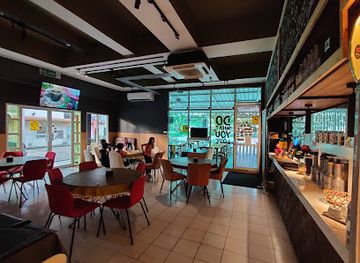
Discover culinary delights at I Luv Cafe Bistro in Tutong—where local flavors meet international cuisine in a cozy setting.
-
Restaurant
Tanda Kasih Restaurant
Experience authentic Bruneian flavors at Tanda Kasih Restaurant in Kampong Keriam - where every meal tells a story.
-
Restaurant
Haji K.K Koya Restaurant
Experience authentic Indian cuisine at Haji K.K Koya Restaurant in Tutong – where every dish tells a story of flavor and tradition.
-
Restaurant
WYWY Restaurant
Experience the delightful fusion of local and international flavors at WYWY Restaurant in Tutong – where culinary adventures await!


Best bars in Tutong District
Tutong has a restrained evening scene shaped by Brunei's Muslim social and legal environment. There are no conventional bar and nightclub districts; alcohol is not sold in ordinary restaurants or shops, and public drinking is not part of local nightlife. Evenings generally centre on family restaurants, cafés, food stalls and informal gatherings, with activity concentrated in Tutong town rather than rural villages. Some establishments may stay open later for meals or drinks such as tea, coffee and fruit beverages, but opening arrangements vary. Visitors seeking live entertainment or a larger selection of evening venues are more likely to find it in Bandar Seri Begawan outside the district, although that is a separate destination and requires a road journey. The quieter pace suits travellers interested in local food, night markets when operating, conversation and an early start for wildlife or coastal excursions rather than clubbing.
-
Restaurant
I Luv Cafe Bistro
Discover the flavors of Tutong at I Luv Cafe Bistro, where culinary creativity meets a warm and inviting atmosphere.
-
Restaurant
WYWY Restaurant
Discover authentic Bruneian flavors at WYWY Restaurant in Tutong, where culinary tradition meets a welcoming atmosphere for all.
-
Park
Sungai Basong Recreational Park
Explore the serene beauty of Sungai Basong Recreational Park, a perfect blend of nature, adventure, and tranquility in Tutong.
-
Restaurant
N-TRE Restaurant & Catering
Discover the culinary delights of N-TRE Restaurant & Catering in Tutong, where local flavors meet international cuisine in a warm, inviting atmosphere.


Best nightclubs in Tutong District
Tutong has a restrained evening scene shaped by Brunei's Muslim social and legal environment. There are no conventional bar and nightclub districts; alcohol is not sold in ordinary restaurants or shops, and public drinking is not part of local nightlife. Evenings generally centre on family restaurants, cafés, food stalls and informal gatherings, with activity concentrated in Tutong town rather than rural villages. Some establishments may stay open later for meals or drinks such as tea, coffee and fruit beverages, but opening arrangements vary. Visitors seeking live entertainment or a larger selection of evening venues are more likely to find it in Bandar Seri Begawan outside the district, although that is a separate destination and requires a road journey. The quieter pace suits travellers interested in local food, night markets when operating, conversation and an early start for wildlife or coastal excursions rather than clubbing.
-
Hotel
The Empire Brunei
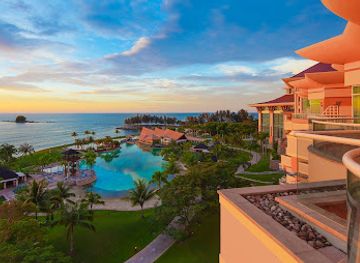
Discover unparalleled luxury and relaxation at The Empire Brunei, featuring exquisite dining, golf courses, and stunning beachfront views.
-
Private golf course
The Empire Country Club
Discover the luxurious golfing experience at The Empire Country Club, the premier destination for golf enthusiasts in Brunei.
-
Lounge
Royal Brunei Business Class Lounge
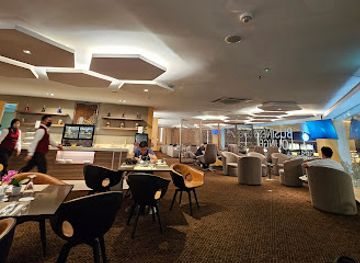
Experience luxury and tranquility at the Royal Brunei Business Class Lounge in Bandar Seri Begawan, where every traveler is treated like royalty.
-
Park
Sungai Basong Recreational Park
Experience the natural beauty and serenity of Sungai Basong Recreational Park in Tutong, Brunei - a perfect retreat for nature lovers.


Best shops in Tutong District
Shopping in Tutong District is practical and locally focused. Tutong town has everyday shops, supermarkets, small retail businesses and food outlets, while village stores serve communities along the main roads. Markets and temporary food stalls are useful places to look for seasonal fruit, traditional cakes, prepared dishes and locally familiar snacks, although locations and operating days can vary. Visitors may find Bruneian packaged foods, modest handicrafts, woven items and souvenirs connected with Malay culture, but Tutong is not a major designer-shopping or luxury-retail destination. Farmers and small producers may offer seasonal produce through informal channels rather than permanent visitor boutiques. It is sensible to carry cash for small purchases and to ask whether a stall accepts cards. For a broader selection of branded goods, craft shops, galleries and large shopping centres, Bandar Seri Begawan outside the district is the principal nearby retail destination. In Tutong, the most meaningful purchases are generally edible regional products or small locally made items rather than standardised souvenirs.
-
Shopping mall
Rimba Point
Discover Rimba Point, Brunei's vibrant shopping mall offering an array of stores, dining options, and family-friendly activities.
-
Shopping mall
Petani Mall
Explore shopping, dining, and entertainment at Petani Mall, the vibrant hub of Tutong, where local culture and modern retail come together.
-
Department store
Hua Ho Department Store Tutong
Explore Hua Ho Department Store in Tutong for a unique shopping experience filled with local goods and cultural treasures.
-
Market
Market Complex, Tutong
Discover the flavors of Brunei at the Tutong Market Complex, your go-to destination for fresh produce and local delicacies.


Get your free copy of our complete guide to Tutong District, delivered straight to you.
Everything on this page, from attractions and restaurants to essentials and local phrases, in one PDF you can read offline, print or share.
Already have an account? Sign in
Your Tutong District guide is ready.
We'll send it to · Not you? Sign out

Getting your guide ready…
We are putting together a fresh copy of the Tutong District guide. This can take up to a minute.
This can take a few moments. If your browser asks, choose Allow so the download can start. You'll find the guide in your Downloads folder.
Nothing happened? Download it again
Sorry, the guide is taking longer than usual. Please try again in a minute, or get it by email instead.
Tutong District essentials
Currency and Payment
Safety
Emergency Situations
Do's and Don'ts
Local Tips
From Eve
Local phrases worth knowing
You don't need to get them perfect. A few words go a long way, and locals appreciate the effort.
Basics
| English | Local | Say it |
|---|---|---|
| Hello | Salam | [sah-lahm] |
| Goodbye | Selamat tinggal | [suh-lah-maht ting-gahl] |
| Yes | Ya | [yah] |
| No | Tidak | [tee-dahk] |
| Please/You’re welcome | Silakan | [see-lah-kahn] |
| Thank you | Terima kasih | [teh-ree-mah kah-see] |
| Excuse me/Sorry | Maaf | [mah-ahf] |
| How are you? | Apa khabar? | [ah-pah kah-bar] |
| Fine. And you? | Baik. Dan kamu? | [bye-ik. dahn kah-moo] |
| Do you speak English? | Adakah kamu bercakap Inggeris? | [ah-dah-kah kah-moo ber-chah-kap ing-ger-is] |
| I don’t understand | Saya tidak faham | [sah-yah tee-dahk fah-hahm] |
Eating & Drinking
| English | Local | Say it |
|---|---|---|
| I’d like to see the menu, please | Saya ingin lihat menu, sila | [sah-yah ee-ngin lee-haht meh-noo, see-lah] |
| I don’t eat meat | Saya tidak makan daging | [sah-yah tee-dahk mah-kahn dah-ging] |
| Cheers! | Selamat! | [suh-lah-maht] |
| I would like to pay, please | Saya ingin bayar, sila | [sah-yah ee-ngin bah-yar, see-lah] |
Emergencies
| English | Local | Say it |
|---|---|---|
| Help! | Tolong! | [toh-long] |
| Go away! | Pergi jauh! | [per-gee jah-oo] |
| Call the Police! | Panggil Polis! | [pahn-gil poh-lis] |
| Call a doctor! | Panggil doktor! | [pahn-gil dok-tor] |
| I’m lost | Saya sesat | [sah-yah seh-saht] |
| I’m ill | Saya sakit | [sah-yah sah-kit] |
Shopping
| English | Local | Say it |
|---|---|---|
| I’d like to buy... | Saya ingin beli... | [sah-yah ee-ngin beh-lee] |
| I’m just looking | Saya hanya melihat | [sah-yah han-yah meh-lih-hat] |
| How much is it? | Berapa harganya? | [beh-rah-pah har-gah-nya] |
| That’s too expensive | Itu terlalu mahal | [ee-too ter-lah-loo mah-hahl] |
| Can you lower the price? | Bolehkah kamu turunkan harga? | [bo-leh-kah kah-moo too-run-kan har-gah] |
Time & Numbers
| English | Local | Say it |
|---|---|---|
| What time is it? | Pukul berapa sekarang? | [poo-kool beh-rah-pah seh-kah-rang] |
| It’s one o’clock | Pukul satu | [poo-kool sah-too] |
| Half past (10) | Setengah (10) | [seh-teng-ah] |
| Morning | Pagi | [pah-gee] |
| Afternoon | Petang | [peh-tahng] |
| Evening | Malam | [mah-lahm] |
| Yesterday | Semalam | [seh-mah-lahm] |
| Today | Hari ini | [hah-ree ee-nee] |
| Tomorrow | Esok | [eh-sok] |
| 1 | Satu | [sah-too] |
| 2 | Dua | [doo-ah] |
| 3 | Tiga | [tee-gah] |
| 4 | Empat | [em-pah-t] |
| 5 | Lima | [lee-mah] |
| 6 | Enam | [eh-nahm] |
| 7 | Tujuh | [too-joo] |
| 8 | Lapan | [lah-pahn] |
| 9 | Sembilan | [sem-bee-lahn] |
| 10 | Sepuluh | [seh-poo-looh] |
Transport & Directions
| English | Local | Say it |
|---|---|---|
| Where's a/the...? | Di mana ...? | [dee mah-nah] |
| What’s the address? | Apa alamatnya? | [ah-pah ah-lah-maht-nya] |
| Can you show me (on the map)? | Bolehkah kamu tunjukkan (di peta)? | [bo-leh-kah kah-moo toon-jook-kan (dee peh-tah)] |
| When's the next (bus)? | Bila bas seterusnya? | [bee-lah bahs seh-teh-roos-nya] |
| A ticket (to ....) | Tiket (ke ....) | [tee-ket (keh ....)] |
History of Tutong District
Early Riverine Settlement and the Tutong People
The rivers and wetlands of central Brunei supported settlement, movement and exchange long before modern roads linked the district with the capital. The Tutong people, one of Brunei's recognised indigenous communities, developed a cultural identity closely associated with the Tutong River valley and surrounding settlements. River routes connected inland communities with the coast and with the wider Brunei Sultanate. Although much of the older material culture is no longer visible in everyday landscapes, the district's village pattern, local traditions and continuing importance of the river preserve elements of this long history.
Tutong within the Brunei Sultanate
Tutong became part of the political and economic world of the Brunei Sultanate, whose authority developed across northern Borneo through coastal trade, river networks and relationships with local communities. The district was not an isolated inland area: its rivers provided routes towards the coast, while settlements supplied food and forest products. Islam, court culture and Malay language traditions influenced social and religious life, leaving a legacy visible today in mosques, village institutions and the district's close connection with Brunei's national identity.
Colonial Administration and Changing Trade
During the period of British influence and the British Residency in Brunei, administrative practices, roads and commercial patterns gradually changed the relationship between Tutong's settlements and the wider territory. River transport remained important, but improved communications strengthened links with Brunei Town and other districts. This period also encouraged the more formal mapping and administration of land, villages and natural resources. Tutong remained less urbanised than the capital area, and its economy continued to combine subsistence activity, agriculture, fishing and forest-related work.
Agriculture, Forestry and the Road Network
In the twentieth century, roads increasingly replaced rivers as the principal means of everyday travel. Smallholder agriculture, fruit growing, rubber and the use of forest resources shaped many rural livelihoods, while government services became concentrated in Tutong town and larger villages. The new road network made the district more closely integrated with national life without removing its dispersed character. Today, the contrast between developed roadside settlements and extensive forest and wetland areas is one of the clearest historical results of this transformation.
Tasek Merimbun and Conservation in Modern Brunei
The protection of Tasek Merimbun reflects a modern shift from viewing wetlands principally as sources of timber, transport or natural resources to recognising them as ecological and cultural assets. The lake and surrounding forest received national protection and later international regional recognition as an ASEAN Heritage Park. Conservation has helped keep a large wetland landscape within Tutong District intact, while also providing a setting in which visitors can understand Brunei's biodiversity and the importance of safeguarding habitats beyond the country's urban corridors.
Contemporary Tutong District
Modern Tutong combines government services, schools, small businesses and improved roads with extensive rural and natural areas. Tutong town has become the district's service centre, while villages and coastal communities retain distinct local settings. The district's present identity is therefore shaped by balance: it participates in Brunei's oil-supported national economy and modern infrastructure, yet remains less urban and less densely developed than Brunei-Muara. Conservation, village life and modest domestic tourism now sit alongside older agricultural and riverine traditions.
Tutong District in Photos
Browse through our photo collection highlighting the charm and character of the destination.
Neighbouring regions of Tutong District
The closest regions to Tutong District, if you have time for more than one.
-

-

-

-

-


Swipe for more regions
Explore more

Explore more of Brunei
Explore Brunei, a hidden gem in Southeast Asia, where modern opulence meets untouched natural beauty and rich cultural heritage.
Explore Brunei