

Labu Forest Reserve Travel Guide - Free Web & App
Your ultimate guide to Labu Forest Reserve. Discover top landmarks, proposed trips, and local tips. Free on the web or via the Evendo companion app.


Labu Forest Reserve in Brunei offers remote rainforest, river landscapes and quiet Temburong adventures for nature-focused travellers seeking Borneo’s wild side.
Forest and Geography
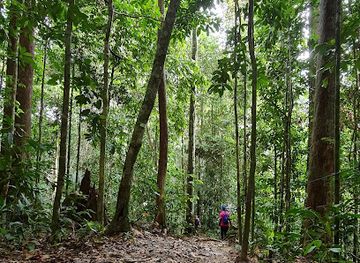
Labu Forest Reserve lies in Brunei’s remote Temburong District, the country’s largely forested eastern enclave separated from the main part of Brunei by Malaysian territory. It is a destination for visitors drawn to dense Bornean rainforest, quiet waterways and the sense of distance that comes with travelling beyond the country’s more accessible attractions. The reserve is not an urban tourism area or a resort complex; its appeal lies in the forest environment itself and in the opportunity to understand Temburong as a living landscape rather than a collection of built attractions.Read more about Labu Forest Reserve
Nature and Local Character
Visiting Labu
When is the best time to visit Labu Forest Reserve?
Best: June–August · 29°C| Month | High (°C) | Rainfall (mm) |
|---|---|---|
| January | 28 | 327 |
| February | 28 | 288 |
| March | 29 | 247 |
| April | 29 | 208 |
| May | 29 | 174 |
| June (best) | 29 | 151 |
| July (best) | 29 | 154 |
| August (best) | 29 | 158 |
| September | 29 | 169 |
| October | 29 | 203 |
| November | 28 | 255 |
| December | 28 | 305 |
Getting to and around Labu Forest Reserve
How to get there
Transportation
Best attractions in Labu Forest Reserve
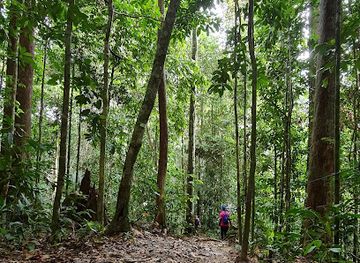
The principal attraction of Labu Forest Reserve is its rainforest environment: a quiet, humid landscape of trees, undergrowth, streams and wildlife habitat rather than a developed circuit of named sights. Visitors who receive permission to enter may explore the forest only through authorised access arrangements, taking time to notice bird calls, insects, changing vegetation and the effects of weather on the ground. The wider Temburong setting adds rivers, rural settlements and extensive forest scenery, while Bangar provides the district’s main practical hub. Other celebrated nature attractions in Temburong, including Ulu Temburong National Park and established river-based visitor facilities, are separate destinations and should not be described as being inside Labu Forest Reserve. The reserve is therefore most rewarding for travellers interested in conservation, tropical ecology and low-impact exploration, with expectations adjusted to limited infrastructure and the possibility that some areas are inaccessible without local approval or a guide.
-
Mosque
Kampong Labu Estate Mosque
Discover tranquility at Kampong Labu Estate Mosque, a cultural gem in Brunei's serene landscapes. Experience Islamic heritage and architectural beauty.
-
 Tourist attraction
Labu Square
Experience the heart of Labu Estate at Labu Square, a vibrant cultural hub offering relaxation, community spirit, and local traditions.

Best landmarks in Labu Forest Reserve
Labu Forest Reserve itself is the defining landmark, not because of a monumental building but because it preserves a substantial tract of Temburong’s tropical forest landscape under a managed reserve designation. Its significance is ecological and geographical: the forest forms part of the continuous natural character for which the district is known, while its remoteness illustrates the distance between Brunei’s urban centres and its interior environments. Rivers and forest access routes in the surrounding Temburong landscape are important geographic reference points, although they should not be treated as individual attractions within the reserve unless officially identified as such. The reserve has no widely recognised historic town, castle, lighthouse or architectural complex, and its meaning is best found in the relationship between rainforest, regulated land use and the communities that navigate the wider district.
-
Resort hotel
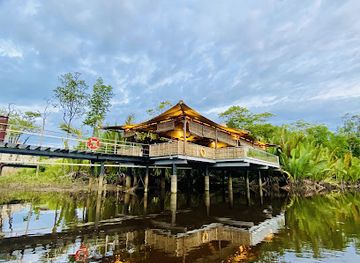
The Abode Resort & Spa, Temburong
Discover tranquility at The Abode Resort & Spa in Temburong, where luxury meets nature in a stunning Bruneian paradise.
-
Park
Bukit Patoi Recreational Park
Explore the breathtaking views and serene trails at Bukit Patoi Recreational Park, a must-visit natural retreat in Labu Estate, Brunei.
-
Tourist attraction
Bandarku Permata Hijau
Discover the enchanting Bandarku Permata Hijau in Labu Estate, a unique blend of post-modernist and Islamic art that captivates every visitor.
-
Mosque
Kampong Labu Estate Mosque
Discover tranquility at Kampong Labu Estate Mosque, a serene spiritual haven in Brunei's Labu Estate, reflecting the nation's rich Islamic traditions.


Explore Labu Forest Reserve on the map
Plan your trip on one map. See where the top attractions, landmarks, restaurants and hotels are, and book hotels and experiences in a few clicks.
Best hotels in Labu Forest Reserve
Best bars in Labu Forest Reserve
Labu Forest Reserve has no nightlife infrastructure, and evening activity is defined by darkness, forest sounds and the quiet routines of rural Temburong rather than bars or clubs. Bangar offers the district’s limited selection of everyday eating and social venues, but visitors should not expect a conventional nightlife district or late-night entertainment scene. Brunei’s predominantly Muslim social culture also means that alcohol is not sold in the manner familiar to many international visitors; non-Muslim visitors may bring personal alcohol into Brunei only within the country’s rules and should consume it privately and discreetly. At nature-oriented accommodation or community stays, evenings may involve conversation, an early night or simple outdoor observation, subject to local arrangements and environmental sensitivity.
-
Resort hotel
The Abode Resort & Spa, Temburong
Experience unparalleled luxury and natural beauty at The Abode Resort & Spa, a perfect getaway in Temburong, Brunei.
-
Park
Bukit Patoi Recreational Park
Discover the lush landscapes and vibrant wildlife of Bukit Patoi Recreational Park—a natural gem perfect for trekking and tranquility.
-
Tourist attraction
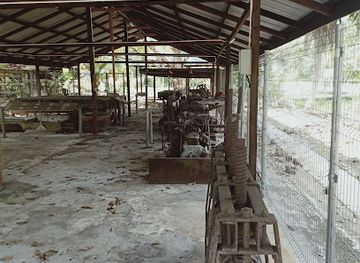
Labu Estate Rubber Industrial Site
Experience the fascinating world of rubber production at the Labu Estate Rubber Industrial Site, Brunei's enchanting agricultural gem.
-
Woods
Labu Forest Reserve
Explore the lush landscapes and diverse wildlife of Labu Forest Reserve in Brunei, a tranquil haven for nature lovers and adventurers.
Best nightclubs in Labu Forest Reserve
Labu Forest Reserve has no nightlife infrastructure, and evening activity is defined by darkness, forest sounds and the quiet routines of rural Temburong rather than bars or clubs. Bangar offers the district’s limited selection of everyday eating and social venues, but visitors should not expect a conventional nightlife district or late-night entertainment scene. Brunei’s predominantly Muslim social culture also means that alcohol is not sold in the manner familiar to many international visitors; non-Muslim visitors may bring personal alcohol into Brunei only within the country’s rules and should consume it privately and discreetly. At nature-oriented accommodation or community stays, evenings may involve conversation, an early night or simple outdoor observation, subject to local arrangements and environmental sensitivity.
-
Park
Bukit Patoi Recreational Park
Discover the serene beauty and breathtaking views at Bukit Patoi Recreational Park in Labu Estate, a perfect spot for nature lovers and adventure seekers.
-
Woods
Labu Forest Reserve
Explore the lush landscapes and diverse wildlife of Labu Forest Reserve, an unspoiled gem in the heart of Brunei, perfect for nature enthusiasts.
Best shops in Labu Forest Reserve
Shopping within Labu Forest Reserve is not a realistic expectation, and there are no known retail streets or permanent craft markets in the forest itself. Bangar is the nearest practical place for basic supplies, snacks and everyday purchases before travelling into remote areas. Visitors may also encounter locally produced food or handicrafts through community-based tourism and rural businesses in Temburong, but availability is not guaranteed and should not be assumed without prior arrangement. Regional products may include prepared foods, woven items or other crafts associated with Brunei’s wider Malay and Indigenous cultural traditions, although the reserve does not function as a dedicated craft destination. Purchase from legitimate local sellers, avoid collecting forest materials and carry essential outdoor equipment from larger Bruneian towns before reaching Temburong.
-
Resort hotel
The Abode Resort & Spa, Temburong
Experience ultimate relaxation and natural beauty at The Abode Resort & Spa in Temburong, Brunei's serene getaway surrounded by lush landscapes.
-
Park
Bukit Patoi Recreational Park
Experience the tranquility and breathtaking views at Bukit Patoi Recreational Park, a natural paradise in Labu Estate, Brunei.
-
Mosque
Kampong Labu Estate Mosque
Explore Kampong Labu Estate Mosque, a serene cultural haven showcasing Islamic heritage and architectural beauty in Labu Estate.
-
Tourist attraction
Labu Estate Rubber Industrial Site
Discover the rich heritage of rubber production at Labu Estate Rubber Industrial Site, a unique attraction in Brunei steeped in culture and natural beauty.


Get your free copy of our complete guide to Labu Forest Reserve, delivered straight to you.
Everything on this page, from attractions and restaurants to essentials and local phrases, in one PDF you can read offline, print or share.
Already have an account? Sign in
Your Labu Forest Reserve guide is ready.
We'll send it to · Not you? Sign out

Getting your guide ready…
We are putting together a fresh copy of the Labu Forest Reserve guide. This can take up to a minute.
This can take a few moments. If your browser asks, choose Allow so the download can start. You'll find the guide in your Downloads folder.
Nothing happened? Download it again
Sorry, the guide is taking longer than usual. Please try again in a minute, or get it by email instead.
Labu Forest Reserve essentials
Currency and Payment
Safety
Emergency Situations
Do's and Don'ts
Local Tips
From Eve
Local phrases worth knowing
You don't need to get them perfect. A few words go a long way, and locals appreciate the effort.
Basics
| English | Local | Say it |
|---|---|---|
| Hello | Selamat pagi | [suh-lah-maht pah-gee] |
| Goodbye | Selamat tinggal | [suh-lah-maht ting-gahl] |
| Yes | Ya | [yah] |
| No | Tidak | [tee-dahk] |
| Please/You're welcome | Sila | [see-lah] |
| Thank you | Terima kasih | [teh-ree-mah kah-seeh] |
| Excuse me/Sorry | Maaf | [mah-ahf] |
| How are you? | Apa khabar? | [ah-pah kah-bahr] |
| Fine. And you? | Baik. Dan kamu? | [bah-ee. dahn kah-moo] |
| Do you speak English? | Boleh cakap Bahasa Inggeris? | [boh-leh chah-kahp bah-hah-sah eeng-geh-rees] |
| I don't understand | Saya tidak faham | [sah-yah tee-dahk fah-hahm] |
Eating & Drinking
| English | Local | Say it |
|---|---|---|
| I'd like to see the menu, please | Boleh saya lihat menu, sila | [boh-leh sah-yah lee-haht meh-noo, see-lah] |
| I don't eat meat | Saya tidak makan daging | [sah-yah tee-dahk mah-kahn dah-yihng] |
| Cheers! | Sihat! | [see-haht] |
| I would like to pay, please | Saya mahu bayar, sila | [sah-yah mah-hoo bah-yahr, see-lah] |
Emergencies
| English | Local | Say it |
|---|---|---|
| Help! | Tolong! | [toh-lohng] |
| Go away! | Pergi jauh! | [pehr-gee jah-oo] |
| Call the Police! | Panggil Polis! | [pahng-geel poh-lees] |
| Call a doctor! | Panggil doktor! | [pahng-geel dohk-tohr] |
| I'm lost | Saya sesat | [sah-yah se-saht] |
| I'm ill | Saya sakit | [sah-yah sah-keet] |
Shopping
| English | Local | Say it |
|---|---|---|
| I'd like to buy... | Saya ingin membeli... | [sah-yah een-geen mehm-buh-lee] |
| I'm just looking | Saya hanya melihat | [sah-yah hahn-yah meh-lee-haht] |
| How much is it? | Berapa harganya? | [beh-rah-pah hahr-gahn-yah] |
| That's too expensive | Terlalu mahal | [tehr-lah-loo mah-hahl] |
| Can you lower the price? | Boleh kurangkan harga? | [boh-leh koo-rahn-gahn hahr-gah] |
Time & Numbers
| English | Local | Say it |
|---|---|---|
| What time is it? | Pukul berapa sekarang? | [poo-kool beh-rah-pah suh-kah-rahn] |
| It's one o'clock | Pukul satu | [poo-kool sah-too] |
| Half past (10) | Seterusnya (pukul sepuluh setengah) | [seh-teh-roos-nyah (poo-kool suh-poo-looh suh-tehn-gah)] |
| Morning | Pagi | [pah-gee] |
| Afternoon | Petang | [peh-tahng] |
| Evening | Malam | [mah-lahm] |
| Yesterday | Semalam | [seh-mah-lahm] |
| Today | Hari ini | [hah-ree ee-nee] |
| Tomorrow | Esok | [eh-sohk] |
| 1 | Satu | [sah-too] |
| 2 | Dua | [doo-ah] |
| 3 | Tiga | [tee-gah] |
| 4 | Empat | [em-paht] |
| 5 | Lima | [lee-mah] |
| 6 | Enam | [eh-nahm] |
| 7 | Tujuh | [too-joo] |
| 8 | Lapan | [lah-pahn] |
| 9 | Sembilan | [sem-bee-lahn] |
| 10 | Sepuluh | [su-poo-looh] |
Transport & Directions
| English | Local | Say it |
|---|---|---|
| Where's a/the...? | Di mana... | [dee mah-nah] |
| What's the address? | Apa alamatnya? | [ah-pah ah-lah-maht-nyah] |
| Can you show me (on the map)? | Boleh tunjukkan saya (di peta)? | [boh-leh toon-jook-kahn sah-yah (dee peh-tah)] |
| When's the next (bus)? | Bila bas seterusnya? | [bee-lah bahs seh-teh-roos-nyah] |
| A ticket (to ....) | Satu tiket (ke ....) | [sah-too tee-keht (keh)] |
History of Labu Forest Reserve
A Forested Temburong Landscape
Labu Forest Reserve belongs to the wider forested landscape of Temburong, a district whose terrain is shaped by tropical hills, rivers and extensive rainforest rather than dense settlement. The forest is part of a regional environment formed over geological timescales, while the reserve’s present identity reflects modern land management and the retention of forested land in a country where rainforest remains a defining national resource. Its history is therefore best understood through the relationship between natural systems, rural communities and the careful control of access to forest areas.
River Communities and Forest Use
For generations, Temburong’s rivers provided routes through difficult terrain and connected settlements with one another and with the wider Brunei world. Communities, including the Indigenous Iban of the district, developed knowledge of forest plants, waterways and seasonal conditions. Forest use traditionally included small-scale agriculture, fishing, gathering and the movement of people and goods, although practices varied between communities and locations. This human history remains visible less through large monuments than through settlement patterns, river journeys and cultural knowledge associated with the surrounding landscape.
Forestry and Conservation
During the modern period, the management of Brunei’s forests became increasingly important as roads, settlement and resource use developed across Borneo. Forest reserves such as Labu represent a framework for regulating land use and retaining forest habitats, rather than an invitation to unrestricted exploration. The reserve’s contemporary significance lies in this balance: Temburong supports local livelihoods and access needs while also forming part of Brunei’s wider conservation landscape. Visitors should treat reserve boundaries, permits and forestry guidance as expressions of that management history.
Temburong’s Emerging Nature Tourism
Nature tourism in Temburong has grown around the district’s rivers and forests, particularly through guided experiences and established attractions elsewhere in the district. Labu Forest Reserve remains a more limited and less developed destination, with no large historic town or major architectural heritage complex defining its identity. Its visitor story is instead linked to Brunei’s interest in presenting Temburong’s rainforest responsibly, while keeping access proportionate to the sensitivity and remoteness of the environment.
Labu Forest Reserve in Photos
Browse through our photo collection highlighting the charm and character of the destination.
Neighbouring destination travel guides
The closest destinations to Labu Forest Reserve, if you have time for more than one.
-
 Pulau Selirong Forest Reserve
, Brunei, offers mangrove waterways, proboscis monkeys, birdlife and quiet boat excursions through protected coastal forest.
Pulau Selirong Forest Reserve
Pulau Selirong Forest Reserve, Brunei, offers mangrove waterways, proboscis monkeys, birdlife and quiet boat excursions through protected coastal forest.
-

-

-
 Bukit Shahbandar Recreational Park
 in Brunei offers rainforest trails, hill climbs, viewpoints and an accessible outdoor escape near Bandar Seri Begawan.
Bukit Shahbandar Recreational Park
Bukit Shahbandar Recreational Park in Brunei offers rainforest trails, hill climbs, viewpoints and an accessible outdoor escape near Bandar Seri Begawan.
-


Swipe for more destinations
Explore more

Explore more of Mukim Labu
Explore Mukim Labu in Brunei’s Temburong District for forest reserves, rural rivers, village roads and a quiet Borneo borderland.
Explore Mukim Labu
Explore more of Brunei
Explore Brunei, a hidden gem in Southeast Asia, where modern opulence meets untouched natural beauty and rich cultural heritage.
Explore Brunei