

Tutong Beach Travel Guide - Free Web & App
Your ultimate guide to Tutong Beach. Discover top landmarks, proposed trips, and local tips. Free on the web or via the Evendo companion app.


Tutong Beach, Brunei offers broad coastal views, river landscapes, mangroves, quiet walks and easy access to Tutong town and local heritage.
Coast, River and Open Horizons
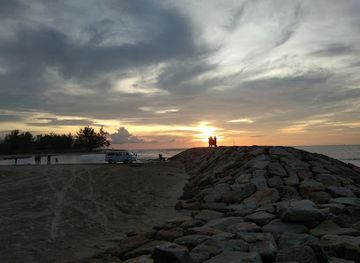
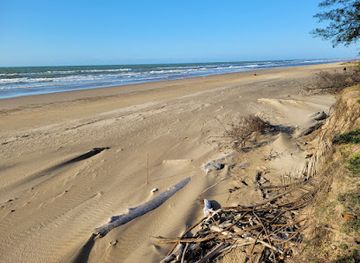
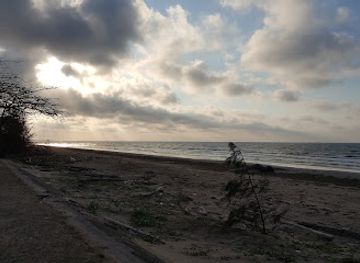
Tutong Beach lies on Brunei’s western coast in Tutong District, a relatively quiet seaside area associated with the town of Tutong and the lower reaches of the Tutong River. Its appeal is its spacious coastal setting rather than a dense concentration of attractions: a broad sandy shoreline, tropical vegetation, open views across the South China Sea and the changing character of the river and coast provide the backdrop for leisurely walks, photography and informal family outings. Tides, weather and the light of day shape the experience, with the beach often feeling especially calm away from busier periods.Read more about Tutong Beach
A Gateway to Tutong District
Visiting the Shore Responsibly
Getting to and around Tutong Beach
How to get there
Transportation
Best attractions in Tutong Beach
Tutong Beach itself is the principal attraction, offering an open sandy coast where visitors can watch the tide, photograph the shoreline and enjoy views across Brunei’s western seaboard. The nearby lower Tutong River adds an estuarine dimension, with changing light, river traffic where present and vegetation associated with tidal environments. Tutong town provides a useful contrast to the beach, with local services and a glimpse of district life, while the wider district includes kampong landscapes, rural roads and forested areas rather than a dense chain of formal visitor attractions. The coast is best approached as a scenic public space for quiet recreation, not as a developed resort with extensive facilities. Visitors interested in nature can observe the relationship between beach, river and wetland habitats without entering sensitive areas, while those seeking a broader itinerary can use Tutong as a base for exploring the district’s cultural and natural surroundings.
-
Recreation center
Penanjong Beach
Escape to Penanjong Beach: Brunei's tranquil coastal haven with golden sands, clear waters, and stunning sunset views.
-
Park
Pantai Pengkalan Pinang, Kg. Penanjong
Experience the tranquility of Pantai Pengkalan Pinang, a serene beach park in Kg. Penanjong, perfect for relaxation and family fun.
-
Castle
Istana Pantai
Discover the architectural beauty and cultural significance of Istana Pantai, a stunning castle that reflects Brunei's royal heritage.
-
Garden
Pantai Danau
Escape to Pantai Danau: A serene garden retreat in Brunei, perfect for nature lovers and those seeking tranquility.
Best landmarks in Tutong Beach
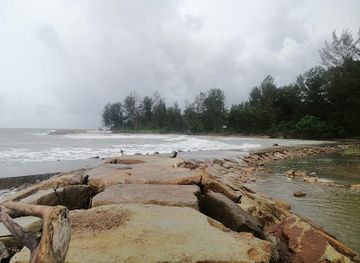
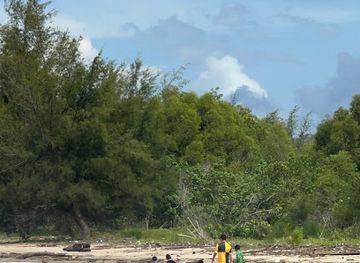
The defining landmark of this destination is the open shoreline of Tutong Beach, whose broad coastal setting expresses the district’s connection with the South China Sea. The lower Tutong River is an equally important geographical feature, linking inland communities with the coast and creating an estuarine landscape shaped by tides and sediment. Beyond these natural landmarks, Tutong town serves as the district’s principal settlement and reference point, while surrounding kampongs reflect the area’s continuing cultural and residential character. There is no need to attribute grand monuments or resort architecture to the beach: its significance lies in the meeting of sea, river, settlement and tropical coastal vegetation. Weather, tides and coastal processes continually alter the appearance of the shore, making the landscape itself the central feature for visitors.
-
Hotel
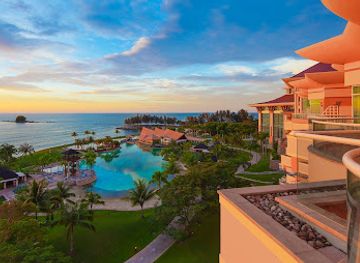
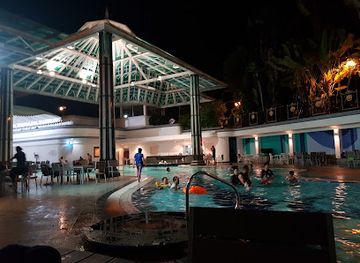
The Empire Brunei
Discover the epitome of luxury at The Empire Brunei, where stunning views and world-class amenities create an unforgettable resort experience.
-
Mosque
Omar Ali Saifuddien Mosque
Discover Brunei's iconic mosque, a stunning blend of Mughal and Italian architecture, and a symbol of Islamic heritage in Southeast Asia.
-
Amusement park
Jerudong Park Playground
Experience unforgettable fun and adventure at Jerudong Park Playground, Brunei's premier amusement park with thrilling rides and beautiful gardens.
-
Market
Kianggeh Market
Discover the vibrant Kianggeh Market in Bandar Seri Begawan, where local culture, fresh produce, and unique handicrafts await every traveler.

Explore Tutong Beach on the map
Plan your trip on one map. See where the top attractions, landmarks, restaurants and hotels are, and book hotels and experiences in a few clicks.
Best hotels in Tutong Beach
Best restaurants in Tutong Beach
Tutong Beach has a quieter and more limited dining environment than Brunei’s capital, so visitors should expect food options to be concentrated in Tutong town and nearby settlements rather than directly on the sand. In the district, Malay and Bruneian cooking commonly draws on rice, noodles, seafood, chicken, beef and coconut, with dishes such as nasi katok, ambuyat and local-style grilled or fried foods available according to the establishment. Small eateries, cafés, markets and food stalls provide a more realistic dining experience than a formal beach restaurant scene, while halal food is the norm in Brunei. Visitors making a coastal outing should consider buying drinks or a meal in town beforehand, especially if travelling outside busier periods. Local food businesses may keep different hours from their city counterparts, so same-day local checks are sensible.
-
Restaurant
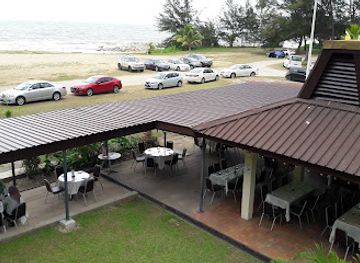
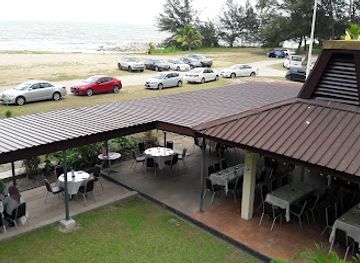
Tarindak Beach Restaurant (Pantai Restaurant)
Experience Brunei's coastal flavors at Tarindak Beach Restaurant - where stunning views meet delectable cuisine.
-
Cafe
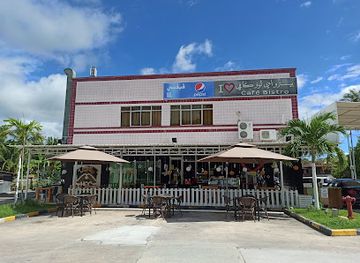
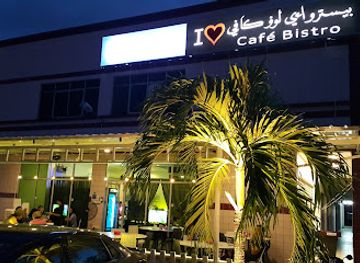
I Luv Cafe Bistro
Discover I Luv Cafe Bistro in Tutong – where delicious flavors meet warm hospitality in a cozy atmosphere.
-
Restaurant
Tanda Kasih Restaurant
Experience authentic Bruneian cuisine at Tanda Kasih Restaurant in Kampong Keriam – where every dish tells a story.
-
Restaurant
Haji K.K Koya Restaurant
Experience authentic Indian cuisine at Haji K.K Koya Restaurant in Tutong - where flavor meets tradition.
Best bars in Tutong Beach
Tutong Beach is not a nightlife destination, and Brunei’s restrictions on alcohol mean visitors should not expect a conventional bar or nightclub scene. Evening activity is generally quiet, centred on family outings, food, conversation and the changing colours over the coast rather than late-night entertainment. Tutong town may offer modest cafés and local eateries where people gather, but facilities are dispersed and opening patterns can vary. Visitors staying in the district are more likely to enjoy a calm evening at their accommodation, an early coastal walk or a meal in town than organised beach parties or live-music venues. Alcohol importation and consumption are subject to Brunei’s laws and customs rules, so international visitors should check current regulations rather than assuming that practices familiar from other coastal destinations apply here.
-
Hotel
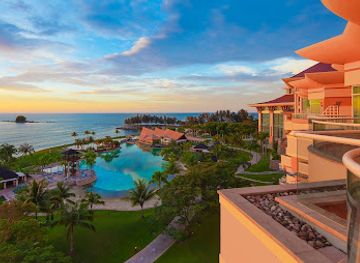
The Empire Brunei
Discover unparalleled luxury at The Empire Brunei, where opulent accommodations meet breathtaking natural beauty in a premier destination.
-
Restaurant
Tarindak D' Polo Royal Brunei Polo and Riding Club
Indulge in Brunei's culinary excellence at Tarindak D' Polo, where equestrian charm meets exquisite dining in a picturesque setting.
-
Restaurant
Tarindak Beach Restaurant (Pantai Restaurant)
Discover the flavors of Brunei at Tarindak Beach Restaurant, where delicious cuisine meets breathtaking ocean views in a serene setting.
-
Restaurant
I Luv Cafe Bistro
Discover I Luv Cafe Bistro in Tutong for an unforgettable dining experience with a blend of local and international flavors.
Best nightclubs in Tutong Beach
Tutong Beach is not a nightlife destination, and Brunei’s restrictions on alcohol mean visitors should not expect a conventional bar or nightclub scene. Evening activity is generally quiet, centred on family outings, food, conversation and the changing colours over the coast rather than late-night entertainment. Tutong town may offer modest cafés and local eateries where people gather, but facilities are dispersed and opening patterns can vary. Visitors staying in the district are more likely to enjoy a calm evening at their accommodation, an early coastal walk or a meal in town than organised beach parties or live-music venues. Alcohol importation and consumption are subject to Brunei’s laws and customs rules, so international visitors should check current regulations rather than assuming that practices familiar from other coastal destinations apply here.
-
Lounge
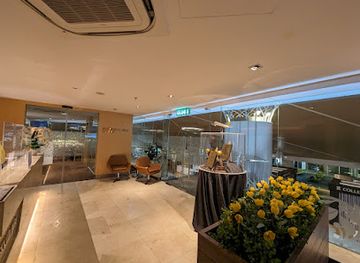
Royal Brunei Business Class Lounge
Experience luxury and comfort at the Royal Brunei Business Class Lounge in Bandar Seri Begawan, your perfect travel oasis.
-
Country club
Panaga Club
Discover leisure and recreation at Panaga Club, a serene country club in Brunei with golf, dining, and relaxation.
-
Lounge
Sky Lounge
Discover the tranquil ambiance and stunning views at Sky Lounge in Bandar Seri Begawan, a perfect retreat for travelers and locals alike.
-
Cafe
Floradina Café
Discover Floradina Café in Seria for a delightful dining experience, featuring grilled delicacies, refreshing drinks, and stunning beachside views.


Best shops in Tutong Beach
Shopping at Tutong Beach is limited, with no extensive seaside retail district expected beside the shore. The practical place to buy drinks, snacks and everyday supplies is Tutong town, where shops, small businesses and food outlets serve the district’s communities. Visitors may also encounter locally produced food, informal market goods and practical household items in settlements around the town, although markets and stock vary by day and location. For regional gifts, Bruneian food products, handicrafts and textiles are more widely associated with larger commercial centres and specialist outlets elsewhere in the country than with the beach itself. Travellers should not rely on finding outdoor equipment, souvenirs or a full range of provisions at the coastal access point. Buying essentials before travelling to the shore also reduces the need for unnecessary journeys and packaging waste.
-
Shopping mall
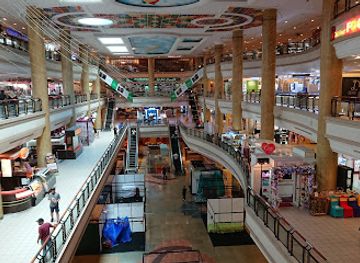
The Mall Gadong
Discover a world of shopping, dining, and entertainment at The Mall Gadong, Brunei's largest and most vibrant shopping destination.
-
Shopping mall
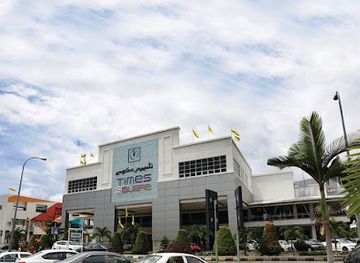
Times Square Shopping Centre
Explore the vibrant Times Square Shopping Centre, a shopping haven in Bandar Seri Begawan offering diverse retail and dining experiences.
-
Shopping mall
Aman Hills Shopping Centre
Discover the vibrant shopping experience at Aman Hills Shopping Centre in Bandar Seri Begawan, where shopping, dining, and entertainment harmoniously blend.
-
Department store
Hua Ho Department Store Kiulap
Explore the Hua Ho Department Store Kiulap for a vibrant shopping experience in Bandar Seri Begawan, offering a blend of local culture and international brands.
Get your free copy of our complete guide to Tutong Beach, delivered straight to you.
Everything on this page, from attractions and restaurants to essentials and local phrases, in one PDF you can read offline, print or share.
Already have an account? Sign in
Your Tutong Beach guide is ready.
We'll send it to · Not you? Sign out

Getting your guide ready…
We are putting together a fresh copy of the Tutong Beach guide. This can take up to a minute.
This can take a few moments. If your browser asks, choose Allow so the download can start. You'll find the guide in your Downloads folder.
Nothing happened? Download it again
Sorry, the guide is taking longer than usual. Please try again in a minute, or get it by email instead.
Tutong Beach essentials
Currency and Payment
Safety
Emergency Situations
Do's and Don'ts
Local Tips
From Eve
Local phrases worth knowing
You don't need to get them perfect. A few words go a long way, and locals appreciate the effort.
Basics
| English | Local | Say it |
|---|---|---|
| Hello | Selamat sejahtera | [suh-LAH-maht say-JAH-tuh-rah] |
| Goodbye | Selamat tinggal | [suh-LAH-maht TING-gahl] |
| Yes | Ya | [yah] |
| No | Tidak | [tee-DAK] |
| Please/You're welcome | Sama-sama | [SAH-mah SAH-mah] |
| Thank you | Terima kasih | [teh-REE-mah KAH-seh] |
| Excuse me/Sorry | Maaf | [mah-AHF] |
| How are you? | Apa khabar? | [AH-pah KAH-bahr] |
| Fine. And you? | Baik. Dan awda? | [bah-EK. dan OW-dah] |
| Do you speak English? | Adakah awda bercakap Bahasa Inggeris? | [AH-dah-kah OW-dah berr-CHA-kahp bah-HAH-sah ing-GAY-riss] |
| I don't understand | Saya tidak faham | [SAH-yah TEE-dahk fah-HAHM] |
Eating & Drinking
| English | Local | Say it |
|---|---|---|
| I'd like to see the menu, please | Saya mahu melihat menu, sila | [SAH-yah mah-HOO muh-LEE-haht meh-NOO, see-lah] |
| I don't eat meat | Saya tidak makan daging | [SAH-yah TEE-dahk MAH-kahn DAI-ngahn] |
| Cheers! | Apa khabar! | [AH-pah KAH-bahr] |
| I would like to pay, please | Saya ingin membayar, sila | [SAH-yah IN-geen muhm-BAH-yahr, see-lah] |
Emergencies
| English | Local | Say it |
|---|---|---|
| Help! | Tolong! | [TOH-long] |
| Go away! | Pergi jauh! | [PEHR-gee jah-OOH] |
| Call the Police! | Panggil polis! | [PANG-geel POH-liss] |
| Call a doctor! | Panggil doktor! | [PANG-geel DOHK-tohr] |
| I'm lost | Saya sesat | [SAH-yah SUH-saht] |
| I'm ill | Saya sakit | [SAH-yah SAH-keet] |
Shopping
| English | Local | Say it |
|---|---|---|
| I'd like to buy... | Saya ingin membeli... | [SAH-yah IN-geen muhm-BEH-lee] |
| I'm just looking | Saya hanya melihat | [SAH-yah HAHN-yah muh-LEE-haht] |
| How much is it? | Berapa harganya? | [BEH-rah-pah HAR-gahn-yah] |
| That's too expensive | Itu terlalu mahal | [EE-too tuhr-LAH-loo mah-HAHL] |
| Can you lower the price? | Bolehkah awda kurangkan harga? | [boh-LEH-kah OW-dah koor-ANG-kahn HAR-gah] |
Time & Numbers
| English | Local | Say it |
|---|---|---|
| What time is it? | Pukul berapa sekarang? | [POO-kool BEH-rah-pah suh-KAH-rahn] |
| It's one o'clock | Pukul satu | [POO-kool SAH-too] |
| Half past (10) | Setengah (sepuluh) | [suh-TUH-ngah (suh-POH-loo)] |
| Morning | Pagi | [PAH-gee] |
| Afternoon | Petang | [puh-TAHNG] |
| Evening | Malam | [MAH-lahm] |
| Yesterday | Semalam | [suh-MAH-lahm] |
| Today | Hari ini | [HAH-ree EE-nee] |
| Tomorrow | Esok | [EH-sohk] |
| 1 | Satu | [SAH-too] |
| 2 | Dua | [DOO-ah] |
| 3 | Tiga | [TEE-gah] |
| 4 | Empat | [em-PAHT] |
| 5 | Lima | [LEE-mah] |
| 6 | Enam | [eh-NAHM] |
| 7 | Tujuh | [too-JOOH] |
| 8 | Lapan | [LAH-pahn] |
| 9 | Sembilan | [SUHM-bee-lahn] |
| 10 | Sepuluh | [suh-POH-loo] |
Transport & Directions
| English | Local | Say it |
|---|---|---|
| Where's a/the...? | Di mana... | [dee MAH-nah] |
| What's the address? | Berapa alamatnya? | [BEH-rah-pah ah-LAH-maht-nyah] |
| Can you show me (on the map)? | Bolehkah awda tunjukkan (pada peta)? | [boh-LEH-kah OW-dah toon-JOOK-kahn (PAH-dah PEH-tah)] |
| When's the next (bus)? | Bila bas seterusnya? | [BEE-lah bahs suh-TEH-roos-nyah] |
| A ticket (to ....) | Satu tiket (ke ....) | [SAH-too tee-KEHT (keh)] |
History of Tutong Beach
A Coast Shaped by River and Sea
Tutong Beach belongs to a low-lying coastal environment shaped by the interaction of the South China Sea, tidal waters and the Tutong River system. The shoreline’s present form is part of a much longer geological and environmental process involving sediment movement, coastal erosion and deposition. These processes continue to influence the beach, river mouth and nearby wetland habitats, making tides and seasonal weather important to the appearance of the coast. Unlike a monument with a fixed architectural history, the beach is a changing natural landscape whose significance lies in its relationship with Brunei’s rivers, coastline and tropical environment.
Tutong Communities and River Life
The history of the wider area is closely connected with Tutong town, the Tutong River and the communities living in the district’s kampongs. Rivers traditionally provided routes for movement, communication and access to natural resources, while coastal and estuarine areas supported fishing and other forms of small-scale livelihood. The Tutong people are one of Brunei’s recognised indigenous communities, and the district retains a strong association with local Malay cultural life. The beach is therefore part of a broader inhabited landscape rather than an isolated wilderness, even where the shore itself appears open and undeveloped.
A District of Forest and Settlement
Tutong District developed as a largely rural part of Brunei, with settlements, agricultural areas, forest and waterways existing alongside one another. The district’s identity was influenced by river access and by the movement between inland kampongs, Tutong town and the coast. As roads and modern services improved, the beach became easier to visit for local recreation, while the surrounding district continued to retain a lower-density character than the capital area. This pattern helps explain why Tutong Beach remains primarily a place for informal leisure and coastal appreciation rather than a heavily built resort.
Modern Recreation and Coastal Stewardship
In recent decades, Tutong Beach has been valued as an accessible public coastal space within a district increasingly explored for nature, community and outdoor experiences. Its use reflects Brunei’s wider interest in conserving forests, waterways and coastal habitats while providing residents and visitors with opportunities to enjoy the landscape. The beach’s future character depends on responsible recreation, especially careful waste management and respect for tidal environments. Contemporary visits are consequently connected with both leisure and the continuing stewardship of Brunei’s coastal and river systems.
Tutong Beach in Photos
Browse through our photo collection highlighting the charm and character of the destination.
Cities in Tutong Beach
The towns and cities of Tutong Beach, and the easiest places to base yourself.
-

-

-
-

-

-


Swipe for more cities
Neighbouring destination travel guides
The closest destinations to Tutong Beach, if you have time for more than one.
-

-

-

-
 Bukit Shahbandar Recreational Park
 in Brunei offers rainforest trails, hill climbs, viewpoints and an accessible outdoor escape near Bandar Seri Begawan.
Bukit Shahbandar Recreational Park
Bukit Shahbandar Recreational Park in Brunei offers rainforest trails, hill climbs, viewpoints and an accessible outdoor escape near Bandar Seri Begawan.
-
 Pulau Selirong Forest Reserve
, Brunei, offers mangrove waterways, proboscis monkeys, birdlife and quiet boat excursions through protected coastal forest.
Pulau Selirong Forest Reserve
Pulau Selirong Forest Reserve, Brunei, offers mangrove waterways, proboscis monkeys, birdlife and quiet boat excursions through protected coastal forest.


Swipe for more destinations
Explore more

Explore more of Tutong District
Explore Tutong District in Brunei for rainforest wetlands, river villages, quiet beaches, local food and the wildlife-rich Tasek Merimbun Heritage Park.
Explore Tutong District
Explore more of Brunei
Explore Brunei, a hidden gem in Southeast Asia, where modern opulence meets untouched natural beauty and rich cultural heritage.
Explore Brunei