

UC Berkeley Campus (Berkeley) Travel Guide - Free
Explore UC Berkeley Campus in Berkeley with Evendo's free guide. Find the best shops, historic streets, restaurants, and gems on web or mobile.


UC Berkeley Campus in Berkeley pairs historic Beaux-Arts buildings, Sather Tower, leafy walks, museums, student culture, and Bay Area views.
A University in the City
UC Berkeley Campus occupies a broad, walkable swathe of central Berkeley, where formal academic buildings, wooded paths, student plazas and residential streets meet the wider East Bay. The University of California's first campus, founded in 1868, is woven into the city rather than sealed away from it: Telegraph Avenue approaches from the south, Downtown Berkeley lies west, and the hills rise beyond the eastern edge. Visitors encounter a working university, so its character changes with lectures, examinations, performances, demonstrations and the daily movement of students.Read more about UC Berkeley Campus
Architecture and Landscapes
Culture, Science and Student Life
Best attractions in UC Berkeley Campus
The campus's principal attractions are clustered within a walkable central precinct. Sather Tower, known as the Campanile, rises above the university and is the clearest landmark for orientation, while the Campanile Esplanade frames views towards the San Francisco Bay on clear days. Doe Memorial Library and its reading-room architecture anchor the north side of the central grounds, and Memorial Glade provides a broad lawn for observing campus life. Sproul Plaza and Sather Gate combine everyday student movement with the history of the Free Speech Movement. The Hearst Museum of Anthropology in Kroeber Hall presents collections connected with human cultures, while the Greek Theatre offers an atmospheric performance setting among the eastern foothills. South Hall, the Hearst Mining Building and the shaded paths around Faculty Glade reward visitors interested in architecture and landscape rather than conventional sightseeing.
-
Park
Memorial Glade
Discover the calming beauty and historical significance of Memorial Glade, a picturesque park at UC Berkeley, perfect for relaxation and scenic views.
2 min walk · 0.2 km from neighbourhood centre
-
Academic department
South Hall
Visit South Hall, UC Berkeley's oldest building, a beautiful example of Second Empire architecture and home to the School of Information.
1 min walk · 0.1 km from neighbourhood centre
-
Historical landmark
Founders Rock
Explore Founders Rock, a historical landmark in Berkeley, California, where nature meets rich heritage and captivating stories await.
6 min walk · 0.5 km from neighbourhood centre


Best landmarks in UC Berkeley Campus
UC Berkeley Campus is defined by a group of landmarks whose importance is architectural as well as institutional. Sather Tower, completed in 1914, is the university's best-known symbol, while Sather Gate marks a ceremonial approach from Telegraph Avenue into the central grounds. Doe Memorial Library and the Campanile Esplanade express John Galen Howard's Beaux-Arts planning principles through formal axes and monumental scale. South Hall, one of the oldest surviving campus buildings, offers a tangible link to the university's early years, and the Hearst Memorial Mining Building reflects Berkeley's historic strength in mining and engineering education. Sproul Plaza and Sproul Hall are landmarks of a different kind: their significance comes from the Free Speech Movement and the continuing role of the campus as a place of public debate.
-
Art museum
Berkeley Art Museum and Pacific Film Archive
Explore the vibrant cultural haven of Berkeley Art Museum and Pacific Film Archive, where art and cinema come to life in a stunning setting.
8 min walk · 0.6 km from neighbourhood centre
-
Park
Memorial Glade
Discover the serene beauty of Memorial Glade, a peaceful park at UC Berkeley, perfect for relaxation and enjoying nature's tranquility.
2 min walk · 0.2 km from neighbourhood centre
-
Tourist attraction
The Campanile
Explore the breathtaking views and rich history at The Campanile, Berkeley's iconic bell tower and a must-see tourist attraction.
2 min walk · 0.1 km from neighbourhood centre
-
Historical landmark
Sather Gate
Explore Sather Gate, an iconic historical landmark at UC Berkeley, and immerse yourself in the vibrant campus culture and stunning architecture.
2 min walk · 0.1 km from neighbourhood centre


Explore UC Berkeley Campus on the map
A handpicked selection of must-see spots in UC Berkeley Campus, mapped for you.
Best hotels in UC Berkeley Campus
Best restaurants in UC Berkeley Campus
Dining within the campus is shaped chiefly by student facilities, cafés and food outlets in university buildings, with choices and access varying according to the academic calendar. The more distinctive visitor-oriented food scene begins at the edges: Telegraph Avenue south of campus has long been associated with inexpensive eateries, cafés and international food, while Downtown Berkeley and University Avenue to the west provide a broader range of restaurants and bakeries. The campus itself is better suited to a practical break between buildings than to a concentrated restaurant district, although its student population gives the surrounding streets a wide range of casual options. Visitors should distinguish university-operated facilities from independent businesses outside the gates, and should check current access arrangements before planning a meal inside an academic or residential building.
-
Cajun
Angeline's Louisiana Kitchen
Experience authentic Cajun and Creole flavors at Angeline's Kitchen in Berkeley - where every dish tells a story from Louisiana.
10 min walk · 0.8 km from neighbourhood centre
-
Restaurant
Eureka!
Discover Eureka!, Berkeley's favorite American restaurant offering delicious cuisine and a vibrant atmosphere perfect for every occasion.
11 min walk · 0.9 km from neighbourhood centre
-
Italian
Gypsy's Trattoria Italiana
Experience the heart of Italy at Gypsy's Trattoria Italiana in Berkeley - where authentic flavors meet warm hospitality.
5 min walk · 0.4 km from neighbourhood centre
-
French
La Note
Experience authentic French cuisine at La Note Bistro in Berkeley - where every meal feels like a trip to Paris.
11 min walk · 0.9 km from neighbourhood centre


Best bars in UC Berkeley Campus
The central campus is not primarily a nightlife district, and evenings are more often shaped by lectures, student organisations, theatre, concerts and sports than by bars or clubs within university grounds. The Greek Theatre hosts large-scale performances in its wooded eastern setting, while campus cultural buildings may present talks, films or music according to the programme. For drinks and late dining, the main choices are outside the campus boundary, particularly around Telegraph Avenue, Downtown Berkeley and parts of University Avenue. These areas have a mixture of pubs, bars and casual venues, but the atmosphere changes quickly from busy event nights to quiet residential streets. Visitors attending an evening performance should plan their route back through the campus and check the venue's current entrance and transport information.
-
Bar
Raleigh's Pub
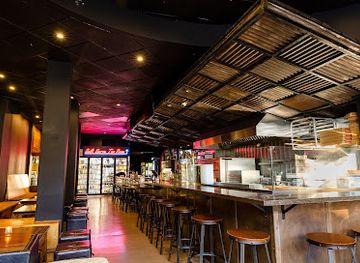
Experience the lively atmosphere and diverse menu at Raleigh's Pub, a bar and grill in Berkeley perfect for casual dining and social gatherings.
7 min walk · 0.6 km from neighbourhood centre
-
Cocktail bar
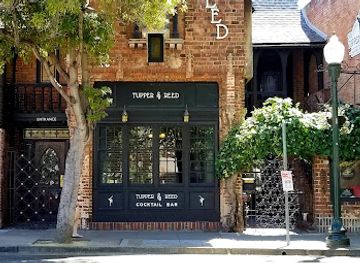
Tupper & Reed
Experience Berkeley's vibrant nightlife at Tupper & Reed, a cocktail bar offering innovative drinks in a stylish lounge atmosphere.
10 min walk · 0.8 km from neighbourhood centre
-
Bar
The Tap Haus
Experience the lively atmosphere of The Tap Haus, a premier bar and pool hall in Berkeley, perfect for socializing and entertainment.
6 min walk · 0.4 km from neighbourhood centre
-
Grill
Kip’s Bar and Grill
Discover Kip's Bar and Grill, Berkeley's charming grill and sports bar offering delicious food and a lively ambiance for a memorable dining experience.
5 min walk · 0.4 km from neighbourhood centre


Best nightclubs in UC Berkeley Campus
The central campus is not primarily a nightlife district, and evenings are more often shaped by lectures, student organisations, theatre, concerts and sports than by bars or clubs within university grounds. The Greek Theatre hosts large-scale performances in its wooded eastern setting, while campus cultural buildings may present talks, films or music according to the programme. For drinks and late dining, the main choices are outside the campus boundary, particularly around Telegraph Avenue, Downtown Berkeley and parts of University Avenue. These areas have a mixture of pubs, bars and casual venues, but the atmosphere changes quickly from busy event nights to quiet residential streets. Visitors attending an evening performance should plan their route back through the campus and check the venue's current entrance and transport information.
-
Cocktail bar
Tupper & Reed
Discover Tupper & Reed: Berkeley's premier cocktail bar and lounge, where creativity meets flavor in a stylish atmosphere.
10 min walk · 0.8 km from neighbourhood centre
-
Grill
Kip’s Bar and Grill
Experience the vibrant atmosphere and delicious grill dishes at Kip’s Bar and Grill in Berkeley, California—your go-to sports bar destination.
5 min walk · 0.4 km from neighbourhood centre
-
Lounge
Beta Lounge
Discover the cozy ambiance of Beta Lounge in Downtown Berkeley, where delicious vegan dishes and expertly crafted cocktails await you.
10 min walk · 0.8 km from neighbourhood centre
-
Bar
Tap in lounge
Explore the vibrant craft beer scene at Tap In Lounge, Berkeley's go-to bar for delicious brews and a lively atmosphere.
10 min walk · 0.8 km from neighbourhood centre


Best shops in UC Berkeley Campus
Shopping on the campus itself is concentrated in university bookstores, practical student services and small food or convenience outlets rather than a conventional retail street. The most distinctive nearby commercial extension is Telegraph Avenue immediately south of the university, where independent bookshops, record stores, clothing retailers, cafés and specialist shops reflect Berkeley's long association with student culture. The blocks around Sather Gate are particularly useful for browsing before or after a campus walk, although they are part of the surrounding city rather than the university grounds. Downtown Berkeley and University Avenue add everyday retail, groceries and independent businesses to the west. Retail character and individual stock change frequently, so the campus is best approached for its architecture and public spaces, with surrounding streets providing the broader shopping experience.
-
Clothing store
Cal Student Store
Discover Berkeley's academic pride at the Cal Student Store, a unique shopping destination for clothing, books, and university memorabilia.
4 min walk · 0.3 km from neighbourhood centre
-
Gift shop
Fall Rush Berkeley
Explore Fall Rush Berkeley, a vibrant gift shop offering clothing, tech gadgets, and school supplies in a friendly, artistic atmosphere.
4 min walk · 0.3 km from neighbourhood centre
-
Vintage clothing store
Paisley Vintage
Explore Paisley Vintage in Berkeley for an eclectic selection of unique second-hand clothing and accessories that celebrate sustainable fashion.
9 min walk · 0.7 km from neighbourhood centre
-
T-shirt store
Shop College Wear
Discover unique collegiate apparel at Shop College Wear in Downtown Berkeley, where style meets school spirit!
9 min walk · 0.8 km from neighbourhood centre


UC Berkeley Campus essentials
Getting There
Getting Around
Safety
Emergency Situations
Do's and Don'ts
Local Tips

From Eve
Local phrases worth knowing
You don't need to get them perfect. A few words go a long way, and locals appreciate the effort.
Basics
| English | Local | Say it |
|---|---|---|
| Hello | What's up | [wats up] |
| Goodbye | Later | [lay-ter] |
| Yes | Yeah | [yeh] |
| No | Nah | [na] |
| Please/You're welcome | Sure thing | [shore thing] |
| Thank you | Thanks | [thanks] |
| Excuse me/Sorry | My bad | [my bad] |
| How are you? | What's good? | [wats good] |
| Fine. And you? | Chillin'. You? | [chillin. you] |
| Do you speak English? | You speak English? | [you speak English] |
| I don't understand | I'm lost | [Im lost] |
Eating & Drinking
| English | Local | Say it |
|---|---|---|
| I'd like to see the menu, please | Can I check out the menu? | [can I check out the menu] |
| I don't eat meat | I'm plant-based | [Im plant-based] |
| Cheers! | Cheers! | [cheers] |
| I would like to pay, please | I'll cash out, thanks | [Ill cash out thanks] |
Emergencies
| English | Local | Say it |
|---|---|---|
| Help! | SOS! | [SOS] |
| Go away! | Get lost! | [get lost] |
| Call the Police! | 911! | [911] |
| Call a doctor! | Medic! | [medic] |
| I'm lost | I'm lost | [Im lost] |
| I'm ill | I'm sick | [Im sick] |
Shopping
| English | Local | Say it |
|---|---|---|
| I'd like to buy... | I'm looking to purchase... | [Im looking to purchase] |
| I'm just looking | Just browsing | [just browsing] |
| How much is it? | What's the price? | [whats the price] |
| That's too expensive | That's steep | [thats steep] |
| Can you lower the price? | Can you cut a deal? | [can you cut a deal] |
Time & Numbers
| English | Local | Say it |
|---|---|---|
| What time is it? | What's the time? | [whats the time] |
| It's one o'clock | It's one | [its one] |
| Half past (10) | Ten thirty | [ten thirty] |
| Morning | AM | [AM] |
| Afternoon | PM | [PM] |
| Evening | Evening | [Evening] |
| Yesterday | Yesterday | [Yesterday] |
| Today | Today | [Today] |
| Tomorrow | Tomorrow | [Tomorrow] |
| 1 | One | [One] |
| 2 | Two | [Two] |
| 3 | Three | [Three] |
| 4 | Four | [Four] |
| 5 | Five | [Five] |
| 6 | Six | [Six] |
| 7 | Seven | [Seven] |
| 8 | Eight | [Eight] |
| 9 | Nine | [Nine] |
| 10 | Ten | [Ten] |
Transport & Directions
| English | Local | Say it |
|---|---|---|
| Where's a/the...? | Where's the...? | [wheres the] |
| What's the address? | What's the location? | [whats the location] |
| Can you show me (on the map)? | Can you guide me? | [can you guide me] |
| When's the next (bus)? | When's the next (bus)? | [whens the next bus] |
| A ticket (to ....) | A pass (to ....) | [A pass to] |
History of UC Berkeley Campus
The University of California Begins
The University of California was chartered in 1868, and the institution moved from its temporary Oakland arrangements to the Berkeley site in 1873. The campus developed on land at the foot of the Berkeley Hills, an area shaped by creeks, oak woodland and earlier Indigenous Ohlone presence in the wider East Bay. Its location gave the new university room to expand while keeping it closely connected to the growing town of Berkeley. Early buildings established the academic core, and the campus gradually became a major intellectual institution rather than simply a collection of teaching facilities.
Hearst and the Beaux-Arts Campus
At the end of the nineteenth century, Phoebe Apperson Hearst supported an architectural competition intended to give the university a coherent long-term plan. John Galen Howard's Beaux-Arts vision influenced the central campus, producing the monumental axes, formal spaces and classical buildings that remain among its most recognisable features. The Hearst Memorial Mining Building, completed in 1907, belongs to this period of institutional ambition. The plan did not erase the campus's natural setting: landscaped glades, mature trees and Strawberry Creek continued to shape movement through the grounds.
Sather Tower and a Growing University
Sather Tower was completed in 1914 through a gift from Jane K. Sather and became the visual emblem of the Berkeley campus. Its carillon and tower form gave the university a distinctive landmark visible across the surrounding city. During the early twentieth century, new laboratories, libraries and departments expanded Berkeley's influence in science, engineering, humanities and the arts. The campus also became increasingly connected to major research undertaken in the Berkeley area, helping transform the university from a regional institution into an internationally recognised centre of scholarship.
The Free Speech Movement
Sproul Plaza became the setting for the Free Speech Movement in 1964, when students challenged restrictions on political activity and advocacy on campus. The demonstrations, including the occupation of Sproul Hall, drew national attention and helped establish Berkeley as an important symbol of student activism and free expression. The movement was rooted in the campus's own rules and public spaces rather than being merely a city-wide event. Today, Sproul Plaza, the steps of Sproul Hall and the surrounding walkways remain closely associated with that history.
A Living Research Campus
From the late twentieth century onwards, the campus added new research, teaching and cultural facilities while adapting older buildings to contemporary needs. The surrounding area also changed as Telegraph Avenue, Downtown Berkeley and the eastern hills developed their own commercial and residential identities. Nearby People's Park, although not part of the university's central campus, became a separate and often contested site in Berkeley's political history. The university today remains both an active research institution and a public landscape, balancing heritage buildings, student life, security requirements and continuing redevelopment.
UC Berkeley Campus in Photos
Browse through our photo collection highlighting the charm and character of the destination.
Neighbourhoods near UC Berkeley Campus
The closest neighbourhoods to UC Berkeley Campus, if you have time for more than one stop.
-

-


Swipe for more neighbourhoods
Explore more

Explore more of Berkeley
Berkeley, California blends UC Berkeley’s intellectual legacy with East Bay food, arts, gardens, and bay views for rewarding city sightseeing and culture.
Explore Berkeley