

Free Berkeley Travel Guide & Mobile App
Plan your Berkeley trip with Evendo. Get free guides to top attractions, restaurants, hotels, and bars. Web access or download the mobile app.


Berkeley, California blends UC Berkeley’s intellectual legacy with East Bay food, arts, gardens, and bay views for rewarding city sightseeing and culture.
University City on San Francisco Bay
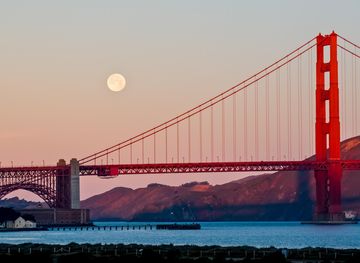
Berkeley stretches from the eastern shore of San Francisco Bay into the wooded Berkeley Hills, combining an internationally recognised university with neighbourhoods that retain a distinctly independent character. The University of California, Berkeley shapes the city’s intellectual and cultural life, while its tree-lined campus, museums and historic buildings provide an absorbing centre for exploration. From the Berkeley Marina, views extend across the bay towards San Francisco, particularly as evening light settles over the water.Read more about Berkeley
Neighbourhoods with Independent Spirit
Gardens, Arts and the Hills
When is the best time to visit Berkeley?
Best: July–September · 25°C| Month | High (°C) | Rainfall (mm) |
|---|---|---|
| January | 15 | 100 |
| February | 17 | 90 |
| March | 18 | 80 |
| April | 19 | 50 |
| May | 22 | 20 |
| June | 24 | 10 |
| July (best) | 25 | 5 |
| August (best) | 25 | 5 |
| September (best) | 25 | 10 |
| October | 22 | 40 |
| November | 19 | 70 |
| December | 16 | 90 |
Getting to and around Berkeley
How to get there
Transportation
Best attractions in Berkeley
Berkeley’s principal attractions reveal the city’s links with learning, activism, art and landscape. The University of California campus invites a walk through Sproul Plaza, Sather Tower and the leafy grounds around Doe Library, while the Berkeley Art Museum and Pacific Film Archive brings modern art and international cinema together in a striking downtown building. Telegraph Avenue offers bookshops, cafés and a visible connection with the Free Speech Movement, whereas the Berkeley Marina opens onto broad views of San Francisco Bay and the Golden Gate. In the hills, the Berkeley Rose Garden is a cultivated overlook above the city, and the University of California Botanical Garden presents plants from across the world in a hillside setting. The Lawrence Hall of Science adds interactive science exhibits and elevated views, making the university’s educational character accessible beyond the formal campus.
-
Park
Tilden Regional Park
Explore nature, history, and family fun in the heart of the East Bay at Tilden Regional Park, offering trails, attractions, and stunning views.
11 min drive · 3.8 km from city centre
-
Amphitheater
The Greek Theatre
Experience unforgettable performances amid the stunning architecture and natural beauty of the Hearst Greek Theatre in Berkeley, California.
5 min drive · 1.6 km from city centre
-
Botanical garden
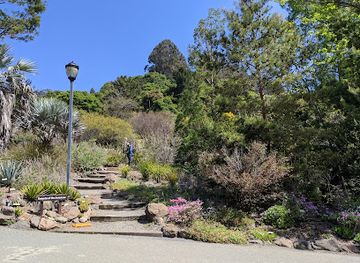
University of California Botanical Garden
Discover the beauty and diversity of plant life at the University of California Botanical Garden, a serene retreat in Berkeley, California.
9 min drive · 3.0 km from city centre
-
Tourist attraction
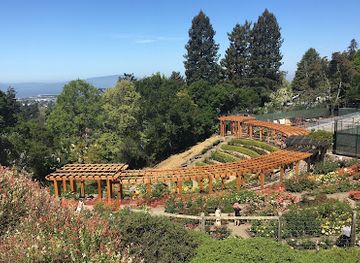
Berkeley Rose Garden
Discover a stunning collection of roses, breathtaking Bay views, and a peaceful retreat at the historic Berkeley Rose Garden in Northern California.
5 min drive · 1.8 km from city centre


Best landmarks in Berkeley
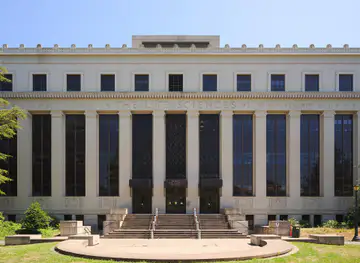
Sather Tower, commonly called the Campanile, is Berkeley’s most recognisable landmark, rising above the University of California campus with a clock and bell tower visible from much of the East Bay. The neoclassical façade of the university’s Doe Memorial Library and the columns of the Hearst Greek Theatre express the formal ambitions of the early campus, while Sproul Plaza carries the political symbolism of the Free Speech Movement. In the city centre, Berkeley City Hall’s Beaux-Arts design reflects the civic confidence of the early twentieth century. The Berkeley Hills contribute another set of landmarks: the Berkeley Rose Garden’s terraces frame views across the bay, and the Japanese-style design elements of the nearby Berkeley campus landscape recall the university’s long engagement with horticulture and international culture. Together these places chart Berkeley’s development as a university town, civic community and setting for public debate.
-
Park
Tilden Regional Park
Experience the beauty of Tilden Regional Park, a natural retreat in California with stunning views and diverse outdoor activities for every traveler.
11 min drive · 3.8 km from city centre
-
Botanical garden
University of California Botanical Garden
Explore the lush landscapes and diverse plant collections at the University of California Botanical Garden, a serene retreat in Berkeley, California.
9 min drive · 3.0 km from city centre
-
Garden
Berkeley Rose Garden
Discover the Berkeley Rose Garden, a stunning floral retreat in North Berkeley, showcasing over 3,000 rose varieties and breathtaking bay views.
5 min drive · 1.8 km from city centre
-
Nature preserve
Tilden Nature Area
Explore Tilden Nature Area, Berkeley's serene nature preserve with stunning views, diverse wildlife, and endless outdoor activities for the whole family.
14 min drive · 4.8 km from city centre


Explore Berkeley on the map
Plan your Berkeley trip on one map. See where the top attractions, landmarks, restaurants, bars and hotels are, find what's near where you're staying, and book hotels and experiences in a few clicks.
Neighbourhoods in Berkeley
-
-

-


Swipe for more neighbourhoods
Best hotels in Berkeley
Best restaurants in Berkeley
Berkeley’s dining identity is closely associated with California’s seasonal produce, informal experimentation and the influence of many immigrant communities. North Berkeley’s former Gourmet Ghetto became nationally known through Chez Panisse and the Cheese Board, helping popularise produce-led cooking, naturally leavened bread and a more relaxed approach to fine dining. Around the city, restaurants and cafés draw on Mexican, Chinese, Japanese, Indian, Mediterranean, Middle Eastern and Southeast Asian traditions, alongside vegetarian and plant-focused cooking. Farmers’ markets provide fruit, vegetables, flowers, baked goods and prepared foods, while Telegraph Avenue, Downtown, San Pablo Avenue and Solano Avenue offer contrasting settings for casual meals, coffee and evening dining. Berkeley’s food culture is less about one single local dish than about the meeting of California agriculture, university tastes and a long-standing appetite for culinary innovation.
-
Cajun
Angeline's Louisiana Kitchen
Discover authentic Cajun and Creole flavors at Angeline's Louisiana Kitchen in Berkeley - where every meal tells a story.
7 min walk · 0.6 km from city centre
-
American
Skates On The Bay
Discover culinary excellence at Skates On The Bay with breathtaking views of San Francisco Bay and an exquisite menu featuring seafood and steak.
12 min drive · 4.1 km from city centre
-
Californian
Chez Panisse
Discover the taste of California at Chez Panisse, where fresh ingredients meet innovative cuisine in an iconic setting.
12 min walk · 1.0 km from city centre
-
Jewish
Saul's Restaurant & Delicatessen
Experience authentic Jewish cuisine at Saul's Restaurant & Delicatessen in North Berkeley - where tradition meets taste in every dish.
13 min walk · 1.1 km from city centre


Best bars in Berkeley
Berkeley’s evenings are shaped more by live performance, cafés, restaurants and student culture than by a large nightclub scene. Downtown is the main cultural hub, with Berkeley Repertory Theatre, the Aurora Theatre and music venues contributing to a busy programme of drama, concerts and comedy. Freight & Salvage is particularly associated with folk, roots and traditional music, while the university campus and surrounding streets host lectures, performances and seasonal events. Telegraph Avenue and the blocks around San Pablo Avenue offer bars and relaxed drinking spots, and North Berkeley and Solano Avenue tend towards quieter evenings built around dining and conversation. The city’s nightlife changes with the academic calendar, and many venues operate under California licensing and age restrictions, so evening entertainment is best approached as a varied programme of performances and neighbourhood social life rather than a concentrated club district.
-
Pizza
Jupiter
Discover the best wood-fired pizzas and craft beers at Jupiter, Berkeley's vibrant brewpub with a lively atmosphere and outdoor beer garden.
6 min walk · 0.5 km from city centre
-
Bar
Cornerstone Craft Beer & Live Music
Discover the perfect blend of craft beer, delicious food, and live music at Cornerstone Craft Beer & Live Music in Downtown Berkeley.
9 min walk · 0.8 km from city centre
-
Pub
Kingfish Pub & Cafe
Discover the lively charm of Kingfish Pub & Cafe in Oakland, where delicious food meets an extensive drink selection in a vibrant atmosphere.
11 min drive · 3.8 km from city centre
-
Pub
The Starry Plough Pub
Experience the vibrant culture and delicious flavors at The Starry Plough Pub, a beloved Berkeley destination for food and live music enthusiasts.
6 min drive · 2.2 km from city centre


Best nightclubs in Berkeley
Berkeley’s evenings are shaped more by live performance, cafés, restaurants and student culture than by a large nightclub scene. Downtown is the main cultural hub, with Berkeley Repertory Theatre, the Aurora Theatre and music venues contributing to a busy programme of drama, concerts and comedy. Freight & Salvage is particularly associated with folk, roots and traditional music, while the university campus and surrounding streets host lectures, performances and seasonal events. Telegraph Avenue and the blocks around San Pablo Avenue offer bars and relaxed drinking spots, and North Berkeley and Solano Avenue tend towards quieter evenings built around dining and conversation. The city’s nightlife changes with the academic calendar, and many venues operate under California licensing and age restrictions, so evening entertainment is best approached as a varied programme of performances and neighbourhood social life rather than a concentrated club district.
-
Pub
The Starry Plough Pub
Discover The Starry Plough Pub, a vibrant Irish pub in Berkeley offering live music, delicious food, and a welcoming atmosphere for all.
6 min drive · 2.2 km from city centre
-
Lounge
Missouri Lounge
Discover the lively Missouri Lounge in Berkeley, where vibrant nightlife meets delicious dining, perfect for an unforgettable evening.
6 min drive · 2.0 km from city centre
-
Cocktail bar
Tupper & Reed
Discover the vibrant cocktail culture at Tupper & Reed in Downtown Berkeley, where handcrafted drinks and live music create an unforgettable experience.
7 min walk · 0.6 km from city centre
-
Lounge
Beta Lounge
Discover the vibrant Beta Lounge in Downtown Berkeley, where cocktails meet community and vegan delights await every visitor.
10 min walk · 0.8 km from city centre


Best shops in Berkeley
Berkeley’s shopping is anchored by independent businesses rather than a single enclosed retail centre. Telegraph Avenue combines used and specialist bookshops, clothing stores, record shops, cafés and stalls with strong links to student and countercultural life. Fourth Street has a more design-led character, with homewares, fashion, galleries and food businesses, while Solano Avenue and Elmwood provide neighbourhood shopping along walkable commercial streets. North Berkeley is especially useful for specialist food shopping, including cheese, bread, wine and carefully sourced ingredients associated with the area’s culinary reputation. Farmers’ markets add seasonal produce, flowers, prepared food and local crafts, and Berkeley’s shops often reflect the wider Bay Area’s interest in sustainable goods, independent publishing, ceramics and artisanal food. Visitors should distinguish enduring local businesses from temporary retail offerings, since the commercial landscape changes over time.
-
Gift shop
Games of Berkeley
Explore a vibrant gift shop and gaming paradise in Berkeley, offering a unique selection of games, toys, and collectibles for all ages.
17 min walk · 1.3 km from city centre
-
Clothing store
Cal Student Store
Discover the Cal Student Store in Berkeley: Your one-stop destination for university apparel, books, and unique souvenirs that capture the spirit of campus life.
15 min walk · 1.2 km from city centre
-
Shopping mall
Fourth Street Shops
Explore the unique boutiques, delightful eateries, and vibrant atmosphere of Fourth Street Shops in Berkeley, California—a shopper’s paradise.
7 min drive · 2.5 km from city centre
-
Women's clothing store
Anthropologie
Explore Anthropologie in Berkeley for an inspiring blend of women's fashion, beauty products, and unique home decor items.
7 min drive · 2.4 km from city centre


Get your free copy of our complete guide to Berkeley, delivered straight to you.
Everything on this page, from attractions and restaurants to essentials and local phrases, in one PDF you can read offline, print or share.
Already have an account? Sign in
Your Berkeley guide is ready.
We'll send it to · Not you? Sign out

Getting your guide ready…
We are putting together a fresh copy of the Berkeley guide. This can take up to a minute.
This can take a few moments. If your browser asks, choose Allow so the download can start. You'll find the guide in your Downloads folder.
Nothing happened? Download it again
Sorry, the guide is taking longer than usual. Please try again in a minute, or get it by email instead.
Berkeley essentials
Currency and Payment
Safety
Emergency Situations
Do's and Don'ts
Local Tips
From Eve
Local phrases worth knowing
You don't need to get them perfect. A few words go a long way, and locals appreciate the effort.
Basics
| English | Local | Say it |
|---|---|---|
| Hello | Hey | [Hey] |
| Goodbye | Later | [Lay-ter] |
| Yes | Yeah | [Yah] |
| No | Nah | [Nah] |
| Please/You're welcome | Please/No worries | [Pleez/No wur-ees] |
| Thank you | Thanks | [Thanks] |
| Excuse me/Sorry | Excuse me/My bad | [Ex-cuse me/My bad] |
| How are you? | How's it going? | [Hows it go-in?] |
| Fine. And you? | Good. You? | [Good. You?] |
| Do you speak English? | You speak English? | [You speak English?] |
| I don't understand | I don't get it | [I don't get it] |
Eating & Drinking
| English | Local | Say it |
|---|---|---|
| I'd like to see the menu, please | Can I see the menu? | [Can eye see the menu?] |
| I don't eat meat | I'm vegetarian | [I'm ve-ji-te-rian] |
| Cheers! | Cheers! | [Cheers!] |
| I would like to pay, please | Check, please | [Check, please] |
Emergencies
| English | Local | Say it |
|---|---|---|
| Help! | Help! | [Help!] |
| Go away! | Leave me alone! | [Leave me alone!] |
| Call the Police! | Call the cops! | [Call the cops!] |
| Call a doctor! | Need a doctor! | [Need a doctor!] |
| I'm lost | I'm lost | [I'm lost] |
| I'm ill | I'm sick | [I'm sick] |
Shopping
| English | Local | Say it |
|---|---|---|
| I'd like to buy... | I want to buy... | [I want to buy...] |
| I'm just looking | Just browsing | [Just brows-ing] |
| How much is it? | How much? | [How much?] |
| That's too expensive | Too pricey | [Too pri-cee] |
| Can you lower the price? | Can you do better? | [Can you do bet-ter?] |
Time & Numbers
| English | Local | Say it |
|---|---|---|
| What time is it? | What's the time? | [Whats the time?] |
| It's one o'clock | It's one | [Its one] |
| Half past (10) | Ten thirty | [Ten thir-tee] |
| Morning | Morning | [Morning] |
| Afternoon | Afternoon | [Afternoon] |
| Evening | Evening | [Evening] |
| Yesterday | Yesterday | [Yesterday] |
| Today | Today | [Today] |
| Tomorrow | Tomorrow | [Tomorrow] |
| 1 | One | [One] |
| 2 | Two | [Two] |
| 3 | Three | [Three] |
| 4 | Four | [Four] |
| 5 | Five | [Five] |
| 6 | Six | [Six] |
| 7 | Seven | [Seven] |
| 8 | Eight | [Eight] |
| 9 | Nine | [Nine] |
| 10 | Ten | [Ten] |
Transport & Directions
| English | Local | Say it |
|---|---|---|
| Where's a/the...? | Where's the...? | [Wheres the...?] |
| What's the address? | What's the address? | [Whats the address?] |
| Can you show me (on the map)? | Can you show me (on the map)? | [Can you show me (on the map)?] |
| When's the next (bus)? | When's the next (bus)? | [Whens the next (bus)?] |
| A ticket (to ....) | A ticket (to ....) | [A ticket (to ....)] |
History of Berkeley
Ohlone Homeland and Spanish Settlement
The Berkeley area lies within the ancestral homeland of Ohlone peoples, whose communities maintained deep relationships with the bayshore, creeks, grasslands and hills long before European settlement. Spanish expeditions entered the wider region in the eighteenth century, and Mission San Francisco de Asís, founded in 1776, became part of the colonial system that transformed Indigenous life through missionisation, disease and displacement. After Mexican independence, the land formed part of large ranchos granted under Mexican rule. The name Berkeley was later applied to the settlement in honour of the Irish philosopher George Berkeley, whose writings were associated with the ideals of the College of California.
The College of California Takes Root
The College of California was founded in Oakland in 1855 by Congregationalist leaders seeking to establish a higher-education institution in the young American state. Its trustees acquired land in what became Berkeley, planning a campus beside a new settlement. In 1868, the California legislature created the University of California, and the institution moved to Berkeley in 1873. The campus’s position between the bay and hills helped define the city’s geography, while the university attracted scholars, students and cultural institutions that would increasingly distinguish Berkeley from neighbouring East Bay communities.
Town Growth and University Expansion
Berkeley developed rapidly in the late nineteenth and early twentieth centuries as rail and ferry connections linked it with San Francisco and Oakland. Residential streets, commercial avenues and civic buildings spread around the expanding university, while the campus adopted a more formal architectural identity. The 1906 San Francisco earthquake brought additional residents and institutions across the bay, contributing to regional growth. University of California research also expanded during this period, reinforcing Berkeley’s importance in science, education and public life. Neighbourhoods such as Elmwood, North Berkeley and the area around Telegraph Avenue acquired many of the patterns still visible today.
Research, War and Scientific Change
During the twentieth century, Berkeley became a major centre for scientific research. The university and associated laboratories contributed to developments in physics, chemistry and nuclear science, particularly during the Second World War and the post-war period. The naming of chemical elements berkelium and californium reflected the city’s place in the history of American research, although the wider legacy of wartime science remains complex. At the same time, the city’s population became more socially and culturally diverse, with university expansion, migration and new political movements reshaping local institutions and neighbourhood life.
Free Speech and Social Movements
Berkeley gained international attention during the 1964 Free Speech Movement, when students challenged restrictions on political activity at the university’s entrance on Telegraph Avenue. The demonstrations helped establish wider debates about academic freedom, civil rights and the role of students in public life. Berkeley also became associated with opposition to the Vietnam War, environmental activism, municipal reform and movements for racial and social justice. Sproul Plaza, Telegraph Avenue and nearby campus spaces remain closely connected with this history, while the city’s bookstores, community organisations and cultural venues continue to reflect its tradition of civic engagement.
A Contemporary East Bay City
In recent decades, Berkeley has combined its university identity with a diverse economy, a strong independent business culture and growing connections to the wider San Francisco Bay Area. Food, biotechnology, education, arts and environmental initiatives all contribute to the city’s contemporary character. The waterfront has been developed for recreation and public access, while the hills preserve important open spaces and ecological landscapes. Berkeley’s present identity is therefore layered: an Ohlone homeland and former rancho landscape, a planned university town, a centre of scientific inquiry and a prominent setting for political and cultural experimentation.
Berkeley in Photos
Browse through our photo collection highlighting the charm and character of the destination.
Cities near Berkeley
The closest cities to Berkeley, if you have time for more than one stop.
-

-
-

-

-


Swipe for more cities
Explore more
Explore more of California
Discover California: A land of diverse landscapes, iconic cities, and endless adventures, from sun-soaked beaches to towering redwoods and vibrant cultural experiences.
Explore California