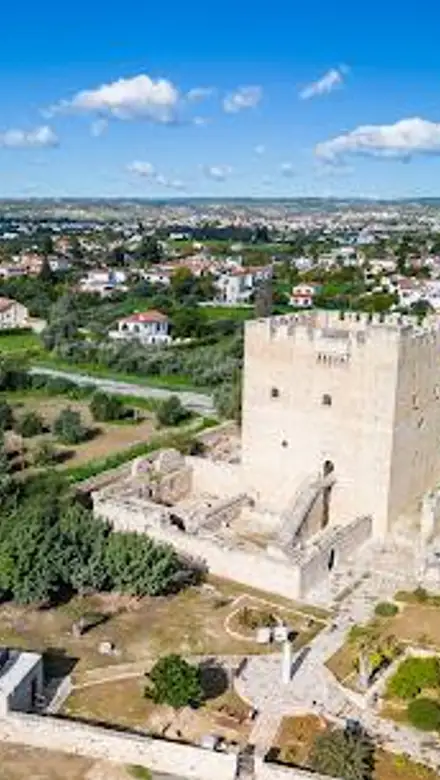
Kolossi Castle, Limassol Travel Guide
Free Guide: Medieval fortress near Limassol, Kolossi Castle reveals the Crusader legacy of Cyprus amid citrus groves, legendary Commandaria wine history, and panoramic countryside views.


A brief summary of Kolossi Castle
Medieval fortress near Limassol, Kolossi Castle reveals the Crusader legacy of Cyprus amid citrus groves, legendary Commandaria wine history, and panoramic countryside views.
Kolossi Castle is a robust medieval fortress situated just outside Limassol, once the command post for the Knights of St John in Cyprus. Steeped in history, the stone keep rises over citrus groves and sugarcane fields, with visitors able to explore its battlements, chambers, and origins tied to the island’s Crusader past. The castle charms with its blend of atmospheric ruins and sweeping views of the surrounding countryside.
Opening hours
- Every day8:30 am–5 pm
Opening hours as listed on the venue’s Google Business Profile. Hours can change for services and special events, so check with the venue before you go.
- Address
- MW8M+3J4, Λεωφόρος Αρχιεπισκόπου Μακαρίου Γ, Kolossi 4632, Cyprus
- Phone
- Website
Getting there
Public Transport
Taxi
Driving
Discover more about Kolossi Castle
Overview
Rising above the fertile western plains of Limassol, Kolossi Castle is one of Cyprus’s most evocative remnants of the Crusader era. Originally constructed in the early 13th century by the Knights of St John, and later rebuilt in its iconic stone form in 1454, this compact yet imposing fortress served as the military and administrative commandery for one of the island’s most strategic sugar-cane and wine-producing regions.The castle’s squat, rectangular keep stands three stories high, exuding strength and simplicity. Visitors enter via a small drawbridge, stepping into thick-walled chambers once used for defense, storage, and the everyday life of knights and soldiers. Ancient heraldic emblems are etched into the stone, lending an air of intrigue and authenticity. The battlements and rooftop terrace offer sweeping views over citrus groves, patches of vineyard, and down to the shimmering Mediterranean.Kolossi’s history is woven with legends: it was pivotal during periods of Crusader rule, contested by rival chivalric orders, and intertwined with the celebrated Commandaria wine, said to be the world’s oldest named wine still in production. The grounds outside the keep hold traces of a medieval aqueduct and a sugar-mill, where the estate’s valuable produce once set fortunes in motion. The atmosphere is both serene and resonant with echoes of knights, merchants, and intrigue. Compact and easily explored in under an hour, Kolossi makes an engrossing stop for history enthusiasts, families, or anyone seeking a window into medieval Cyprus set against rural beauty.
Evendo Review Centre
 Google
Guest reviews
Explore Kolossi Castle on the map
A handpicked selection of must-see spots near Kolossi Castle, mapped for you.
Get your free copy of our complete guide to Kolossi Castle, delivered straight to you.
Everything on this page, from opening hours and how to get there to Eve’s tips and the best time to go, in one PDF you can read offline, print or share.
Already have an account? Sign in
Your Kolossi Castle guide is ready.
We'll send it to · Not you? Sign out

Getting your guide ready…
We are putting together a fresh copy of the Kolossi Castle guide. This can take up to a minute.
This can take a few moments. If your browser asks, choose Allow so the download can start. You'll find the guide in your Downloads folder.
Nothing happened? Download it again
Sorry, the guide is taking longer than usual. Please try again in a minute, or get it by email instead.
Unlock the best of Kolossi Castle
Skip-the-line tickets, guided tours with entry, and walking tours of the area, booked in a few clicks.


Other nearby places you may find interesting
The closest places of the same kind, if this one is not quite what you had in mind.
-
-
-
-
-


Swipe for more places
More to explore near Kolossi Castle

 Best experiences near Kolossi Castle
 Best hotels near Kolossi Castle
 Best landmarks near Kolossi Castle
 Best attractions near Kolossi Castle
 Best shops near Kolossi Castle
 Best restaurants near Kolossi Castle
 Best bars near Kolossi Castle
Do you manage this location?
Take control to get all the benefits, like improved information, better appearance, and stronger visibility across AI-powered discovery.
Explore more

Explore more of Limassol
Discover Limassol, Cyprus: A city where ancient history meets modern luxury, with sun-soaked beaches, lively festivals, and a cosmopolitan atmosphere.
Explore Limassol
Explore more of Cyprus
Discover Cyprus: A Mediterranean paradise with a rich tapestry of history, culture, and breathtaking landscapes, offering a perfect blend of relaxation and adventure.
Explore Cyprus