Aarhus Cathedral, Aarhus Travel Guide
Free Guide: Denmark’s longest church, Aarhus Cathedral weaves Romanesque brickwork, soaring Gothic light and vivid medieval frescoes into the spiritual heart of the city.


A brief summary of Aarhus Cathedral
Denmark’s longest church, Aarhus Cathedral weaves Romanesque brickwork, soaring Gothic light and vivid medieval frescoes into the spiritual heart of the city.
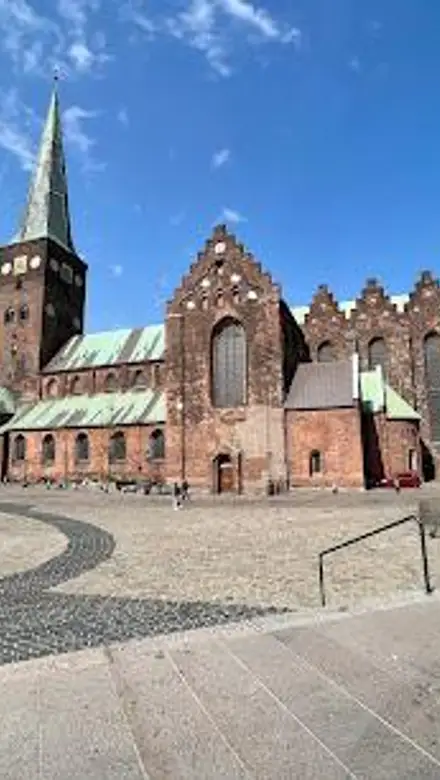
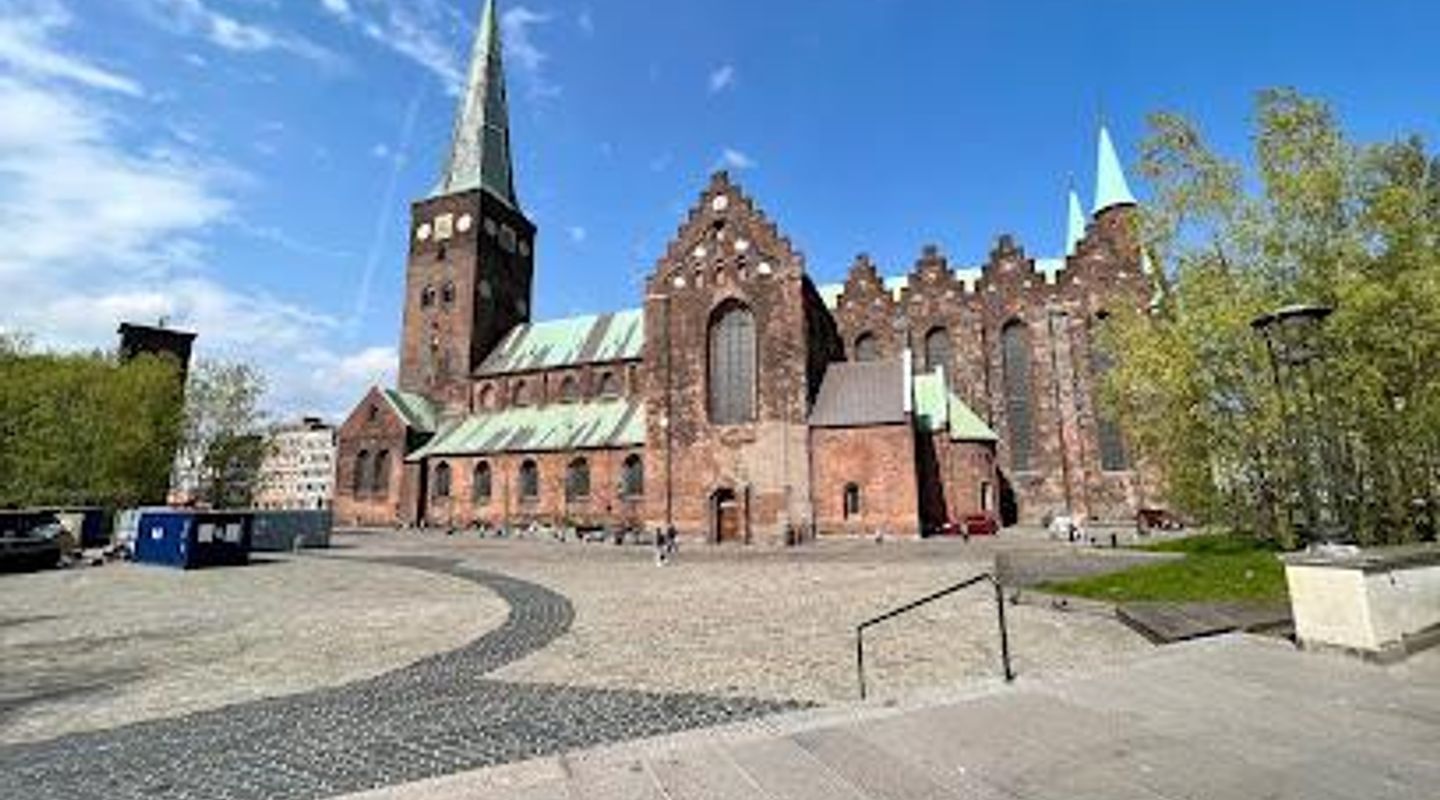
Rising above the cobbled square of Store Torv, Aarhus Cathedral is Denmark’s longest church and one of its most atmospheric. Dedicated to St Clement, patron saint of sailors, this red-brick giant blends Romanesque foundations with soaring Gothic vaults, intricate medieval frescoes and a magnificent gilded altarpiece by Bernt Notke. Step inside for cool stone, filtered light and a powerful sense of the city’s maritime and spiritual history at its very heart.
On-site amenities
 Restrooms
 Seating areas
 Information boards
 Drinking water
 Trash bins
Opening hours
- Mon10 am–3 pm
- Tue10:30 am–3 pm
- Wed10 am–3 pm
- Thu10 am–3 pm
- Fri10 am–3 pm
- Sat10 am–3 pm
- SunClosed
Opening hours as listed on the venue’s Google Business Profile. Hours can change for services and special events, so check with the venue before you go.
- Address
- Store Torv, 8000 Aarhus
- Phone
- Website
Getting there
Walking from central Aarhus
City bus within Aarhus
Regional train to Aarhus C and short walk
Car or taxi within Aarhus
Discover more about Aarhus Cathedral
A red-brick giant in the heart of Aarhus
Aarhus Cathedral dominates Store Torv with its long, red-brick body and tall copper spire, a familiar silhouette in the city’s skyline. Begun in the late 12th century and dedicated to St Clement, the patron saint of sailors, it reflects Aarhus’ historic link to the sea and its role as a trading harbour. From the outside you see buttresses, pointed windows and the great west tower that signals the city centre from far away.With a total length of around 93 metres, the building holds the title of Denmark’s longest church, and it can seat about 1,200 people. The cathedral still functions as the main church of the diocese, hosting regular services, concerts and civic ceremonies. Yet despite its size and status, there is a calm, almost intimate feel as you step in from the busy shopping streets just a few metres away.
Layers of Romanesque and Gothic craftsmanship
The earliest cathedral here was a massive Romanesque basilica in brick – an ambitious project at a time when brick construction was still new in Denmark. Only fragments of that phase survive in the outer walls and chapels along the eastern transept, but they give a sense of the heavy, fortress‑like style that once dominated. Rounded arches and thick walls spoke of solidity more than light.From the mid‑1400s, a sweeping Gothic rebuilding transformed the mood completely. The nave was heightened, and elegant cross and star vaults rose overhead, while chapels and aisles were extended. Tall, pointed windows flooded the interior with light and shifted the emphasis upwards. The enlarged Gothic chancel, with three naves of equal height and an encircling ambulatory, turned the east end into a luminous space where architecture and ritual came together.
Altarpiece, frescoes and quiet treasures inside
Inside, the eye is drawn first to the richly carved late Gothic altarpiece attributed to the Lübeck master Bernt Notke. Gilded figures crowd the panels, telling episodes from the life of Christ and the Virgin Mary, while saints and bishops stand in painted niches. It was installed around 1479 and later carefully restored, so its colours and gold leaf still glow in the subdued light.Look closer at the walls and vaults and you will find one of Denmark’s finest collections of medieval frescoes. Many were painted between about 1470 and 1530, whitewashed after the Reformation and later uncovered. Scenes of biblical stories sit alongside maritime symbols such as anchors linked to St Clement, quietly reminding you of the sailors once entrusted to his protection. A finely worked font, an ornate pulpit and wrought‑iron latticework portals by Caspar Fincke add further layers of craftsmanship.
Atmosphere, sound and seasonal light
The atmosphere in the nave changes subtly through the day. In the morning, light slants in through the high windows, picking out brick patterns and dust motes under the ribs of the vaulting. Around midday, the long central aisle becomes a bright path leading towards the chancel. On grey days, the space feels more enclosed and contemplative, inviting you to sit on a pew and absorb the stillness.Music is an important part of the cathedral’s life. The large organ, rebuilt over time in Baroque and later styles, can fill the entire building with sound during services and concerts. Even when silent, the organ façade, choir stalls and candle stands hint at centuries of liturgy and choral singing. The interplay of sound, stone and light is central to the experience here, especially during Advent, Easter and other high points of the church year.
Exploring chapels, tower and the surrounding squares
Beyond the main nave, side aisles and chapels offer quieter corners where you can study details at your own pace. In the eastern chapels, surviving Romanesque masonry meets later Gothic elements, allowing you to trace the building’s long evolution. Information panels help explain the iconography and construction without overwhelming the sense of calm.For those comfortable with heights and narrow staircases, it is sometimes possible to climb into the tower during opening hours for a closer look at the bells and a view over rooftops and harbour cranes. Outside, Store Torv and neighbouring Bispetorv frame the cathedral with open space, making it easy to step back and admire the full length of the building. From here the green spire, the rhythm of buttresses and the contrast between brick and sky show why Aarhus Cathedral has long been a symbol of the city itself.
Evendo Review Centre
 Google
Guest reviews
Best time to go
Quietest: Jan, Feb & Mar · before 8am or at 9pm
Busy times are Evendo estimates for a typical year, to help you plan. Actual crowds vary with events, school holidays and the weather.
Explore Aarhus Cathedral on the map
A handpicked selection of must-see spots near Aarhus Cathedral, mapped for you.
Get your free copy of our complete guide to Aarhus Cathedral, delivered straight to you.
Everything on this page, from opening hours and how to get there to Eve’s tips and the best time to go, in one PDF you can read offline, print or share.
Already have an account? Sign in
Your Aarhus Cathedral guide is ready.
We'll send it to · Not you? Sign out

Getting your guide ready…
We are putting together a fresh copy of the Aarhus Cathedral guide. This can take up to a minute.
This can take a few moments. If your browser asks, choose Allow so the download can start. You'll find the guide in your Downloads folder.
Nothing happened? Download it again
Sorry, the guide is taking longer than usual. Please try again in a minute, or get it by email instead.
Unlock the best of Aarhus Cathedral
Skip-the-line tickets, guided tours with entry, and walking tours of the area, booked in a few clicks.
 Tour with entry
Aarhus Walking Tour: Explore Top Sights & Hidden Gems
from $39.90 Tour with entry
Aarhus City Highlights Tour: History, Culture & Street Art
from $95.93 Tour with entry
Aarhus Private Custom Walking Tour With A Guide
from $111.92 Tour with entry
Surprise walk of Aarhus with a local
from $117.28


Other nearby places you may find interesting
The closest places of the same kind, if this one is not quite what you had in mind.
-
-
-
-
-


Swipe for more places
More to explore near Aarhus Cathedral

 Best experiences near Aarhus Cathedral
 Best hotels near Aarhus Cathedral
 Best landmarks near Aarhus Cathedral
 Best attractions near Aarhus Cathedral
 Best shops near Aarhus Cathedral
 Best restaurants near Aarhus Cathedral
 Best bars near Aarhus Cathedral
Do you manage this location?
Take control to get all the benefits, like improved information, better appearance, and stronger visibility across AI-powered discovery.
Explore more

Explore more of Aarhus
Discover Aarhus, Denmark's second-largest city, where ancient history meets modern culture. Explore historical sites, vibrant arts, and a thriving food scene in the City of Smiles.
Explore Aarhus
Explore more of Denmark
Discover Denmark: A perfect blend of history, modern design, and the cozy concept of hygge. Explore vibrant cities, serene landscapes, and world-class cuisine.
Explore Denmark