Mural - The Seagull Kiss Travel Guide
Free Guide: An iconic Hans Krull mural on a Fiskergade gable, "The Seagull Kiss" fuses fantasy, seafaring spirit and bohemian Aarhus into one unforgettable street-side scene.


A brief summary of Mural - The Seagull Kiss
An iconic Hans Krull mural on a Fiskergade gable, "The Seagull Kiss" fuses fantasy, seafaring spirit and bohemian Aarhus into one unforgettable street-side scene.
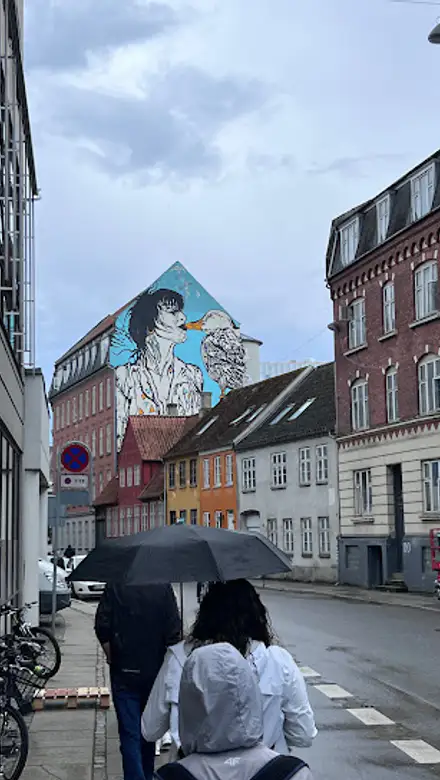
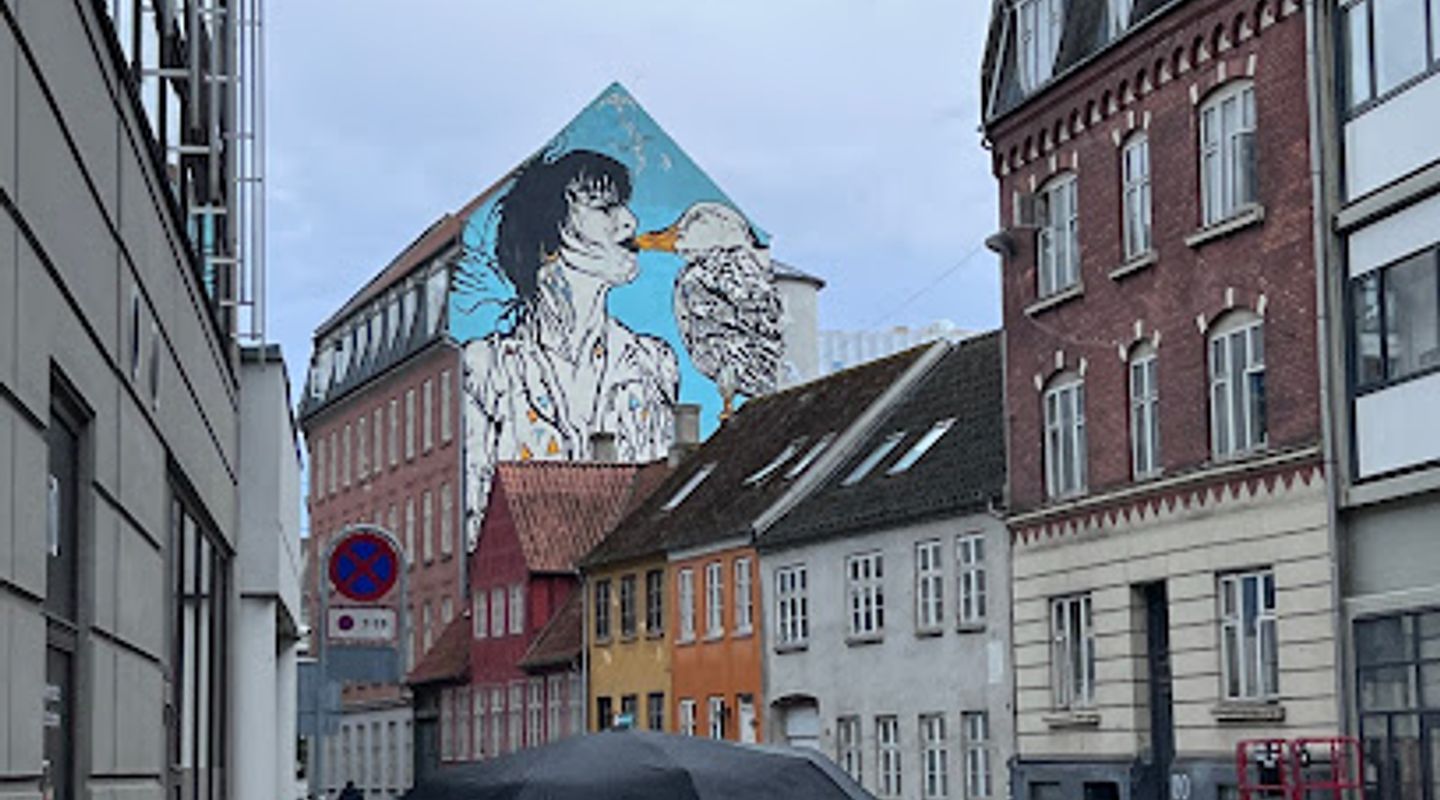
Tucked into central Aarhus on Fiskergade, the mural "The Seagull Kiss" (Mågekysset) by Danish artist Hans Krull is one of the city’s most distinctive pieces of street art. Painted on the gable of a building in 1985 and based on an earlier lithograph, it shows a dreamlike young woman sharing an almost mythic kiss with a swooping seagull. This bold, surreal image has become a quiet local landmark, weaving together Aarhus’ maritime character, bohemian side streets and thriving urban art scene.
On-site amenities
 Restrooms
 Drink options
 Drinking water
 Food options
 Seating areas
 Trash bins
 Information boards
Opening hours
- Every dayOpen 24 hours
Opening hours as listed on the venue’s Google Business Profile. Hours can change for services and special events, so check with the venue before you go.
- Address
- Fiskergade 90, 8000 Aarhus
Getting there
Walking from Aarhus Cathedral area
Local city bus within Aarhus C
Bicycle within central Aarhus
Discover more about Mural - The Seagull Kiss
A surreal kiss above Fiskergade
"The Seagull Kiss" greets you high on a gable wall along Fiskergade, a narrow street in the heart of Aarhus C. The composition is immediately striking: a young woman leans forward, eyes half closed, meeting the beak of a large white seagull in an intimate kiss. Around them, soft colours and stylised lines give the scene a dreamlike, almost underwater quality, as if air and sea have merged above the rooftops. The mural is large enough to dominate the end of the street, yet detailed enough to reward a long, close look.The woman’s flowing hair and the bird’s outstretched wings create a sense of movement that cuts through the static brick façade. This contrast between solid gable and fluid figures is part of the mural’s charm. Seen from the street it feels like a secret moment caught between everyday errands; viewed from elevated vantage points nearby, it becomes a graphic icon etched into the cityscape.
The story behind Hans Krull’s creation
The mural is the work of Danish artist Hans Krull, a central figure in Aarhus’ alternative art and music scene from the late 20th century. Before appearing on this wall in 1985, the motif existed as a lithograph, already titled "Seagull Kiss" and already exploring the strange tenderness between human and bird. Transferring it to the gable of Fiskergade amplified its scale and turned an intimate idea into a public artwork that the whole neighbourhood would live with.Krull often mixed fantasy, symbolism and personal references, and this mural is no exception. The woman is said to be inspired by musician Kate Svanholm, linking the piece to the city’s cultural life beyond the visual arts. The seagull, a familiar presence along Aarhus’ harbour and bay, anchors the image in the local environment while also hinting at freedom, restlessness and the pull of the sea.
Aarhus street art before it was fashionable
When "The Seagull Kiss" was painted, large-scale murals were far less common in Danish cities than they are today. This work belongs to an early generation of urban art that emerged from countercultural circles rather than from municipal commissions. In that sense, the mural records a moment when Aarhus was starting to embrace bolder visual expressions on its walls, long before curated street art festivals became part of city branding.Over the decades the image has weathered sun, rain and wind from the bay, subtly softening its colours without erasing its impact. It has quietly accompanied the transformation of central Aarhus, from working harbour town to university-driven cultural hub. The mural’s survival is a testament to its acceptance as part of the neighbourhood’s identity, bridging older brick buildings and newer creative venues nearby.
Reading symbols in the seagull’s embrace
Part of the fascination lies in how open the scene is to interpretation. Some see the kiss as a playful, slightly ironic twist on romantic imagery, replacing the traditional lover with a seabird. Others read deeper themes into it: a meeting of city and sea, human vulnerability and wild nature, or a nod to the bohemian freedom that has long characterised this part of Aarhus.Details invite closer inspection. The angle of the woman’s body suggests trust rather than fear; the seagull, often thought of as a noisy scavenger, is rendered with elegance and poise. Together they seem suspended in a brief, impossible balance. The mural offers no clear narrative, only this suspended moment, allowing each passerby to project their own story onto the wall.
Experiencing the mural in its urban setting
Standing beneath the gable, you can feel how tightly the artwork fits into the scale of Fiskergade. The street is lined with low buildings, bars, and small shops, and the mural rises above them like a theatrical backdrop. At different times of day the light shifts across the wall, picking out new tones and shadows; in the soft Danish evening, the colours deepen and the figures feel more intimate.From nearby rooftops and terraces, including popular viewpoints in the city centre, the mural becomes part of a broader patchwork of chimneys, church spires and modern facades. Spotting it from above is like discovering an inside reference woven into the urban fabric. Whether you linger directly below the wall or catch glimpses while exploring central Aarhus, "The Seagull Kiss" works as both a destination and a recurring visual companion.
A small stop on a wider art-filled walk
The mural also functions as a gentle gateway to Aarhus’ broader street art landscape. Within walking distance you will come across other painted gables, contemporary installations and gallery spaces, making it easy to turn this single stop into a self-guided art stroll. Yet even if you only pause here for a few minutes, the piece delivers a concentrated dose of what defines the city: a close relationship with the sea, an openness to experimentation, and a willingness to let art spill out of museums and onto everyday walls.Because it sits in a lived-in street rather than a formal plaza, the mural rewards repeat encounters. You might first photograph it from the pavement, then notice fresh angles on a later visit, framed by bicycles, café chairs or the sudden flight of real seagulls overhead. In this way, the painted kiss keeps evolving, quietly interacting with the rhythms of Aarhus life that pass beneath it.
Evendo Review Centre
 Google
Guest reviews
Best time to go
Quietest: Jan, Feb & Mar · before 8am
Busy times are Evendo estimates for a typical year, to help you plan. Actual crowds vary with events, school holidays and the weather.
Explore Mural - The Seagull Kiss on the map
A handpicked selection of must-see spots near Mural - The Seagull Kiss, mapped for you.
Get your free copy of our complete guide to Mural - The Seagull Kiss, delivered straight to you.
Everything on this page, from opening hours and how to get there to Eve’s tips and the best time to go, in one PDF you can read offline, print or share.
Already have an account? Sign in
Your Mural - The Seagull Kiss guide is ready.
We'll send it to · Not you? Sign out

Getting your guide ready…
We are putting together a fresh copy of the Mural - The Seagull Kiss guide. This can take up to a minute.
This can take a few moments. If your browser asks, choose Allow so the download can start. You'll find the guide in your Downloads folder.
Nothing happened? Download it again
Sorry, the guide is taking longer than usual. Please try again in a minute, or get it by email instead.
Other nearby places you may find interesting
The closest places of the same kind, if this one is not quite what you had in mind.
-
Abbey Mill Historic Abbey Mill on Mossø’s shore, where Denmark’s longest wooden building meets bird-rich wetlands, gentle trails and a tranquil corner of the Gudenå River.
-
Clausholm Castle A moated Baroque manor near Hadsten, where painted ceilings, royal love stories and terraced gardens bring Denmark’s aristocratic past vividly to life.
-
Slotsholmen Tranquil green islet at Silkeborg’s origins, where a vanished riverside castle meets calm water views, quiet lawns and a gentle sense of early local history.
-
The Manor House of Hald An 18th-century manor fronting centuries-old ruins, deep forest and Hald Lake, where writers find seclusion and visitors wander through Danish history in nature.
-
Marselisborg Castle Royal retreat above Aarhus Bay, where sculpture-filled gardens, a rose-scented park and quiet ceremony surround Denmark’s Jutland summer palace.
Swipe for more places
More to explore near Mural - The Seagull Kiss
-
 Best experiences near Mural - The Seagull Kiss
-
 Best hotels near Mural - The Seagull Kiss
-
 Best landmarks near Mural - The Seagull Kiss
-
 Best attractions near Mural - The Seagull Kiss
-
 Best shops near Mural - The Seagull Kiss
-
 Best restaurants near Mural - The Seagull Kiss
-
 Best bars near Mural - The Seagull Kiss







Do you manage this location?
Take control to get all the benefits, like improved information, better appearance, and stronger visibility across AI-powered discovery.
Explore more

Explore more of Central Jutland
Explore Central Jutland in Denmark: A perfect blend of natural beauty, cultural heritage, and family-friendly attractions.
Explore Central Jutland
Explore more of Denmark
Discover Denmark: A perfect blend of history, modern design, and the cozy concept of hygge. Explore vibrant cities, serene landscapes, and world-class cuisine.
Explore Denmark