St. Paul's Church, Copenhagen Travel Guide
Free Guide: A red-brick Neo-Romanesque church anchoring Copenhagen’s historic Nyboder district, where naval heritage, calm interiors, and striking streetscapes meet.


A brief summary of St. Paul's Church
A red-brick Neo-Romanesque church anchoring Copenhagen’s historic Nyboder district, where naval heritage, calm interiors, and striking streetscapes meet.
St. Paul’s Church rises in red brick at the heart of Copenhagen’s historic Nyboder quarter, long associated with the Danish navy. Consecrated in 1877 and designed by architect Johannes Emil Gnudtzmann, the Neo‑Romanesque church acts as a visual full stop to the surrounding rows of ochre seamen’s houses. Inside, a calm, high‑vaulted nave, warm brickwork, and soft natural light create a quietly impressive space that feels both intimate and monumental, making it a rewarding detour in central Copenhagen.
On-site amenities
 Restrooms
 Seating areas
 Sheltered areas
 Trash bins
 Information boards
- Address
- Gernersgade 33, 1319 København
- Phone
- Website
Getting there
Metro and short walk
City bus connection
Bicycle from central Copenhagen
Discover more about St. Paul's Church
A red-brick landmark amid Nyboder’s yellow rows
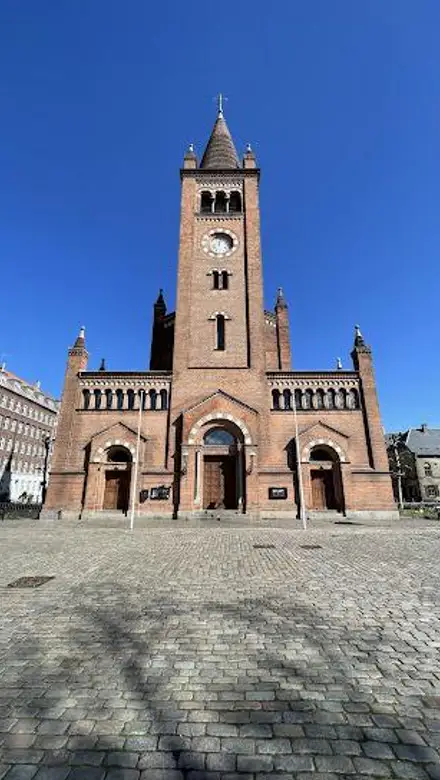
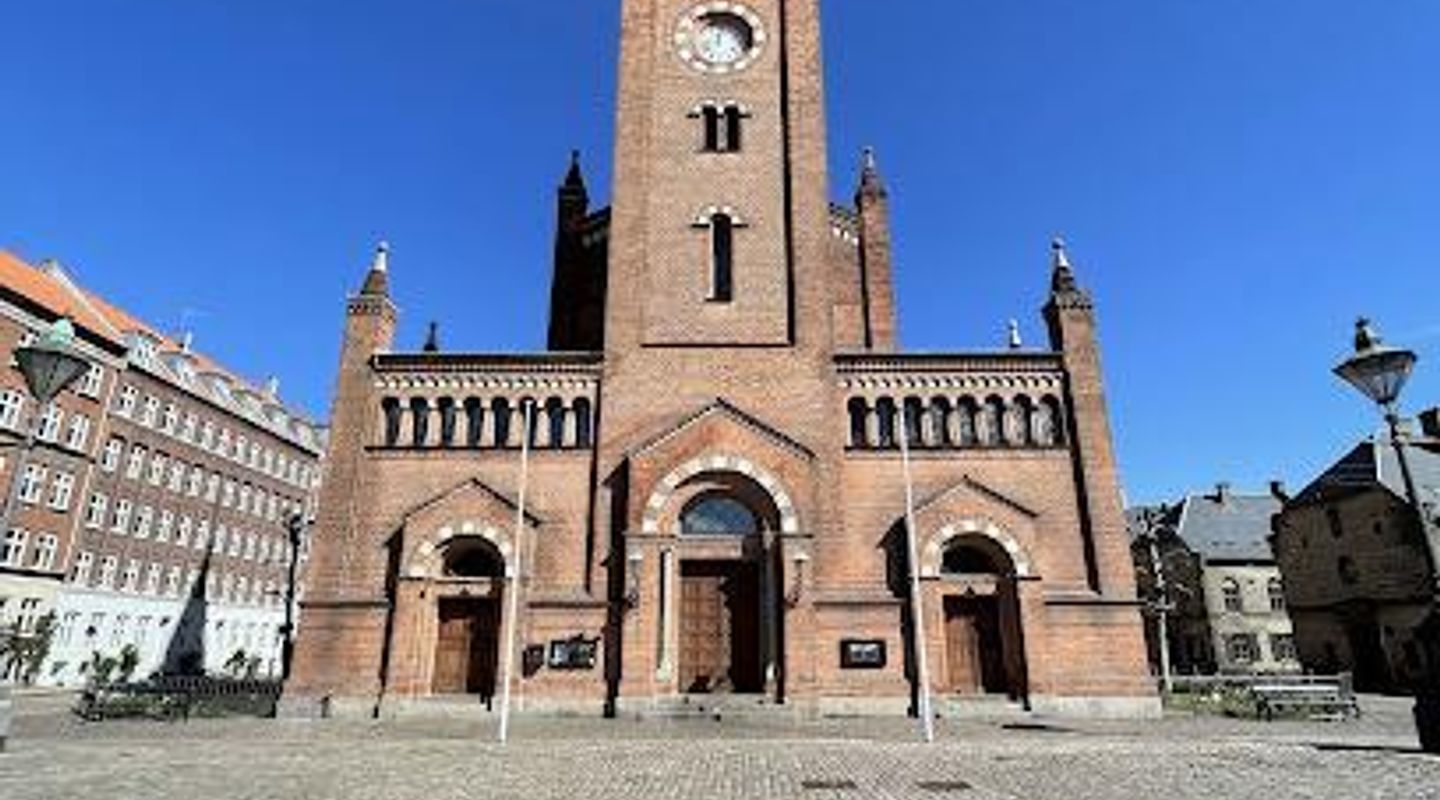
St. Paul’s Church stands at the edge of Copenhagen’s Nyboder district, where long lines of mustard-yellow terraced houses once accommodated generations of Danish naval families. Finished in 1877, the church arrived centuries after the neighborhood itself, finally giving this maritime community its own dedicated parish. Its tall tower and stepped gables form a distinctive punctuation mark at the end of nearby streets, instantly legible against the lower rooflines of the historic housing blocks.Approaching the church, you notice how the deep red brick contrasts with Nyboder’s yellow facades. The façade is articulated with round-arched openings and patterned masonry, lending a sense of rhythm before you even step inside. Decorative details are handled with restraint, emphasizing solid forms and careful proportions rather than exuberant ornament.
Neo-Romanesque architecture with Italian inspiration
St. Paul’s was the first major independent work of architect Johannes Emil Gnudtzmann, who drew on the Neo-Romanesque tradition then in vogue. The style is visible in the rounded window arches, robust walls, and a tower that feels more fortress-like than filigreed. Yet there is also a subtle Italian influence, echoing brick churches of northern Italy in the use of color, blind arcades, and the interplay of vertical and horizontal lines.The floor plan is straightforward, with a single, high nave guiding the eye toward the chancel. Inside, the structural clarity of brick piers and arches gives the space a calm, almost austere character. Light filters in through tall windows, tracing soft bands across the walls and highlighting the craftsmanship of the masonry. It is the kind of interior that rewards unhurried looking rather than spectacular effect.
From sailors’ parish to restored city church
Nyboder’s history is closely tied to the development of a permanent Danish navy in the 17th century, when housing for sailors became a state priority. For more than two centuries, residents relied on other parishes before a church was finally commissioned here in the 1870s, reflecting both population growth and a broader wave of church building across Copenhagen. St. Paul’s thus embodies a later chapter in the neighborhood’s story, linking the seafaring past with a more urban, civic present.By the late 20th century, changing demographics and shifting parish boundaries brought uncertainty about the building’s future. Discussions once circled around closing or repurposing the church, but restoration ultimately prevailed. A thorough renovation in the late 20th century reinforced its structure and refreshed the interior, allowing it to continue as an active city church rather than a relic of a vanished community.
Atmosphere, artwork, and quiet urban refuge
Inside, the church offers a surprisingly intimate atmosphere despite its scale. Wooden pews, a modestly scaled altar, and restrained decorative programs encourage contemplation more than display. Details such as carved furnishings, simple stained glass, and carefully placed liturgical objects speak to a Lutheran emphasis on clarity and function combined with quiet beauty.As a visitor, you experience St. Paul’s as both sanctuary and viewpoint. Step back outside and the tower becomes a reference point for orienting yourself within Nyboder’s grid of houses. In one direction, the red-brick mass frames views along narrow streets; in another, it anchors glimpses of Copenhagen’s broader skyline. Even a short stop allows you to feel how architecture can mediate between everyday housing and the larger narratives of a city.
A rewarding pause on a walk through central Copenhagen
St. Paul’s Church fits naturally into a wider exploration of the city center. Many people encounter it while wandering through Nyboder or moving between other nearby sights, but it merits a deliberate pause. The churchyard, though compact, offers a moment of calm, with benches and planted areas softening the edges between sacred space and public street.Whether you slip in during a brief opening period or simply study the exterior, the building gives a tangible sense of late 19th-century Copenhagen—a time when new churches rose alongside expanding residential quarters. In the play of red brick against yellow houses, and in the quiet interior overlooking the lives of a changing neighborhood, St. Paul’s encapsulates a distinctly local blend of modesty, craftsmanship, and enduring presence.
Evendo Review Centre
 Google
Guest reviews
Best time to go
Quietest: Jan, Feb & Mar · before 7am or from 9pm
Busy times are Evendo estimates for a typical year, to help you plan. Actual crowds vary with events, school holidays and the weather.
Explore St. Paul's Church on the map
A handpicked selection of must-see spots near St. Paul's Church, mapped for you.
Get your free copy of our complete guide to St. Paul's Church, delivered straight to you.
Everything on this page, from opening hours and how to get there to Eve’s tips and the best time to go, in one PDF you can read offline, print or share.
Already have an account? Sign in
Your St. Paul's Church guide is ready.
We'll send it to · Not you? Sign out

Getting your guide ready…
We are putting together a fresh copy of the St. Paul's Church guide. This can take up to a minute.
This can take a few moments. If your browser asks, choose Allow so the download can start. You'll find the guide in your Downloads folder.
Nothing happened? Download it again
Sorry, the guide is taking longer than usual. Please try again in a minute, or get it by email instead.
Other nearby places you may find interesting
The closest places of the same kind, if this one is not quite what you had in mind.
-
City Hall Square Copenhagen's grand civic plaza where history, culture, and urban life converge in one iconic square.
-
Amalienborg Palace The octagonal heart of Danish monarchy where history, art, and royal tradition converge in perfect Rococo harmony.
-
 The Little Mermaid
Copenhagen’s most famous bronze figure, a small mermaid with a grand story, gazing from Langelinie’s harbour rocks toward the meeting of fairy tale and sea.
The Little Mermaid
Copenhagen’s most famous bronze figure, a small mermaid with a grand story, gazing from Langelinie’s harbour rocks toward the meeting of fairy tale and sea.
-
Frederiksholms Kanal Historic waterway encircling Denmark's political heart, where regal grandeur meets relaxed Nordic charm.
-
Nyhavn Copenhagen's iconic 17th-century harbor where colorful townhouses, maritime history, and vibrant waterfront culture converge.
Swipe for more places
More to explore near St. Paul's Church

 Best experiences near St. Paul's Church
 Best hotels near St. Paul's Church
 Best landmarks near St. Paul's Church
 Best attractions near St. Paul's Church
 Best shops near St. Paul's Church
 Best restaurants near St. Paul's Church
 Best bars near St. Paul's Church
Do you manage this location?
Take control to get all the benefits, like improved information, better appearance, and stronger visibility across AI-powered discovery.
Explore more

Explore more of Copenhagen
Discover Copenhagen: A perfect blend of history, modernity, and vibrant culture, where picturesque canals, stunning architecture, and world-class dining await you.
Explore Copenhagen
Explore more of Denmark
Discover Denmark: A perfect blend of history, modern design, and the cozy concept of hygge. Explore vibrant cities, serene landscapes, and world-class cuisine.
Explore Denmark