
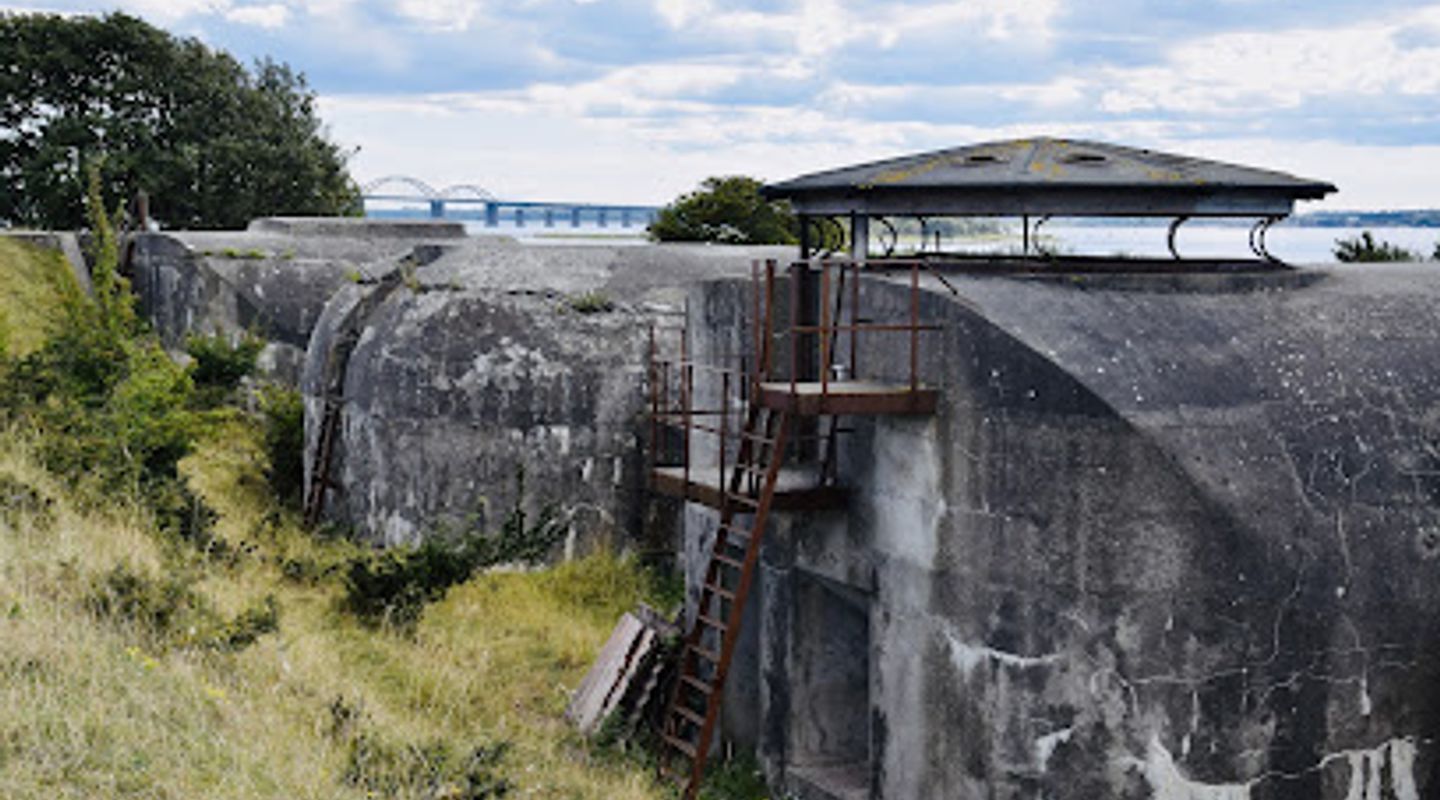
Masnedø Fort, Falster Travel Guide
Grassy ramparts, hidden bunkers and Baltic views on a small Danish island where a former coastal fortress now blends military history with art and open parkland.
Masnedø Fort is a low-slung coastal fortress on the small island of Masnedø near Vordingborg, built between 1912 and 1915 to guard the vital link between Zealand and Lolland-Falster. Half-hidden in grassy ramparts and earthworks, the 45,000 m² complex once housed hundreds of soldiers, underground passages and heavy artillery controlling Storstrømmen. Today its moat, gun positions and casemates form an atmospheric historic landscape, freely accessible year-round, with the interior opening in summer for art exhibitions and cultural events.
A brief summary to Masnedø Fort
- Masnedø, Vordingborg, 4760, DK
- Click to display
- Duration: 1 to 3 hours
- Free
-
 Outdoor
- Mobile reception: 4 out of 5

Know before you go
Hi, I'm Eve. Here are a few practical things to know before exploring Masnedø Fort.
- Bring a windproof layer; the exposed position by Storstrømmen means it can feel breezy and cool even on otherwise mild, sunny days.
- If you want to see the interior casemates, time your visit for the summer exhibition period or another announced event, as indoor access is otherwise limited.
- Wear sturdy shoes suitable for uneven ground, grassy slopes and occasionally muddy paths around the moat and embankments.
- Combine your stop with nearby Vordingborg’s castle ruins and Danmarks Borgcenter to get a broader picture of Danish military history.
Do you manage this location?
Take control to get all the benefits, like improved information, better appearance, and stronger visibility across AI-powered discovery. Learn more about listing your business on Evendo
Activate your presenceOther nearby places you may find interesting
The closest places of the same kind, if this one is not quite what you had in mind.

Explore Masnedø Fort on the Map
A handpicked selection of must-see spots near Masnedø Fort, mapped for you.
Getting There
-
Car from Vordingborg town
From central Vordingborg, driving to Masnedø Fort typically takes about 10–15 minutes, using the local road network and the bridge to Masnedø. Traffic is usually light, but expect slower progress in summer weekends. There is informal parking space near the fort, though it can be limited during larger events. Fuel and supermarkets are available in Vordingborg; there are no filling stations on Masnedø itself. No road tolls apply, and the drive does not add to your costs beyond standard fuel expenses.
-
Bicycle from Vordingborg
Cyclists can reach Masnedø Fort from Vordingborg in roughly 20–35 minutes, depending on pace and wind. The route uses public roads and the bridge, generally flat but exposed to gusts, so be prepared for strong headwinds. There is no dedicated bike parking at the fort, but most visitors simply lock bikes near the entrance or along the fence. This option is free and well-suited to those combining the fort with other nearby coastal viewpoints.
-
Train plus walk from regional destinations
If you arrive by regional train to Vordingborg Station from Copenhagen or other Zealand towns, the onward journey to Masnedø Fort typically involves a 45–60 minute walk or a short taxi ride of about 10–15 minutes. Trains on this line usually run at least once an hour during the day, with standard Danish rail fares varying by distance but often in the range of 80–160 DKK for a one-way adult ticket from Copenhagen. Taxis from the station add an extra paid segment; expect a moderate local fare depending on time and company.
For the on-the-go comforts that matter to you
-
 Trash Bins
-
 Information Boards
Discover more about Masnedø Fort
Coastal stronghold at the gateway to southern Zealand
Masnedø Fort sprawls across a grassy headland on the tiny island of Masnedø, just off Vordingborg. Built from 1912 to 1915 as part of the outer defences of Copenhagen, it was strategically placed to control the Storstrømmen waters and the crucial rail and road link between Zealand and Lolland-Falster. Low concrete structures, earth mounds and a moat conceal how significant this strongpoint once was in Denmark’s coastal defence network.The fort occupies about 45,000 square metres, a self-contained military landscape of ramparts, ditches and concealed gun emplacements. From the seaward side you look across to the bridges and the flat, shallow waters they were built to protect, giving an immediate sense of why this position mattered in an age when naval power could decide a nation’s fate.Layers of military history beneath the turf
Behind the grassed-over banks lies a story of shifting defence strategies. Masnedø Fort was initially manned by artillery troops who operated heavy guns in armoured turrets, backed by underground magazines and shelters connected via galleries. Its task was to deter hostile fleets and safeguard the transport corridor linking islands across southern Denmark.In 1940, the fort entered the history books when German paratroopers seized it in one of the earliest airborne assaults of the Second World War. Under occupation it continued to serve as a coastal position, later taking on more secretive roles, from penal and isolation facilities for certain prisoners to a hidden mine depot for the Danish military. The utilitarian architecture you see today reflects decades of adaptation to new threats and technologies.From restricted zone to cultural landscape
Military life ended here in the late 20th century when the site passed into municipal ownership and was later protected as a national historical monument. What was once off-limits is now open parkland, where the geometry of bastions, bunkers and moats is softened by wild grasses, shrubs and sea breezes. The transition from guarded zone to public space is part of the fort’s character: you move freely where sentries once patrolled.A small part of the complex still hosts a unit of the Danish Home Guard, maintaining a living link to its martial past. Yet for most visitors the fort is experienced as a place to stroll, explore and contemplate, rather than a functioning military installation. Informal paths lead up onto embankments and along the outer ditch, revealing new angles of the structures and glimpses of the surrounding coastline.Art, atmosphere and summer exhibitions
While the exterior grounds are accessible every day, the inner spaces behind the thick walls usually open only for events, especially a recurring summer art exhibition. During these months the fort’s casemates and vaulted rooms are transformed into galleries for contemporary visual art, installations and performances. The contrast between raw concrete, peeling paint and carefully lit artworks creates a striking dialogue between war-built architecture and creative expression.Open-air concerts and theatre sometimes animate the parade grounds and courtyards, making use of the fort’s enclosure and acoustics. Even outside the event season, the site has a quietly theatrical quality: arches frame the sky, gun pits feel like rough amphitheatres, and long, shadowy corridors invite the imagination to wander.Exploring the ramparts and sea views
A visit here is as much about the coastal setting as the heritage. From the top of the ramparts you can trace the line of bridges spanning Storstrømmen and watch ferries and small craft move through the channel the fort once guarded. The open horizon and ever-changing light underline the sense of being on a threshold between islands.Families and casual walkers use the grounds as an informal park, with plenty of space to roam, sit on the grass or peer into old positions and embrasures. There are no elaborate displays; instead, the structures themselves tell the story through concrete, brick, metal fittings and scars of use. It is a place where military history, contemporary culture and coastal landscape quietly meet, rewarding unhurried exploration and a bit of curiosity.












Your all‑in‑one travel companion app
Explore expert travel guides, compare and book tours, experiences, hotels, and more—all from the palm of your hand. Download now for seamless trip planning wherever your wanderlust takes you.


Explore More of Falster
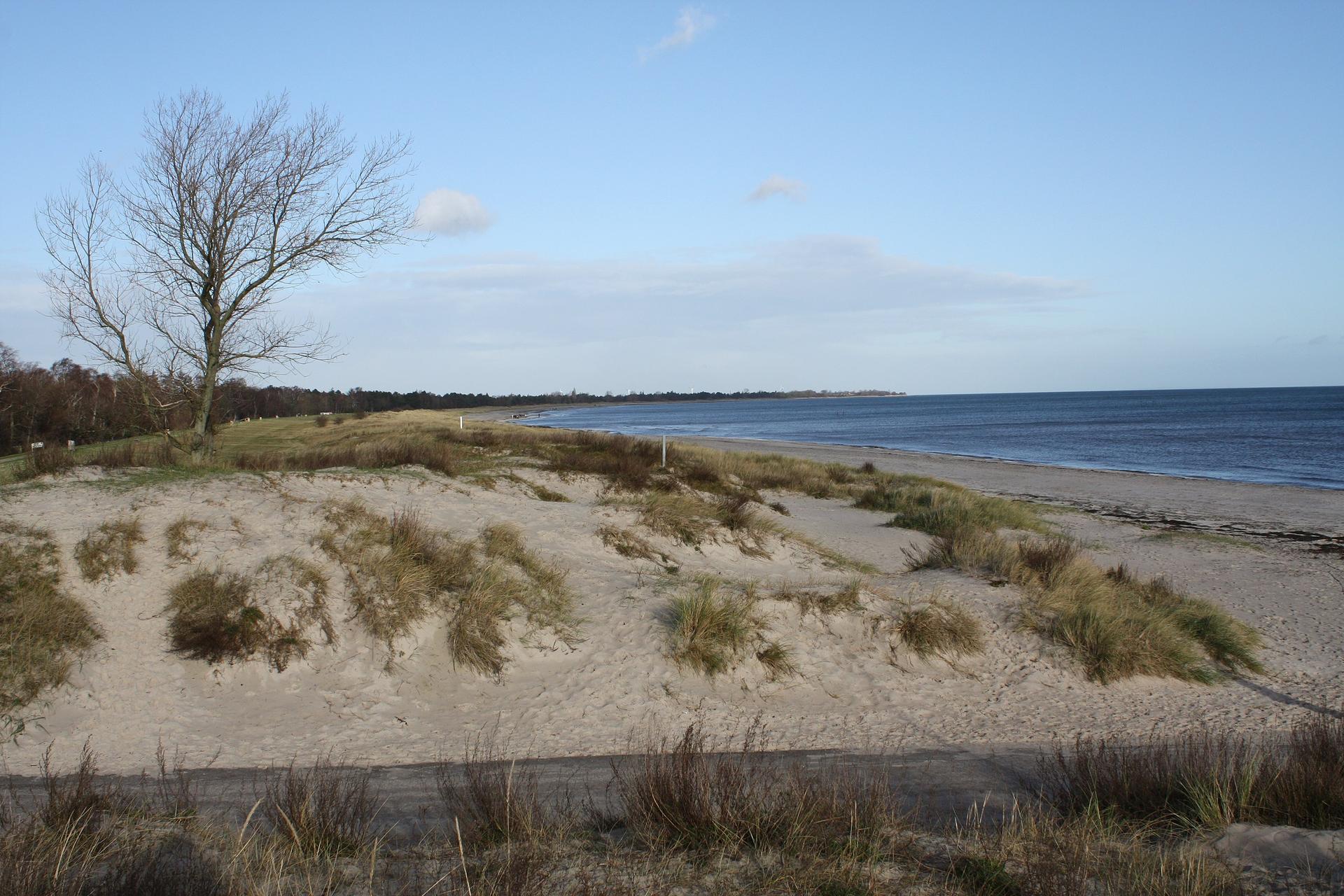
Looking beyond Masnedø Fort? Discover Falster for broader travel guides, local hot-spots, and regional highlights.
Explore Falster

