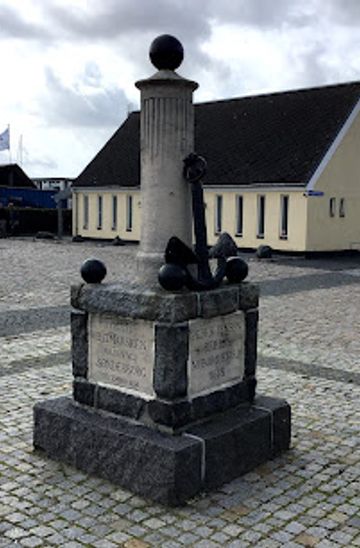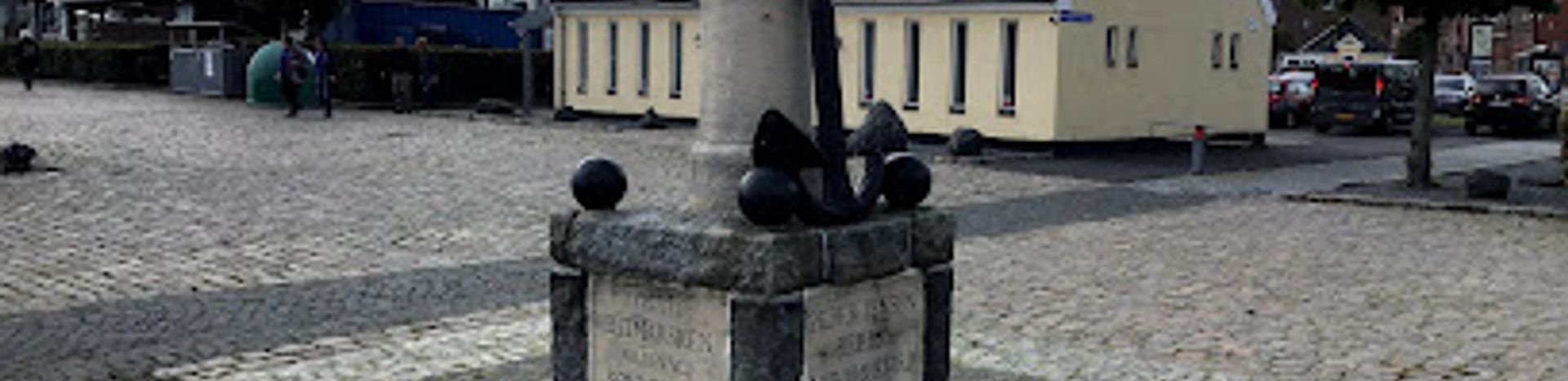
Mindesmærke for kaptajn Peter Bredal
A solemn memorial to a 17th-century Danish captain whose frozen fleet became legend.
A solemn memorial park in Nyborg dedicated to Captain Peter Bredal, a 17th-century Danish naval officer whose fleet became trapped in ice during the winter of 1658. The monument commemorates a pivotal moment in Danish maritime history when Bredal's four ships froze in Nyborg Fjord, marking both a personal tragedy and a significant naval event. This quiet outdoor space offers visitors a chance to reflect on Denmark's seafaring heritage and the harsh realities faced by early modern sailors.
A brief summary to Mindesmærke for kaptajn Peter Bredal
- Nyborg, 5800, DK
- Duration: 0.5 to 1.5 hours
- Free
-
 Outdoor
- Mobile reception: 4 out of 5

Know before you go
Hi, I'm Eve. Here are a few practical things to know before exploring Mindesmærke for kaptajn Peter Bredal.
- Visit during mild weather to fully appreciate the outdoor memorial park setting and its connection to the historical fjord landscape.
- Combine your visit with exploration of Nyborg's other historical sites, including Nyborg Castle, which is nearby and offers broader context on Danish medieval and early modern history.
- The memorial is best appreciated with some prior knowledge of 17th-century Danish naval history; consider reading about the frozen fleet incident before visiting to deepen your understanding.
- Bring a camera to capture the memorial and surrounding fjord landscape, particularly during golden hour when light reflects beautifully across the water.
Do you manage this location?
Take control to get all the benefits, like improved information, better appearance, and stronger visibility across AI-powered discovery. Learn more
Activate your presenceOther nearby places you may find interesting

Getting There
-
Train from Copenhagen
Direct regional trains operate from Copenhagen Central Station to Nyborg Station, approximately 1 hour 15 minutes travel time. Trains run regularly throughout the day with frequencies typically every 30–60 minutes. From Nyborg Station, the memorial is within walking distance (approximately 10–15 minutes on foot). Standard ticket prices range from 150–200 Danish kroner depending on time of booking.
-
Car via Great Belt Bridge
Drive from Copenhagen or surrounding regions via the Great Belt Bridge (Storebæltsbroen), approximately 1 hour 30 minutes from Copenhagen. The memorial is accessible by car with parking available in central Nyborg near the fjord. Bridge toll is approximately 235 Danish kroner for a standard passenger vehicle. The drive is straightforward on major highways.
-
Bus from Regional Centers
Regional bus services connect Nyborg to surrounding towns and cities. Journey times vary depending on origin (typically 45 minutes to 2 hours from major centers). Bus fares generally range from 80–150 Danish kroner. Services are less frequent than trains but offer an economical alternative.
-
Bicycle from Nyborg Town Center
Nyborg is bicycle-friendly with dedicated cycling routes. The memorial is accessible by bike from the town center in approximately 10–15 minutes. Denmark's flat terrain and well-maintained cycle infrastructure make this a pleasant option in fair weather.
For the on-the-go comforts that matter to you
-
 Seating Areas
-
 Information Boards
-
 Trash Bins
Discover more about Mindesmærke for kaptajn Peter Bredal
A Naval Officer's Frozen Legacy
Captain Peter Bredal stands as a notable figure in 17th-century Danish maritime history, remembered primarily for a dramatic event that unfolded in the winter of 1658. Born in Ditmarsken, Bredal rose through the ranks of the Danish Navy to achieve the rank of captain, commanding vessels during a period when Denmark's naval power was being tested by regional conflicts and the unpredictable forces of nature. His story is inextricably linked to the Nyborg Fjord, where his fleet encountered circumstances that would define his legacy and capture the imagination of subsequent generations.The Frozen Fleet of 1658
In the harsh winter of 1658, Captain Bredal commanded four ships that became trapped in the ice of Nyborg Fjord. This was not merely a navigational mishap but a catastrophic event that reflected the vulnerability of naval operations in northern European waters during the early modern period. The freezing of the fjord, a phenomenon that could occur with sudden severity, left Bredal's vessels immobilized and exposed to the elements. The incident occurred on December 14, 1658, when Bredal himself died at Sønderborg, though the exact circumstances surrounding his death remain historically significant. This event became a watershed moment in Danish naval consciousness, illustrating both the courage required of seafaring commanders and the relentless power of nature.Remembrance and Historical Significance
The memorial park established in Nyborg serves as a permanent testament to Bredal's place in Danish naval history. Rather than celebrating military conquest, the monument honors the resilience and sacrifice of those who ventured into dangerous waters during an era when maritime travel carried extraordinary risks. The memorial reflects a broader Danish tradition of commemorating naval figures whose contributions shaped the nation's relationship with the sea. Nyborg itself, strategically positioned on the Great Belt, has long been central to Danish maritime affairs, making it an appropriate location for this remembrance.The Broader Context of Danish Naval History
Bredal's era was one of significant change for the Danish Navy. The mid-17th century witnessed Denmark engaged in various conflicts and struggles for regional dominance, with naval power serving as a crucial instrument of statecraft. Officers like Bredal were instrumental in maintaining Denmark's maritime presence, even as they faced formidable challenges from both human adversaries and environmental conditions. The frozen fleet incident, while tragic, became emblematic of the determination required to sustain naval operations in northern waters. This period laid the groundwork for Denmark's later development as a significant maritime power.A Quiet Space for Reflection
Today, the memorial park offers visitors a serene setting to contemplate Danish maritime heritage. The outdoor location in Nyborg provides a direct connection to the historical landscape where these events unfolded centuries ago. The memorial invites reflection not only on Bredal's individual story but on the broader themes of exploration, duty, and the human struggle against natural forces that characterize maritime history. For those interested in Danish naval traditions or 17th-century history, the site provides tangible evidence of how the nation remembers and honors those who served at sea.Explore the best of what Mindesmærke for kaptajn Peter Bredal has to offer
-

Best experiences near Mindesmærke for kaptajn Peter Bredal
-

Best hotels near Mindesmærke for kaptajn Peter Bredal
-

Best attractions near Mindesmærke for kaptajn Peter Bredal
-

Best shops near Mindesmærke for kaptajn Peter Bredal
-

Best restaurants near Mindesmærke for kaptajn Peter Bredal
-

Best bars near Mindesmærke for kaptajn Peter Bredal








More about Funen
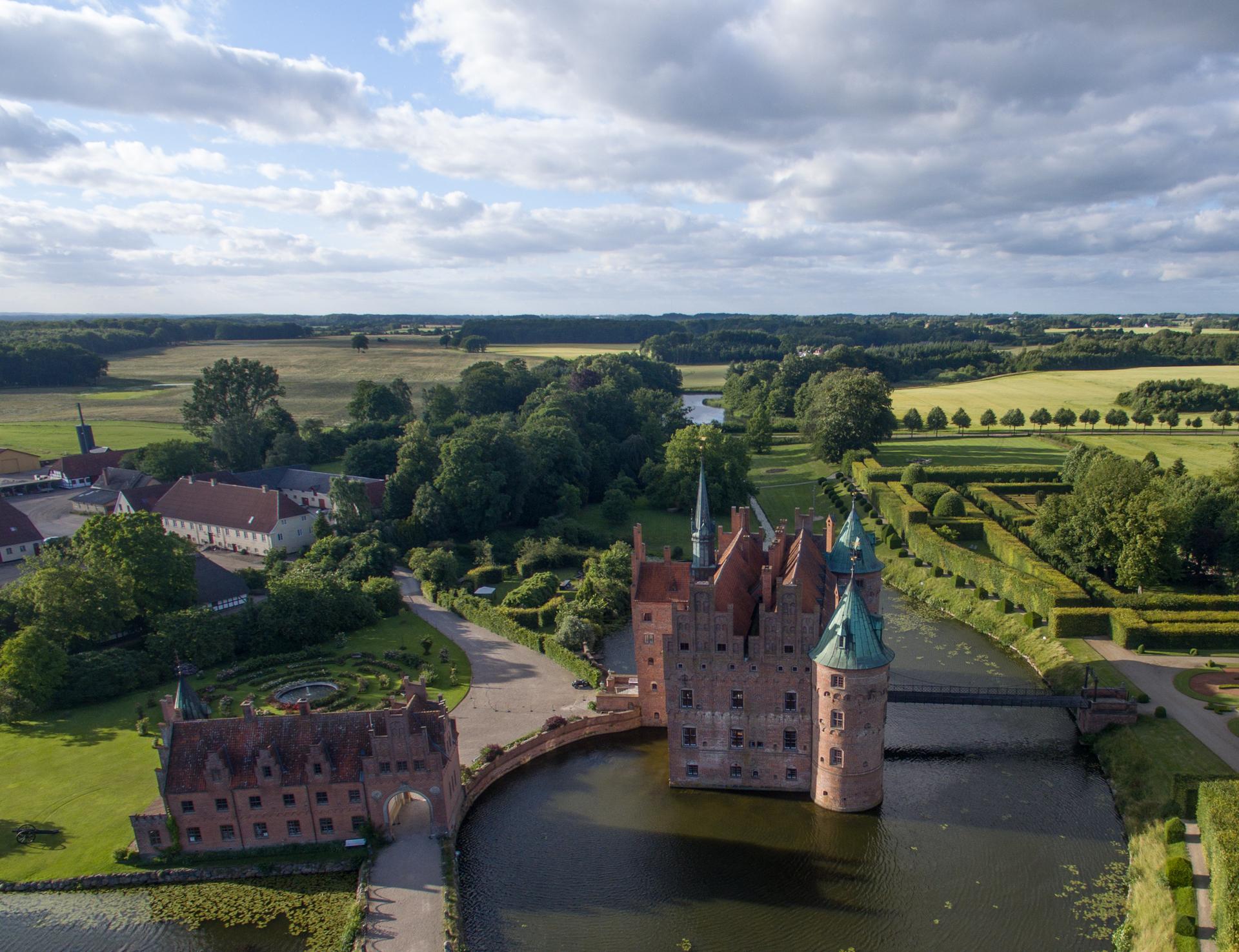
Discover Funen, Denmark's lush island treasure, where fairy tales come to life amidst scenic landscapes, historic castles, and vibrant cultural heritage.
Tell me more about Funen