Sønderho Mølle Travel Guide
Free Guide: Wind, flour and island history meet in this beautifully restored 1895 gallery Dutch windmill above the village of Sønderho on Fanø.


A brief summary of Sønderho Mølle
Wind, flour and island history meet in this beautifully restored 1895 gallery Dutch windmill above the village of Sønderho on Fanø.
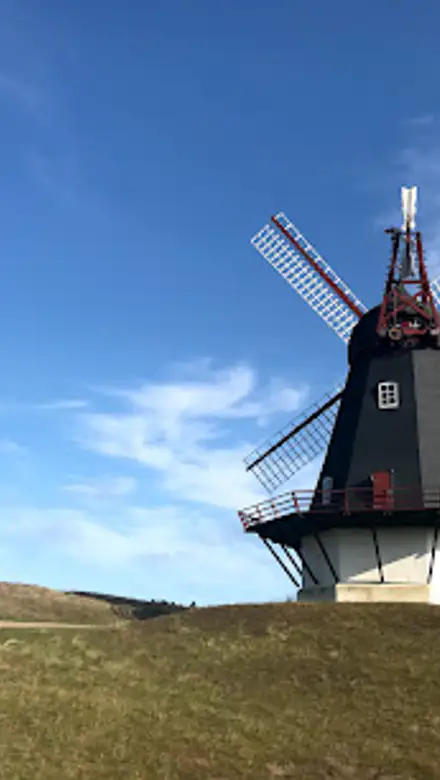
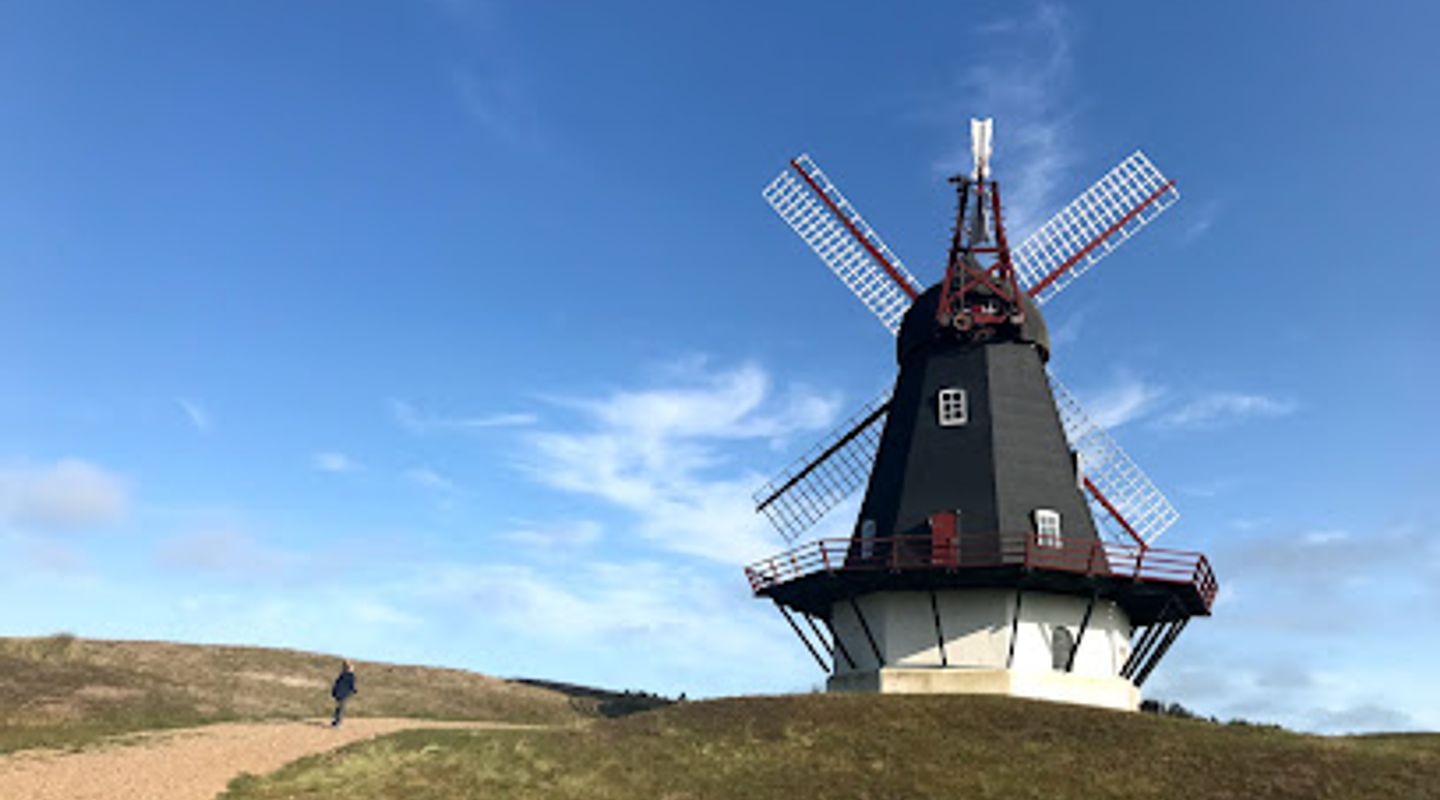
Perched on a low hill at the edge of the village of Sønderho on Fanø, Sønderho Mølle is a beautifully restored gallery Dutch windmill from 1895. Saved from demolition in 1928 by the Gamle Sønderho Foundation, it now stands almost as it did in the late 19th century, with its octagonal body, masonry base and encircling gallery. Visitors can step inside the unmanned mill, explore several wooden floors, study the ingenious mechanics and enjoy sweeping views over the Wadden Sea landscape.
On-site amenities
 Trash bins
 Information boards
 Seating areas
- Address
- Vester Land 44, 6720 Fanø
- Website
Getting there
Ferry and local bus from Esbjerg
Car via ferry to Fanø
Cycling across Fanø
Discover more about Sønderho Mølle
A historic windmill above Denmark’s most beautiful village
Sønderho Mølle rises above the southern tip of Fanø, just outside the thatched-roof village of Sønderho, long celebrated for its traditional houses and maritime heritage. Built in 1895 as a classic gallery Dutch windmill, it stands on a windswept rise where steady coastal breezes once powered the grinding of grain for the surrounding farming community.The mill narrowly escaped demolition in the 1920s, when industrial milling and changing agriculture made many traditional mills obsolete. In 1928 the Gamle Sønderho Foundation acquired the building specifically to preserve it as part of the island’s cultural landscape, securing a familiar silhouette on the horizon that locals had grown up with.
Ingenious Dutch-style construction in timber and brick
Architecturally, Sønderho Mølle is a textbook example of the so‑called Dutch style: an octagonal wooden upper structure mounting on a robust masonry lower floor. The lower level, sometimes called the undermill, anchors the mill into the sandy soil, while the timber body and cap can be rotated toward the wind. Outside, a broad gallery encircles the upper part, giving the miller access to the sails and the brake rope.Inside, the mill is organised over several compact levels: a high grinding loft where the millstones once turned, a low star wheel loft, and a cap loft just beneath the rotating roof. Thick beams, creaking stairways and exposed cogwheels reveal how the cap, axle and sail system transfer the force of the wind down through the structure, an elegant balance of weight, friction and motion refined over centuries.
From near ruin to working mill once again
By the time the foundation stepped in, the mill had already suffered from neglect, and over the following decades further deterioration set in. Systematic restoration work began in stages, focusing first on stabilising the structure and later on reconstructing missing elements such as the wind rose and the encircling gallery. A major phase culminated in a reinauguration in the early 1930s and, after additional work, another in 2003, when the mill appeared much as it did in 1895.Today, Sønderho Mølle is again able to grind flour on its traditional stone grinder. On days when the mechanism is in operation, the building hums softly as gears engage and wooden shafts turn. Visitors can sometimes buy small bags of locally milled flour, a tangible link between the restored machinery and the island’s agricultural past.
Exploring the interior on your own
The mill is unmanned and usually open during daylight hours from around Palm Sunday to mid‑November, with simple honesty‑box entrance. This self-guided setting encourages slow exploration: you push open the wooden door, step into the cool lower floor and then climb narrow stairs to the higher levels. Each floor reveals different parts of the mechanism, from the great vertical shaft to the gearing that once drove grain hoists and sifters.Because the structure is historic, floors can be uneven and headroom low in places, and the stairways are steep and relatively tight. Families often explore together, and older children with an interest in how things work tend to linger by the cogs and wheels. The absence of modern interventions preserves an authentic feel, though it also means there is limited interpretation on site, so prior reading can enrich the visit.
Big skies, sea breezes and wide views
Step out onto the gallery and the mill’s position on its small hill becomes clear. The thatched rooftops and church tower of Sønderho spread out on one side, while in the distance lie salt marshes, dunes and the tidal flats of the Wadden Sea. On clear days, the light shifts constantly over the landscape, and the slow turning of the sails, when the wind cooperates, adds gentle movement to the scene.The surrounding area invites quiet wandering before or after your mill visit. Low vegetation, sandy paths and the ever-present breeze create a distinctly coastal atmosphere. Combined with the village’s preserved streets, Sønderho Mølle forms part of a larger cultural landscape that connects traditional building techniques, seafaring wealth and the long struggle to wrest a living from wind, sand and sea.
Practicalities, access and seasonality
Admission to Sønderho Mølle is modest and paid via MobilePay or a simple money box near the entrance, with reduced rates for children and free entrance for members of the local heritage association. The mill is typically open daily in the main season between Easter and mid‑autumn, but it remains unmanned, so visitors move at their own pace and must take care on the stairs and upper levels.The hilltop setting is exposed, so it can feel cool and windy even on bright days; bringing an extra layer is wise outside high summer. Allow at least half an hour to explore the interior and enjoy the views, longer if you are particularly interested in milling technology or planning to combine the visit with a walk into the surrounding village and coastal landscapes.
Evendo Review Centre
 Google
Guest reviews
Best time to go
Quietest: Jan, Feb & Dec · before 7am or from 8pm
Busy times are Evendo estimates for a typical year, to help you plan. Actual crowds vary with events, school holidays and the weather.
Explore Sønderho Mølle on the map
A handpicked selection of must-see spots near Sønderho Mølle, mapped for you.
Get your free copy of our complete guide to Sønderho Mølle, delivered straight to you.
Everything on this page, from opening hours and how to get there to Eve’s tips and the best time to go, in one PDF you can read offline, print or share.
Already have an account? Sign in
Your Sønderho Mølle guide is ready.
We'll send it to · Not you? Sign out

Getting your guide ready…
We are putting together a fresh copy of the Sønderho Mølle guide. This can take up to a minute.
This can take a few moments. If your browser asks, choose Allow so the download can start. You'll find the guide in your Downloads folder.
Nothing happened? Download it again
Sorry, the guide is taking longer than usual. Please try again in a minute, or get it by email instead.
Other nearby places you may find interesting
The closest places of the same kind, if this one is not quite what you had in mind.
-
Fanø Skibsfarts- & Dragtsamling Maritime museum preserving Fanø's golden age of sailing ships and island traditions.
-
Fanø Museum Step into an 18th-century skipper’s home in Nordby and discover how Fanø’s seafaring families lived, worked and kept island traditions alive by the North Sea.
-
 Detrigonometriskestation
A quiet dune top on Fanø where 19th‑century surveyors fixed their instruments, this modest trigonometrical station now offers big skies, wind, and quiet reflection.
Detrigonometriskestation
A quiet dune top on Fanø where 19th‑century surveyors fixed their instruments, this modest trigonometrical station now offers big skies, wind, and quiet reflection.
-
Strandgut - Strandfischerei Monument A simple dune-side memorial where driftwood, sea wind and open sky recall Fanø’s hard-earned living from beach fishing and the gifts and losses of the North Sea.
-
Fanø Kunstmuseum Intimate island art museum in an old merchant’s house, celebrating Fanø’s luminous Wadden Sea light and a century of coastal-inspired painting.
Swipe for more places
More to explore near Sønderho Mølle

 Best experiences near Sønderho Mølle
 Best hotels near Sønderho Mølle
 Best landmarks near Sønderho Mølle
 Best attractions near Sønderho Mølle
 Best shops near Sønderho Mølle
 Best restaurants near Sønderho Mølle
 Best bars near Sønderho Mølle
Do you manage this location?
Take control to get all the benefits, like improved information, better appearance, and stronger visibility across AI-powered discovery.
Explore more

Explore more of Fanø
Discover Fanø, Denmark's hidden coastal gem, offering stunning beaches, charming villages, and rich wildlife, perfect for a tranquil getaway and nature adventures.
Explore Fanø
Explore more of Denmark
Discover Denmark: A perfect blend of history, modern design, and the cozy concept of hygge. Explore vibrant cities, serene landscapes, and world-class cuisine.
Explore Denmark