

Frederiksborg Castle Gardens, Hillerød Travel Guide
Free Guide: Sweeping Baroque terraces and romantic woodland paths framing a lake island castle, Frederiksborg Castle Gardens blend royal theatre with everyday green escape.


A brief summary of Frederiksborg Castle Gardens
Sweeping Baroque terraces and romantic woodland paths framing a lake island castle, Frederiksborg Castle Gardens blend royal theatre with everyday green escape.
Wrapping around the island-set Frederiksborg Castle in Hillerød, the Frederiksborg Castle Gardens marry strict Baroque geometry with a softer, romantic landscape. Terraced parterres, cascading water features and royal monograms align perfectly with the Renaissance castle, while woodland paths, lakes and the tiny Bathhouse Castle offer a gentler, storybook contrast. Free to enter and open year-round, this is one of Denmark’s most evocative historic gardens.
On-site amenities
 Restrooms
 Drink options
 Food options
 Seating areas
 Picnic areas
 Trash bins
 Information boards
 Visitor centre
- Address
- Frederiksborg Slot, 3400 Hillerød
- Phone
- Website
Getting there
Train from Copenhagen
Regional bus within North Zealand
Car from Copenhagen area
Discover more about Frederiksborg Castle Gardens
Royal landscape framing a Renaissance island castle
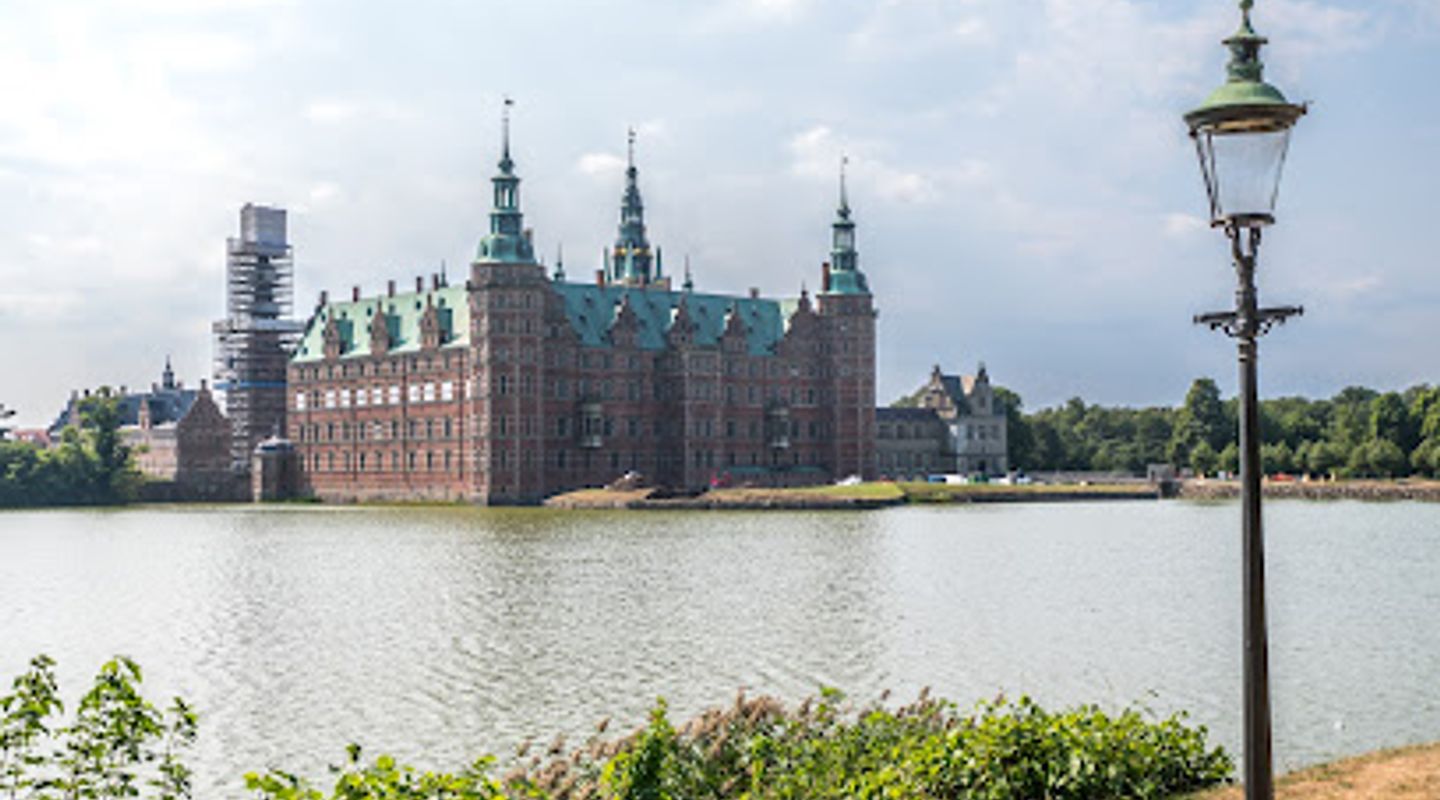
The Frederiksborg Castle Gardens form a grand green frame around one of Denmark’s most dramatic castles, set on islands in the Castle Lake at Hillerød. From almost anywhere in the grounds, views pull your eye back to red-brick spires, copper roofs and mirror-still water, creating a near-theatrical backdrop for a walk. The gardens are not just an add-on to the castle; they were conceived as an essential finishing touch, extending its power and splendour into the landscape.You enter a world shaped by centuries of royal ambition. Christian IV had his own earlier garden here, but the layout you see today was largely defined in the early 18th century and then painstakingly brought back to life in the late 20th century. The result is a rare opportunity to wander through two distinct garden philosophies in a single visit.
Baroque terraces, cascades and royal monograms
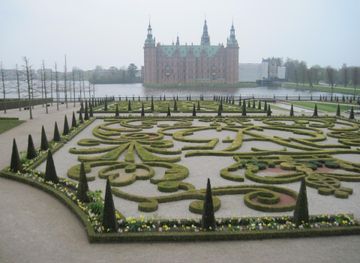
On the castle’s axial line, the Baroque Garden announces itself with strict symmetry, clipped hedges and a powerful central cascade stepping down towards the lake. Designed in the 1720s by royal gardener J. Krieger for Frederik IV, it follows the Baroque ideal of demonstrating human control over nature: straight avenues, geometric parterres and carefully disciplined trees all work together to create a sense of order.The garden is laid out on four descending terraces. From the upper levels you can look down over ornamental beds and pools that form intricate patterns. On the lowest plateaus, box-edged parterres shape the monograms of four monarchs—Frederik IV, Christian VI, Frederik V and Queen Margrethe II—linking the original creation and the 1990s restoration in living greenery. When the cascade and fountains are running from spring through autumn, water and light animate the strict geometry.
Romantic woodland paths and the Bathhouse Castle
In deliberate contrast, the romantic landscape garden stretches to the side of the Baroque axis. Here, straight lines soften into curving paths, shrubberies and irregular tree plantings. Small lakes and meadows invite slower wandering, with views opening and closing as you move, rather than being presented in a single formal vista.Hidden among the trees stands the small Bathhouse Castle, dating back to the late 16th century. This miniature building beside the water once served as a pleasure retreat and today adds a fairy-tale touch to the scene. The romantic section was created to evoke moods rather than impress with power: reflections on still water, rustling leaves, and glimpses of the big castle through branches all create a more intimate atmosphere.
Seasonal moods and everyday escapes
Because much of the gardens are freely accessible all year, they function as both royal showpiece and local green refuge. In spring, the terraces and borders come alive with fresh foliage and the first flowers, while the cascades and fountain return to life. Summer highlights the precise structure of the Baroque parterres, their patterns etched in green against bright sky.Autumn brings fiery colours to the romantic woodland, with drifting leaves carpeting paths and lakesides. Even in winter, the skeletal geometry of hedges and the sharp outline of the terraces against a dusting of frost or snow reveal the underlying design. Throughout the year, lawns and more secluded corners lend themselves to picnics, quiet reading, or simply watching the changing light on the castle.
Exploring on foot, by lake and with a deeper lens
Most visitors explore the gardens on foot, tracing the main axis for classic castle views before meandering into the more naturalistic sections. Gently sloping paths and broad gravel avenues make it easy to choose either a short circuit or a longer ramble. Photography opportunities are constant: reflections in the lake, the powerful perspective from the head of the cascade, or close-ups of carefully clipped greenery.In the warmer months, a small ferry crosses the Castle Lake, linking town, castle and the Baroque Garden. Seen from the water, the terraces and façades line up in dramatic layers. Near the garden café, an exhibition model explains the Baroque layout and restoration in miniature, adding context to what you see outside. Combined with a visit inside Frederiksborg Castle and its Museum of National History, the gardens complete a rich day of Danish history, art and landscape design.
Evendo Review Centre
 Google
Guest reviews
Best time to go
Quietest: Jan, Feb & Mar · before 8am or at 9pm
Busy times are Evendo estimates for a typical year, to help you plan. Actual crowds vary with events, school holidays and the weather.
Explore Frederiksborg Castle Gardens on the map
A handpicked selection of must-see spots near Frederiksborg Castle Gardens, mapped for you.
Get your free copy of our complete guide to Frederiksborg Castle Gardens, delivered straight to you.
Everything on this page, from opening hours and how to get there to Eve’s tips and the best time to go, in one PDF you can read offline, print or share.
Already have an account? Sign in
Your Frederiksborg Castle Gardens guide is ready.
We'll send it to · Not you? Sign out

Getting your guide ready…
We are putting together a fresh copy of the Frederiksborg Castle Gardens guide. This can take up to a minute.
This can take a few moments. If your browser asks, choose Allow so the download can start. You'll find the guide in your Downloads folder.
Nothing happened? Download it again
Sorry, the guide is taking longer than usual. Please try again in a minute, or get it by email instead.
Other nearby places you may find interesting
The closest places of the same kind, if this one is not quite what you had in mind.
-
-
-
-
-


Swipe for more places
More to explore near Frederiksborg Castle Gardens
-
 Best experiences near Frederiksborg Castle Gardens
-
 Best hotels near Frederiksborg Castle Gardens
-
 Best landmarks near Frederiksborg Castle Gardens
-
 Best attractions near Frederiksborg Castle Gardens
-
 Best shops near Frederiksborg Castle Gardens
-
 Best restaurants near Frederiksborg Castle Gardens
-
 Best bars near Frederiksborg Castle Gardens


Do you manage this location?
Take control to get all the benefits, like improved information, better appearance, and stronger visibility across AI-powered discovery.
Explore more
Explore more of Hillerød
Explore Hillerød: Discover Frederiksborg Castle, vibrant town life, and scenic nature trails in Denmark's charming North Zealand region.
Explore Hillerød
Explore more of Denmark
Discover Denmark: A perfect blend of history, modern design, and the cozy concept of hygge. Explore vibrant cities, serene landscapes, and world-class cuisine.
Explore Denmark
