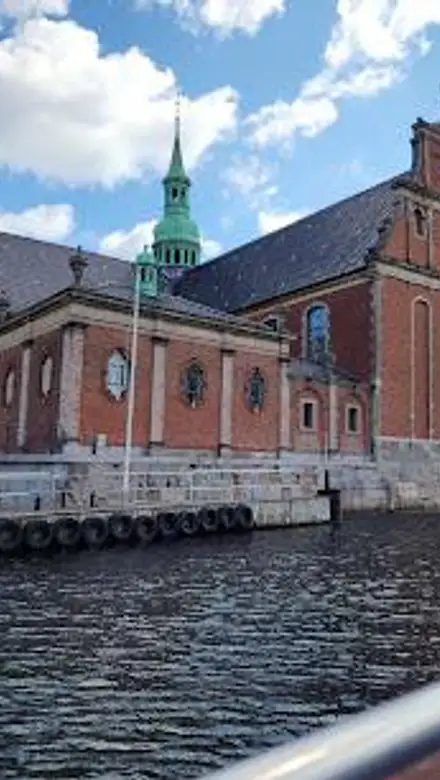
Church of Holmen, Køge Travel Guide
Free Guide: A former anchor forge turned Renaissance naval church, where model ships, royal ceremonies and seafaring heroes share a serene canal-side sanctuary.


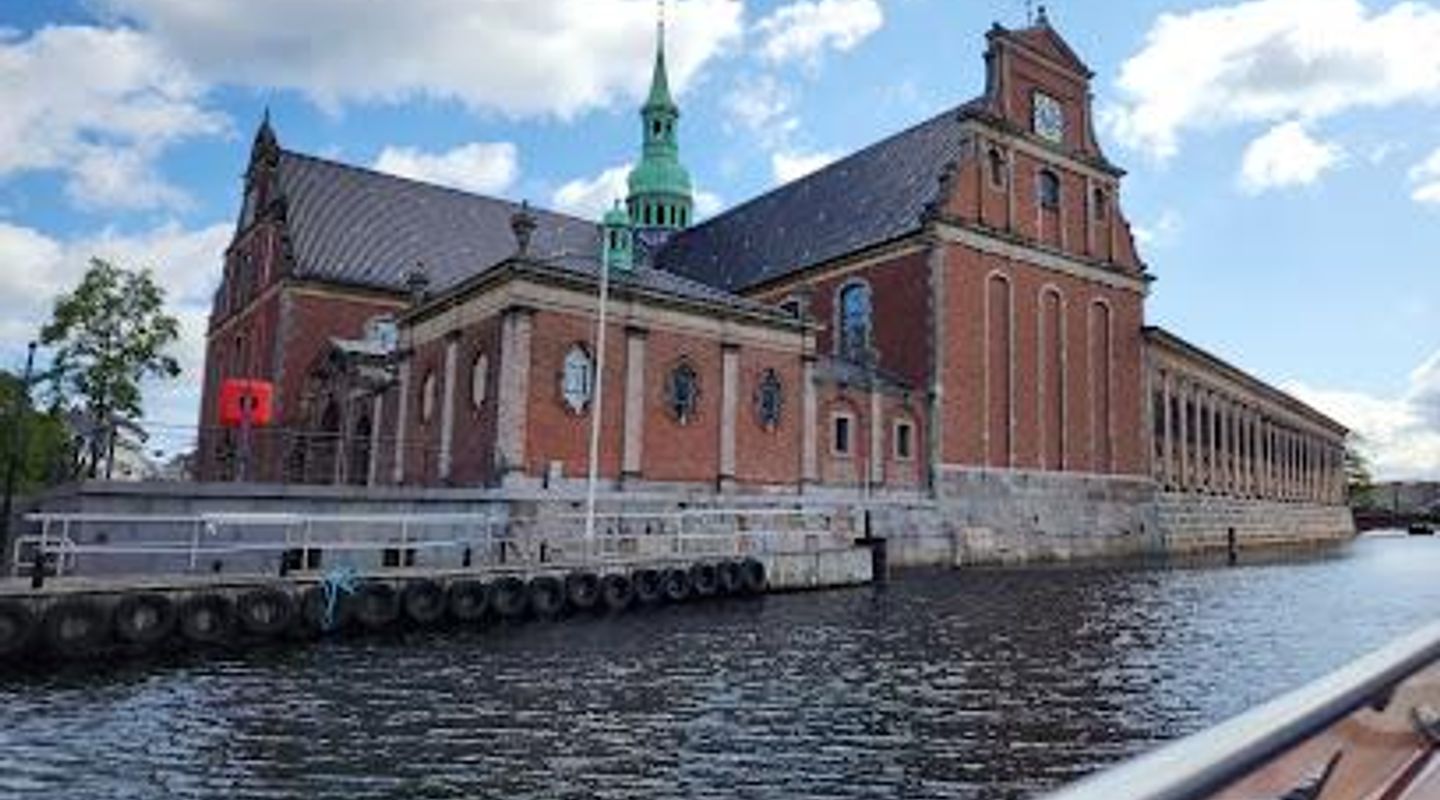
A brief summary of Church of Holmen
A former anchor forge turned Renaissance naval church, where model ships, royal ceremonies and seafaring heroes share a serene canal-side sanctuary.
Set on Holmens Kanal in central Copenhagen, the Church of Holmen is a Renaissance-era naval church with deep ties to Denmark’s maritime and royal history. Once an anchor forge serving the royal dockyards, it was transformed in 1619 into a cruciform church for sailors and shipyard workers. Inside, you’ll find a remarkably intact 17th‑century interior, model ships hanging from the vaulted ceiling, richly carved oak furnishings, royal memorials, and the tombs of famed naval heroes, all in a calm, contemplative space moments from the city’s bustle.
On-site amenities
 Restrooms
 Seating areas
 Trash bins
 Information boards
Opening hours
- Mon–Sat10 am–4 pm
- Sun12 pm–4 pm
Opening hours as listed on the venue’s Google Business Profile. Hours can change for services and special events, so check with the venue before you go.
- Address
- Holmens Kanal 21, 1060 Indre By
- Phone
- Website
Getting there
Metro from central Copenhagen
City bus within Copenhagen
Bicycle within the city
On foot from nearby historic core
Discover more about Church of Holmen
From Anchor Forge to Royal Naval Church
Holmens Kirke began life in the 1560s as an anchor forge serving Copenhagen’s royal shipyard, hidden behind a handsome tower so it would not spoil the king’s view across the canal. In 1619 King Christian IV ordered the industrial hall to be converted into a church to serve sailors and naval workers living around the docks. The original long workshop gradually evolved into a cruciform plan as the congregation grew, with architect Leonhard Blasius shaping the expansion but the king himself dictating the overall layout.This unusual origin still defines the church’s character. From the outside, the low brick body and squat tower feel more like a fortified warehouse than a soaring cathedral, a reminder that this was once a working corner of the fleet. Yet its Renaissance detailing, copper roof and canal-side setting mark it out as one of Copenhagen’s oldest surviving pieces of architecture from that era.
Renaissance Interior Frozen in Time
Step inside and the space opens into a surprisingly intimate nave with a barrel-vaulted ceiling and whitewashed walls trimmed with stucco. Much of what you see dates back more than three centuries, making Holmens Kirke one of the city’s most complete Renaissance church interiors. The light is soft and filtered, catching on dark oak galleries and pews that run close to the altar.The pulpit, carved in 1662 by Abel Schrøder, rises dramatically from floor to ceiling. Its panels tell biblical stories in intricate relief, with the monograms and crowns of Christian IV and his queen picked out in gold. The high altarpiece, also in richly worked oak, creates a warm focal point beneath the chancel arch, contrasting with the simple plaster and brick that frame it.
Maritime Symbols and Naval Heroes
Look up and the church’s naval identity comes into focus. Model ships hang from the ceiling like votive offerings, some based on historic warships of the Danish fleet. They echo the creak of rigging and the swell of the harbor outside, turning the interior into a quiet memorial to centuries of seafaring life.Beneath the floor and in the adjoining chapel lie some of Denmark’s most celebrated naval figures, including Niels Juel and Peter Wessel Tordenskjold, commemorated in heavy stone sarcophagi. Their presence underlines Holmens Kirke’s role as a pantheon for the Royal Danish Navy. Here, maritime history is not presented in cases but woven into the very fabric of the building.
Royal Ceremonies and National Moments
Although built for sailors and shipwrights, the church has long been linked with the Danish monarchy. Several royal christenings have taken place here, as well as one of the country’s most watched weddings: in 1967 the then‑princess Margrethe married Henri de Laborde de Monpezat beneath this modest brick roof. The fact that such events were held in a former forge speaks volumes about the symbolic weight of the navy in Denmark’s story.This dual identity—working sailors’ church and royal ceremonial setting—gives Holmens Kirke a particular atmosphere. It feels both grand and personal, a national stage on an unexpectedly human scale. Portraits, coats of arms and memorial plaques along the walls trace generations of officers, chaplains and monarchs who have passed through its doors.
Visiting Today: Quiet Reflection by the Canal
Today the Church of Holmen is an active Lutheran parish church, yet it remains welcoming to visitors during opening hours. Entry is free, and there is usually time to linger in the pews, study the carvings up close and wander quietly through the aisles. The central Copenhagen location means city noise is only a few steps away, but inside the main sound is often the organ or the murmur of low voices.Because of ongoing parish life, parts of the church may occasionally be reserved for services, concerts or private ceremonies. When open, it is an inviting place to pause between nearby museums and palaces, offering a rare chance to stand inside a largely intact 17th‑century interior and feel the layers of maritime, royal and everyday history that have accumulated here over four centuries.
Evendo Review Centre
 Google
Guest reviews
Best time to go
Quietest: Jan, Feb & Mar · before 7am or from 8pm
Busy times are Evendo estimates for a typical year, to help you plan. Actual crowds vary with events, school holidays and the weather.
Explore Church of Holmen on the map
A handpicked selection of must-see spots near Church of Holmen, mapped for you.
Get your free copy of our complete guide to Church of Holmen, delivered straight to you.
Everything on this page, from opening hours and how to get there to Eve’s tips and the best time to go, in one PDF you can read offline, print or share.
Already have an account? Sign in
Your Church of Holmen guide is ready.
We'll send it to · Not you? Sign out

Getting your guide ready…
We are putting together a fresh copy of the Church of Holmen guide. This can take up to a minute.
This can take a few moments. If your browser asks, choose Allow so the download can start. You'll find the guide in your Downloads folder.
Nothing happened? Download it again
Sorry, the guide is taking longer than usual. Please try again in a minute, or get it by email instead.
Unlock the best of Church of Holmen
Skip-the-line tickets, guided tours with entry, and walking tours of the area, booked in a few clicks.
 Tour with entry
Self-Guided Tour In Copenhagen with 100 Captivating Audio Stories
from $3.17 Tour with entry
Copenhagen Self Guided Audio Experience
from $5.70 Tour with entry
GhostWalk Copenhagen: Self-Guided Audio Experience from StoryHunt
from $14.10 Tour with entry
2-Hour Walking Introduction to Copenhagen and its Main Sights
from $42.72


Other nearby places you may find interesting
The closest places of the same kind, if this one is not quite what you had in mind.
-
Køge Miniby Step into Køge’s past at 1:10 scale, where hand-built model houses, harbour scenes and church spires recreate the market town of 1865 in a tranquil seaside garden.
-
Køge Museum Time‑travel through Køge’s past inside a 17th‑century merchant’s house where Viking treasures, buried secrets and a tranquil courtyard meet in one intimate museum.
-
Ølsemagle Revle A shifting sandbar of shallow lagoons, rich birdlife and wide sandy beaches, where Køge’s urban edge gives way to one of Zealand’s most evocative coastal nature reserves.
-
Solgårdsparken Romantic coastal park between Køge Bay and Tryggevælde River, where historic garden design, tranquil nature, play areas and reflective audio stories meet in one green retreat.
-
Vandkunsten - Stationspladsen A sculptural fountain anchoring Køge’s station square, where moving water, stone and light turn a busy transport hub into an inviting urban meeting place.
Swipe for more places
More to explore near Church of Holmen

 Best experiences near Church of Holmen
 Best hotels near Church of Holmen
 Best landmarks near Church of Holmen
 Best attractions near Church of Holmen
 Best shops near Church of Holmen
 Best restaurants near Church of Holmen
 Best bars near Church of Holmen
Do you manage this location?
Take control to get all the benefits, like improved information, better appearance, and stronger visibility across AI-powered discovery.
Explore more
Explore more of Køge
Explore Køge, Denmark's coastal gem, with its medieval charm, beautiful marina, and close proximity to the stunning Stevns Klint UNESCO World Heritage site.
Explore Køge
Explore more of Denmark
Discover Denmark: A perfect blend of history, modern design, and the cozy concept of hygge. Explore vibrant cities, serene landscapes, and world-class cuisine.
Explore Denmark