Mønsted Kalkgruber Travel Guide
Free Guide: Descend into the world’s largest limestone mine, where cool tunnels, mirror‑still lakes and a living bat habitat meet industrial history in rural Jutland.


A brief summary of Mønsted Kalkgruber
Descend into the world’s largest limestone mine, where cool tunnels, mirror‑still lakes and a living bat habitat meet industrial history in rural Jutland.
Hidden beneath the rolling countryside near Viborg, Mønsted Kalkgruber is the world’s largest limestone mine, a vast underground labyrinth of tunnels, caverns and clear blue lakes. Around 4 km of passages are accessible, with roughly half of them illuminated, offering an atmospheric journey through centuries of mining history, geology and bat habitat. Above ground, a former lime works has been transformed into a museum, complemented by nature trails, viewpoints, a seasonal café and a bat-themed playground that make this a compelling family-friendly stop in Jutland.
On-site amenities
 Restrooms
 Drink options
 Drinking water
 Food options
 Seating areas
 Picnic areas
 Trash bins
 Information boards
 Visitor centre
Opening hours
- Every day10 am–4 pm
Opening hours as listed on the venue’s Google Business Profile. Hours can change for services and special events, so check with the venue before you go.
- Address
- Kalkværksvej 8-10, 7850 Stoholm
- Phone
- Website
Getting there
Car from Viborg
Regional bus and short walk
Bicycle from Viborg region
Discover more about Mønsted Kalkgruber
A Hidden Underground World Beneath Jutland
Mønsted Kalkgruber lies in the countryside west of Viborg, where gentle fields and pastures conceal a gigantic underground maze. At first glance, the surface landscape feels almost ordinary: grassy slopes, sinkholes and a blue‑green former quarry lake set within a protected nature area. Yet beneath your feet runs the world’s largest limestone mine, carved out over centuries by hand and later by machine, creating tens of kilometres of tunnels on multiple levels.Today, around four kilometres of passageways are open to visitors, with about two kilometres lit by soft electric light. As you step inside, the temperature drops to around 8°C year‑round, and the sounds of the outside world fade, replaced by the drip of water and the echo of footsteps.
Tunnels, Lakes and the Drama of the Underground
The mine’s atmosphere is its greatest draw. Wide galleries suddenly narrow to low, intimate corridors, then open again into impressive chambers where light plays over pale limestone walls. Underground lakes reflect ceiling vaults like a mirror, and small rivulets trickle along the edges of the paths. The lighting is designed to emphasise shapes and textures, creating reflections and shadows that highlight the scale of the excavations without ever feeling theatrical.Paths are generally level and well maintained, and several of the main routes are suitable for wheelchairs and strollers, making it surprisingly accessible for an active mine environment. Waymarked walking routes of different lengths allow you to tailor the experience, from a brief loop through the main halls to longer walks that reveal quieter corners of the labyrinth.
From Working Lime Quarry to Industrial Heritage
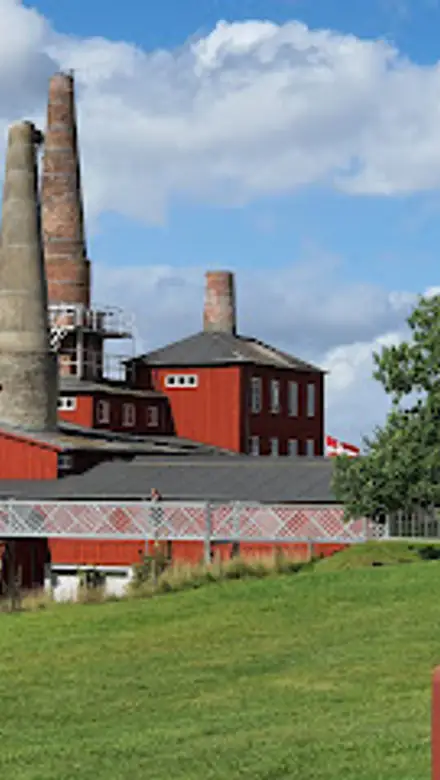
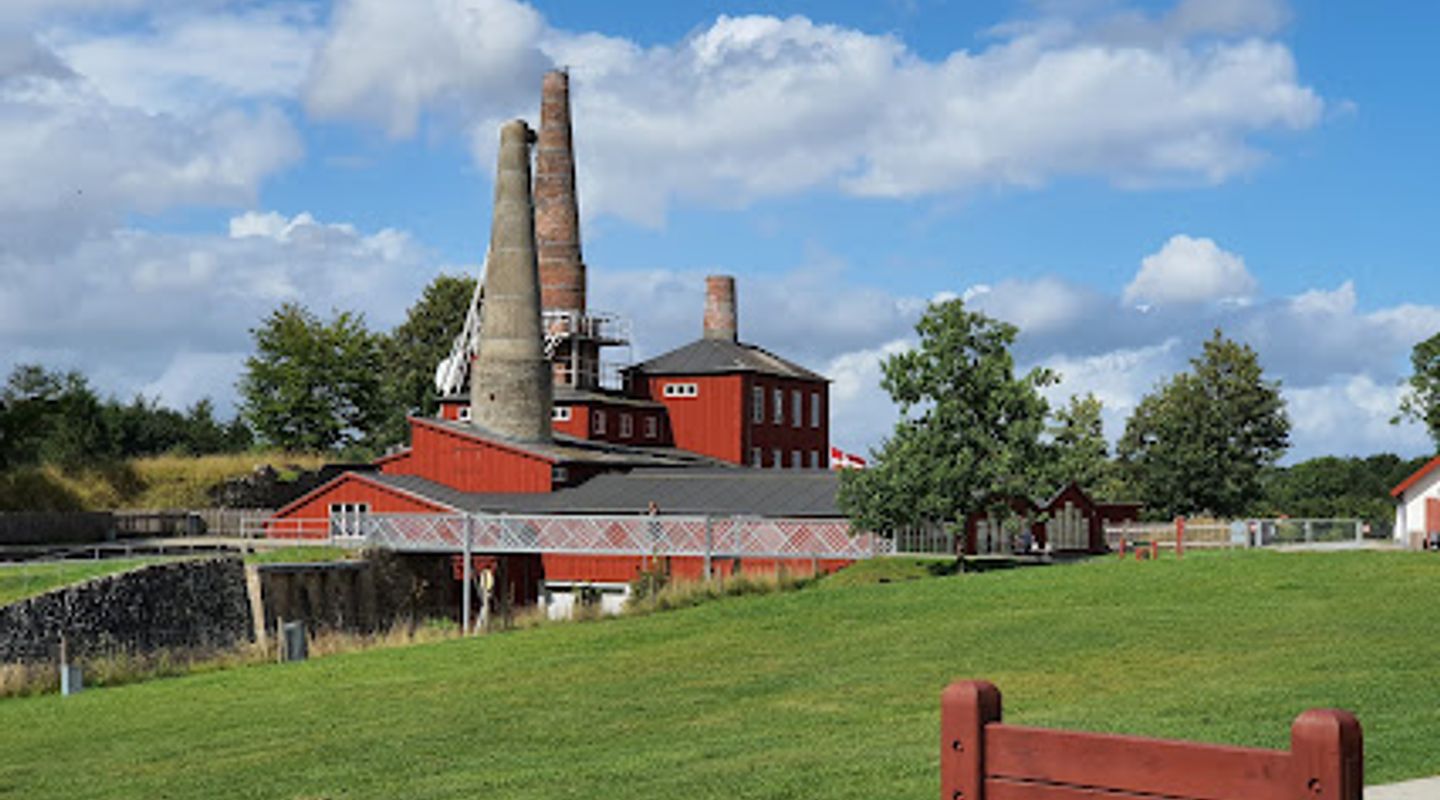
Limestone has been quarried at Mønsted since at least the Middle Ages, providing raw material for agriculture, construction and later industry. Above ground, the old lime works buildings tell this story in detail. Here, exhibits and preserved machinery show how limestone was burned in towering kilns, turned into quicklime and transported onward, and what working life was like in this demanding industry.The heavy brick structures, conveyors and storage areas form a striking contrast to the organic shapes underground. Walking through the former works, you can trace the full journey of the stone, from extraction deep in the hill to processing in the blistering heat of the kilns. The site closed as an industrial facility in 1980 and has since evolved into a cultural and natural attraction, preserving both the physical heritage and the stories of the people who worked here.
Bats, Nature Trails and a Protected Landscape
When the mining activity slowed, the mine tunnels became ideal winter quarters for bats. Today, many thousands of bats hibernate in the cool, stable climate of the caves during the colder months, and the surrounding area is part of a Natura 2000 protected nature zone. Interpretation on site explains the different species and how their presence shapes access at certain times of year.Above ground, nature trails thread through limestone pastures, sinkholes and steep slopes. From higher vantage points, there are fine views over the former open quarry, now filled with striking blue‑green water. The contrast between the quiet, reclaimed landscape and the industrial remnants offers a sense of how nature steadily reasserts itself once heavy industry withdraws.
A Full‑Day Stop for Curious Explorers
Mønsted Kalkgruber is set up as a complete visiting experience rather than a quick stop. Near the entrance you will find a museum area, seasonal Café Kridthuset serving simple meals and drinks, and outdoor picnic spots for those bringing their own food. A bat‑themed playground gives younger visitors an energetic outlet after time underground, while information boards help orient you to the geology and history before or after your descent.Most travellers spend two to three hours here, but those who enjoy slow exploration can easily fill longer by combining the mine, the lime works museum and a walk through the surrounding nature area. The constant cool temperature underground makes it a welcome escape on hot days, while the sheltered tunnels can also be appealing in less stable weather, provided you dress warmly and wear sturdy footwear.
Evendo Review Centre
 Google
Guest reviews
Best time to go
Quietest: Jan, Feb & Nov · before 8am or from 8pm
Busy times are Evendo estimates for a typical year, to help you plan. Actual crowds vary with events, school holidays and the weather.
Explore Mønsted Kalkgruber on the map
A handpicked selection of must-see spots near Mønsted Kalkgruber, mapped for you.
Get your free copy of our complete guide to Mønsted Kalkgruber, delivered straight to you.
Everything on this page, from opening hours and how to get there to Eve’s tips and the best time to go, in one PDF you can read offline, print or share.
Already have an account? Sign in
Your Mønsted Kalkgruber guide is ready.
We'll send it to · Not you? Sign out

Getting your guide ready…
We are putting together a fresh copy of the Mønsted Kalkgruber guide. This can take up to a minute.
This can take a few moments. If your browser asks, choose Allow so the download can start. You'll find the guide in your Downloads folder.
Nothing happened? Download it again
Sorry, the guide is taking longer than usual. Please try again in a minute, or get it by email instead.
Other nearby places you may find interesting
The closest places of the same kind, if this one is not quite what you had in mind.
-
-
-
-
-


Swipe for more places
More to explore near Mønsted Kalkgruber

 Best experiences near Mønsted Kalkgruber
 Best hotels near Mønsted Kalkgruber
 Best landmarks near Mønsted Kalkgruber
 Best attractions near Mønsted Kalkgruber
 Best shops near Mønsted Kalkgruber
 Best restaurants near Mønsted Kalkgruber
 Best bars near Mønsted Kalkgruber
Do you manage this location?
Take control to get all the benefits, like improved information, better appearance, and stronger visibility across AI-powered discovery.
Explore more
Explore more of Limfjord
Discover Limfjord in Denmark: A serene waterway offering a blend of nature, culture, and history with charming villages, Viking sites, and vibrant arts scenes.
Explore Limfjord
Explore more of Denmark
Discover Denmark: A perfect blend of history, modern design, and the cozy concept of hygge. Explore vibrant cities, serene landscapes, and world-class cuisine.
Explore Denmark