Valdemars Slot Travel Guide
Free Guide: A privately owned royal manor turned contemporary art estate, Valdemars Slot blends baroque interiors, coastal nature and centuries of Danish history on tranquil Tåsinge.


A brief summary of Valdemars Slot
A privately owned royal manor turned contemporary art estate, Valdemars Slot blends baroque interiors, coastal nature and centuries of Danish history on tranquil Tåsinge.
Valdemars Slot is a grand 17th‑century manor house on the island of Tåsinge near Svendborg, built by King Christian IV and later owned by naval hero Niels Juel. Today it combines historic royal interiors and baroque architecture with a contemporary art programme, set amid forests, beaches and wildlife‑rich meadows. Public paths, sea views and a coastal lagoon make it as much a nature escape as a cultural landmark, with seasonal exhibitions, events and a relaxed estate atmosphere.
On-site amenities
 Restrooms
 Drink options
 Drinking water
 Food options
 Seating areas
 Sheltered areas
 Picnic areas
 Trash bins
 Information boards
 Visitor centre
- Address
- Valdemars Slot, Slotsalleen 100, 5700 Svendborg
- Phone
- Website
Getting there
Bus and short walk from Svendborg
Cycling from Svendborg or Troense
Seasonal passenger ferry
Taxi from Svendborg
Discover more about Valdemars Slot
Royal manor on a quiet Danish island
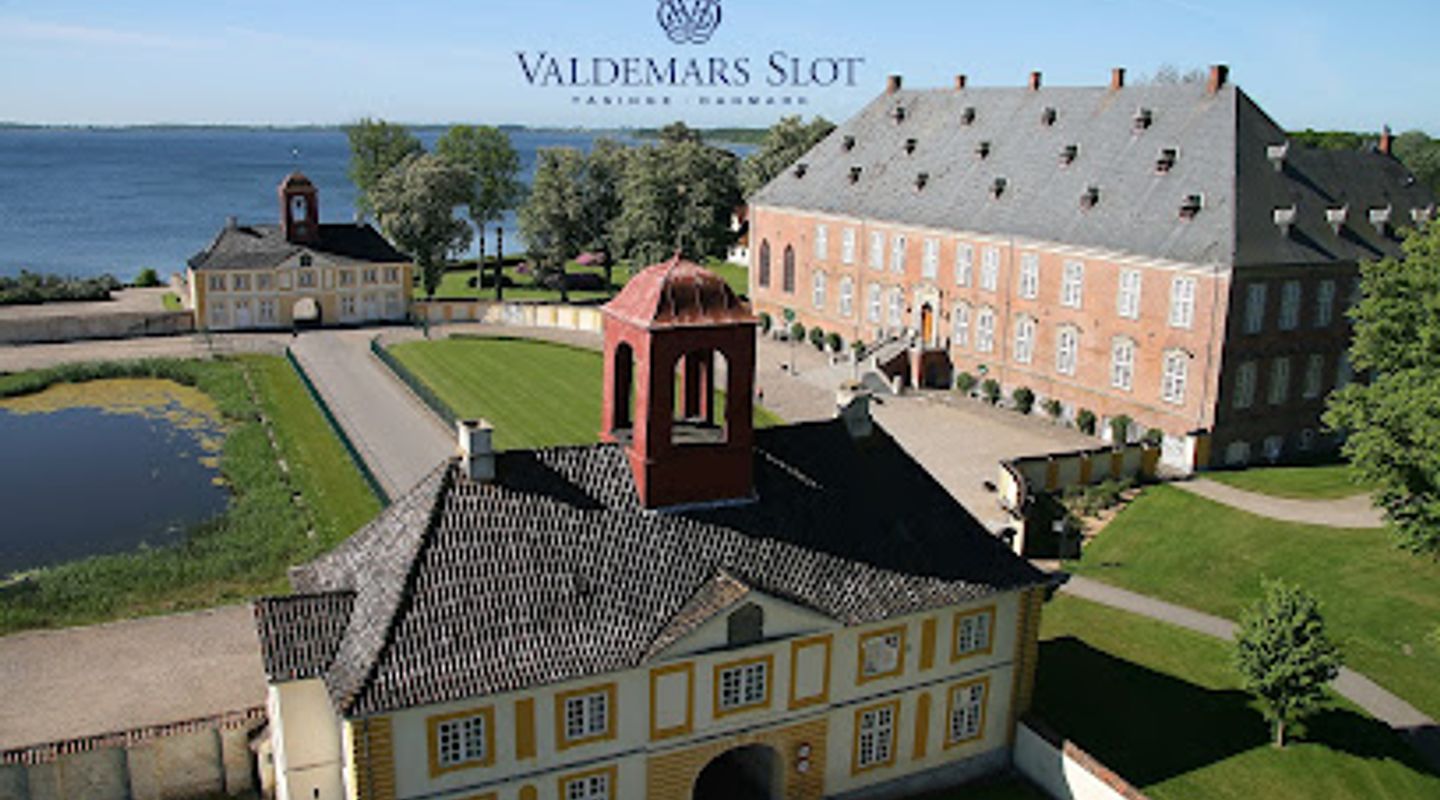
Valdemars Slot sits on the northeastern coast of Tåsinge, a short hop from Svendborg, yet it feels worlds away from city life. Commissioned by King Christian IV in the early 17th century as a residence for his son Valdemar Christian, it was conceived from the outset not as a fortress but as a lavish country manor. Long, symmetrical façades, a formal approach and views towards the water underline its role as a showpiece of royal ambition in the South Funen archipelago.From a distance, the castle’s pale walls and red roofs rise above woodland and meadows, with the estate unfolding around a series of courtyards, ponds and tree‑lined avenues. The setting is intimate rather than overpowering: this is a grand home scaled to human life, where you can easily imagine carriages arriving, servants bustling and family life carrying on behind tall windows.
From naval victory to private palace
Although Valdemar Christian never lived here, the house quickly gained a new chapter when Admiral Niels Juel, a key figure in Danish naval history, was granted the estate after his victory at the Battle of Køge Bay in 1677. His reward included captured Swedish ships, and transferring ownership of Valdemars Slot to him symbolised both royal gratitude and Denmark’s renewed control of the Baltic.Over generations, the Juel and later Iuel‑Brockdorff family shaped the property, repairing war damage and gradually turning the original Renaissance manor into the baroque country house seen today. The castle has remained closely tied to this lineage, culminating in its present status as Denmark’s largest private home and the only former royal palace still in private hands. That continuity of ownership is part of its fascination: the rooms feel curated but lived‑in, more like an inhabited estate than a frozen monument.
Historic interiors and contemporary artworks
Inside, Valdemars Slot plays with contrasts. Period rooms preserve noble rococo interiors, antique furniture, chandeliers and decorative details that trace shifting tastes across centuries. Portraits by artists such as Carl Gustaf Pilo and Jens Juel line walls, their sitters locked in formal poses that speak of power, lineage and courtly life.These historic works now share space with temporary exhibitions of international contemporary art. Site‑specific installations and curated shows respond directly to the architecture, staircases and long galleries, inviting you to look again at cornices, doorways and perspectives that might otherwise blend into the background. Rather than a traditional historic‑house museum, the castle operates as a hybrid: part time capsule, part laboratory for new ideas in art and display.
Forests, beaches and a coastal lagoon
Step outside and the experience shifts from cultural history to living landscape. The estate stretches from the main house down to the sea, with public paths threading through mature woodland, across meadows and along the shoreline. An enclosed coastal lagoon creates a sheltered pocket of water where light plays on reeds and mudflats, and where changing tides subtly redraw the edge between land and sea.These varied habitats support notably rich birdlife. In spring and summer, waders use the meadows as breeding grounds, while in colder months the lagoon and surrounding fields attract swans, geese and herons. Raptors occasionally quarter the area, adding a wilder note to an otherwise carefully managed estate. It is easy to combine a castle visit with a gentle nature walk, pausing at viewpoints over the water or seeking out quieter corners beneath tall trees.
A seasonal destination for art, events and wandering
Valdemars Slot opens to the public on a seasonal basis, with its main programme running across the warmer months. During this period, exhibitions, performances and events activate not only the main interiors but also outbuildings and parts of the grounds. Some years bring maritime or hunting‑themed displays, others focus more heavily on new commissions that temporarily transform familiar rooms.The estate remains flexible in how spaces are used: a vaulted cellar might host an installation or small events, while pavilions and lawns support outdoor happenings when the weather allows. On quieter days, simply strolling the avenues, skirting ornamental ponds or lingering by the narrow strip of beach near the jetty can be just as rewarding as the formal displays inside.
Slow experiences on the shores of Tåsinge
A visit here easily becomes a half‑day or longer outing rather than a quick photo stop. Many travellers pair time inside the castle with walks along the coast, a picnic on the grass or a coffee break in one of the estate buildings when open. Because Tåsinge is threaded with cycle routes and coastal paths, Valdemars Slot also works well as a stop within a wider exploration of the South Funen archipelago.What stands out most is the interplay between continuity and change. The house retains its roots in royal patronage and naval history, yet its current chapter emphasises restoration, contemporary creativity and access to landscape. Whether you come for portraits and plasterwork or for sea air and birdsong, the castle offers a layered snapshot of Danish culture, from 17th‑century court to 21st‑century art space.
Evendo Review Centre
 Google
Guest reviews
Best time to go
Quietest: Jan, Feb & Mar · before 8am or at 9pm
Busy times are Evendo estimates for a typical year, to help you plan. Actual crowds vary with events, school holidays and the weather.
Explore Valdemars Slot on the map
A handpicked selection of must-see spots near Valdemars Slot, mapped for you.
Get your free copy of our complete guide to Valdemars Slot, delivered straight to you.
Everything on this page, from opening hours and how to get there to Eve’s tips and the best time to go, in one PDF you can read offline, print or share.
Already have an account? Sign in
Your Valdemars Slot guide is ready.
We'll send it to · Not you? Sign out

Getting your guide ready…
We are putting together a fresh copy of the Valdemars Slot guide. This can take up to a minute.
This can take a few moments. If your browser asks, choose Allow so the download can start. You'll find the guide in your Downloads folder.
Nothing happened? Download it again
Sorry, the guide is taking longer than usual. Please try again in a minute, or get it by email instead.
Unlock the best of Valdemars Slot
Skip-the-line tickets, guided tours with entry, and walking tours of the area, booked in a few clicks.
Other nearby places you may find interesting
The closest places of the same kind, if this one is not quite what you had in mind.
-
Labyrint Lolland-Falster Lose yourself in a leafy forest maze where quiz clues, gentle trails and fresh Lolland-Falster air turn getting lost into an easygoing family adventure.
-
Evolution Museet World-class real dinosaur fossils and a 300-million-year journey through evolution, set inside Denmark’s Knuthenborg Safaripark on the island of Lolland.
-
Lupinmark A seasonal sea of lupins turning the Lolland farmland into a vivid carpet of color, perfect for a peaceful countryside pause and striking photographs.
-
Skelsnæs-pavillionen A restored 1822 forest pavilion on a lakeside promontory in Naturpark Maribosøerne, offering peaceful picnic shelter amid historic woods and bird‑rich waters.
-
Relic of the Castle Revshale Subtle grassy earthworks on Borgø Island where a forgotten royal fortress, fierce 13th‑century battles and the serene Maribo Lakes Nature Park meet.
Swipe for more places
More to explore near Valdemars Slot

 Best experiences near Valdemars Slot
 Best hotels near Valdemars Slot
 Best landmarks near Valdemars Slot
 Best attractions near Valdemars Slot
 Best shops near Valdemars Slot
 Best restaurants near Valdemars Slot
 Best bars near Valdemars Slot
Do you manage this location?
Take control to get all the benefits, like improved information, better appearance, and stronger visibility across AI-powered discovery.
Explore more
Explore more of Lolland
Discover Lolland, Denmark's tranquil island retreat, offering lush landscapes, historic sites, and delightful local cuisine for an unforgettable escape.
Explore Lolland
Explore more of Denmark
Discover Denmark: A perfect blend of history, modern design, and the cozy concept of hygge. Explore vibrant cities, serene landscapes, and world-class cuisine.
Explore Denmark