

Cold war museum Stevnsfort Travel Guide
Free Guide: Once a top-secret fortress beneath Stevns Klint, today an atmospheric Cold War labyrinth where underground tunnels, radar and artillery reveal Denmark’s nuclear-era frontline.


A brief summary of Cold war museum Stevnsfort
Once a top-secret fortress beneath Stevns Klint, today an atmospheric Cold War labyrinth where underground tunnels, radar and artillery reveal Denmark’s nuclear-era frontline.
Hidden beneath the chalk cliffs of Stevns Klint, the Cold War Museum Stevnsfort reveals Denmark’s former top-secret fortress, built to guard the Baltic and monitor Warsaw Pact movements. Eighteen metres underground, 1.6–1.8km of tunnels, operations rooms, missile facilities and gun batteries tell the story of nuclear anxiety, everyday life on alert, and the strategic role this stretch of coast played in NATO defence. Above ground, open terrain, radar and artillery installations, missiles and a visitor centre complete an immersive Cold War experience.
On-site amenities
 Restrooms
 Drink options
 Food options
 Seating areas
 Sheltered areas
 Picnic areas
 Trash bins
 Information boards
 Visitor centre
Opening hours
- Every day10 am–5 pm
Opening hours as listed on the venue’s Google Business Profile. Hours can change for services and special events, so check with the venue before you go.
- Address
- Korsnæbsvej 60, 4673 Rødvig Stevns
- Phone
- Website
Getting there
Regional train and bus from Copenhagen
Car from Copenhagen via Køge
Bicycle from Rødvig and Stevns Klint area
Discover more about Cold war museum Stevnsfort
A secret fortress beneath the Danish coastline
Stevnsfort lies on a flat stretch of farmland that ends abruptly in the white chalk cliffs of Stevns Klint, but the real story is hidden deep below your feet. Carved 18 metres down into solid limestone, the fortress was designed to survive a nuclear strike and to keep operating even if the surface was devastated. For decades during the Cold War, this was one of Denmark’s most closely guarded secrets.From here, the Danish Navy and NATO monitored every ship and aircraft moving through the Baltic Sea and the narrow Øresund strait towards Copenhagen. The location was chosen for its geology as much as its geography: the compact chalk could absorb blast pressure and shield sensitive equipment and personnel from shockwaves, radiation and chemical or biological agents.
Artillery, missiles and a frontline view of the Baltic
Above ground, the museum’s open terrain still carries the unmistakable silhouette of a coastal fortress. Massive 150 mm gun turrets point towards the horizon, their barrels once capable of reaching as far as the Swedish coast. Around them you find radar masts, spotlights, anti-aircraft positions and supporting vehicles that made this a self-contained defensive node.This coastal position meant Stevnsfort could both close the entrance to Øresund and protect the routes into the heart of Denmark. During exercises, guns, radar and communications systems worked in sync to simulate the response to Soviet ships or bombers. Today, explanatory panels and reconstructed positions help you read the landscape as a military map, with every mast, bunker and concrete slab telling part of the story.
Life and routines in the underground labyrinth
The real heart of the museum is its tunnel network, more than a kilometre and a half of passages linking operations rooms, ammunition magazines, power supplies, sleeping quarters and technical spaces. Guided tours lead you through this dim, echoing world of cables, valves and thick doors, where the temperature sits at around 10°C all year.Here, several hundred soldiers could have lived and worked for weeks, sealed off from the surface. Barracks, canteens and infirmaries reveal the everyday routines that underpinned the constant state of alert, from night shifts in the operations centre to maintenance of complex radar and communication systems. The dense layout and steep stairways still convey how cramped and specialised this environment was when fully manned.
Monitoring the Warsaw Pact from a NATO outpost
Stevnsfort was a crucial node in the electronic early-warning chain that stretched across northern Europe. In its plotting rooms, radar screens and telecommunication lines fed real-time information about ship movements, aircraft and possible missile trajectories. The data gathered here was transmitted to Danish and NATO command centres, helping to assess threats and coordinate responses.Displays and diagrams in the museum set Stevnsfort’s work within the broader global tensions of the Cold War. Maps chart potential invasion routes through the Baltic, documents outline contingency plans, and original equipment illustrates how analogue technology underpinned nuclear-age security. It is both a technical story and a political one, showing how a rural corner of Zealand became entangled in superpower rivalries.
From classified stronghold to cultural landscape
When the Cold War thawed and the fortress was decommissioned in the 2000s, the site began a careful transformation from active military installation to museum. Many original elements were preserved in situ, from machinery and instruments to furniture and signage, giving today’s visitors a sense of stepping into a frozen moment in time.The museum also belongs to a wider coastal landscape that includes the UNESCO-listed cliffs of Stevns Klint. Out on the surface, walking paths connect gun emplacements, missile launchers and lookout points with sweeping views over the Baltic Sea. Together they form a layered cultural environment where geology, natural scenery and recent military history intersect in a single, compact site.
Evendo Review Centre
 Google
Guest reviews
Best time to go
Quietest: Jan, Nov & Dec · before 8am or from 7pm
Busy times are Evendo estimates for a typical year, to help you plan. Actual crowds vary with events, school holidays and the weather.
Explore Cold war museum Stevnsfort on the map
A handpicked selection of must-see spots near Cold war museum Stevnsfort, mapped for you.
Get your free copy of our complete guide to Cold war museum Stevnsfort, delivered straight to you.
Everything on this page, from opening hours and how to get there to Eve’s tips and the best time to go, in one PDF you can read offline, print or share.
Already have an account? Sign in
Your Cold war museum Stevnsfort guide is ready.
We'll send it to · Not you? Sign out

Getting your guide ready…
We are putting together a fresh copy of the Cold war museum Stevnsfort guide. This can take up to a minute.
This can take a few moments. If your browser asks, choose Allow so the download can start. You'll find the guide in your Downloads folder.
Nothing happened? Download it again
Sorry, the guide is taking longer than usual. Please try again in a minute, or get it by email instead.
Other nearby places you may find interesting
The closest places of the same kind, if this one is not quite what you had in mind.
-
GeoCenter Møns Klint Immersive cliff-top museum and nature hub revealing 70 million years of geology beside Denmark’s highest white chalk cliffs at Møns Klint.
-
Moen lighthouse A quiet 19th‑century beacon perched above Denmark’s most dramatic chalk cliffs, where sea, sky and starlight meet on the far edge of the island of Møn.
-
Trappe Møns Klint A steep wooden stairway plunging from beech forest to turquoise Baltic shore, Trappe Møns Klint is the most direct way into Denmark’s iconic white chalk cliffs.
-
Stranden Møns Klint A raw shingle shore pressed between turquoise Baltic waves and 100‑metre chalk cliffs, Stranden Møns Klint is Denmark’s most dramatic meeting of land and sea.
-
Thorsvang, Danmarks Samlermuseum Et stemningsfuldt samlermuseum på Møn, indrettet som en hel lille by fra de gode gamle dage – fyldt med butikker, værksteder, kolonihaver og hverdagsminder.
Swipe for more places
More to explore near Cold war museum Stevnsfort
-
 Best experiences near Cold war museum Stevnsfort
-
 Best hotels near Cold war museum Stevnsfort
-
 Best landmarks near Cold war museum Stevnsfort
-
 Best attractions near Cold war museum Stevnsfort
-
 Best shops near Cold war museum Stevnsfort
-
 Best restaurants near Cold war museum Stevnsfort
-
 Best bars near Cold war museum Stevnsfort







Do you manage this location?
Take control to get all the benefits, like improved information, better appearance, and stronger visibility across AI-powered discovery.
Explore more
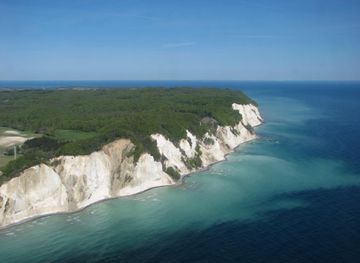
Explore more of Møn
Discover the breathtaking cliffs, rich history, and serene beauty of Møn, Denmark's hidden gem in the Baltic Sea, perfect for nature lovers and history enthusiasts alike.
Explore Møn
Explore more of Denmark
Discover Denmark: A perfect blend of history, modern design, and the cozy concept of hygge. Explore vibrant cities, serene landscapes, and world-class cuisine.
Explore Denmark
