Højerup old church, Mon Travel Guide
A tiny 13th‑century church clinging to the edge of Stevns Klint, where medieval frescoes, coastal legends and a cliff-top balcony meet above the Baltic Sea.
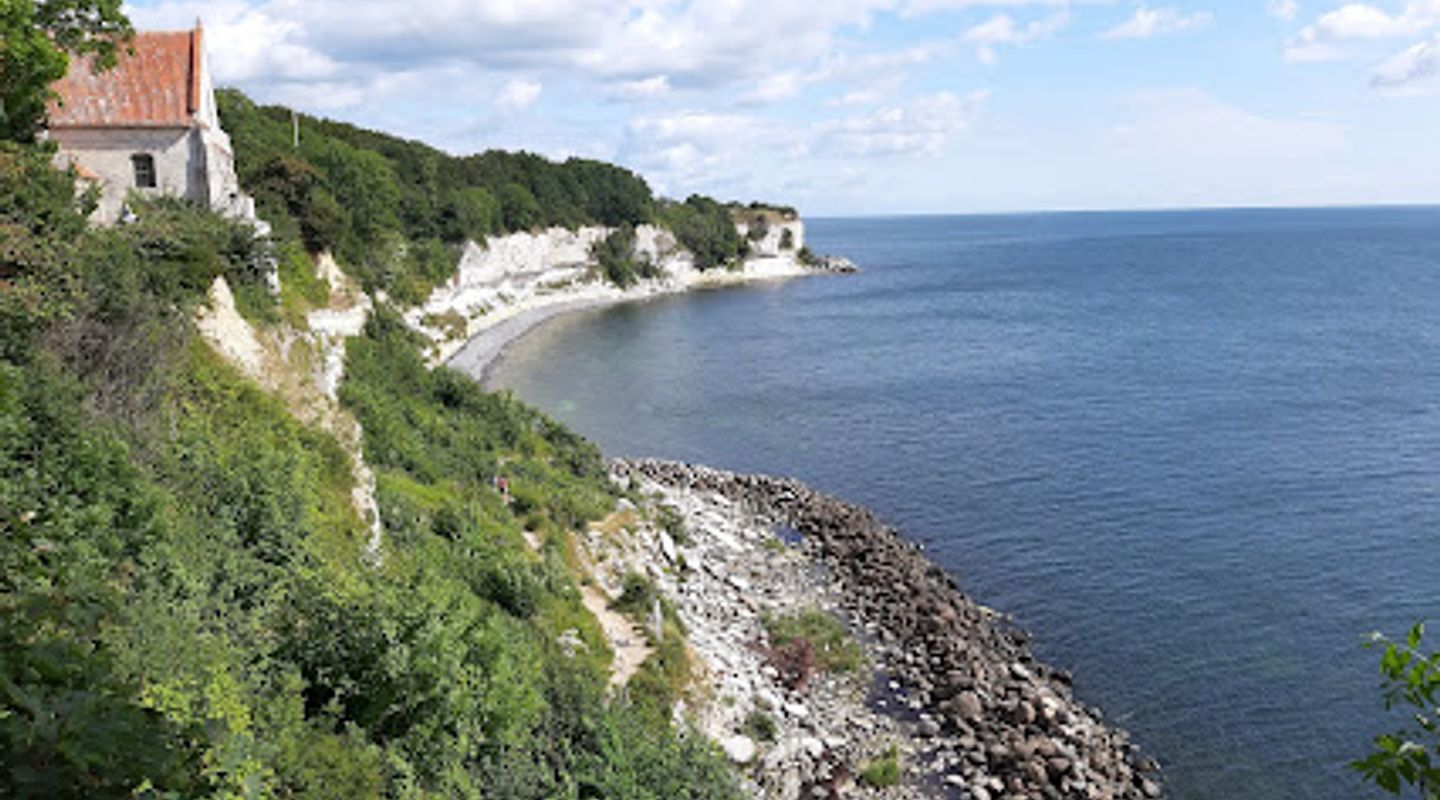
Højerup Old Church is a 13th‑century cliff‑edge church dramatically perched atop the UNESCO‑listed Stevns Klint on Zealand’s southeastern coast. Built around 1250 in Romanesque style and consecrated in 1357, it famously lost its chancel and part of the cemetery to a cliff collapse in 1928. The ruin has since been stabilized and the missing choir replaced by a balcony overlooking the Baltic Sea, making this small whitewashed church both a historic monument and an unforgettable viewpoint.
A brief summary to Højerup old church
- Højerup Bygade 30, Store Heddinge, 4660, DK
- Click to display
- Duration: 1 to 2.5 hours
- Free
-
 Outdoor
- Mobile reception: 4 out of 5
- Monday 10 am-4 pm
- Tuesday 10 am-4 pm
- Wednesday 10 am-4 pm
- Thursday 10 am-4 pm
- Friday 10 am-4 pm
- Saturday 10 am-5 pm
- Sunday 10 am-5 pm

Know before you go
Hi, I'm Eve. Here are a few practical things to know before exploring Højerup old church.
- Allow time to visit both the church interior and the balcony, then walk down to the beach to see the truncated building and chalk cliffs from below.
- Bring a windproof layer; even on warm days the exposed clifftop and balcony can feel significantly cooler due to sea breezes.
- Have small change or a card handy for the paid parking, which funds upkeep of the memorial grove, access paths and cliff-top facilities.
- Watch footing near unfenced sections of the cliff and on the steps to the beach, which can be slippery after rain or in winter.
- If you are interested in geology, combine your visit with time to look for fossils along the shore and to spot the dark fish-clay layer in the cliff.
Do you manage this location?
Take control to get all the benefits, like improved information, better appearance, and stronger visibility across AI-powered discovery. Learn more about listing your business on Evendo
Activate your presenceOther nearby places you may find interesting
The closest places of the same kind, if this one is not quite what you had in mind.

Explore Højerup old church on the Map
A handpicked selection of must-see spots near Højerup old church, mapped for you.
Getting There
-
Regional train and bus from Copenhagen
From central Copenhagen, take a regional train toward Køge and onward to Store Heddinge; the journey usually takes about 1 hour to 1 hour 20 minutes in total. From Store Heddinge, connect to the local bus serving Højerup, which typically takes around 10–15 minutes and stops within walking distance of the church. A combined one-way trip with standard tickets generally costs in the range of 80–120 DKK per adult, depending on time and ticket type, and services run more frequently on weekdays than late evenings.
-
Car from Copenhagen or Køge area
Driving from Copenhagen or the Køge region to Højerup Old Church usually takes about 1 hour to 1 hour 15 minutes, using main roads across eastern Zealand toward Stevns. The final approach is on smaller country roads through farmland and villages. On arrival there is a designated parking area a short walk from the church; parking typically costs around 50 DKK per vehicle, and this fee goes toward maintaining the memorial grove and surrounding grounds. Spaces can fill during sunny weekends and summer holidays.
-
Cycling from Store Heddinge
For an active option, visitors already in Store Heddinge can reach Højerup Old Church by bicycle in roughly 20–30 minutes, following minor rural roads through gently undulating countryside. The route is generally paved and suitable for most bikes, though wind from the coast can make the ride feel longer. There is informal space to leave bicycles near the parking area; lights and reflective gear are advisable outside daylight hours, as some stretches have limited street lighting.
For the on-the-go comforts that matter to you
-
 Restrooms
-
 Drink Options
-
 Food Options
-
 Seating Areas
-
 Picnic Areas
-
 Trash Bins
-
 Information Boards
Discover more about Højerup old church
A medieval church carved from the cliffs
Højerup Old Church is a compact medieval parish church dating from around 1250, constructed in Romanesque style using limestone and bricks quarried directly from the surrounding chalk cliffs of Stevns Klint. Thick walls, small high-set windows and a simple rectangular nave give it the solid, understated character typical of rural Danish churches from this period. Consecrated in 1357, it served the tiny coastal community of Højerup for centuries, its whitewashed walls acting as a seamark for sailors navigating the Baltic.Stepping inside, you find an intimate single-nave space with traces of medieval frescoes on the plaster, including ochre-toned religious scenes attributed to the painter Johannes Malling that link the church to wider Danish ecclesiastical art traditions of the 1200s. Modest furnishings and muted colours keep the focus on the rough masonry and the sense of age, making the interior feel more like a preserved time capsule than an active parish church.Legends, erosion and the night the choir fell
Local legend holds that Højerup Old Church was founded by a sailor who vowed to build a chapel on the cliff if he survived a storm at sea. Another tale claims that every Christmas night the church would move a tiny step inland to escape the encroaching edge. In reality, coastal erosion worked steadily on the chalk below, bringing the precipice ever closer from the 17th century onward and even gnawing into the graveyard so that coffins and bones occasionally emerged from the cliff face.The drama culminated at dawn on 16 March 1928, when a major collapse sent the entire chancel and part of the cemetery plunging thirty metres down into the Baltic. The church had already been closed for services since 1910 because of safety concerns, and a new church had been built further inland, but the sight of the torn-open building hanging on the cliff drew national attention. Engineers soon reinforced the remaining structure with underpinning and coastal protection, transforming a near-loss into one of Denmark’s most striking church ruins.A balcony where the altar once stood
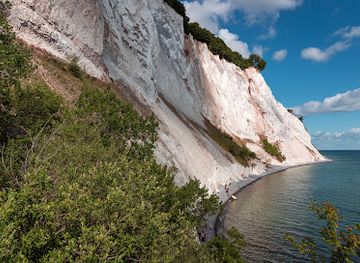
Rather than reconstructing the lost eastern end, the gap where the choir once stood has been turned into a viewing platform that projects out over the void. From inside the nave you now step through a doorway straight onto an open balcony, with a sheer drop beneath and a sweeping view along the pale chalk walls of Stevns Klint and across the changing blue-grey surface of the Baltic Sea. It is both a literal and symbolic threshold between sacred space and raw landscape.This marriage of architecture and geology is one reason the surroundings form part of the UNESCO-listed Stevns Klint, renowned for its clearly visible layers of chalk and the thin band of dark "fish clay" that records the asteroid impact associated with the end of the dinosaurs. Standing on the balcony, you look out across cliffs that double as a global reference point in earth history, while behind you lies a building that tells a more human story of adaptation to a restless coastline.Atmosphere, frescoes and coastal paths
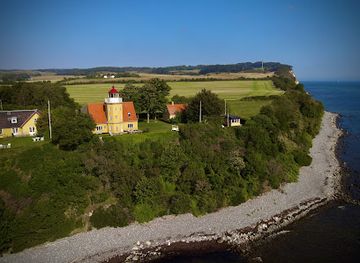
Inside, restored medieval wall paintings and discreet explanatory panels help you read the building’s layers without overwhelming the quiet atmosphere. Soft daylight filters in through small windows and the open east end, falling on the rough limewashed surfaces and the modest altarpiece now relocated to a side chapel. The combination of ruin, preservation and careful reinforcement gives the space a contemplative feel rather than one of decay.Outside, a memorial grove and paths lead through lawns and trees along the clifftop, with several vantage points for photographing the church poised above the drop. Steps nearby descend to the beach, where you can look back to see the truncated church perched improbably on the brink and search the shingle for fossils and flint nodules washed from the chalk. The wider Stevns coast, with its old lighthouse, fishing villages and farmed fields, frames the church as both a landmark in the landscape and a focal point for exploring this corner of South Zealand.From parish church to romantic landmark
Although no longer used for regular worship, Højerup Old Church remains consecrated ground and has found a second life as a venue for intimate civil wedding ceremonies and cultural events. Couples stand where the altar once stood, with the sea rolling below and the wind coming off the Baltic, while guests sit in the centuries-old nave. The blend of vulnerability and endurance lends a special symbolism to the setting.Whether you come for the medieval architecture, the dramatic cliff-top story or the geology of Stevns Klint, the experience is compact yet layered. Within a short circuit you can absorb centuries of local history, feel the scale of natural forces that reshaped the building, and enjoy some of Zealand’s most evocative coastal views, all anchored by the small, resilient shell of Højerup Old Church.












Your all‑in‑one travel companion app
Explore expert travel guides, compare and book tours, experiences, hotels, and more—all from the palm of your hand. Download now for seamless trip planning wherever your wanderlust takes you.


Explore More of Mon
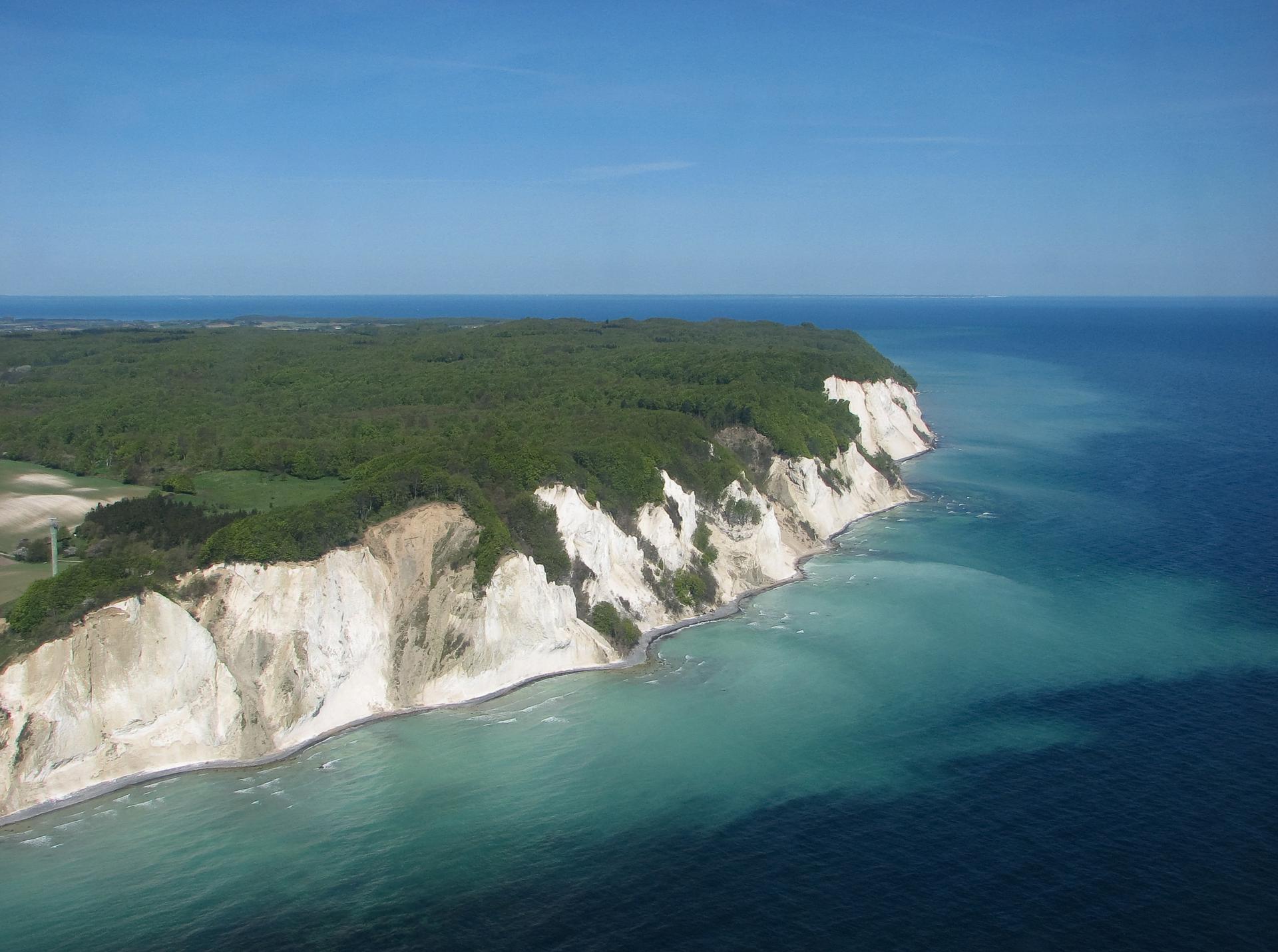
Looking beyond Højerup old church? Discover Mon for broader travel guides, local hot-spots, and regional highlights.
Explore Mon