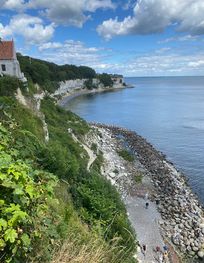
Stevns Klint UNESCO World Heritage, Mon Travel Guide
Witness 66 million years of Earth's history in the cliffs where dinosaurs vanished and life recovered.
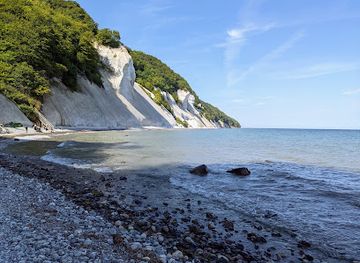
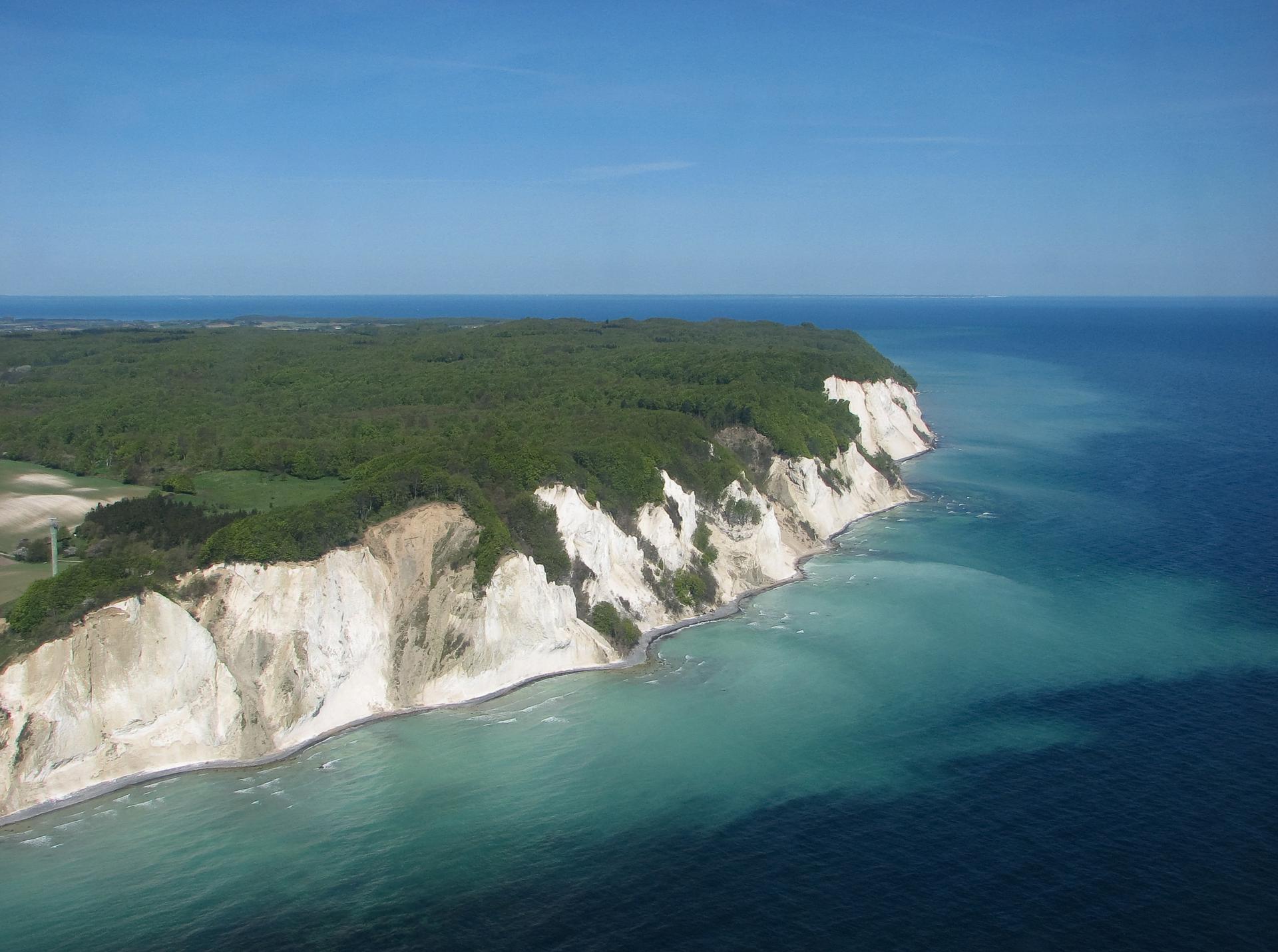
Stevns Klint is a 15-kilometer stretch of dramatic white chalk cliffs rising 40 meters above the Baltic Sea, located 50 kilometers south of Copenhagen. This UNESCO World Heritage Site preserves the world's most accessible and scientifically significant evidence of the Chicxulub meteorite impact 66 million years ago—the catastrophic event that ended the Age of Dinosaurs and caused the extinction of over 50% of all life on Earth. The cliffs reveal a remarkable fossil record spanning one million years before, during, and after the impact, making it essential for understanding mass extinction and evolutionary recovery.
A brief summary to Stevns Klint UNESCO World Heritage
- Boesdalsvej 14, Rødvig Stevns, 4673, DK
- Click to display
- Click to display
- Duration: 2 to 4 hours
- Mid ranged
-
 Outdoor
- Mobile reception: 4 out of 5

Know before you go
Hi, I'm Eve. Here are a few practical things to know before exploring Stevns Klint UNESCO World Heritage.
- Visit the Stevns Klint Experience Centre first to understand the geological story before exploring the cliffs. The interactive exhibits and VR experience provide essential context for interpreting the rock layers and fossil evidence you'll see outdoors.
- Hike the cliff path trail early in the day to avoid crowds and enjoy the best light for photography. The nine marked viewpoints offer different perspectives of the K/T boundary layer and panoramic views toward Sweden and the island of Møn.
- Look for the thin dark fish clay layer approximately halfway up the white cliff face—this is the K/T boundary marking the asteroid impact 66 million years ago. Binoculars help identify this crucial geological marker from a distance.
- Climb the stairs at Højerup Church to reach the cliff top for dramatic views of the eroded church ruin and the Baltic Sea. The contrast between the ancient church and the dynamic geological landscape creates powerful photography opportunities.
- Consider booking a guided tour or boat trip to gain deeper geological insights and access perspectives unavailable from land. Boat tours offer unique views of the cliff face and its structural composition from the water.
Do you manage this location?
Take control to get all the benefits, like improved information, better appearance, and stronger visibility across AI-powered discovery. Learn more about listing your business on Evendo
Activate your presenceOther nearby places you may find interesting
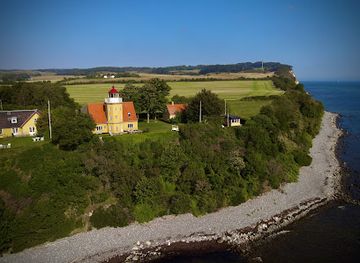
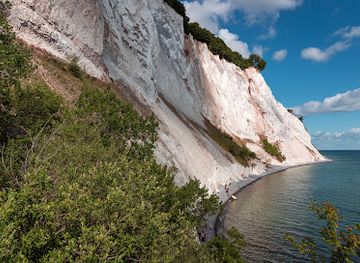
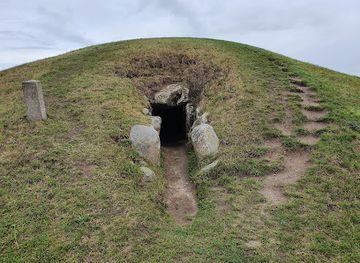
The closest places of the same kind, if this one is not quite what you had in mind.

Explore Stevns Klint UNESCO World Heritage on the Map
A handpicked selection of must-see spots near Stevns Klint UNESCO World Heritage, mapped for you.
Getting There
-
Car from Copenhagen
Drive south from Copenhagen toward Store Heddinge, approximately 50 kilometers, taking 50–70 minutes depending on traffic. Follow signs to Rødvig and Stevns Klint. Parking is available at the Stevns Klint Experience Centre (Boesdalsvej 14, 4673 Rødvig). Standard parking rates apply; the site is accessible year-round by vehicle.
-
Train and Bus from Copenhagen
Take the regional train from Copenhagen Central Station toward Køge or Roskilde, then transfer to a local bus service toward Stevns Municipality (approximately 90–120 minutes total travel time). Bus services operate regularly but with reduced frequency on weekends and holidays. Journey costs approximately 80–120 DKK depending on zones. Confirm schedules in advance as service varies seasonally.
-
Bicycle from Store Heddinge
Rent a bicycle in Store Heddinge and cycle to Stevns Klint via local routes, approximately 15–20 kilometers and 1.5–2 hours depending on fitness level and route selection. The coastal cycling routes offer scenic views. Terrain is generally flat to gently rolling. Bicycle rental services are available in Store Heddinge and nearby towns.
-
Guided Tour from Copenhagen
Book a full-day guided tour departing from Copenhagen (typically 8–10 hours including travel and site exploration). Tours cost approximately 600–1,200 DKK per person and include transportation, expert geological interpretation, and access to the Experience Centre. Multiple tour operators offer this service; advance booking is recommended, especially during peak season.
For the on-the-go comforts that matter to you
-
 Restrooms
-
 Drink Options
-
 Food Options
-
 Seating Areas
-
 Sheltered Areas
-
 Information Boards
-
 Visitor Center
Discover more about Stevns Klint UNESCO World Heritage
A Window into Earth's Most Dramatic Moment
Stevns Klint stands as one of the world's most important geological sites, preserving the story of a catastrophe that reshaped life on Earth. Approximately 66 million years ago, a massive asteroid struck the planet near Mexico's Yucatan Peninsula, triggering a global extinction event. The cliffs of Stevns Klint contain the clearest visible record of this moment—a thin, dark layer of fish clay embedded within the white chalk that marks the precise boundary between the Cretaceous and Tertiary periods, known to geologists as the K/T boundary. This layer represents the ash cloud that circled the planet following the impact, and it remains one of the most accessible places on Earth to witness this pivotal moment in planetary history.Reading the Rocks: A Million-Year Story
The cliffs reveal far more than just the moment of impact. Stevns Klint preserves a detailed fossil record spanning approximately one million years—documenting the marine ecosystem before the asteroid struck, the immediate aftermath of mass extinction, and the gradual recovery of life in the oceans. Three distinct biological communities are visible in the rock layers: a thriving pre-impact marine fauna with over 450 species of macrofossils, a depleted community of survivors immediately following the extinction event, and a progressively richer ecosystem as life diversified and recovered. This exceptional record shows which species vanished forever and which adapted to survive, revealing the tempo and mode of evolution as new marine communities developed to eventually become the fauna we know today.Geological Composition and Quarrying Heritage
The cliffs are composed of four distinct layers, each telling its own story. At the base lies soft chalk from the Cretaceous Period, topped by the famous fish clay boundary layer, followed by hard bryozoan limestone, and capped by sediments from the last ice age. The pale limestone of Stevns Klint proved invaluable to medieval builders—the stone was quarried and used to construct more than 80 churches throughout the surrounding countryside, as well as major fortifications including Copenhagen Castle and Kronborg Castle. Quarrying continued into the early 20th century, with the last significant extraction occurring in the 1980s. Today, the chalk's shock-resistant properties are evident in the tunnels of Stevnsfortet, a Cold War military fortress built in 1953, where the K/T boundary layer remains visible deep underground.Højerup Church: A Monument Perched on the Edge
Atop the cliffs stands the remarkable Højerup Old Church, dating to the year 1200. According to local legend, the church was built by a sailor who had been lost at sea and vowed to construct it if he survived—a promise he kept. The building's precarious position has become increasingly dramatic over the centuries. In 1928, coastal erosion caused a catastrophic landslide that destroyed the church's chancel, sending it tumbling to the shore below. Rather than abandon the site, a new church was completed in 1913, positioned 300 meters back from the cliff edge. The original church remains, now a haunting ruin that seems to defy gravity as it clings to the eroding cliff face, offering visitors a tangible reminder of nature's relentless power.Modern Interpretation and Visitor Experience
The Stevns Klint Experience Centre brings the site's extraordinary story to life through interactive exhibitions and immersive displays. Visitors encounter Lucky, a symbolic mammal figure representing the fortunate continuation of life after the extinction event. The centre features a cinema with projections displayed on a massive limestone block carved from the cliff itself, along with displays of real fossils, meteorite specimens, dinosaur skeletons, and hands-on interactive games. A virtual reality experience called VR Genesis allows visitors to journey through Earth's evolution. The site also offers practical amenities including a café serving organic salads and local fare, a curated shop featuring local crafts and heritage-inspired goods, and a hiking trail along the cliff path with nine marked points of interest offering breathtaking views of the Baltic Sea.Conservation and Ongoing Significance
In 2014, Stevns Klint was inscribed on the UNESCO World Heritage List in recognition of its exceptional fossil record and global significance as testimony to the Chicxulub meteorite impact. The site is managed through a collaborative steering group representing state and regional governments, local authorities, museums, and private landowners—98% of the property is privately owned. The management framework emphasizes sustainable tourism, fossil protection, and community engagement. As visitation increases, careful stewardship remains essential to preserve the site's scientific and educational value while allowing future generations to witness this remarkable window into Earth's deep history.More to explore near Stevns Klint UNESCO World Heritage
-

Best experiences near Stevns Klint UNESCO World Heritage
-

Best hotels near Stevns Klint UNESCO World Heritage
-

Best attractions near Stevns Klint UNESCO World Heritage
-

Best shops near Stevns Klint UNESCO World Heritage
-

Best restaurants near Stevns Klint UNESCO World Heritage
-

Best bars near Stevns Klint UNESCO World Heritage







Your all‑in‑one travel companion app
Explore expert travel guides, compare and book tours, experiences, hotels, and more—all from the palm of your hand. Download now for seamless trip planning wherever your wanderlust takes you.


Explore More of Mon
Looking beyond Stevns Klint UNESCO World Heritage? Discover Mon for broader travel guides, local hot-spots, and regional highlights.
Explore Mon