Flyverstenen i Torstedlund Travel Guide
Free Guide: A solemn forest memorial to eleven RAF airmen lost in 1945, carved by local hands.


A brief summary of Flyverstenen i Torstedlund
A solemn forest memorial to eleven RAF airmen lost in 1945, carved by local hands.
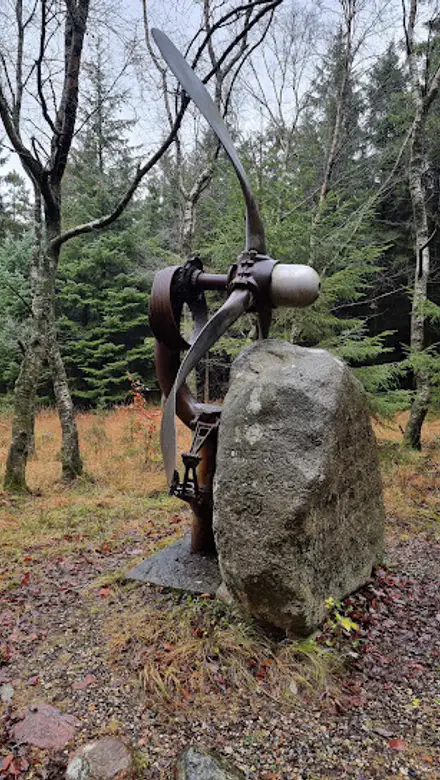
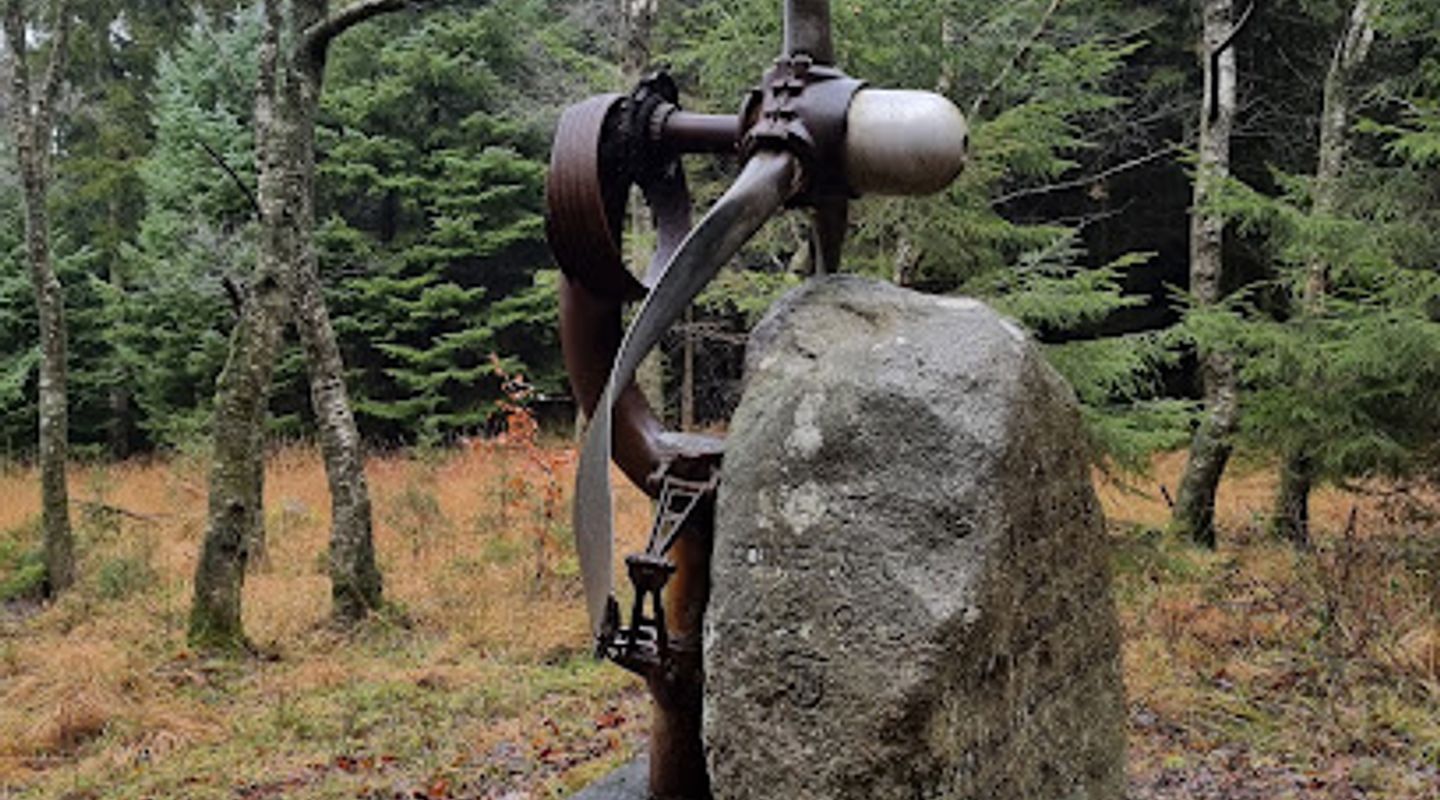
Flyverstenen is a solemn memorial stone deep within Torstedlund Forest, marking the crash site of a British RAF Liberator bomber that fell on April 20, 1945. All eleven crew members perished in the crash, their names engraved on the stone. The memorial stands as a tribute to Allied sacrifice during World War II and reflects the dedication of local forest workers who recovered the remains and erected the monument shortly after the war ended.
On-site amenities
 Information boards
- Address
- Unnamed Road, 9520 Skørping
- Website
Getting there
Forest Road Access by Car
Bicycle via Forest Paths
Guided Historical Walking Tour
Discover more about Flyverstenen i Torstedlund
The Crash and Its Circumstances
On the night of April 20–21, 1945, a Consolidated B-24 Liberator aircraft belonging to RAF Squadron 206, based at Leuchars in Scotland, crashed deep within Torstedlund Forest near Skørping in northern Denmark. The aircraft was on a mission hunting German U-boats in the Kattegat when disaster struck. All eleven crew members aboard perished in the crash. While the exact cause remains uncertain, credible witness accounts suggest the aircraft was shot down by a German fighter plane. The wreckage scattered across the forest floor, leaving behind twisted metal, ammunition casings, and fragments that would lie hidden for years.
Discovery and Recovery
The bodies of the fallen airmen were initially buried by German soldiers in an unmarked grave somewhere within the forest. For nearly two years, their final resting place remained unknown. In June 1947, a forest worker named Kristian Kristensen made a chance discovery while probing the forest floor with a stick—it broke through into a hidden grave. The remains were carefully exhumed and identified through military records. The crew members were given a proper burial at Aarestrup Cemetery on June 22, 1947, in a solemn ceremony attended by local residents and military officials. Later, at British request, the bodies were reburied in the correct military order according to RAF protocol.
The Memorial Stone and Local Remembrance
Shortly after the war ended, local forest workers and staff from Nørlund Sawmill undertook a remarkable initiative to honor the fallen airmen. In their spare time, they cleared the crash site of wreckage and fallen trees, located a suitable stone in Torstedlund Forest, and transported it to the site using sawmill equipment and horses. On August 4, 1945, the stone was erected at the crash location. By October 1945, the memorial was complete, with a landing gear axle from the aircraft positioned behind the stone as a symbolic marker. Local schoolteacher Th. Johansen carved an inscription into the stone: "Here fell an Allied airman on April 20, 1945 in the struggle for Denmark's freedom." He later engraved the names of all eleven crew members onto the memorial.
Historical Significance and Witness Accounts
The crash was witnessed by multiple people across the surrounding area. On that moonlit night, residents from Aarestrup and the Nørlund region reported seeing a burning aircraft plummet from the sky. The wreckage yielded numerous artifacts—ammunition casings bearing dents and cracks, copper wire, oil residue, and fragments of the fuselage—all testament to the violence of the impact. The memorial stone has become an important part of local World War II history, representing not only the sacrifice of the airmen but also the compassion and determination of Danish civilians who ensured the fallen were properly honored and remembered.
A Living Memorial in the Forest
Flyverstenen stands deep within Torstedlund Forest, accessible only by forest roads. The stone and its inscription serve as a quiet but powerful reminder of the cost of World War II and the international cooperation between Allied forces and Danish civilians. The site has become a destination for historical walks and remembrance visits, drawing those interested in wartime history and the stories of sacrifice that shaped modern Europe. The dedication of the local community to preserving this memory—from the initial recovery of the remains to the creation and maintenance of the memorial—reflects a broader commitment to honoring those who gave their lives for freedom.
Evendo Review Centre
 Google
Guest reviews
Best time to go
Quietest: Jan, Feb & Dec · before 7am or from 7pm
Busy times are Evendo estimates for a typical year, to help you plan. Actual crowds vary with events, school holidays and the weather.
Explore Flyverstenen i Torstedlund on the map
A handpicked selection of must-see spots near Flyverstenen i Torstedlund, mapped for you.
Get your free copy of our complete guide to Flyverstenen i Torstedlund, delivered straight to you.
Everything on this page, from opening hours and how to get there to Eve’s tips and the best time to go, in one PDF you can read offline, print or share.
Already have an account? Sign in
Your Flyverstenen i Torstedlund guide is ready.
We'll send it to · Not you? Sign out

Getting your guide ready…
We are putting together a fresh copy of the Flyverstenen i Torstedlund guide. This can take up to a minute.
This can take a few moments. If your browser asks, choose Allow so the download can start. You'll find the guide in your Downloads folder.
Nothing happened? Download it again
Sorry, the guide is taking longer than usual. Please try again in a minute, or get it by email instead.
Other nearby places you may find interesting
The closest places of the same kind, if this one is not quite what you had in mind.
-
-
-
-
-


Swipe for more places
More to explore near Flyverstenen i Torstedlund
-
 Best experiences near Flyverstenen i Torstedlund
-
 Best hotels near Flyverstenen i Torstedlund
-
 Best landmarks near Flyverstenen i Torstedlund
-
 Best attractions near Flyverstenen i Torstedlund
-
 Best shops near Flyverstenen i Torstedlund
-
 Best restaurants near Flyverstenen i Torstedlund
-
 Best bars near Flyverstenen i Torstedlund


Do you manage this location?
Take control to get all the benefits, like improved information, better appearance, and stronger visibility across AI-powered discovery.
Explore more
Explore more of North Jutland
Discover North Jutland: Denmark's northernmost region, renowned for its stunning coastlines, rich Viking history, vibrant culture, and outdoor adventures.
Explore North Jutland
Explore more of Denmark
Discover Denmark: A perfect blend of history, modern design, and the cozy concept of hygge. Explore vibrant cities, serene landscapes, and world-class cuisine.
Explore Denmark