

Aalborghus Castle Travel Guide
Free Guide: Renaissance fortress on the Limfjord where Danish history meets atmospheric dungeons and peaceful parkland.


A brief summary of Aalborghus Castle
Renaissance fortress on the Limfjord where Danish history meets atmospheric dungeons and peaceful parkland.
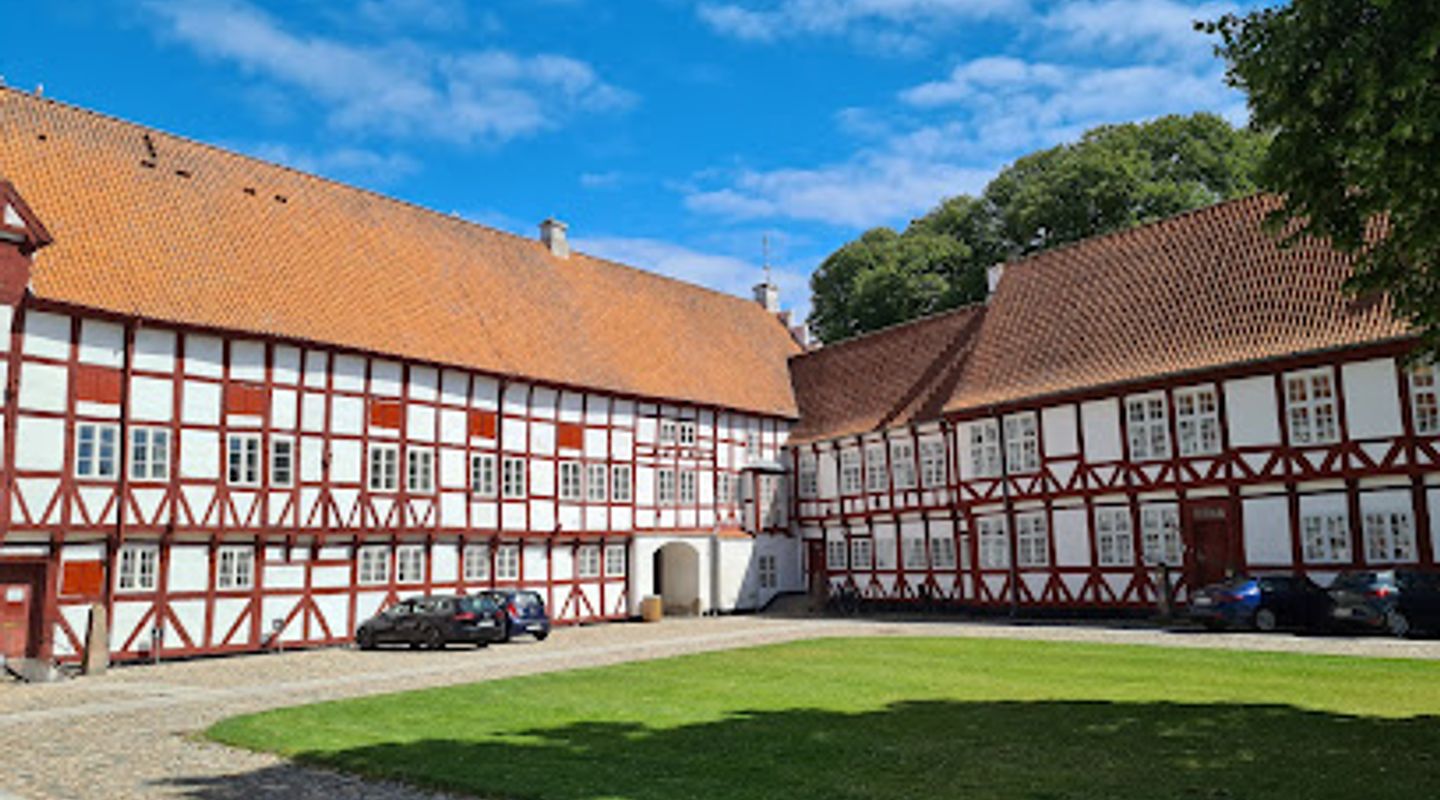
Aalborghus Castle is a Renaissance fortress built by King Christian III between 1539 and 1555 on the banks of the Limfjord in Aalborg, Denmark. Once a royal residence and administrative center, this half-timbered castle now welcomes visitors to explore its atmospheric grounds, beautiful park, and historic dungeons. The castle's courtyard and surrounding landscape remain accessible year-round, offering a tangible connection to Danish medieval and Renaissance history.
On-site amenities
 Seating areas
 Information boards
 Trash bins
 Picnic areas
Opening hours
- Every day8 am–9 pm
Opening hours as listed on the venue’s Google Business Profile. Hours can change for services and special events, so check with the venue before you go.
- Address
- Aalborghus Slot, Slotspladsen 1, 9000 Aalborg
- Phone
Getting there
Train
Car
Bus
Walking
Discover more about Aalborghus Castle
A Renaissance Fortress Born from Political Necessity
Aalborghus Castle emerged from Denmark's turbulent past. King Christian III commissioned its construction in 1539 following the devastating Count's Feud (1534–1536), a civil war that left Aalborg's previous fortifications in ruins. The new castle was strategically positioned along the Limfjord, a location chosen to defend against both naval threats and potential rebellion from the city itself. Royal architect Morten Bussert designed the fortress with Renaissance principles, incorporating half-timbered walls and defensive features including a deep moat and cannon bastions at its corners. Construction continued until 1555, creating a structure that blended military functionality with the emerging comfort and style of Renaissance residential architecture.
From Military Stronghold to Administrative Center
Despite its formidable design, Aalborghus Castle's military career proved brief. By 1555, royal inspector Rigsmarsk Otte Krumpen deemed it unsuitable as a fortification, noting that enemies could easily cut off the water supply from Peder Barkes Å. Rather than abandon the investment, the crown repurposed the castle as the seat of the provincial governor for North Jutland, a role it maintained through centuries of Danish rule. Under absolutism, it became the headquarters for county governors and tax administration. This transformation from fortress to bureaucratic center reflects the castle's adaptability and the broader shift in Danish governance from military to administrative power.
Architectural Evolution and Surviving Structures
Of the original 16th-century castle, only the east wing remains standing today. King Christian IV added the north wing facing the harbor in the 1630s, initially designed as a granary to store grain, meats, and fish for the royal household. A detached southern building was constructed in 1808–1809. Between 1954 and 1964, the old granaries underwent comprehensive renovation, converting them into council offices while preserving their historical character. The castle's distinctive half-timbered construction, characteristic of Danish Renaissance design, remains visible in the surviving structures, offering visitors an authentic glimpse of 16th-century building techniques and aesthetic preferences.
Exploring the Dungeons and Underground Passages
Beneath the castle lie its most intriguing features: the casemates and dungeons that once served as storage, prison cells, and military installations. These underground chambers offer a darker perspective on the castle's history. During World War II, German soldiers used the casemates to test gas masks, sealing valves and deploying tear gas to evaluate equipment effectiveness. Today, visitors can descend into these atmospheric spaces during summer months to experience the cold, echoing passages and learn about their varied purposes across centuries. The dungeons are open from May through October, Monday to Friday from 8:00 AM to 3:00 PM, while underground passages remain accessible daily until 9:00 PM.
The Castle Park and Year-Round Access
The castle's greatest gift to visitors is its surrounding landscape. Set within lush green surroundings near the harbor and Toldbod Plads, the castle park provides peaceful respite and scenic views of the Limfjord. The courtyard and grounds are accessible year-round from 8:00 AM to 9:00 PM, allowing visitors to walk freely among the original ramparts and experience the castle's spatial layout. The park's mature trees and open spaces create an atmosphere of quiet contemplation, while the visible remains of the old defensive works—the ravine terrain and foundation outlines—help visitors mentally reconstruct the fortress as it once stood. This accessibility ensures that Aalborghus Castle welcomes exploration regardless of season or time of day.
Legends and Cultural Significance
Local folklore surrounds Aalborghus Castle with mystery and intrigue. The legend of the White Lady, a ghostly noblewoman said to haunt the dungeons, adds an eerie dimension to the castle's narrative. According to tradition, she was wronged by a lord of the castle, and her spirit has lingered through the centuries. Whether viewed as historical romance or supernatural tale, this legend reflects the castle's deep roots in Danish cultural memory. Today, the castle stands as a repository of historical records and a symbol of Denmark's transition from medieval fortification to Renaissance sophistication, making it an essential destination for understanding the nation's architectural and political evolution.
Evendo Review Centre
 Google
Guest reviews
Best time to go
Quietest: Jan, Feb & Nov · before 7am or at 9pm
Busy times are Evendo estimates for a typical year, to help you plan. Actual crowds vary with events, school holidays and the weather.
Explore Aalborghus Castle on the map
A handpicked selection of must-see spots near Aalborghus Castle, mapped for you.
Get your free copy of our complete guide to Aalborghus Castle, delivered straight to you.
Everything on this page, from opening hours and how to get there to Eve’s tips and the best time to go, in one PDF you can read offline, print or share.
Already have an account? Sign in
Your Aalborghus Castle guide is ready.
We'll send it to · Not you? Sign out

Getting your guide ready…
We are putting together a fresh copy of the Aalborghus Castle guide. This can take up to a minute.
This can take a few moments. If your browser asks, choose Allow so the download can start. You'll find the guide in your Downloads folder.
Nothing happened? Download it again
Sorry, the guide is taking longer than usual. Please try again in a minute, or get it by email instead.
Unlock the best of Aalborghus Castle
Skip-the-line tickets, guided tours with entry, and walking tours of the area, booked in a few clicks.


Other nearby places you may find interesting
The closest places of the same kind, if this one is not quite what you had in mind.
-
-
-
-
-


Swipe for more places
More to explore near Aalborghus Castle

 Best experiences near Aalborghus Castle
 Best hotels near Aalborghus Castle
 Best landmarks near Aalborghus Castle
 Best attractions near Aalborghus Castle
 Best shops near Aalborghus Castle
 Best restaurants near Aalborghus Castle
 Best bars near Aalborghus Castle
Do you manage this location?
Take control to get all the benefits, like improved information, better appearance, and stronger visibility across AI-powered discovery.
Explore more
Explore more of North Jutland
Discover North Jutland: Denmark's northernmost region, renowned for its stunning coastlines, rich Viking history, vibrant culture, and outdoor adventures.
Explore North Jutland
Explore more of Denmark
Discover Denmark: A perfect blend of history, modern design, and the cozy concept of hygge. Explore vibrant cities, serene landscapes, and world-class cuisine.
Explore Denmark
