

The Bastrup Tower Travel Guide
Free Guide: A massive 12th-century stone tower rising above Bastrup Lake, blending medieval military power, quiet countryside and evocative ruin in rural North Zealand.


A brief summary of The Bastrup Tower
A massive 12th-century stone tower rising above Bastrup Lake, blending medieval military power, quiet countryside and evocative ruin in rural North Zealand.
Rising above fields and forest at the edge of Bastrup Lake in North Zealand, the Bastrup Tower is one of Denmark’s most powerful medieval fortification ruins. Built around 1100, this massive round donjon once formed the core of a stone stronghold with walls up to 6 m thick and a diameter of about 21 m, thought to be among the largest of its kind in Europe. Today, the roofless stone shell, grassy ramparts and lakeside setting create an atmospheric, easily accessible stop for history-minded walkers and nature lovers.
On-site amenities
 Restrooms
 Trash bins
 Information boards
 Seating areas
Opening hours
- Every dayOpen 24 hours
Opening hours as listed on the venue’s Google Business Profile. Hours can change for services and special events, so check with the venue before you go.
- Address
- Stengårdsvej 4, 3540 Lynge
- Website
Getting there
Public transport from Copenhagen via Allerød
Driving from Greater Copenhagen
Cycling from nearby towns
Discover more about The Bastrup Tower
A solitary medieval giant in the countryside
The Bastrup Tower, or Bastrup Stenhus, stands just north of Bastrup Lake in the gently rolling landscape south of Lynge in Central North Zealand. At first sight, the structure looks almost oversized for its rural setting: a huge circular ring of rough-hewn fieldstone rising from low grassy banks. Built around 1100, it is widely regarded as one of the strongest medieval towers in Denmark, a rare example of an early stone castle in a country that otherwise relied heavily on earth-and-timber fortifications.The tower’s basic statistics are striking. With walls around 6 m thick and an overall diameter of about 21 m, it ranks among the largest round donjons in Europe from its era. Even in ruin, the sheer mass of stone gives an immediate feel for how formidable it must have appeared to people in the Middle Ages, dominating the surrounding farms, forests and the narrow lake valley below.
From noble power base to forgotten ruin
The exact origins of Bastrup Tower remain partly enigmatic, adding a layer of intrigue to any visit. It was almost certainly built as a high-status private stronghold, probably linked to powerful local landowners during Denmark’s turbulent 12th century, when feuds, rival kings and shifting alliances shaped the political landscape. Some historians have connected the site to prominent noble families of the time, though no written source describes the tower in detail while it was in active use.Archaeological work in the 20th century uncovered traces of a rampart system around the tower, confirming that it once formed the heart of a small castle complex with defensive earthworks. However, excavations revealed surprisingly few remains of additional stone buildings or paved courtyards. This has led to the intriguing idea that Bastrup may have been a "lonely tower"—a massively built refuge and symbol of authority rather than a fully developed castle with extensive outbuildings.
Architecture carved from boulders and lime
Standing close to the wall, you can see how the tower’s construction reflects both ambition and practicality. The outer face is built from large rounded fieldstones gathered from the local landscape, carefully laid in courses and bound with lime mortar. Inside, the wall core would once have been filled with smaller stones and rubble, creating a solid defensive shell. The thickness of the masonry hints at several internal floors, with wooden beams and staircases now long gone.Openings in the ruin, some original and some caused by collapse, give glimpses of where doorways or windows might have been. It is easy to imagine a dim entrance level used for storage and defense, with living quarters higher up, safely above the reach of attackers. At the same time, the design would have allowed residents to survey the surrounding farmland and control movement along the lake and nearby routes through the countryside.
Lakeside setting and forest paths
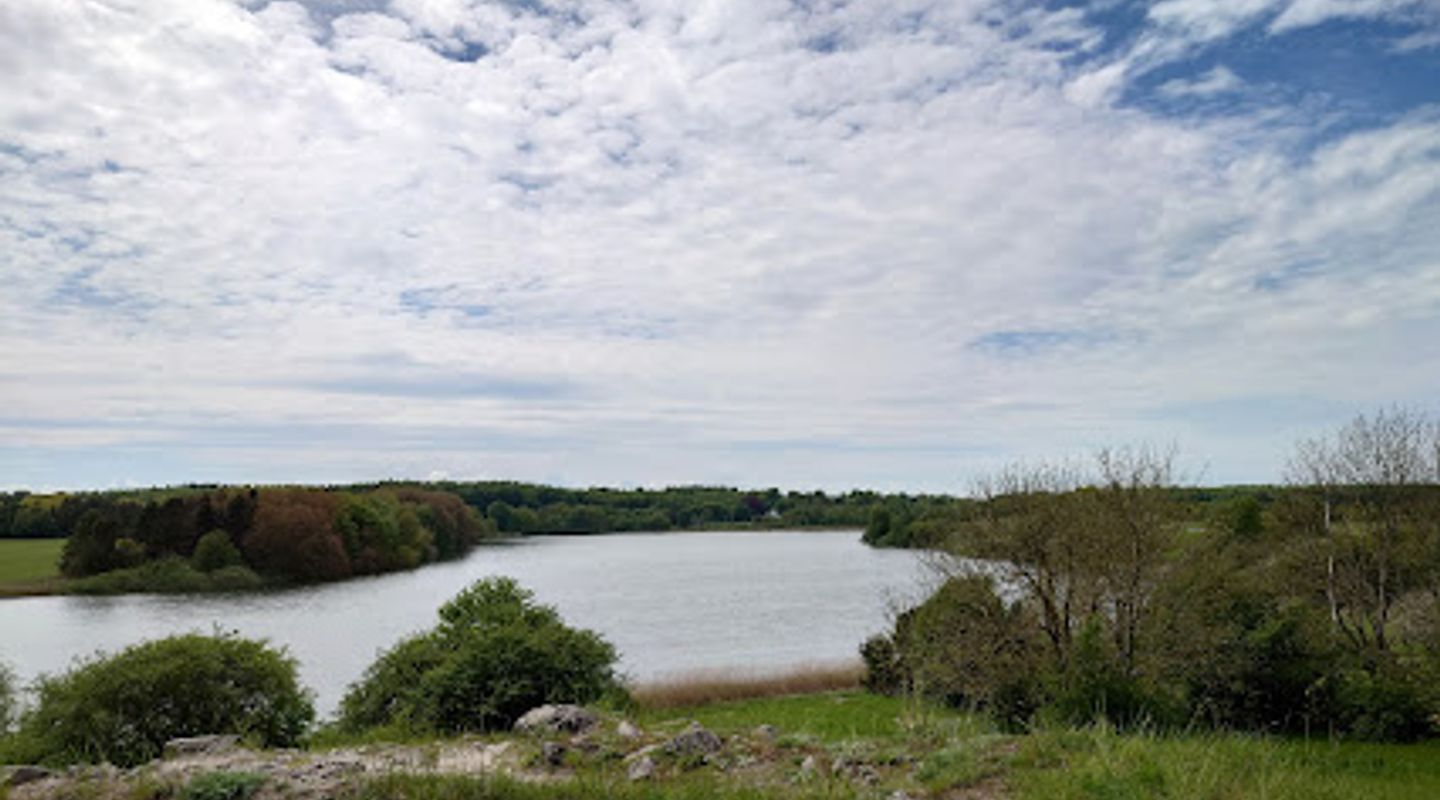
Part of Bastrup Tower’s appeal today lies in its setting as much as its masonry. Just a short stroll from the lakeshore, the ruin sits on slightly raised ground, ringed by pasture, woodland edges and the quiet waters of Bastrup Lake below. The broader Central Nordsjælland area is a patchwork of small towns, forests and agricultural land, and the western part around Lynge retains a distinctly rural character.This landscape invites slow exploration. Paths lead from the ruin down towards the lake and into surrounding fields and woods, making it a natural stop on a longer walk. The nearby Mølleå river system, which begins around Bastrup Lake and continues east through a chain of lakes and mills, has been important to Danish history since the Middle Ages and reinforces the impression that this was once a strategically chosen spot.
Visiting the ruin today
Bastrup Tower is freely accessible at all hours, with no entrance fee or gate. Low grassy banks and open ground around the structure make it easy to walk around the entire circumference and study the stonework from different angles. Information panels on site provide concise background in Danish and often also English, outlining the tower’s history, its dating to around 1100 and the main archaeological findings.There is typically simple parking close to the ruin, and the location combines well with a walk along Bastrup Lake or a wider day out in North Zealand’s forests and lakes. Mobile reception is generally good, but the area still feels pleasantly quiet and slightly off the beaten path. Rather than a long, structured visit, this is a place for an unhurried hour: circling the walls, reading the signs, looking out over the water and letting the imagination fill in wooden floors, banners and armed retainers where only stone and grass remain.
Evendo Review Centre
 Google
Guest reviews
Best time to go
Quietest: Jan, Feb & Mar · before 8am or at 9pm
Busy times are Evendo estimates for a typical year, to help you plan. Actual crowds vary with events, school holidays and the weather.
Explore The Bastrup Tower on the map
A handpicked selection of must-see spots near The Bastrup Tower, mapped for you.
Get your free copy of our complete guide to The Bastrup Tower, delivered straight to you.
Everything on this page, from opening hours and how to get there to Eve’s tips and the best time to go, in one PDF you can read offline, print or share.
Already have an account? Sign in
Your The Bastrup Tower guide is ready.
We'll send it to · Not you? Sign out

Getting your guide ready…
We are putting together a fresh copy of the The Bastrup Tower guide. This can take up to a minute.
This can take a few moments. If your browser asks, choose Allow so the download can start. You'll find the guide in your Downloads folder.
Nothing happened? Download it again
Sorry, the guide is taking longer than usual. Please try again in a minute, or get it by email instead.
Other nearby places you may find interesting
The closest places of the same kind, if this one is not quite what you had in mind.
-
-
-
-
-


Swipe for more places
More to explore near The Bastrup Tower

 Best experiences near The Bastrup Tower
 Best hotels near The Bastrup Tower
 Best landmarks near The Bastrup Tower
 Best attractions near The Bastrup Tower
 Best shops near The Bastrup Tower
 Best restaurants near The Bastrup Tower
 Best bars near The Bastrup Tower
Do you manage this location?
Take control to get all the benefits, like improved information, better appearance, and stronger visibility across AI-powered discovery.
Explore more

Explore more of North Zealand
Explore North Zealand, Denmark's enchanting region of castles, beaches, and royal estates, perfect for history buffs, nature enthusiasts, and seaside lovers.
Explore North Zealand
Explore more of Denmark
Discover Denmark: A perfect blend of history, modern design, and the cozy concept of hygge. Explore vibrant cities, serene landscapes, and world-class cuisine.
Explore Denmark
