

Rold Skov Travel Guide - Free Web & App
Your ultimate guide to Rold Skov. Discover top landmarks, proposed trips, and local tips. Free on the web or via the Evendo companion app.


Rold Skov, Denmark’s great forest, offers beech woods, clear springs, lakes, trails and nearby Rebild Bakker for walking, cycling and nature year-round.
Beech Woods, Lakes and Springs
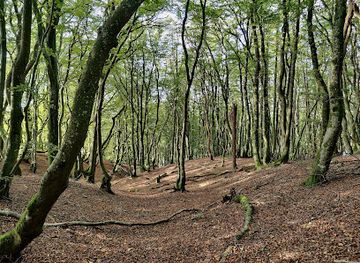
Rold Skov spreads across roughly 80 square kilometres of rolling woodland in Himmerland, northern Jutland, close to the town of Skørping and the celebrated Rebild Bakker hills. It is Denmark’s largest forest area, a varied landscape of mature beech, conifer plantations, open clearings, small lakes and spring-fed streams. The forest is not a single uniform wilderness: roads, tracks and footpaths pass through distinct woods and connect a constellation of natural features, including Store Økssø, Lille Økssø, Madum Sø and the atmospheric Troldeskoven, where old, gnarled beeches create one of the area’s most recognisable scenes.Read more about Rold Skov
A Landscape of Water and Woodland
Walking Country Near Skørping
When is the best time to visit Rold Skov?
Best: June–August · 22–23°C| Month | High (°C) | Rainfall (mm) |
|---|---|---|
| January | 4 | 40 |
| February | 3 | 35 |
| March | 5 | 30 |
| April | 12 | 25 |
| May | 18 | 25 |
| June (best) | 22 | 30 |
| July (best) | 23 | 35 |
| August (best) | 22 | 35 |
| September | 18 | 30 |
| October | 13 | 40 |
| November | 8 | 50 |
| December | 4 | 45 |
Getting to and around Rold Skov
How to get there
Best attractions in Rold Skov
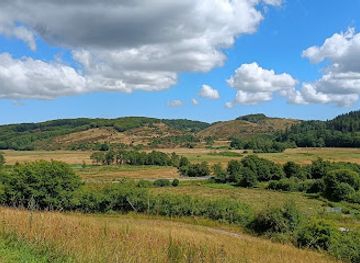
Rold Skov’s attractions are dispersed through a landscape of beech woods, conifer stands, lakes and springs rather than concentrated in one visitor centre. Troldeskoven is known for its old, contorted beeches, while Store Økssø and Lille Økssø provide tranquil waterside settings for walks and nature observation. Madum Sø, one of the largest lakes associated with the forest, adds an expansive open-water landscape framed by woodland. The clear springs of Ravnkilden and Lille Blåkilde reveal the area’s distinctive relationship with groundwater and chalk. On the eastern side, Rebild Bakker offers open heaths and rounded hills that contrast with the enclosed forest, while the Thingbæk limestone mines and Rebildcentret provide insight into local geology and culture. Gravlev Ådal, just beyond the immediate woodland setting, extends the experience into a valley of meadows, streams and wetland habitats, best considered as a nearby complementary attraction rather than part of the forest itself.
-
Nature preserve
Rebild National Park
Denmark's historic heathland where glacial hills meet Danish-American heritage and Europe's finest certified hiking trails.
-
Restaurant
Comwell Rebild Bakker
Luxury resort immersed in Denmark's most visited national park, blending Nordic wellness with historic landscape.
-
Tourist attraction
Thingbæk Chalk Mines / Rebild Center
An atmospheric limestone mine turned sculpture museum, paired with geology and Cold War exhibits in the Rebild hills, where art, stone, and history meet underground.
-
Historical landmark
Koldkrigsmuseet REGAN Vest
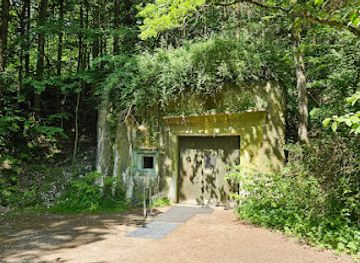
Once Denmark’s deepest state secret, this fully preserved Cold War government bunker now reveals life, fear and contingency planning 60 metres beneath a Jutland hill.
Best landmarks in Rold Skov
The defining landmarks of Rold Skov are natural: the old beech trees of Troldeskoven, the wooded shores of Store Økssø and Lille Økssø, and the spring systems that emerge from the Himmerland landscape. Ravnkilden and Lille Blåkilde are notable examples of clear groundwater rising through the forest, while Madum Sø forms a larger open-water feature among the woods. The adjoining Rebild Bakker is a separate landscape landmark, recognised for its open hills and heaths in contrast to the forest canopy. At Thingbæk, limestone mines provide a man-made and geological point of interest near the forest, connecting underground quarrying with the region’s chalk geology. Skørping railway station and the surrounding villages are practical cultural landmarks of the area’s development as a rural gateway, though the woodland and its water features remain its central identity.
-
Sculpture
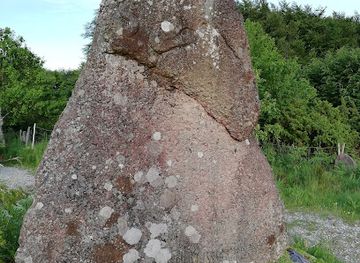
Kimbrerstenen i Rebild Bakker
Ancient stone monument honoring the Cimbri tribe amid Denmark's historic heaths and rolling landscape.
Explore Rold Skov on the map
Plan your trip on one map. See where the top attractions, landmarks, restaurants and hotels are, and book hotels and experiences in a few clicks.
Best hotels in Rold Skov
Best restaurants in Rold Skov
Dining within Rold Skov is limited and closely tied to the small settlements around it rather than to the woodland interior. Skørping is the most practical place for cafés, everyday meals and provisions, while Rebild and nearby villages provide additional opportunities connected with visits to the hills and surrounding attractions. Traditional Danish fare, open sandwiches, pastries, coffee and simple hot meals are the most useful expectations, with regional food producers and farm shops providing opportunities to buy picnic ingredients where available. Larger selections can be found in Støvring, Arden or Aalborg outside the forest area. Visitors planning a full-day walk should carry food and water, since lakes, springs and trail junctions do not form a continuous dining district and individual rural businesses may have seasonal opening patterns.
-
 Restaurant
Rold Storkro
Traditional Danish inn on the edge of Rold Forest, pairing panoramic valley views, classic kro dining and relaxed comforts with direct access to Rebild Bakker’s hills.
-
Fast Food
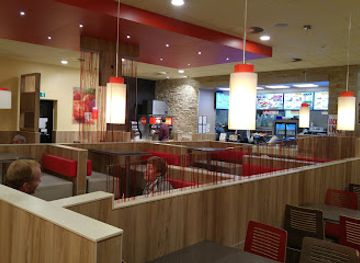
Burger King
Flame-grilled burgers and quick meals in rural Jutland's convenient fast-food hub.
-
Restaurant
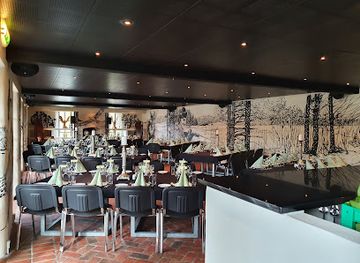
Røverstuen
Forest-nestled Danish restaurant blending rustic charm with quality cuisine and genuine hospitality.
-
Pizza
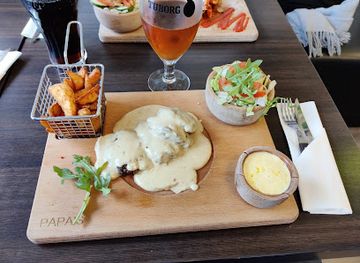
Papas Pizza Og Kebab House V/Serdar Keskin
Casual pizza and kebab favourite in the centre of Skørping, serving generous takeaway and dine‑in comfort food from late morning until evening every day.
Best bars in Rold Skov
Rold Skov is a quiet woodland destination rather than a nightlife centre. Evening options are concentrated in Skørping, Rebild and the surrounding villages, where traditional pubs, hotel bars and local social venues provide a more appropriate atmosphere than late-night clubs. These places are generally suited to a drink, conversation and an early meal after walking or cycling, with the character of the evening shaped by local community life rather than a dedicated entertainment district. Cultural events in the wider Rebild area may add occasional music or performance opportunities, but programmes vary and should be checked locally. Visitors seeking extensive clubbing, theatres or a broad choice of late venues will need to travel to Aalborg, outside the destination.
-
Bodega
Loke's Ølstue
A classic Danish bodega in Suldrup, where cold beer, warm conversation and small-town charm come together in a cozy, lived-in village bar.
-
Bar
Skørping Bodega
A no-frills local bodega in central Skørping, serving cold beers, simple spirits and plenty of conversation in a cozy, down-to-earth setting.
-
Cocktail bar
Happy Friday
Cozy neighborhood cocktail bar in Støvring, serving classic and signature drinks in a compact, modern space where quiet evenings can quickly turn into lively nights.

Best shops in Rold Skov
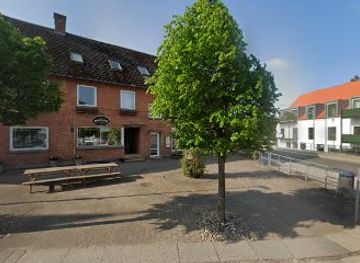
Shopping in and around Rold Skov is modest and practical, with the strongest selection in Skørping and larger nearby towns such as Støvring and Aalborg. Visitors can look for everyday supplies, walking and cycling essentials, books, gifts and locally produced foods rather than a concentrated tourist shopping quarter. Farm shops and small regional producers may offer seasonal produce, preserves, baked goods or other Himmerland specialities, while village businesses around Rebild can provide useful provisions for an outing. Craft and design shopping is more characteristic of the wider North Jutland region than of the forest itself, so availability varies between settlements and seasons. Because the woodland has no extensive retail infrastructure, visitors should buy picnic food, drinks and specialist equipment before heading to remote lakes or trailheads.
-
Clothing store
Skott in Rold
A focused bridal and occasionwear boutique in Arden, where curated Scandinavian style, personal fittings and on-site alterations shape outfits for life’s big celebrations.
-
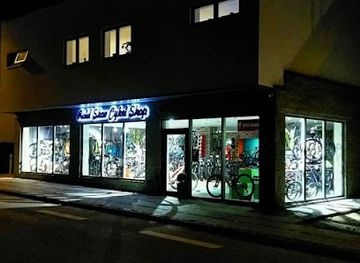
Bicycle store
Rold Forest Bike Shop
Denmark's premier mountain bike hub in the heart of Rold Forest's 50-kilometer trail network.
-
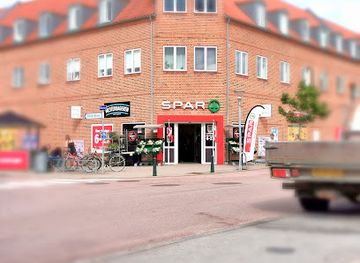
Supermarket
SPAR
Compact neighborhood supermarket in Arden, ideal for stocking up on everyday groceries, road-trip snacks and simple meals while exploring northern Jutland.
-
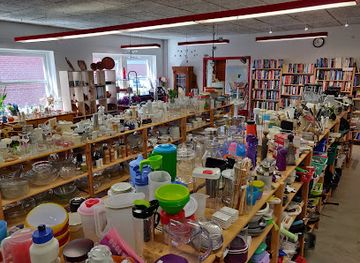
Thrift store
Kirkens Korshær Genbrug
Small-town Danish thrift shop where every second-hand bargain helps fund social work and offers a glimpse into everyday community life in Skørping.

Get your free copy of our complete guide to Rold Skov, delivered straight to you.
Everything on this page, from attractions and restaurants to essentials and local phrases, in one PDF you can read offline, print or share.
Already have an account? Sign in
Your Rold Skov guide is ready.
We'll send it to · Not you? Sign out

Getting your guide ready…
We are putting together a fresh copy of the Rold Skov guide. This can take up to a minute.
This can take a few moments. If your browser asks, choose Allow so the download can start. You'll find the guide in your Downloads folder.
Nothing happened? Download it again
Sorry, the guide is taking longer than usual. Please try again in a minute, or get it by email instead.
From Eve
Local phrases worth knowing
You don't need to get them perfect. A few words go a long way, and locals appreciate the effort.
Basics
| English | Local | Say it |
|---|---|---|
| Hello | Hej | [hay] |
| Goodbye | Farvel | [far-vel] |
| Yes | Ja | [ya] |
| No | Nej | [nay] |
| Please/You're welcome | Vær så god | [vayr so go] |
| Thank you | Tak | [tak] |
| Excuse me/Sorry | Undskyld | [oon-skoold] |
| How are you? | Hvordan har du det? | [vohr-dan har doo deh] |
| Fine. And you? | Fint. Og du? | [feent oh doo] |
| Do you speak English? | Taler du engelsk? | [tah-ler doo en-gelsk] |
| I don't understand | Jeg forstår ikke | [yay for-stor ee-keh] |
Eating & Drinking
| English | Local | Say it |
|---|---|---|
| I'd like to see the menu, please | Jeg vil gerne se menuen, tak | [yay vil gehr-neh seh meh-noo-en, tak] |
| I don't eat meat | Jeg spiser ikke kød | [yay spee-ser ee-keh kuhd] |
| Cheers! | Skål! | [skawl] |
| I would like to pay, please | Jeg vil gerne betale, tak | [yay vil gehr-neh beh-tah-leh, tak] |
Emergencies
| English | Local | Say it |
|---|---|---|
| Help! | Hjælp! | [hyehlp] |
| Go away! | Gå væk! | [goh vayk] |
| Call the Police! | Ring til politiet! | [ring teel poh-lee-tee-et] |
| Call a doctor! | Ring efter en læge! | [ring ef-ter en lay-eh] |
| I'm lost | Jeg er faret vild | [yay ehr fah-ret veel] |
| I'm ill | Jeg er syg | [yay ehr soog] |
Shopping
| English | Local | Say it |
|---|---|---|
| I'd like to buy... | Jeg vil gerne købe... | [yay vil gehr-neh kuh-beh] |
| I'm just looking | Jeg kigger bare | [yay kee-ger bah-reh] |
| How much is it? | Hvor meget koster det? | [vohr meh-eh kohs-ter deh] |
| That's too expensive | Det er for dyrt | [deh ehr for deert] |
| Can you lower the price? | Kan du sænke prisen? | [kan doo sahn-keh pree-sen] |
Time & Numbers
| English | Local | Say it |
|---|---|---|
| What time is it? | Hvad er klokken? | [vah ehr kloh-ken] |
| It's one o'clock | Den er et | [dehn ehr eht] |
| Half past (10) | Halv ti | [hahlv tee] |
| Morning | Morgen | [mor-gen] |
| Afternoon | Eftermiddag | [eft-er-mee-dag] |
| Evening | Aften | [ahf-ten] |
| Yesterday | I går | [ee gowr] |
| Today | I dag | [ee day] |
| Tomorrow | I morgen | [ee mor-gen] |
| 1 | Et | [eht] |
| 2 | To | [too] |
| 3 | Tre | [treh] |
| 4 | Fire | [fee-reh] |
| 5 | Fem | [fem] |
| 6 | Seks | [seks] |
| 7 | Syv | [soov] |
| 8 | Otte | [oh-teh] |
| 9 | Ni | [nee] |
| 10 | Ti | [tee] |
Transport & Directions
| English | Local | Say it |
|---|---|---|
| Where's a/the...? | Hvor er en/the...? | [vohr ehr en/the] |
| What's the address? | Hvad er adressen? | [vah ehr ah-dres-sen] |
| Can you show me (on the map)? | Kan du vise mig (på kortet)? | [kan doo vee-seh mee (poh kohr-teh)] |
| When's the next (bus)? | Hvornår er næste (bus)? | [vohr-nor ehr nes-teh (boos)] |
| A ticket (to ....) | Et billet (til ....) | [eht bee-let (teel)] |
History of Rold Skov
A Landscape Shaped by Ice and Water
Rold Skov’s present form reflects the glacial and post-glacial shaping of northern Jutland. Ice, meltwater and later erosion helped create the gently undulating terrain, hollows and valleys of Himmerland, while the area’s chalk and groundwater contribute to its numerous springs. The forest’s lakes and watercourses are therefore not simply ornamental features but part of a wider hydrological landscape linking woodland with the meadows and valleys around Rebild and Gravlev.
Early Woodland and Rural Settlement
Human communities have long used the land around the forest for grazing, cultivation and woodland resources. The area’s place names and archaeological traces reflect settlement in the wider Himmerland region, while the forest itself survived as a mixture of woodland parcels, commons and estate land rather than as an untouched natural preserve. Timber, fuel, grazing and access to water all influenced how local communities interacted with Rold Skov.
Estate Forestry and Changing Woods
Much of Rold Skov has historically been associated with large estates, including Lindenborg, and with organised forestry. Management gradually introduced and expanded conifers alongside the native beech, producing the varied mixture of woodland encountered today. The contrast between managed plantations, older beech stands, open glades and wet habitats is a visible record of changing forestry priorities, from timber production towards a broader balance of landscape, recreation and nature conservation.
Railways and the Rise of Visitors
The railway connection through Skørping helped bring the forest and surrounding hills within easier reach of visitors from other parts of Jutland. Improved transport supported walking excursions, local tourism and the growth of Skørping as a gateway settlement. Rebild Bakker developed a particularly strong public identity during the modern era, while attractions such as the Thingbæk limestone mines added geological and cultural dimensions to visits around the forest.
Conservation and Recreation Today
Modern management of Rold Skov reflects the area’s importance for forestry, groundwater, habitats and public recreation. Parts of the wider landscape are included in European nature-protection designations, and conservation work seeks to maintain springs, lakes, old trees and other sensitive environments alongside established access. Walking, cycling and nature observation now form a major part of the forest’s identity, although the landscape remains a working woodland rather than a wholly unmanaged reserve.
Rold Skov in Photos
Browse through our photo collection highlighting the charm and character of the destination.
Neighbouring destination travel guides
The closest destinations to Rold Skov, if you have time for more than one.
-

-

-

-

-


Swipe for more destinations
Explore more
Explore more of North Jutland
Explore North Jutland for Skagen’s sea meeting, Aalborg’s culture, Limfjord islands, windswept beaches and distinctive Danish coastal heritage.
Explore North Jutland
Explore more of Denmark
Discover Denmark: A perfect blend of history, modern design, and the cozy concept of hygge. Explore vibrant cities, serene landscapes, and world-class cuisine.
Explore Denmark