
Stenalderens Jægere, Silkeborg
A quiet rural stop near Silkeborg where fields, woods and wetlands hint at the lives of Stone Age hunters who once moved through this Jutland landscape.
Tucked along Skeldalvej outside Silkeborg, Stenalderens Jægere is a modest open-air spot that evokes the lives of Stone Age hunters in the surrounding lake and forest landscape. Close to the Gudenå valley and the famous bog finds of central Jutland, this quiet rural corner invites you to imagine small groups of hunter-gatherers tracking game, fishing and camping here thousands of years ago. Simple, unsignposted and free to access, it is best combined with nearby nature walks and archaeological sites.
A brief summary to Stenalderens Jægere
- Skeldalvej, Silkeborg, 8600, DK
- Duration: 0.5 to 1 hours
- Free
-
 Outdoor
- Mobile reception: 4 out of 5

Know before you go
Hi, I'm Eve. Here are a few practical things to know before exploring Stenalderens Jægere.
- Bring a good map or offline navigation, as there is little on-site signage and the spot is easy to pass without noticing.
- Combine the stop with nearby museums or bog sites in the Silkeborg area to see actual Stone Age artefacts and context.
- Wear sturdy shoes and weather-appropriate clothing; paths and field edges can be muddy after rain.
- Use this as a short mindfulness break on a wider drive or cycle tour, taking ten or fifteen minutes simply to observe the landscape.
Do you manage this location?
Take control to get all the benefits, like improved information, better appearance, and stronger visibility across AI-powered discovery. Learn more
Activate your presenceOther nearby places you may find interesting
Getting There
-
Car from central Silkeborg
From central Silkeborg, driving to the Skeldalvej area typically takes around 15–20 minutes, depending on traffic. Expect a mix of town streets and smaller country roads, all paved and suitable for standard vehicles. There is no formal parking area at Stenalderens Jægere, so visitors usually pull off safely onto a roadside verge without blocking farm access. Fuel is available in Silkeborg, and there are no tolls or specific driving fees for this short trip.
-
Bicycle from Silkeborg area
Cycling from Silkeborg to Skeldalvej is a realistic option for confident riders and typically takes 30–45 minutes one way. The route uses regular roads and minor lanes through gently undulating countryside, with occasional traffic but no dedicated cycle path for the entire distance. There is no cost beyond bicycle rental if needed, which in Silkeborg generally ranges from about 80–150 DKK per day. Surfaces are paved but can be windy and exposed, so this option is best in daylight and stable weather.
-
Regional bus plus walk
Regional buses run between Silkeborg and nearby rural stops in the direction of Skeldalvej, with journey times of about 15–25 minutes depending on the route and time of day. A single adult ticket on such routes is typically in the range of 20–40 DKK. From the nearest stop, expect a country-road walk of roughly 20–30 minutes on the roadside verge, with no pavements and limited lighting. Services are less frequent in the evening and on weekends, so checking timetables in advance is important.
Discover more about Stenalderens Jægere
Stone Age echoes in a Jutland landscape
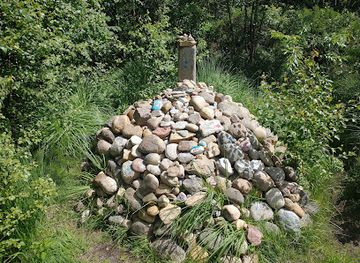
Stenalderens Jægere is less a formal attraction and more a historic reference point in the gently rolling countryside east of Silkeborg. The name, which translates as “Hunters of the Stone Age”, hints at the deep prehistory of this area of central Jutland, where lakes, wetlands and forest once formed an ideal hunting ground. Standing here, with open fields and tree lines all around, it is easy to picture small mobile groups moving along ridges and watercourses, following herds and seasonal resources.The wider Silkeborg region is known for Stone Age settlements and rich archaeological finds, from early hunter-fisher camps around bogs and lakes to the later farming communities that reshaped the land. This quiet spot on Skeldalvej is part of that broader story, helping you anchor the abstract idea of prehistory in a tangible modern landscape.Hunters, fishers and changing waters
In the Stone Age, central Jutland was dominated by water. Meltwater lakes, streams and wetlands created a mosaic of habitats full of red deer, wild boar, waterfowl and fish. A place like this would have been valuable territory for hunter-fisher groups who knew every bend of the streams and every dry rise in the ground. Temporary camps were often placed on slightly elevated spots close to water, where dugout canoes could be pulled ashore and stone tools knapped beside the fire.Over millennia, shorelines shifted, bogs grew and forests were cleared. Yet the basic pattern is still legible: low, damp ground in the distance, higher, drier patches underfoot, and the sense of a route along which people, animals and later traders and farmers have moved for thousands of years. Even without visible ruins, that continuity of use is what gives the site its quiet resonance.A subtle stop on a wider heritage route
As a destination, Stenalderens Jægere is understated. There are no reconstructed houses or large sculptures, only the rural setting itself and the knowledge of what once took place here. It works best as one stop in a day spent exploring the cultural landscape around Silkeborg: nearby bogs with famous finds, museum displays of Stone Age tools, and trails that trace older routes along the Gudenå valley and surrounding hills.Because there is no formal infrastructure, you are free to linger as long or as briefly as you like, listening to the wind in the trees and the calls of birds that still rely on the same wetlands once exploited by prehistoric hunters. The simplicity encourages you to slow down, pay attention to small details and let your imagination do the work.Reading the landscape with an archaeologist’s eye
One of the rewards of visiting such a modest site is learning to see landscape features as clues. Slight rises may mark old shorelines; darker, wetter patches indicate former inlets or bog margins rich in organic remains. Archaeologists use such patterns, along with soil studies and chance finds of flint, to locate ancient activity. As you look around Stenalderens Jægere, you are engaging in a similar exercise, tracing invisible lines between terrain, water and human needs.In doing so, the everyday life of Stone Age communities comes into focus: the constant balancing of risk and reward, the seasonal rhythm of hunting, fishing and gathering, and the intimate knowledge of animal tracks, bird migrations and plant cycles that made survival possible here long before fields and villages appeared.Quiet moments in today’s countryside
Today the surrounding farms, hedgerows and small patches of woodland form a characteristically Danish rural scene, yet the area retains a sense of spaciousness that suits unhurried exploration. The relative lack of signage and facilities means it rarely feels busy, making it a good place for contemplation, photography and short walks that connect you with the broader story of the region.Whether you pause here briefly between other sights or make it a deliberate stop on a themed route through prehistoric Jutland, Stenalderens Jægere offers a gentle reminder that even ordinary-looking corners of the countryside can hold many layers of human history beneath the surface.Explore the best of what Stenalderens Jægere has to offer













More about Central Jutland
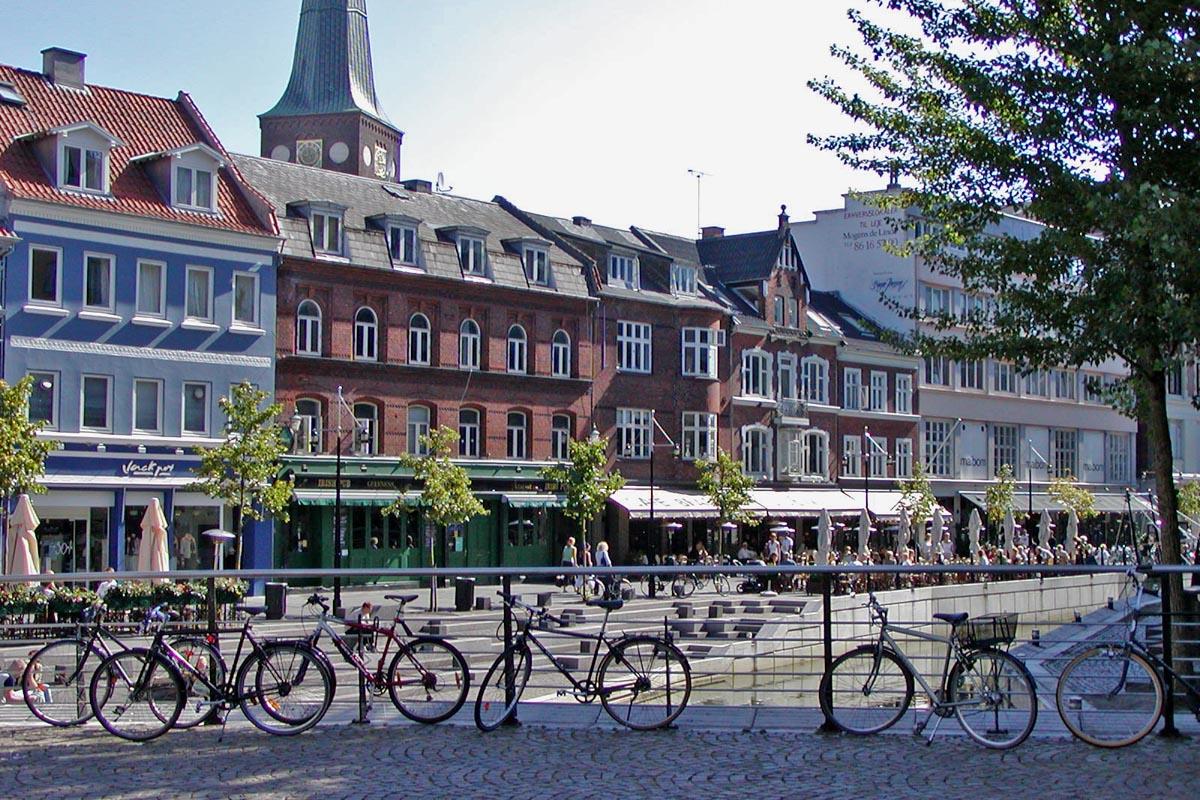
Explore Central Jutland in Denmark: A perfect blend of natural beauty, cultural heritage, and family-friendly attractions.
Tell me more about Central Jutland
Denmark's oldest steamship still operating with its original 1861 engine, offering historic cruises through the scenic Silkeborg Lake District.
Stand on Denmark’s quiet continental divide, where raindrops choose between the Skjern Å to the west and the Gudenå to the east in softly rolling farmland.
