Klosterlund Museum Travel Guide
Free Guide: Stone Age artifacts and industrial heritage converge in a beautifully restored peat factory overlooking Lake Bølling.


A brief summary of Klosterlund Museum
Stone Age artifacts and industrial heritage converge in a beautifully restored peat factory overlooking Lake Bølling.
Klosterlund Museum showcases the rich history of Central Jutland, from Stone Age settlements to the industrial peat era. Housed in a beautifully restored 120-year-old boulder farm, the museum features original archaeological finds including the renowned Hammerum girl's 2,000-year-old dress, alongside authentic peat-working machinery. A large nature playground overlooks Lake Bølling, and visitors can encounter heritage farm animals. Summer demonstrations reveal traditional peat-harvesting techniques.
On-site amenities
 Restrooms
 Drink options
 Food options
 Seating areas
 Sheltered areas
 Picnic areas
 Trash bins
 Information boards
 Visitor centre
Opening hours
- MonClosed
- Tue11 am–4 pm
- Wed11 am–4 pm
- Thu11 am–4 pm
- FriClosed
- Sat11 am–4 pm
- Sun11 am–4 pm
Opening hours as listed on the venue’s Google Business Profile. Hours can change for services and special events, so check with the venue before you go.
- Address
- Kragelundvej 6A, 7442 Engesvang
- Phone
- Website
Getting there
Car from Silkeborg
Bus from Herning
Bicycle from Lake Bølling
Walking from Engesvang village
Discover more about Klosterlund Museum
From Ancient Hunters to Industrial Heritage
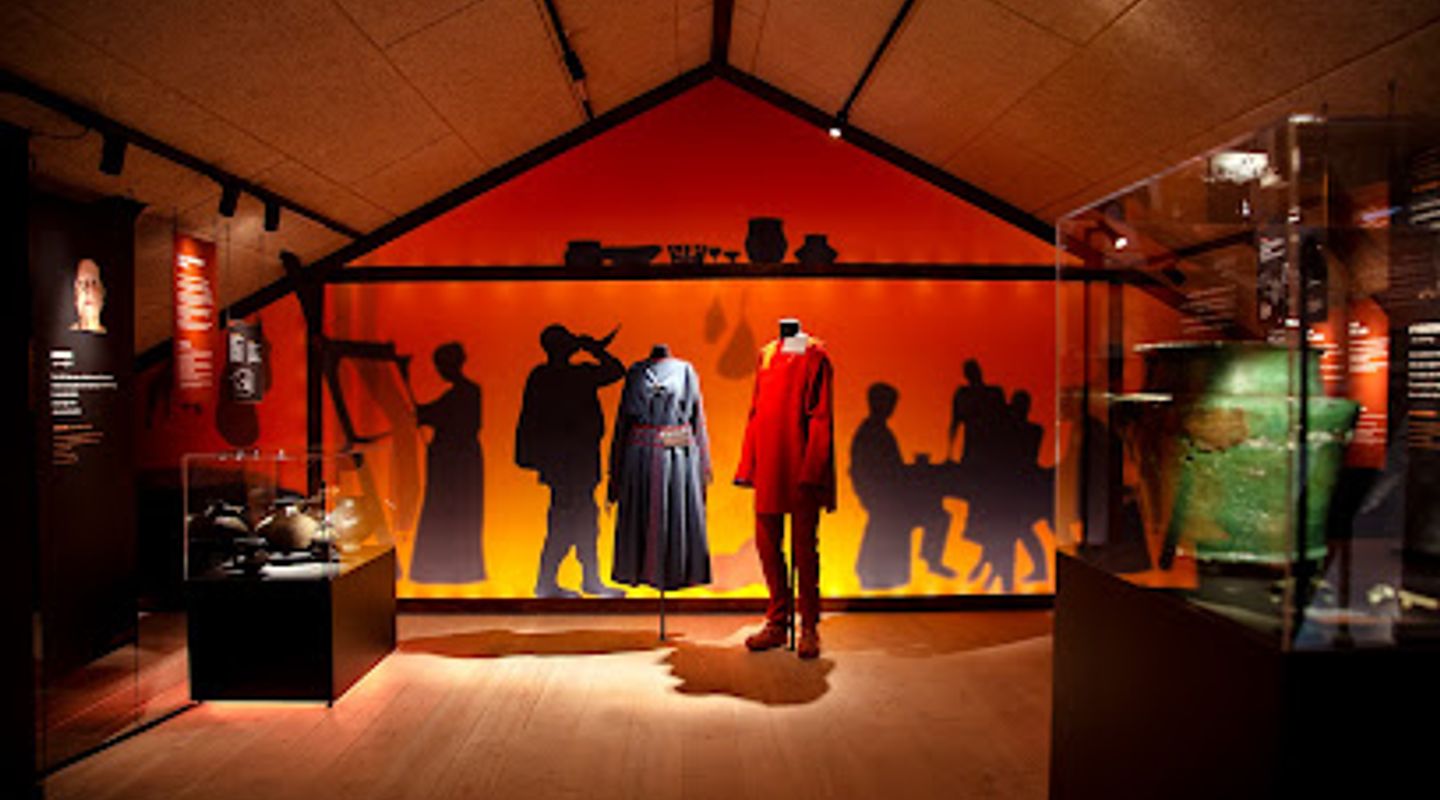
Klosterlund Museum tells the compelling story of human settlement in Central Jutland spanning thousands of years. The narrative begins with Stone Age hunter-gatherers who lived along the shores of Lake Bølling, continues through the medieval period, and culminates in the region's transformation into a major peat-production center during the 19th and 20th centuries. The museum's collections reveal how successive generations adapted to and exploited the natural landscape, particularly the extensive bog systems that once defined the local economy.The archaeological exhibitions feature finds of exceptional significance, including pottery, tools, and textiles that illuminate daily life in prehistoric times. Among the most prized artifacts is the Hammerum girl, whose grave contained one of Denmark's best-preserved ancient textiles—a nearly 2,000-year-old dress that provides rare insight into Roman Iron Age craftsmanship and fashion. Northern Europe's oldest wheel is also displayed, underscoring the site's archaeological importance.
The Peat Industry and Mechanical Innovation
The museum's second major theme explores the industrial transformation of the landscape. From the 1800s onward, peat extraction became the economic lifeblood of the region, attracting entrepreneurs and laborers who transformed the bogs into productive industrial zones. The exhibition showcases original machinery—from hand tools to steam-powered equipment—that powered this extraction. Visitors encounter the stories of local figures like Martin Anchersen, a peat producer who accumulated wealth during the 1930s boom and became instrumental in establishing the museum itself.During summer months, volunteer demonstrations bring this industrial heritage to life, recreating the physically demanding work of hand-digging and machine-powered peat extraction. These performances offer visceral understanding of the labor that sustained the regional economy for generations.
Architectural Setting and Restoration
The museum occupies a former peat factory building—a 120-year-old boulder farm that has been meticulously restored and modernized by dedicated volunteers. The renovation maintains the authentic character of the original structure while providing modern exhibition spaces and visitor amenities. The careful restoration work reflects the community's commitment to preserving both the physical heritage and the stories embedded within these walls. The surrounding landscape, with views toward Lake Bølling and the forested terrain, creates an immersive context for understanding how geography shaped local history.
Interactive Experiences for Families
Beyond exhibitions, the museum offers extensive outdoor spaces designed for active engagement. A large nature playground provides free play opportunities with panoramic views of Lake Bølling and the surrounding forest. Children can interact with heritage farm animals—horses, rabbits, geese, pigeons, and chickens—representing traditional agricultural breeds that once populated the region. These living connections to the past complement the artifact-based learning inside the museum building.
The "Face to Face" Exhibition
A distinctive exhibition titled "Face to Face" presents the museum's most invaluable archaeological treasures through a contemporary lens. Rather than displaying artifacts in isolation, the exhibition pairs ancient finds with personal narratives and photographs of present-day Central Jutlanders, creating dialogue between past and present. This approach transforms archaeological objects into windows onto human experience, allowing visitors to recognize continuity and change across millennia.
Evendo Review Centre
 Google
Guest reviews
Best time to go
Quietest: Jan, Feb & Nov · before 9am or from 5pm
Busy times are Evendo estimates for a typical year, to help you plan. Actual crowds vary with events, school holidays and the weather.
Explore Klosterlund Museum on the map
A handpicked selection of must-see spots near Klosterlund Museum, mapped for you.
Get your free copy of our complete guide to Klosterlund Museum, delivered straight to you.
Everything on this page, from opening hours and how to get there to Eve’s tips and the best time to go, in one PDF you can read offline, print or share.
Already have an account? Sign in
Your Klosterlund Museum guide is ready.
We'll send it to · Not you? Sign out

Getting your guide ready…
We are putting together a fresh copy of the Klosterlund Museum guide. This can take up to a minute.
This can take a few moments. If your browser asks, choose Allow so the download can start. You'll find the guide in your Downloads folder.
Nothing happened? Download it again
Sorry, the guide is taking longer than usual. Please try again in a minute, or get it by email instead.
Other nearby places you may find interesting
The closest places of the same kind, if this one is not quite what you had in mind.
-
Abbey Mill Historic Abbey Mill on Mossø’s shore, where Denmark’s longest wooden building meets bird-rich wetlands, gentle trails and a tranquil corner of the Gudenå River.
-
Clausholm Castle A moated Baroque manor near Hadsten, where painted ceilings, royal love stories and terraced gardens bring Denmark’s aristocratic past vividly to life.
-
Slotsholmen Tranquil green islet at Silkeborg’s origins, where a vanished riverside castle meets calm water views, quiet lawns and a gentle sense of early local history.
-
The Manor House of Hald An 18th-century manor fronting centuries-old ruins, deep forest and Hald Lake, where writers find seclusion and visitors wander through Danish history in nature.
-
Marselisborg Castle Royal retreat above Aarhus Bay, where sculpture-filled gardens, a rose-scented park and quiet ceremony surround Denmark’s Jutland summer palace.
Swipe for more places
More to explore near Klosterlund Museum

 Best experiences near Klosterlund Museum
 Best hotels near Klosterlund Museum
 Best landmarks near Klosterlund Museum
 Best attractions near Klosterlund Museum
 Best shops near Klosterlund Museum
 Best restaurants near Klosterlund Museum
 Best bars near Klosterlund Museum
Do you manage this location?
Take control to get all the benefits, like improved information, better appearance, and stronger visibility across AI-powered discovery.
Explore more

Explore more of Central Jutland
Explore Central Jutland in Denmark: A perfect blend of natural beauty, cultural heritage, and family-friendly attractions.
Explore Central Jutland
Explore more of Denmark
Discover Denmark: A perfect blend of history, modern design, and the cozy concept of hygge. Explore vibrant cities, serene landscapes, and world-class cuisine.
Explore Denmark