Aarhus Cathedral, East Jutland Travel Guide
Denmark's longest and tallest church, blending Romanesque strength with Gothic grace and medieval artistry.
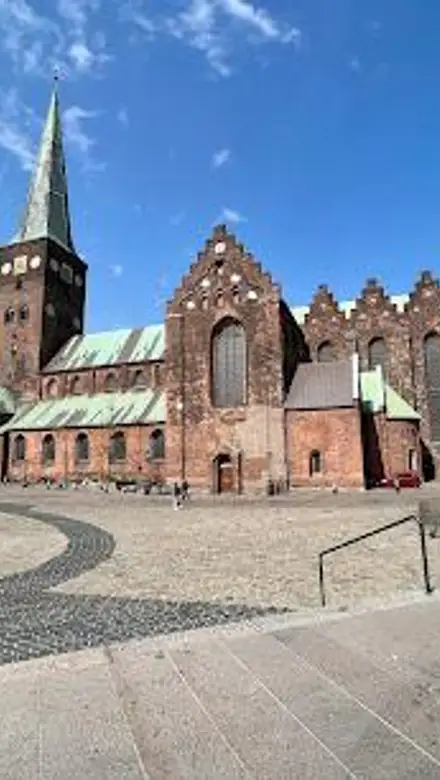
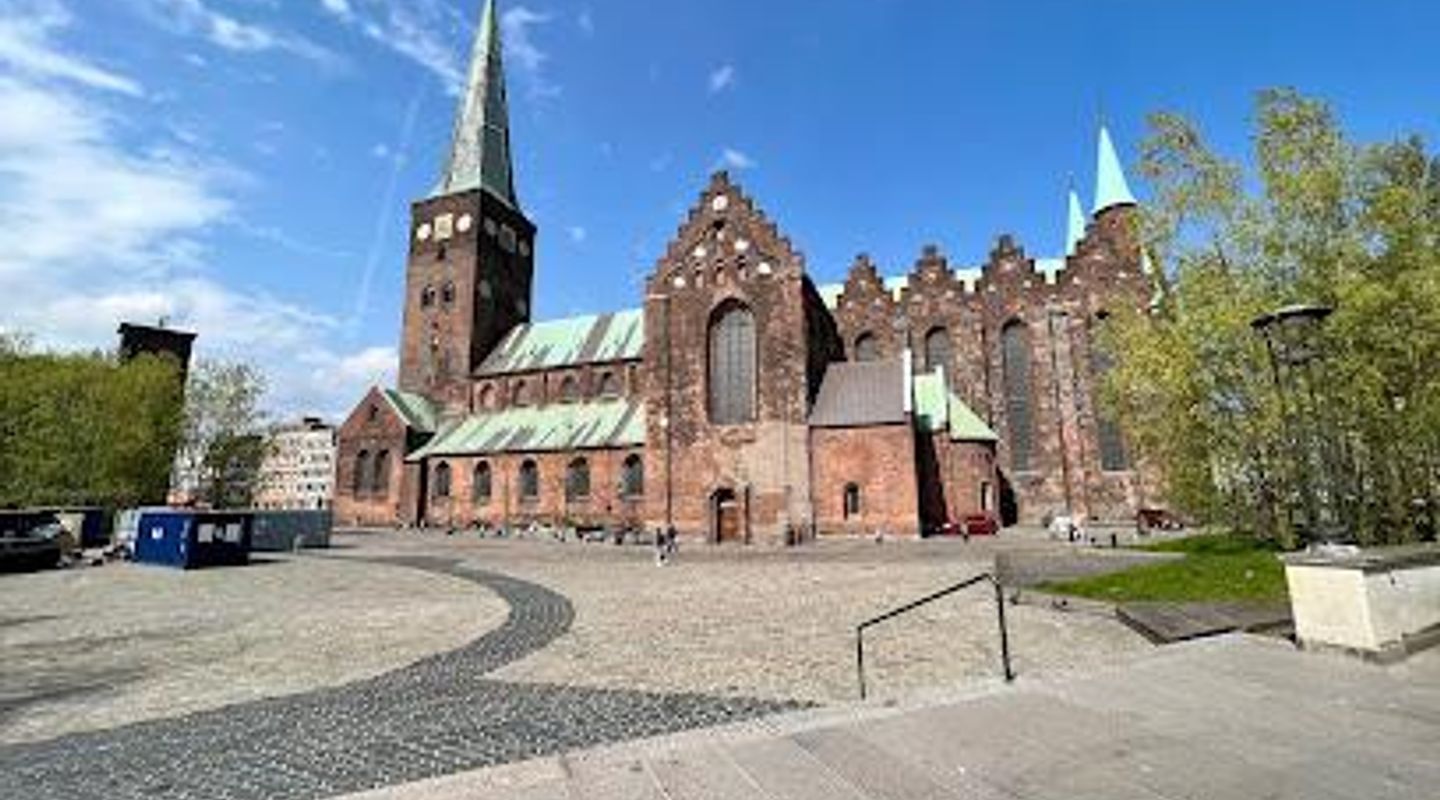
Aarhus Cathedral, officially St. Clement's Church, is Denmark's longest and tallest church at 93 meters long and 92 meters high. This architectural masterpiece combines Romanesque foundations with stunning Gothic transformations undertaken between 1449 and 1520. Located at the heart of Aarhus on Store Torv, the cathedral features an exceptional collection of medieval frescoes, a magnificent altarpiece by Bernt Notke, and intricate ribbed vaulting. Built with distinctive red brick—a material revolutionary for Denmark in the 12th century—the cathedral remains an active place of worship and a defining landmark of the city's skyline.
A brief summary to Aarhus Cathedral
- Store Torv, Aarhus, Aarhus C, 8000, DK
- Click to display
- Click to display
- Duration: 1 to 2.5 hours
- Free
-
 Indoor
- Mobile reception: 5 out of 5
- Monday 10 am-3 pm
- Tuesday 10:30 am-3 pm
- Wednesday 10 am-3 pm
- Thursday 10 am-3 pm
- Friday 10 am-3 pm
- Saturday 10 am-3 pm

Know before you go
Hi, I'm Eve. Here are a few practical things to know before exploring Aarhus Cathedral.
- Visit on weekdays between late morning and early afternoon to avoid peak worship times and large tour groups. Sunday mornings are reserved for services and the cathedral opens only to worshippers.
- Take time to examine the frescoes and maritime motifs throughout the nave and chapels—these medieval wall paintings were hidden for centuries and reveal rich details about the cathedral's seafaring heritage.
- Look upward to appreciate the star and cross vaulting that characterizes the Gothic renovation. The ribbed vaults and pointed arches create a sense of soaring height that defines the interior experience.
- Book a guided tour in English or Danish to learn the detailed stories behind the Bernt Notke altarpiece, the baptismal font, and the cathedral's architectural transformations across eight centuries.
- The cathedral is located steps from Strøget and major shopping areas, making it an ideal pause during city exploration. Admission is free, though tours require a fee.
Do you manage this location?
Take control to get all the benefits, like improved information, better appearance, and stronger visibility across AI-powered discovery. Learn more about listing your business on Evendo
Activate your presenceOther nearby places you may find interesting
The closest places of the same kind, if this one is not quite what you had in mind.
Explore Aarhus Cathedral on the Map
A handpicked selection of must-see spots near Aarhus Cathedral, mapped for you.
Unlock the Best of Aarhus Cathedral
Buy tickets
-
No tickets available
Book tours with entry


Getting There
-
Public Transport
From Aarhus Central Station, take the metro (M1 or M2 line) toward the city center and exit at Skolebakken station, approximately 5 minutes. The cathedral is a 2-minute walk from the station, located directly on Store Torv in the heart of the city center. Metro tickets cost approximately 24 DKK for a single journey within the city zone.
-
Walking
If you are in central Aarhus near Strøget or the shopping district, the cathedral is within a 5–10 minute walk. From Magasin department store on Store Torv, the cathedral entrance is immediately adjacent. The city center is compact and pedestrian-friendly with clear signage.
-
Parking
Street parking is available in the surrounding area near Store Torv and Bispetorv, though spaces are limited during peak hours. Several paid parking garages operate nearby, including Magasin's parking facility. Expect to pay approximately 30–50 DKK per hour for street parking.
-
Bicycle
Aarhus is highly bicycle-friendly with dedicated cycle lanes throughout the city center. Bike rental services are available at the central station and throughout the city, costing approximately 60–100 DKK per day. Secure bike parking is available near the cathedral.
For the on-the-go comforts that matter to you
-
 Restrooms
-
 Seating Areas
-
 Information Boards
-
 Visitor Center
Discover more about Aarhus Cathedral
From Romanesque Foundations to Gothic Splendor
Construction of Aarhus Cathedral began between 1180 and 1200, likely under Bishop Peder Vognsen, on the site of an earlier wooden church dedicated to Saint Clement. The original Romanesque basilica, completed around 1350, was an ambitious undertaking built entirely in red brick—a revolutionary material for Denmark, not widely used before 1160. The outer walls and eastern chapels of this Romanesque structure survive today as testament to medieval ambition. However, the cathedral's true transformation came during the 15th century, when Bishop Jens Iversen Lange initiated a radical Gothic reconstruction between 1449 and 1500.This Gothic renovation fundamentally reshaped the cathedral's character. The nave was elevated dramatically, receiving soaring star vaults while the side aisles were fitted with cross vaults and enlarged windows that flooded the interior with light. The choir was entirely reconstructed and enlarged with three naves of equal height, an ambulatory, and thirteen high pointed windows. A magnificent west tower bearing the bishop's coat of arms rose above the entrance, and the overall effect transformed the heavy Romanesque structure into a luminous hall church inspired by the great Hanseatic churches around the Baltic Sea.Artistic Treasures and Sacred Craftsmanship
The cathedral's interior contains some of Denmark's most significant medieval artistic achievements. The crowning glory is the gilded altarpiece, commissioned from the workshop of the renowned German painter Bernt Notke in Lübeck and installed in 1479. This late Gothic masterpiece depicts the Madonna and Child with Saint Anna, flanked by Saint Clement and John the Baptist, with the twelve apostles arranged in tiers below and the Coronation of Our Lady in Heaven at the apex, attended by the archangels Gabriel and Michael. The altarpiece was meticulously restored between 1975 and 1980, recovering its original brilliance.Equally remarkable are the cathedral's frescoes, among the finest medieval wall paintings in Denmark. Dating primarily from the Gothic renovation period (1470–1530), these frescoes had been hidden beneath whitewash for centuries before being uncovered and conserved in modern times. Maritime motifs appear throughout, reflecting the cathedral's dedication to Saint Clement, patron saint of sailors—a fitting choice for a city with deep seafaring roots. The cathedral also houses a notable baptismal font and pulpit reflecting post-medieval craftsmanship, while a suspended model sailing ship hangs within the nave as a votive offering.Centuries of Transformation and Resilience
The cathedral's journey through subsequent centuries reflects the turbulent history of Denmark itself. After the Reformation, the church's financial resources were severely restricted, limiting maintenance to essential repairs until the mid-1800s. In 1642, the original tower burned and was replaced by a shorter octagonal spire, nicknamed the "coffee pot lid" by locals. In 1702, parts of the eastern chapels were demolished, and in 1743, the exterior was modernized in the Baroque style. An extensive repair in 1775 removed much of the remaining medieval character, though the core Gothic structure remained intact. In 1822, the northern spire on the small round choir towers was blown down and replaced with octagonal onion domes designed by architect N. H. Rieman. The current tower, standing 92 meters tall, was rebuilt in 1931.A Living Monument to Danish Sacred Architecture
Today, Aarhus Cathedral stands as Denmark's longest church, stretching 93 meters and seating approximately 1,200 people. It remains the tallest church in the nation and a defining feature of Aarhus's skyline, dominating the central squares of Store Torv and Bispetorv. The cathedral continues to function as an active parish church, hosting regular services, religious observances, and concerts that echo through its vaulted spaces. Visitors who enter find themselves walking through eight centuries of Danish architectural evolution—from the sturdy red-brick Romanesque walls to the soaring Gothic vaults, from medieval frescoes to Baroque organs. The cathedral's enduring presence speaks to the resilience of both the building and the community it has served, making it far more than a museum piece: it is a living testament to faith, craftsmanship, and the layered history of a great Danish city.












Your all‑in‑one travel companion app
Explore expert travel guides, compare and book tours, experiences, hotels, and more—all from the palm of your hand. Download now for seamless trip planning wherever your wanderlust takes you.


Explore More of East Jutland
Looking beyond Aarhus Cathedral? Discover East Jutland for broader travel guides, local hot-spots, and regional highlights.
Explore East Jutland