

Mindesten for Røde Kors, Sønderborg Travel Guide
Free Guide: A quiet memorial to the world's first Red Cross observers amid Denmark's most historic battlefield.


A brief summary of Mindesten for Røde Kors
A quiet memorial to the world's first Red Cross observers amid Denmark's most historic battlefield.
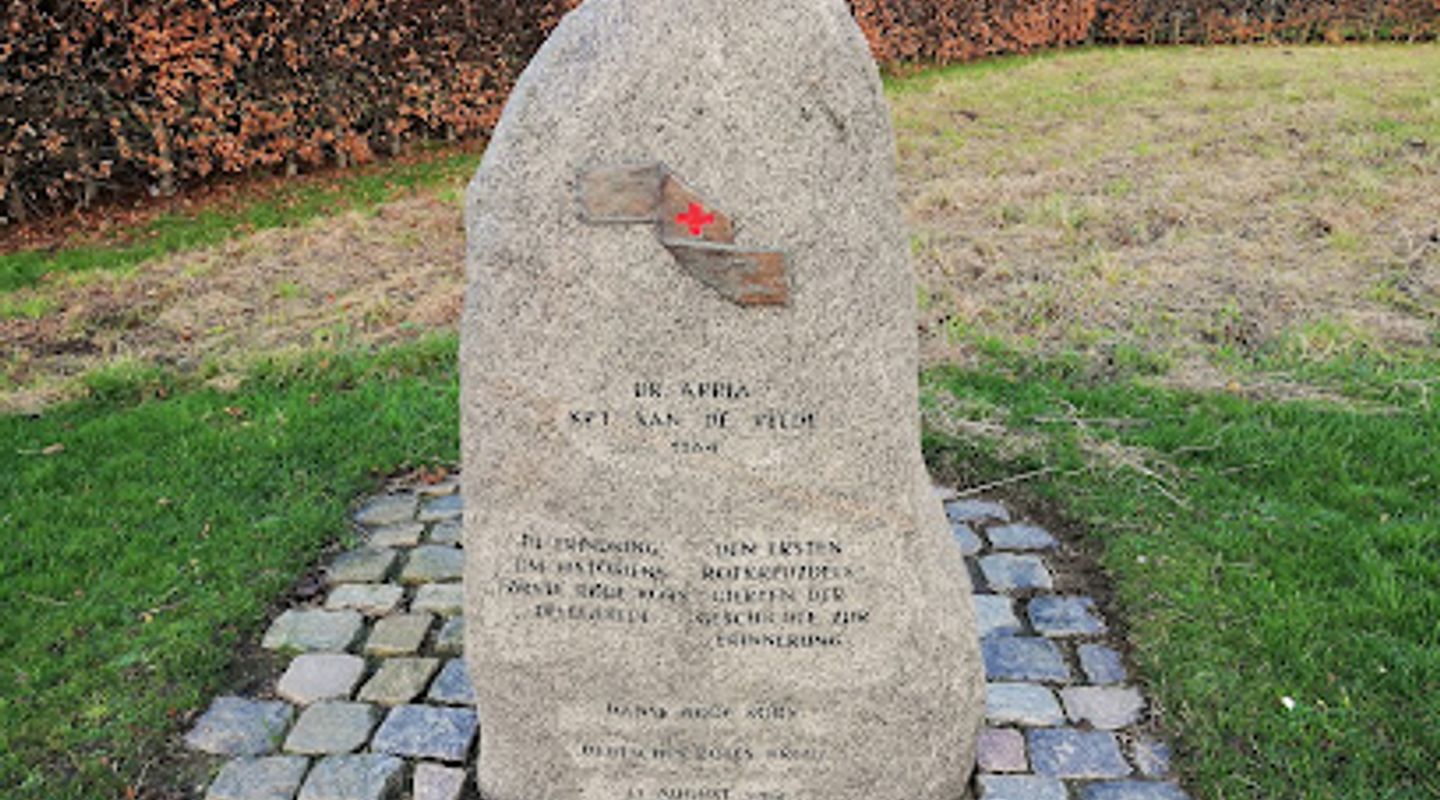
A solemn memorial stone at Dybbøl Banke honoring Louis Appia and Charles van de Velde, the world's first Red Cross observers who documented the 1864 Danish-Prussian War. Located within the historic battlefield landscape near Sønderborg, this modest but significant monument commemorates the humanitarian pioneers who witnessed one of Denmark's most pivotal military conflicts and helped establish international humanitarian principles.
On-site amenities
 Information boards
 Visitor centre
Opening hours
- Every dayOpen 24 hours
Opening hours as listed on the venue’s Google Business Profile. Hours can change for services and special events, so check with the venue before you go.
- Address
- Dybbøl Banke 22, 6400 Sønderborg
Getting there
Car from Sønderborg town center
Bus from Sønderborg
Bicycle from Sønderborg
Walking from nearby attractions
Discover more about Mindesten for Røde Kors
Pioneers of International Humanitarian Response
The memorial stone at Dybbøl Banke stands as a tribute to Louis Appia and Charles van de Velde, two Swiss observers who made history during the 1864 war between Denmark and the German states of Prussia and Austria. These men were the world's first Red Cross observers, documenting the conflict and bearing witness to the human cost of war. Their presence at Dybbøl marked a turning point in how the international community would approach armed conflict, establishing principles of neutral humanitarian observation that would shape modern conflict response for generations to come.
The 1864 War and Dybbøl's Significance
Dybbøl Banke itself was the site of one of Denmark's most decisive military defeats. On April 18, 1864, Prussian forces stormed the Danish defensive positions in a brutal assault that would ultimately lead to Denmark's loss of approximately 40 percent of its territory, including the duchies of Schleswig and Holstein. The battle was characterized by intense bombardment and close combat, resulting in thousands of casualties. The wounded soldiers who survived faced years of physical and psychological recovery, their struggles becoming part of Denmark's collective memory of this catastrophic conflict.
A Monument Within a Living Historical Landscape
The memorial stone is situated within Dybbøl Banke, a landscape transformed into a comprehensive historical site. The area contains reconstructed military fortifications, including the famous Dybbøl Mølle (mill), which stands as one of Denmark's most iconic national symbols. The Historiecenter Dybbøl Banke, opened in 1992, provides immersive exhibitions, films, and reconstructed soldier barracks that bring the 1864 conflict to life. Walking among these monuments and installations, visitors encounter multiple layers of historical narrative—from the original Danish skanser (fortifications) built in 1861–1862 to the Prussian defensive works constructed after their victory in 1865–1871.
Remembering Humanitarian Values Amid Conflict
While the battlefield itself speaks to the devastation of war, the memorial to Appia and van de Velde represents something different: the emergence of organized compassion and neutral observation during armed conflict. Their work laid the foundation for the International Committee of the Red Cross and established the principle that humanitarian workers could operate independently of military objectives. This stone, modest in appearance but profound in meaning, reminds visitors that even in humanity's darkest moments, individuals can choose to document, witness, and advocate for the protection of the wounded and vulnerable.
Evendo Review Centre
 Google
Guest reviews
Best time to go
Quietest: Jan, Feb & Mar · before 7am or at 8pm
Busy times are Evendo estimates for a typical year, to help you plan. Actual crowds vary with events, school holidays and the weather.
Explore Mindesten for Røde Kors on the map
A handpicked selection of must-see spots near Mindesten for Røde Kors, mapped for you.
Get your free copy of our complete guide to Mindesten for Røde Kors, delivered straight to you.
Everything on this page, from opening hours and how to get there to Eve’s tips and the best time to go, in one PDF you can read offline, print or share.
Already have an account? Sign in
Your Mindesten for Røde Kors guide is ready.
We'll send it to · Not you? Sign out

Getting your guide ready…
We are putting together a fresh copy of the Mindesten for Røde Kors guide. This can take up to a minute.
This can take a few moments. If your browser asks, choose Allow so the download can start. You'll find the guide in your Downloads folder.
Nothing happened? Download it again
Sorry, the guide is taking longer than usual. Please try again in a minute, or get it by email instead.
Other nearby places you may find interesting
The closest places of the same kind, if this one is not quite what you had in mind.
-
-
-
-
-


Swipe for more places
More to explore near Mindesten for Røde Kors
-
 Best experiences near Mindesten for Røde Kors
-
 Best hotels near Mindesten for Røde Kors
-
 Best landmarks near Mindesten for Røde Kors
-
 Best attractions near Mindesten for Røde Kors
-
 Best shops near Mindesten for Røde Kors
-
 Best restaurants near Mindesten for Røde Kors
-
 Best bars near Mindesten for Røde Kors


Do you manage this location?
Take control to get all the benefits, like improved information, better appearance, and stronger visibility across AI-powered discovery.
Explore more

Explore more of Sønderborg
Discover Sønderborg, Denmark's coastal gem, where history meets nature amidst stunning landscapes and vibrant cultural experiences.
Explore Sønderborg
Explore more of Denmark
Discover Denmark: A perfect blend of history, modern design, and the cozy concept of hygge. Explore vibrant cities, serene landscapes, and world-class cuisine.
Explore Denmark
