Augustenborg Palace, South Jutland Travel Guide
Denmark's largest baroque palace complex overlooking the fjord, where ducal history meets timeless gardens.
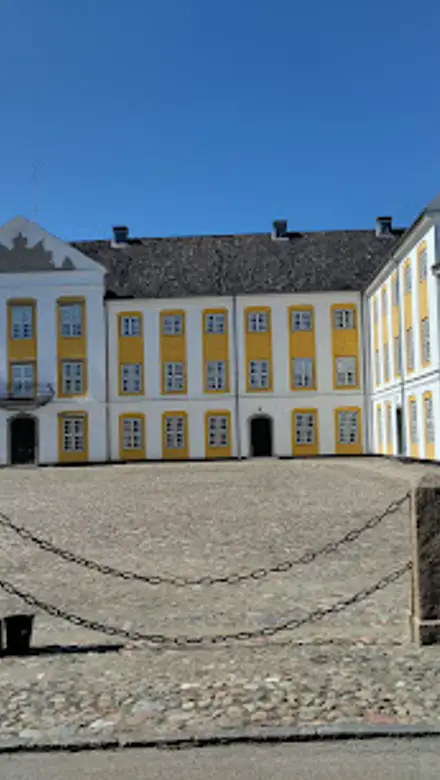
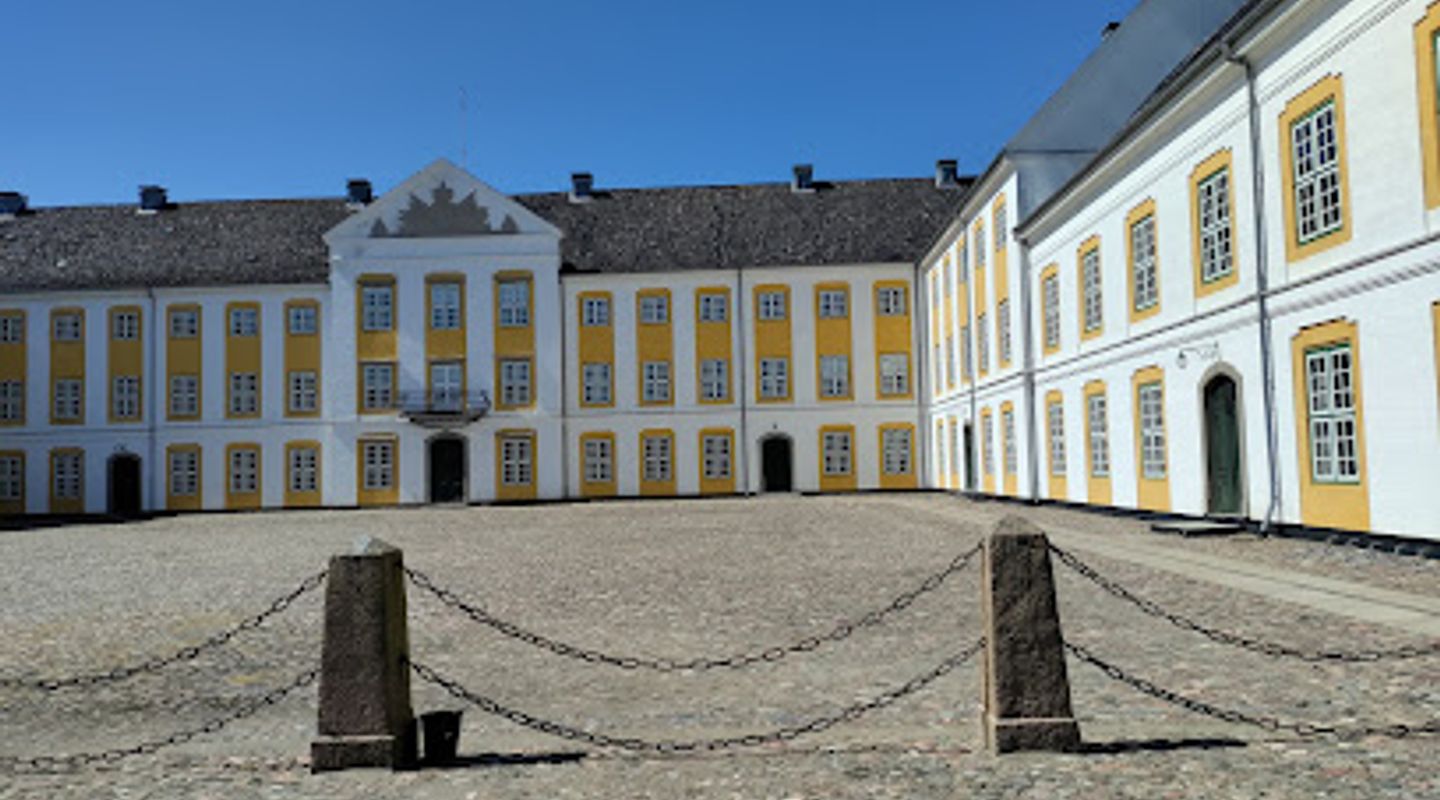
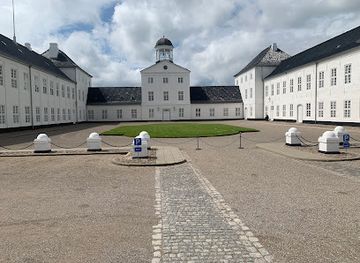
A magnificent Rococo-style palace overlooking Augustenborg Fjord on Als Island, Denmark. Built between 1770–1776, this baroque masterpiece served as the residence of the ducal family for over a century. Today, visitors can explore the beautifully landscaped gardens, visit the palace chapel, and discover a small museum dedicated to the palace's rich history and the House of Schleswig-Holstein-Sonderburg-Augustenburg.
A brief summary to Augustenborg Palace
- Augustenborg Slot, Augustenborg, 6440, DK
- Click to display
- Duration: 1.5 to 3 hours
- Free
-
 Outdoor
- Mobile reception: 4 out of 5

Know before you go
Hi, I'm Eve. Here are a few practical things to know before exploring Augustenborg Palace.
- Visit the palace gardens during spring mornings when blossoms are at their peak and crowds are minimal, offering the most serene experience and optimal photography conditions.
- Explore the memorial linden tree where Hans Christian Andersen drew inspiration for his fairy tales, and discover the nearby Ice Hill, a fascinating remnant of 18th-century ice storage technology.
- Access the palace gardens via multiple routes: from the palace itself, along Palævej, or via the beautiful fjord-side promenade that connects the gardens to the harbour and town.
- Time your visit to coincide with the palace chapel's summer opening hours to experience the exquisite Rococo interior, or check for special cultural events and concerts held in the gardens.
- Visit the mini-museum in the gatehouse for a comprehensive overview of the ducal family's history and the palace's architectural evolution before exploring the grounds.
Do you manage this location?
Take control to get all the benefits, like improved information, better appearance, and stronger visibility across AI-powered discovery. Learn more about listing your business on Evendo
Activate your presenceOther nearby places you may find interesting
The closest places of the same kind, if this one is not quite what you had in mind.
Explore Augustenborg Palace on the Map
A handpicked selection of must-see spots near Augustenborg Palace, mapped for you.
Getting There
-
By Car
From Sønderborg (approximately 15 km south), take Route 8 northbound toward Augustenborg. Follow signs to the town centre and palace. Parking is available near the palace grounds. Journey time is approximately 20–25 minutes. The palace and gardens are well-signposted throughout the town.
-
By Bus
Regional bus services connect Augustenborg to Sønderborg and surrounding towns. Journey times vary from 25–40 minutes depending on the route and service frequency. Check local bus schedules in advance, as services may be limited on weekends and holidays. Buses typically stop near the town centre, from which the palace is a short walk.
-
By Bicycle
Als Island has a well-developed cycling network. From Sønderborg, the journey to Augustenborg is approximately 20 km and takes 1–1.5 hours on flat terrain. Bicycle paths are clearly marked, and the route offers scenic views of the island's landscape. Bike rentals are available in nearby towns.
-
Walking from Town Centre
From Augustenborg town centre, the palace gardens are accessible via multiple walking routes. The main approach via Palævej takes approximately 10–15 minutes on level ground. An alternative scenic route follows the fjord-side promenade from the harbour, offering waterfront views and taking approximately 15–20 minutes. All routes are clearly marked and accessible year-round.
For the on-the-go comforts that matter to you
-
 Restrooms
-
 Drink Options
-
 Food Options
-
 Seating Areas
-
 Information Boards
-
 Visitor Center
-
 Picnic Areas
Discover more about Augustenborg Palace
A Baroque Masterpiece on the Baltic
Augustenborg Palace stands as one of Denmark's most complete and impressive baroque complexes, commanding a prominent position on Als Island in southern Denmark. The present palace was constructed between 1770 and 1776, replacing an earlier half-timbered manor house built in 1660–1664 by Ernest Günther, the first Duke of Augustenborg. The three-winged main building exemplifies Late Baroque architecture in full symmetry, while the surrounding red-roofed outbuildings, added from 1733 onwards, create a harmonious ensemble that overlooks the narrow waters of Augustenborg Fjord, an arm of the Baltic Sea.The Ducal Legacy and Historical Transformations
The palace owes its name to Duchess Auguste (1633–1701) and became the seat of the House of Schleswig-Holstein-Sonderburg-Augustenburg, one of Denmark's most prominent noble families. Duke Christian August II, the last member of the ducal family to reside in the palace, departed in 1848 following the First Schleswig War due to his close ties with Germany. After the ducal family's departure, the palace underwent dramatic transformations: it served first as military barracks, then from 1878 as a seminary for women. In 1921, the Danish state purchased the property, converting it into a hospital in 1927–1928. For more than 80 years, significant portions functioned as a psychiatric hospital until the facility relocated to nearby Aabenraa in 2015. Today, the palace houses the Danish Agency for Agriculture, which has undertaken extensive renovations of the main building.Gardens and Landscape Design
The palace grounds showcase exceptional landscape architecture, with the original Baroque-style garden transformed during the 19th century into an expansive landscaped park. Elegant grass terraces descend toward the fjord, framed by carefully sculpted topiary hedges and mature trees. The garden's design creates a visual illusion where the manicured landscape appears to merge seamlessly with the natural landscape beyond, a hallmark of sophisticated 18th-century estate design. Accessible trails wind through the grounds, offering visitors multiple perspectives of the palace and fjord views.Structures and Hidden Stories
The palace complex includes several notable secondary buildings, each with distinct historical significance. The House of Prince, built in 1765 for Emil August (younger brother of Duke Frederick Christian I), served as a hermitage for the retired general until his death in 1786. The palace chapel, constructed in the Rococo style, now functions as the parish church of Augustenborg and opens to the public during summer months. Within the park grounds stands a memorial plaque beneath an ancient linden tree, marking the spot where poet Hans Christian Andersen is said to have found inspiration for some of his most celebrated fairy tales, including "The Little Match Girl." The Ice Hill, located north of the linden tree, preserves the remains of a five-meter-deep cellar constructed from large boulders, originally used to store ice blocks for the palace household during winter months.Contemporary Access and Cultural Significance
While the main palace building remains closed to the public due to its current institutional use, the grounds and gardens are freely accessible year-round, making it an essential destination for understanding Danish ducal history and baroque architecture. The palace chapel remains open to visitors during its special opening hours when no services are scheduled. A small museum located in the gatehouse provides insight into the ducal family's history and the palace's architectural evolution. The palace gardens have hosted major cultural events, including concerts by internationally renowned artists such as Elton John, Eric Clapton, and Bryan Adams, as well as the popular family concert series "A Sunday on Als." The surrounding town of Augustenborg, with its 13 statutory listed buildings and 29 locally listed buildings, forms a protected historic preservation area that reflects the palace's dominant influence on regional development during the 18th and 19th centuries.












Your all‑in‑one travel companion app
Explore expert travel guides, compare and book tours, experiences, hotels, and more—all from the palm of your hand. Download now for seamless trip planning wherever your wanderlust takes you.


Explore More of South Jutland
Looking beyond Augustenborg Palace? Discover South Jutland for broader travel guides, local hot-spots, and regional highlights.
Explore South Jutland