Dybbøl Mill, Sonderborg Travel Guide
Denmark's most iconic symbol of resilience, rebuilt twice from wartime destruction and standing as a monument to national identity.
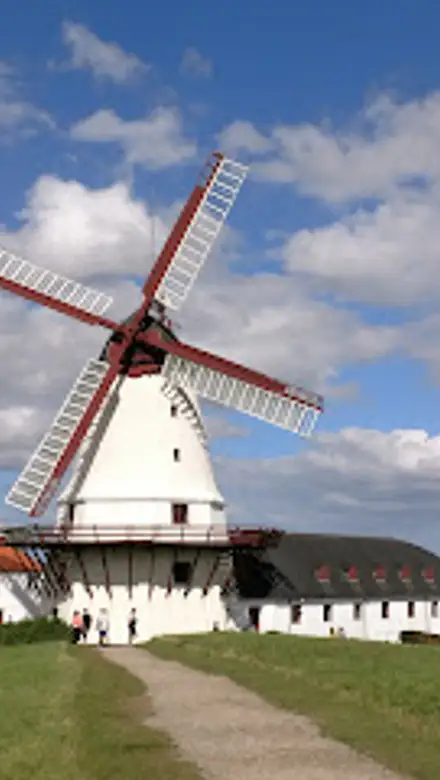
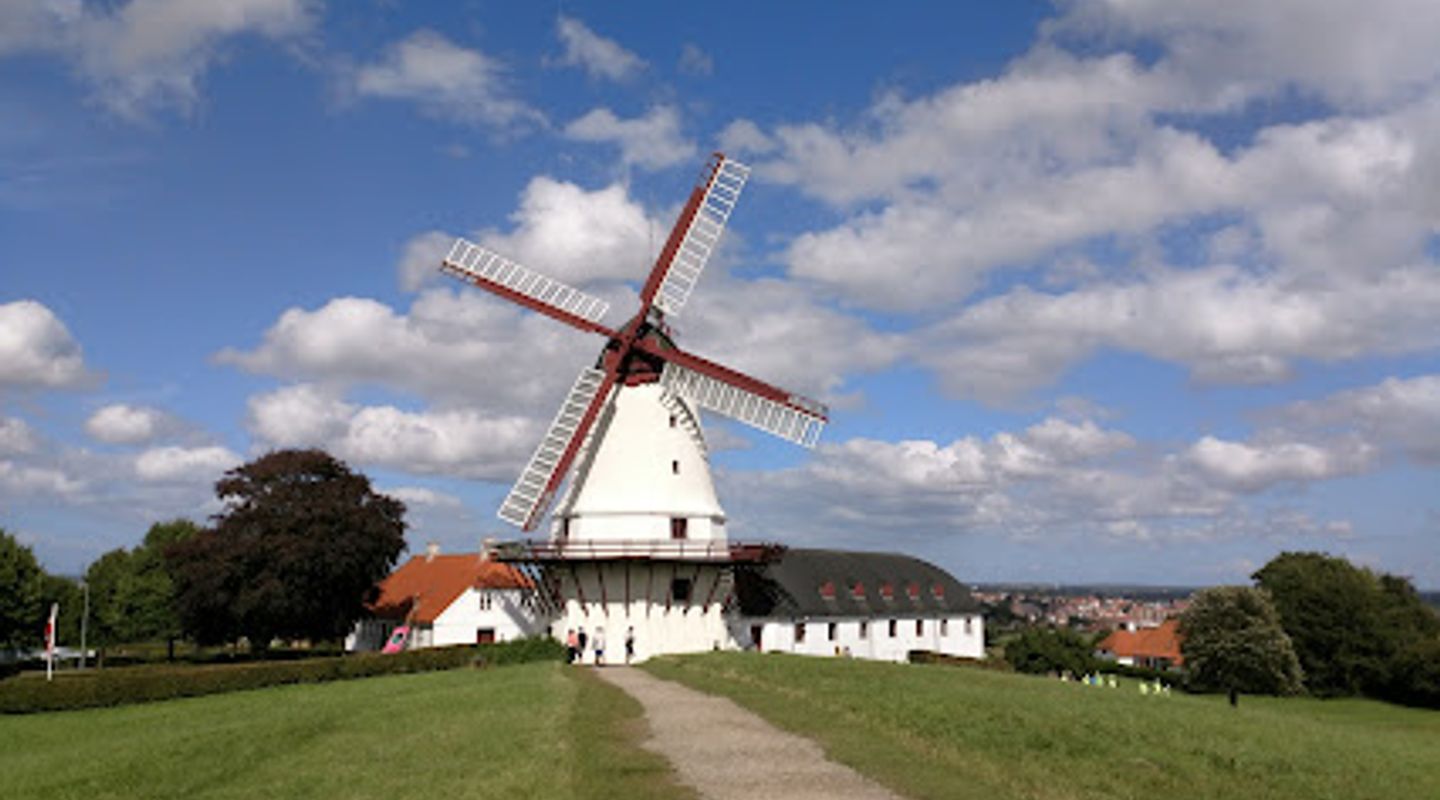
A reconstructed Dutch windmill standing atop Dybbøl Banke near Sønderborg, Dybbøl Mill is one of Denmark's most iconic national symbols. Originally built in 1744, the mill was destroyed twice during the Schleswig Wars (1849 and 1864) and rebuilt each time. Today it functions as a museum with exhibitions exploring the mill's dramatic history, the families who operated it, and its profound significance in Danish cultural memory and national identity.
A brief summary to Dybbøl Mill
- Dybbøl Banke 7, Sønderborg, 6400, DK
- Click to display
- Click to display
- Duration: 1.5 to 3 hours
- Budget
-
 Mixed
Mixed
- Mobile reception: 4 out of 5
- Monday 10 am-4 pm
- Tuesday 10 am-4 pm
- Wednesday 10 am-4 pm
- Thursday 10 am-4 pm
- Friday 10 am-4 pm
- Saturday 10 am-4 pm
- Sunday 10 am-4 pm

Know before you go
Hi, I'm Eve. Here are a few practical things to know before exploring Dybbøl Mill.
- Visit the mill tower gallery for panoramic views across Dybbøl Banke and the surrounding landscape—the same vistas witnessed by the mill's occupants during the Schleswig Wars. The perspective enhances understanding of the site's strategic military importance.
- Allow time to explore the reconstructed fortifications and redoubts across Dybbøl Banke itself. The landscape has been deliberately restored to its 1864 appearance, providing essential context for understanding the battlefield and the mill's role within the larger military position.
- Combine your visit with the adjacent History Centre Dybbøl Banke (Historiecenter Dybbøl Banke), located just 0.2 km away. A combination ticket is available from April to October, offering savings on admission for both sites and providing comprehensive coverage of the 1864 war and the broader history of the region.
- The exhibitions are primarily in Danish, but English-language information cards are available throughout the mill. Take time to read these carefully, as they provide essential context for understanding the family histories, technical details, and historical significance of the displays.
- Visit during spring or autumn for optimal conditions—the restored grassland landscape is most evocative during these seasons, and crowds are lighter than in peak summer months. Winter visits offer solitude and dramatic skies, though daylight hours are limited.
Do you manage this location?
Take control to get all the benefits, like improved information, better appearance, and stronger visibility across AI-powered discovery. Learn more about listing your business on Evendo
Activate your presenceOther nearby places you may find interesting
The closest places of the same kind, if this one is not quite what you had in mind.


Explore Dybbøl Mill on the Map
A handpicked selection of must-see spots near Dybbøl Mill, mapped for you.
Getting There
-
Bus from Sønderborg
Regional buses operate from Sønderborg town centre to Dybbøl Banke, with journey times of approximately 15–20 minutes depending on the route and stops. Service frequency varies seasonally, with more frequent departures during summer months. The bus stop is located near the mill entrance. Verify current schedules with local transport authorities, as services may be reduced in winter months. No fare information is publicly standardized; purchase tickets from the driver or at the station.
-
Car from Sønderborg
Dybbøl Mill is located approximately 5 km west of Sønderborg town centre. Drive time is 10–15 minutes via local roads. The site has dedicated parking facilities on-site. No parking fee is charged. The approach road is well-signposted from Sønderborg. Winter conditions may occasionally affect road access, though the main route is maintained year-round.
-
Walking from Sønderborg
A scenic walking route of approximately 5 km connects Sønderborg town centre to Dybbøl Mill, requiring 60–75 minutes on foot. The route is primarily downhill from the mill back into town. Terrain is mixed, including paved paths and country roads. The walk is accessible to most fitness levels, though the return journey involves uphill sections. No dedicated hiking trail exists; follow local road signage and maps.
-
Bicycle from Sønderborg
Cycling from Sønderborg to Dybbøl Mill takes approximately 20–30 minutes over a distance of 5 km. Local cycling routes connect the town to the mill site. Terrain is gently rolling with some uphill sections. The Gendarme Path, a historic 84 km cycling route, passes near Dybbøl and connects to broader regional cycling networks. Bike rental is available in Sønderborg.
For the on-the-go comforts that matter to you
-
 Restrooms
-
 Drink Options
-
 Food Options
-
 Seating Areas
-
 Information Boards
-
 Visitor Center
Discover more about Dybbøl Mill
A Monument Born from Conflict and Resilience
Dybbøl Mill stands as one of Denmark's most powerful national symbols, a distinction earned through its central role in the nation's most turbulent military conflicts. The first wooden mill was constructed in 1744 and operated successfully for over a century under family ownership. However, its fate became inextricably linked to Denmark's struggle for sovereignty when the Schleswig Wars erupted in the mid-19th century. During the First Schleswig War in April 1849, Prussian bombardment destroyed the mill, leaving it in ruins for four years. The owners, Heinrich B. Quade and his family, rebuilt it as a Dutch-style tile windmill in 1853, only to see it destroyed again during the Second Schleswig War on 10 April 1864, when a Prussian grenade collapsed the entire mill top. The owners, Jørgen and Margrethe Hansen, watched from a nearby hill on the island of Als as their livelihood crumbled. Despite receiving only two-fifths of the assessed war indemnity, Jørgen rebuilt the mill once more, establishing a pattern of extraordinary resilience that would define the site's character.The Mill as Living History and National Symbol
Following its reconstruction in 1864, Dybbøl Mill transcended its practical function as a grain mill to become a symbol of Danish identity and resistance. The mill continued grinding grain with various tenants until 1990, operating for nearly 250 years despite the devastation of war. A fire in 1935 necessitated yet another reconstruction, demonstrating the mill's enduring importance to the community. By 1995, Sønderborg Museum began organizing exhibitions within the mill and its associated grain repository, transforming the structure into a museum dedicated to preserving its extraordinary narrative. The mill house, established in 2012, now serves as administrative headquarters for the mill and the History Centre Dybbøl Banke, creating a comprehensive heritage complex that interprets both the building's past and the broader historical landscape surrounding it.Exhibitions and Immersive Experiences
Today's visitors encounter Dybbøl Mill as a multi-layered museum experience. The grain warehouse features permanent exhibitions across two floors exploring themes including "Why are you here?", "The people at the mill", "The many mills", "The fight for the mill", and "Dybbøl as a place of remembrance". These exhibitions document the lives of the miller families across generations, the technical evolution of milling, and the profound impact of the Schleswig Wars on both the structure and its inhabitants. The mill tower itself preserves the original grinding machinery and the large spur wheel, allowing visitors to understand the mechanical processes that sustained the operation for centuries. From the gallery encircling the tower, panoramic views extend across Dybbøl Banke, Sønderborg, and Vemmingbund, offering the same vistas that the mill's occupants witnessed during moments of both peace and conflict.The Battlefield Landscape and Fortification System
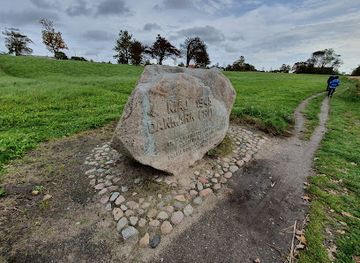
Dybbøl Banke itself represents a carefully preserved historical landscape. Between 1861 and 1862, Danish engineers constructed ten redoubts in a three-kilometre crescent formation stretching from Vemmingbund to Als Sound, creating a defensive system of small earthen constructions with concrete powder magazines and wooden blockhouses. This fortification system became the focal point of the Second Schleswig War's most significant battle, lasting from 7 April to 18 April 1864, which resulted in a Prussian-Austrian victory and Denmark's loss of Schleswig. In recent decades, authorities have purchased additional land and removed modern buildings to restore the landscape to its 1864 appearance, with cornfields converted to grassland and water holes excavated to recreate the historical environment. This landscape restoration allows contemporary visitors to comprehend the topography and spatial relationships that determined military strategy and civilian experience during the wars.Cultural Significance and Commemoration
The mill's symbolic importance extends far beyond its architectural or mechanical significance. Danish poet Holger Drachmann immortalized Dybbøl Mill in verse, using it as a symbol of Danish-minded resistance during the period when southern Jutland remained under German rule following the 1864 defeat. The mill became the focal point for Danish national celebrations and commemorations, particularly during the 1920 Schleswig Plebiscites when Denmark recovered the northern portion of Schleswig. Annual celebrations and commemorations continue to take place at Dybbøl, maintaining the mill's role as a living monument to Danish resilience, national identity, and the enduring human capacity to rebuild after catastrophe. The site's power lies not merely in what happened there, but in what the mill represents: the determination of ordinary families and a nation to persist through extraordinary hardship.












Your all‑in‑one travel companion app
Explore expert travel guides, compare and book tours, experiences, hotels, and more—all from the palm of your hand. Download now for seamless trip planning wherever your wanderlust takes you.


Explore More of Sonderborg
Looking beyond Dybbøl Mill? Discover Sonderborg for broader travel guides, local hot-spots, and regional highlights.
Explore Sonderborg